
How to Make CoCo Ichibanya Curry Rice at Home
The Rice Is Half the Dish and Usually the Half Done Badly
Rice that holds its shape under sauce instead of dissolving into it.
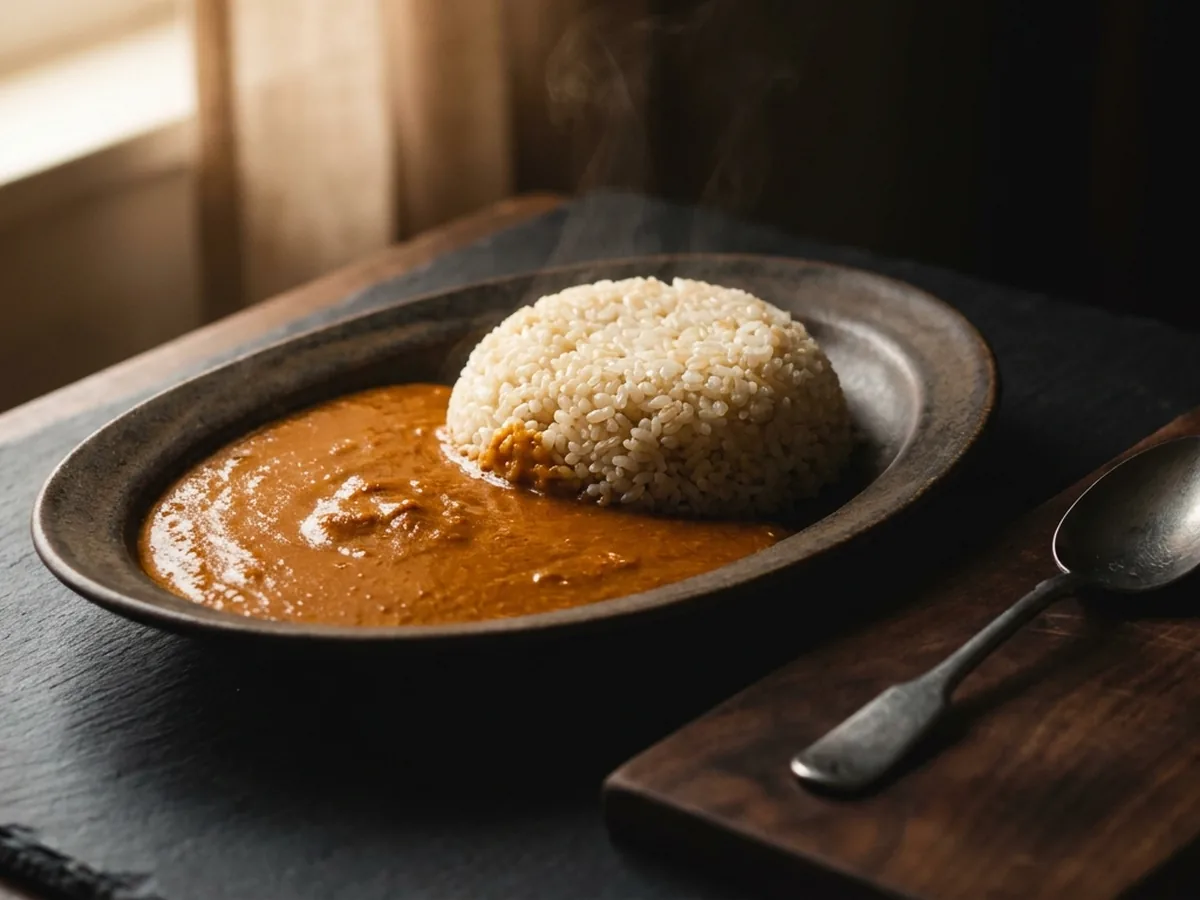
AI-generated illustration created for food.fast. It is not photographic evidence of a prepared batch.
In a curry house the rice is an afterthought. In a Japanese curry shop it is half the plate, it is shaped deliberately, and the sauce is poured along one side rather than over the top.
That is not presentation for its own sake. It means every forkful is the reader's choice of ratio, and it means the far side of the rice stays dry until it is wanted.
The rice itself has to be short grain. Long grain varieties are bred to stay separate, which is exactly wrong here - you want grains that cling to each other enough to hold a shape and still come apart under a fork.
How this page shows its working
The method gives quantities, timings and observable cues rather than asking you to guess. The 3 cases in If it goes wrong explain likely causes and corrective action.
See the recipe verification standard · See how the cost is calculated
Rinsing, and how to tell when it is enough
Put the rice in a bowl, cover with cold water, swirl with your hand, and pour the cloudy water off. Repeat.
The first rinse runs milky white. By the fourth or fifth it should run faintly cloudy rather than opaque. That is the point to stop - rinsing until the water is completely clear washes away more surface starch than you want, and the rice stops clinging at all.
What you are removing is loose starch dust from milling, which would otherwise turn to glue on the outside of each grain.
The ten minute rest, which is not optional
When the timer goes, the rice is cooked and the moisture in the pot is very unevenly distributed - wet at the bottom, drier at the top.
Ten minutes with the lid on and the heat off lets it equalise. The grains at the bottom give up water to the ones above, and the whole pot arrives at the same texture.
Lift the lid at the end of cooking and you lose the steam that does this. Every grain of rice served in a curry shop has had this rest.
How to make it, step by step
Cook
-
Rinse four or five times until the water is faintly cloudy
Cover with cold water, swirl, pour off, repeat. Stop when the water runs faintly cloudy rather than clear - washing it completely clean removes starch the rice needs to cling.
About 5 min -
Soak thirty minutes if you have time
Draining the rinsed rice and leaving it to soak in its measured water for half an hour gives a more even grain. It is worth doing and the recipe works without it.
About 5 min -
Boil, then the lowest heat for twelve minutes
Bring to a boil uncovered, then put the lid on, drop to the lowest heat and set a timer for twelve minutes. Do not lift the lid at any point.
About 12 min
Rest and plate
-
Rest ten minutes off the heat, lid on
Take the pan off the heat and leave it covered for a full ten minutes. This is where the moisture equalises through the pot and it makes a visible difference.
About 10 min -
Fold with a spatula, then shape on the plate
Fold gently from the bottom up to separate the grains without crushing them. Press a portion into a small bowl and turn it out onto one side of the plate, then pour the sauce along the other.
About 3 min
What went wrong, and how to fix it
Each entry names a likely cause as well as a correction, so the advice remains useful when equipment, ingredients or batch size differ.
Rice is gluey
- Why it happened
- Not rinsed, or stirred while hot.
- What to do
- Rinse four or five times, and fold rather than stir once cooked.
Dry on top and wet at the bottom
- Why it happened
- No rest, or the lid was lifted during cooking.
- What to do
- Ten minutes with the lid on after the heat goes off. It is the whole fix.
Rice collapses under the sauce
- Why it happened
- Long grain rice, or too much water.
- What to do
- Short grain, and 1.2 parts water to 1 part rice by volume.