McDonald's
McDonald's Sweet and Sour Sauce Copycat Recipe
Apricot jam, not pineapple. Six minutes on the hob, and the one thing that fixes the gluey texture home versions alwa…
 food.fast
Takeaway taste, kitchen prices
Nuggets: the Texture Comes From Blitzing the Chicken, Not From Breading It
Nuggets with the right interior, which almost every home recipe gets wrong by using whole chicken.
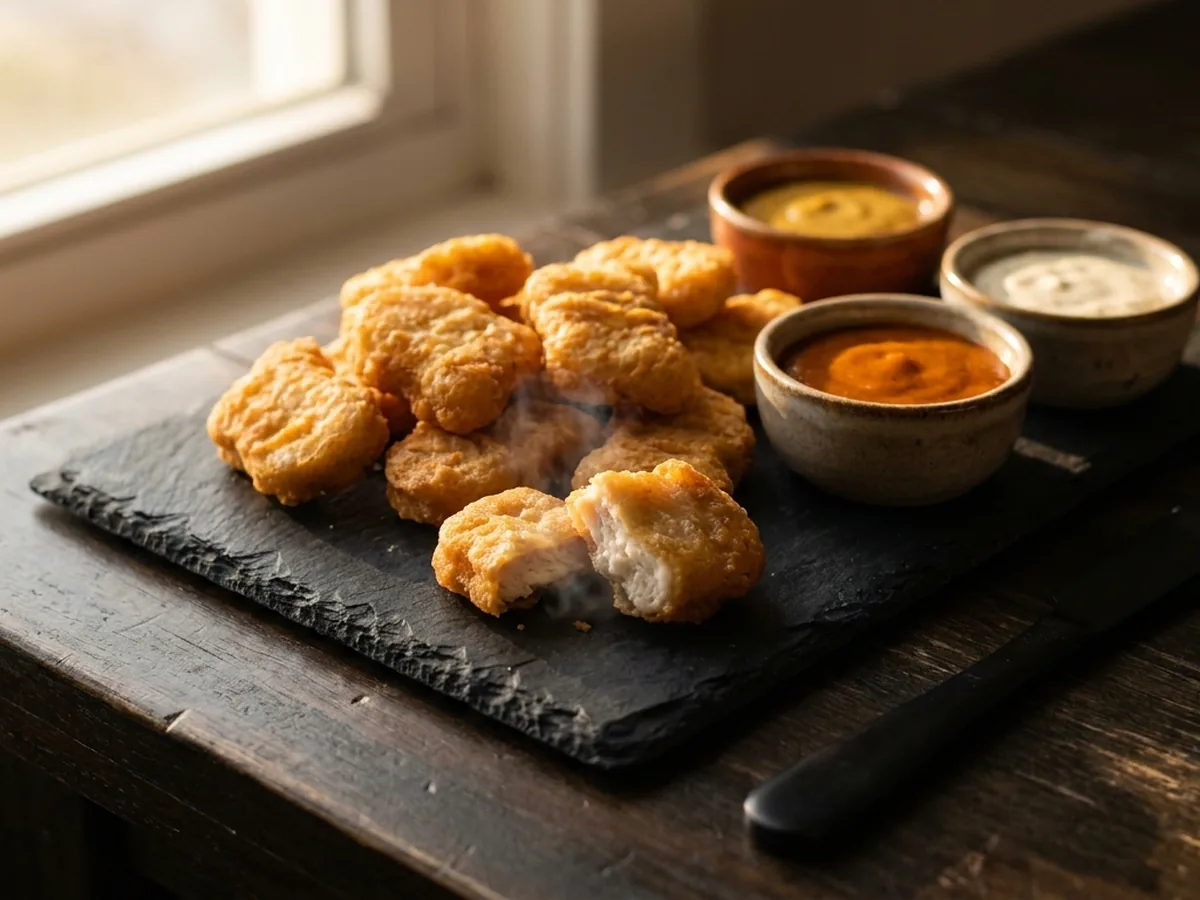
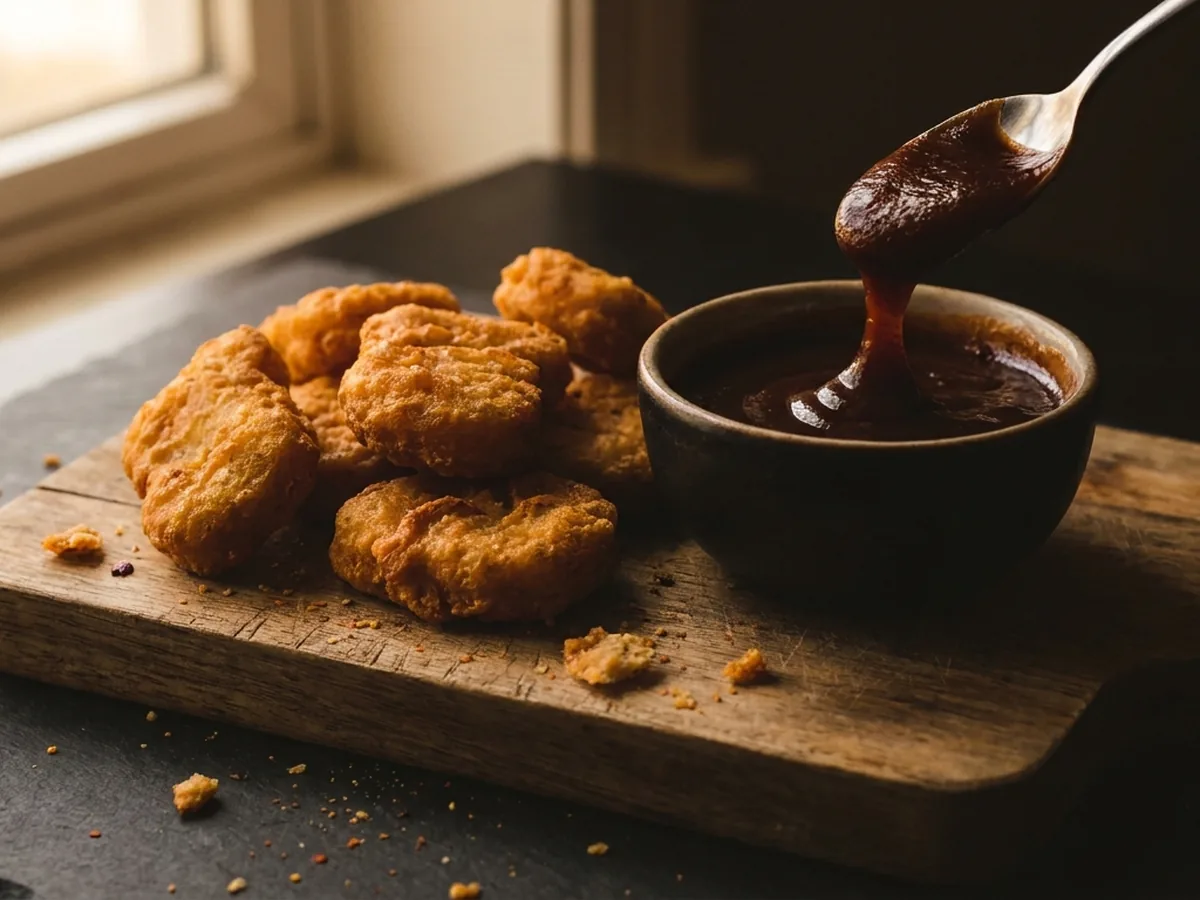
AI-generated illustration created for food.fast. It is not photographic evidence of a prepared batch.
Almost every home nugget recipe cuts chicken breast into pieces and breads them. That makes very good breaded chicken pieces and it does not make nuggets, because the thing that defines a nugget is the inside.
A McNugget's interior is smooth, uniform and slightly springy. The chicken has been minced fine, mixed with water and salt until the proteins bind, and re-formed. That process - essentially the same one used to make a sausage or a fish cake - is what gives the texture, and no amount of careful breading reproduces it.
It needs a food processor and about twenty minutes. In exchange you get something that is recognisably the thing, made from chicken you can see, and which freezes better than almost anything else here.
The method gives quantities, timings and observable cues rather than asking you to guess. The 5 cases in If it goes wrong explain likely causes and corrective action; 1 ingredient note explains choices that materially affect the result.
See the recipe verification standard · See how the cost is calculated
Blitzing chicken with salt does something specific. Salt dissolves myosin, one of the main muscle proteins, and dissolved myosin acts as a binder - it forms a sticky, tacky paste that holds water and sets into a springy gel when cooked.
This is the principle behind every sausage, fish cake, terrine and nugget, and it has a name in the trade: the protein has been "extracted".
Two things make it work:
The chicken must be very cold. Friction in a food processor generates heat, and if the mixture goes above about 12 °C the fat starts to melt and separate out, giving a greasy, crumbly texture rather than a springy one. Freeze the diced chicken for twenty minutes first.
Add the water gradually while the machine runs. Three tablespoons of iced water for 500 g of chicken, dribbled in. The paste will visibly change - from crumbly to glossy and tacky - as the myosin takes up the water. That change is the signal.
Stop as soon as it is smooth and tacky. Over-processing warms it and the texture turns rubbery.
McDonald's nuggets come in exactly four shapes - internally called the ball, the bell, the bone and the boot - and the reason is standardisation: four shapes cook at the same rate and portion consistently, and they are distinct enough that the fryer operator can see at a glance that a batch is mixed.
At home it matters less, but even sizing genuinely does matter for cooking. Aim for pieces about 5 mm thick and roughly 5 cm across. Thicker than that and the batter is dark before the middle is safe.
The easiest method is to spread the paste onto a lined tray to an even 5 mm, freeze it for thirty minutes until firm, and then cut it into shapes with a knife or a small cutter. Trying to shape a soft chicken paste by hand is unpleasant and gives uneven pieces.
Two effects. The bubbles physically aerate the batter so it fries light rather than dense. And cold liquid slows gluten development, so the batter stays tender instead of turning chewy. Mix it at the last moment and use it within five minutes - a batter that has stood loses both advantages.
Spread on a tray. It should be very cold and firm at the edges but not solid. Warm chicken gives a greasy, crumbly nugget.
About 20 minThirty seconds to break it down, then the iced water added gradually with the machine running. Watch for the change - it goes from crumbly to glossy and tacky, and that is the myosin doing its job.
Use a palette knife or the back of a spoon, with a little water on it so it does not stick. Even thickness matters more than neatness.
About 32 minA knife into rough rectangles, or a small cutter. About 5 cm across. Keep them on the tray in the freezer while you make the batter.
About 5 minDry ingredients whisked, then the cold sparkling water stirred in until just combined. Lumps are fine - over-mixing makes it chewy. It should be the consistency of single cream.
About 2 minDip each frozen nugget in the batter, let the excess run off for a second, and lower it into the oil away from you. They will float and go golden fast.
Internal temperature should be 74 °C. Never drain on paper.
About 2 minTwo ways, and the second is better.
Freeze the shapes raw, on the tray, then bag. Three months. Batter and fry straight from frozen, adding a minute.
Or par-fry and freeze. Fry for two minutes only - the batter sets and goes pale gold, the middle stays underdone - then cool completely, freeze on a tray, then bag. To cook: 190 °C oil for two and a half minutes, or an air fryer at 200 °C for nine minutes, from frozen.
The par-fried version is genuinely better than any bag of frozen nuggets you can buy, is made from chicken you diced yourself, and turns a weeknight into a ten-minute job. A double batch is the right amount.
All four of the classic sauces are on this site:
| Component | Amount | Cost |
|---|---|---|
| Chicken breast and thigh | 500 g | £2.35 |
| Flour, cornflour, seasonings | - | £0.35 |
| Oil, share of bottle | - | £0.40 |
| 24 nuggets at home | £3.10 | |
| Four 6-piece boxes, UK counter price | £17.16 |
The batter does not work in an air fryer - it drips. Instead, coat the shapes in flour, then egg, then panko, and air fry at 200 °C for 12 minutes. A different and very good nugget.
A teaspoon of cayenne in the paste and another in the batter.
The same method with white fish - cod or pollock - and half the processing time. Fish proteins bind much faster.
Each entry names a likely cause as well as a correction, so the advice remains useful when equipment, ingredients or batch size differ.
The recipes that go with this one, or that use what you have just made.
Apricot jam, not pineapple. Six minutes on the hob, and the one thing that fixes the gluey texture home versions alwa…
A thin, sharp, faintly smoky barbecue dip that is nothing like a thick American BBQ sauce. Eight minutes, one pan.
Small pieces, a heavily seasoned dredge and a very short fry. The whole recipe is about not overcooking something tha…
Eight minutes, one bowl, no cooking. The sweet pickle relish base that every 'secret sauce' recipe gets wrong, and th…