CoCo Ichibanya Curry Rice Copycat Recipe
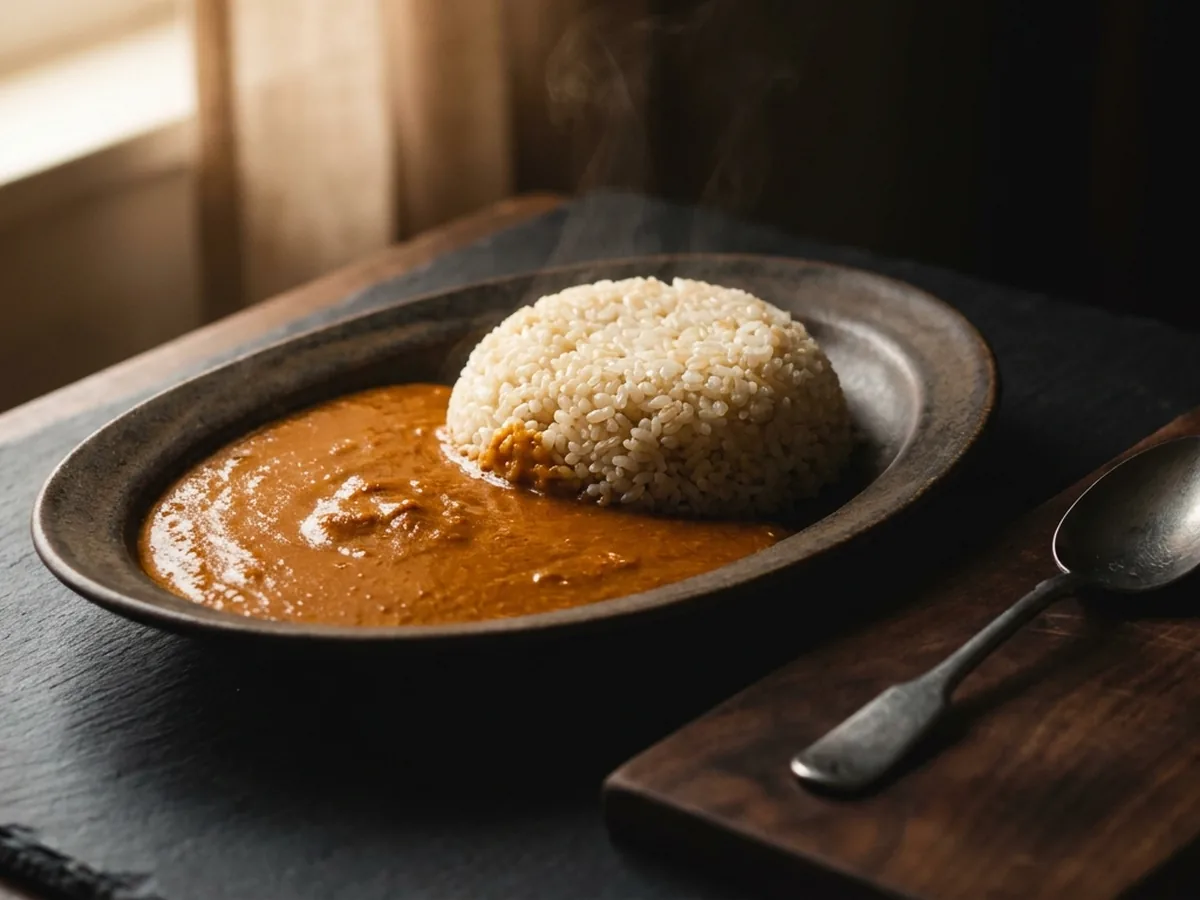
Short grain rice cooked so it holds its shape under sauce - rinsed, rested and plated as a bank rather than a heap.
 food.fast
Takeaway taste, kitchen prices

Japanese curry built to order, from a roux block anyone can buy.
AI-generated editorial illustration created for food.fast; not a product photograph from CoCo Ichibanya.
Not every menu item has a recipe here, and that is deliberate - We write a page when there is something genuinely worth saying about how to make the thing.
Short grain rice cooked so it holds its shape under sauce - rinsed, rested and plated as a bank rather than a heap.
Japanese curry is sweet, thick and mild by default. Grated apple and honey are traditional and are what separate it from an Indian curry.
The roux block route is not cheating. It is what the chain does.
The katsu is panko-crumbed and fried, then sliced. Slicing before serving is not presentation - it is how the sauce gets into the middle of the cutlet rather than sitting on a sealed crust.
Panko, not ordinary breadcrumb. Made from crustless bread dried without browning, so the flakes are large, jagged and full of air. They give the shattering crunch that a fine dried crumb cannot.
The spice levels are a separate sauce, added at the end. Heat is not cooked into a Japanese curry; it is stirred in, which is why the chain can offer ten levels from one pot.
Serve it with the rice shaped, not heaped. The curry goes on one half of the plate and the rice on the other, and you work across. It sounds fussy and it is how the dish is meant to eat.
CoCo Ichibanya - CoCo Ichi to almost everybody - is the largest curry house chain in the world, and it runs on a level of customisation that is unusual even by fast food standards. You specify the quantity of rice by the gram, the spice level from one to ten, and the toppings from a list that runs to dozens. Two people ordering "curry" can receive quite different meals.
The base under all of it is Japanese curry, which is worth understanding as its own cuisine rather than as a variant of an Indian one. It arrived in Japan via the British Royal Navy in the Meiji era, which is why it is thick, mild, faintly sweet and thickened with a roux - it is closer to a British curry of 1890 than to anything from the subcontinent, and it has been evolving independently ever since.
That history is also why a home copy is genuinely achievable in a way most chain food is not. Japanese curry is built from a roux block - a solid slab of fat, flour and spices sold in every Asian supermarket for a couple of pounds - and using one is not a shortcut. It is what the chain does, and it is what almost every Japanese household does.
The recipe here covers both routes: the block, which is the honest everyday answer, and a from-scratch roux for anyone who wants to control the spice themselves.
What else people compare CoCo Ichibanya against, and what we hold for each.
CoCo Ichibanya is a trademark of its owner. food.fast is independent and is not affiliated with, endorsed by or sponsored by CoCo Ichibanya. Recipes on this page are our own interpretations, not the company’s formulas.