CoCo Ichibanya
CoCo Ichibanya Curry Rice Copycat Recipe
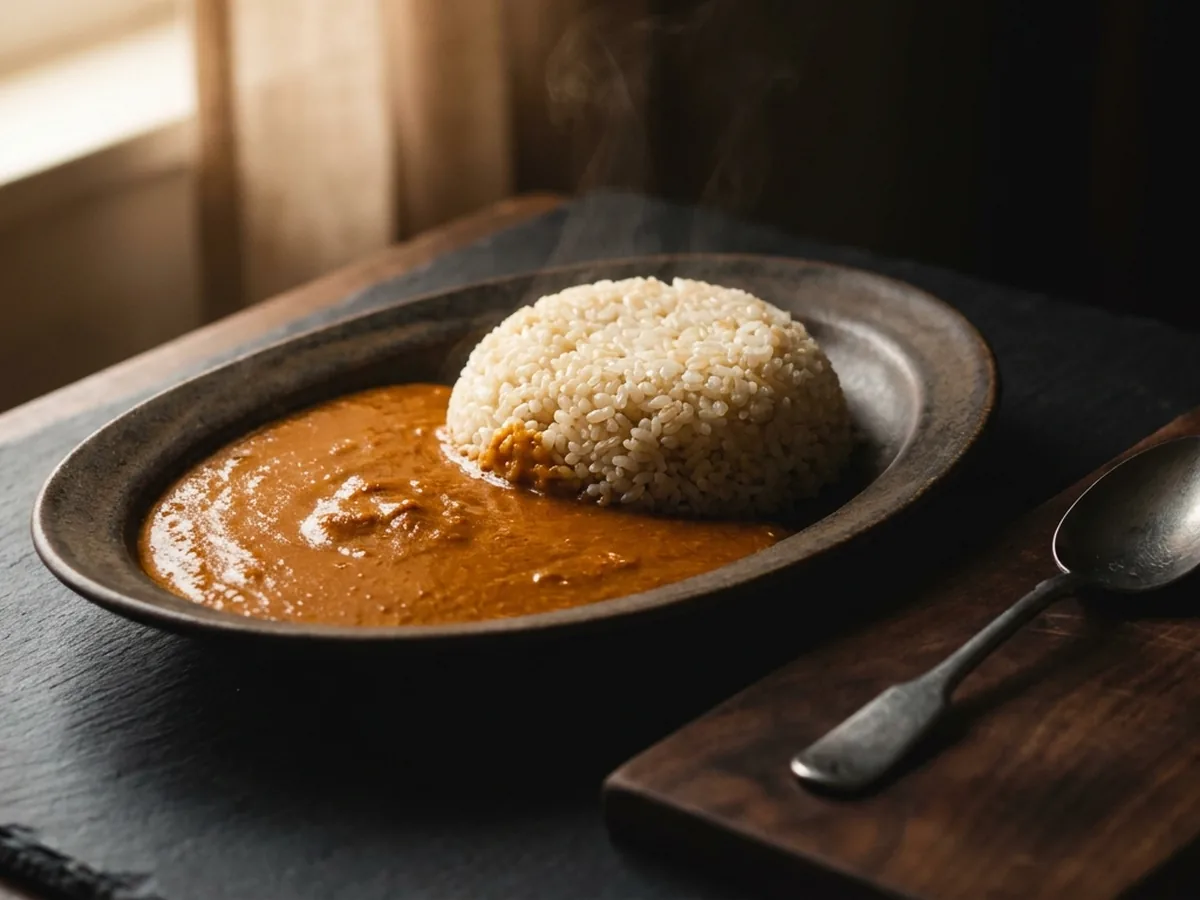
Short grain rice cooked so it holds its shape under sauce - rinsed, rested and plated as a bank rather than a heap.
 food.fast
Takeaway taste, kitchen prices
Grated Apple and Honey Are Not Optional in Japanese Curry
Japanese curry sauce with the sweetness and body of the shop version.
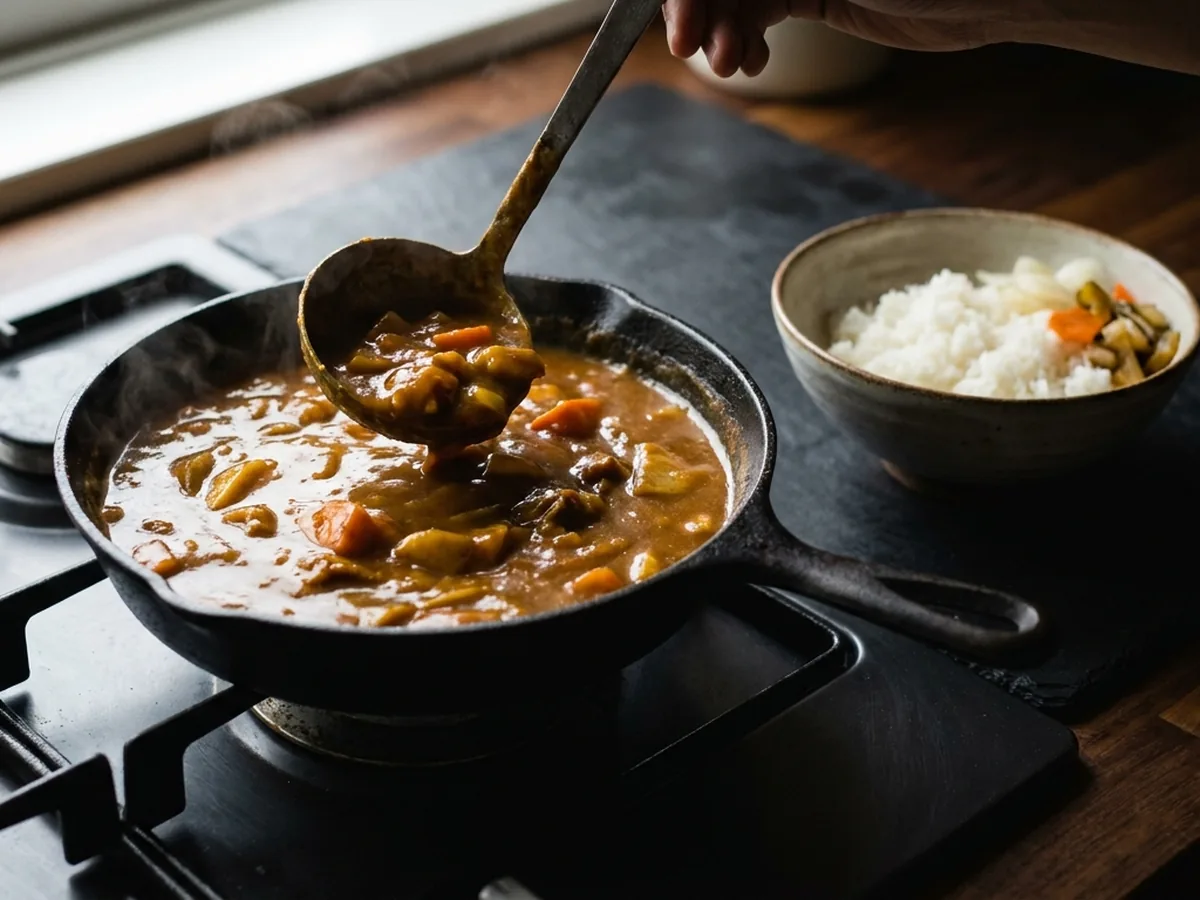
AI-generated illustration created for food.fast. It is not photographic evidence of a prepared batch.
Japanese curry is thick, glossy, dark brown and mild. It is closer to a gravy than to anything served in an Indian restaurant, and the reason is that it is thickened with a roux - flour cooked in fat - rather than with reduced onion and tomato.
The second difference is sweetness. Grated apple and a spoon of honey are traditional and they are what separate this from every other curry. They are not there to make it taste of apple; they are there to round off the edges so the spice sits underneath rather than on top.
The third is heat, or the absence of it. The default is very mild. Heat is added at the table, which is why the menu has a numbered spice scale rather than a hot version of each dish.
The method gives quantities, timings and observable cues rather than asking you to guess. The 3 cases in If it goes wrong explain likely causes and corrective action.
See the recipe verification standard · See how the cost is calculated
Forty minutes, over a low heat, until they are genuinely brown and jammy - not the eight minutes a recipe usually means by "softened".
This is where the depth comes from. Onions cooked that far have broken down and caramelised, and they dissolve into the sauce rather than sitting in it as pieces. Skip it and the curry tastes thin and floury however long you simmer it afterwards.
There is no shortcut that works. A pinch of bicarbonate of soda speeds it up by raising the pH, but it also turns the onions slightly slimy and gives a faint soapy note, which is worse than waiting.
Equal weights of butter and flour, cooked together until it smells of biscuit and has gone the colour of weak tea. Five or six minutes over a medium heat.
Too pale and the sauce tastes of raw flour. Too dark and you lose thickening power, because the starch breaks down as it browns - a very dark roux thickens about half as much as a pale one.
The curry powder goes in at the end of that, off the heat, and cooks in the residual warmth for thirty seconds. Any longer over direct heat and the ground spice scorches.
Low heat, oil, sliced onions, stirring every few minutes until they are brown and jammy rather than merely soft. This is where the depth of the sauce comes from and there is no way to hurry it.
About 40 minStir them through the onions and cook for another five minutes until the apple has broken down and the mixture smells sweet rather than raw.
About 5 minAdd the stock, soy sauce, ketchup and Worcestershire sauce, bring to a simmer and leave it bubbling gently while you make the roux.
About 10 minMelt the butter in a separate pan, stir in the flour and cook over a medium heat for five or six minutes, stirring constantly, until it smells of biscuit and has taken on a light tan colour.
About 6 minTake the roux off the heat and stir in the curry powder, garam masala and turmeric. Thirty seconds in the residual heat is enough - ground spice on direct heat scorches and turns bitter.
About 1 minAdd the roux to the pan a spoonful at a time, whisking between each so it disperses rather than lumping. Then simmer for fifteen minutes until thick and glossy.
About 15 minEach entry names a likely cause as well as a correction, so the advice remains useful when equipment, ingredients or batch size differ.
The recipes that go with this one, or that use what you have just made.
Short grain rice cooked so it holds its shape under sauce - rinsed, rested and plated as a bank rather than a heap.