
Coffee World
Coffee World Caramel Frappe Copycat Recipe
A blended iced coffee built on coffee ice cubes, so it gets stronger as it melts instead of weaker.
 food.fast
Takeaway taste, kitchen prices
Sift the Matcha or Drink the Lumps
A smooth green tea frappe with no lumps and no bitterness.
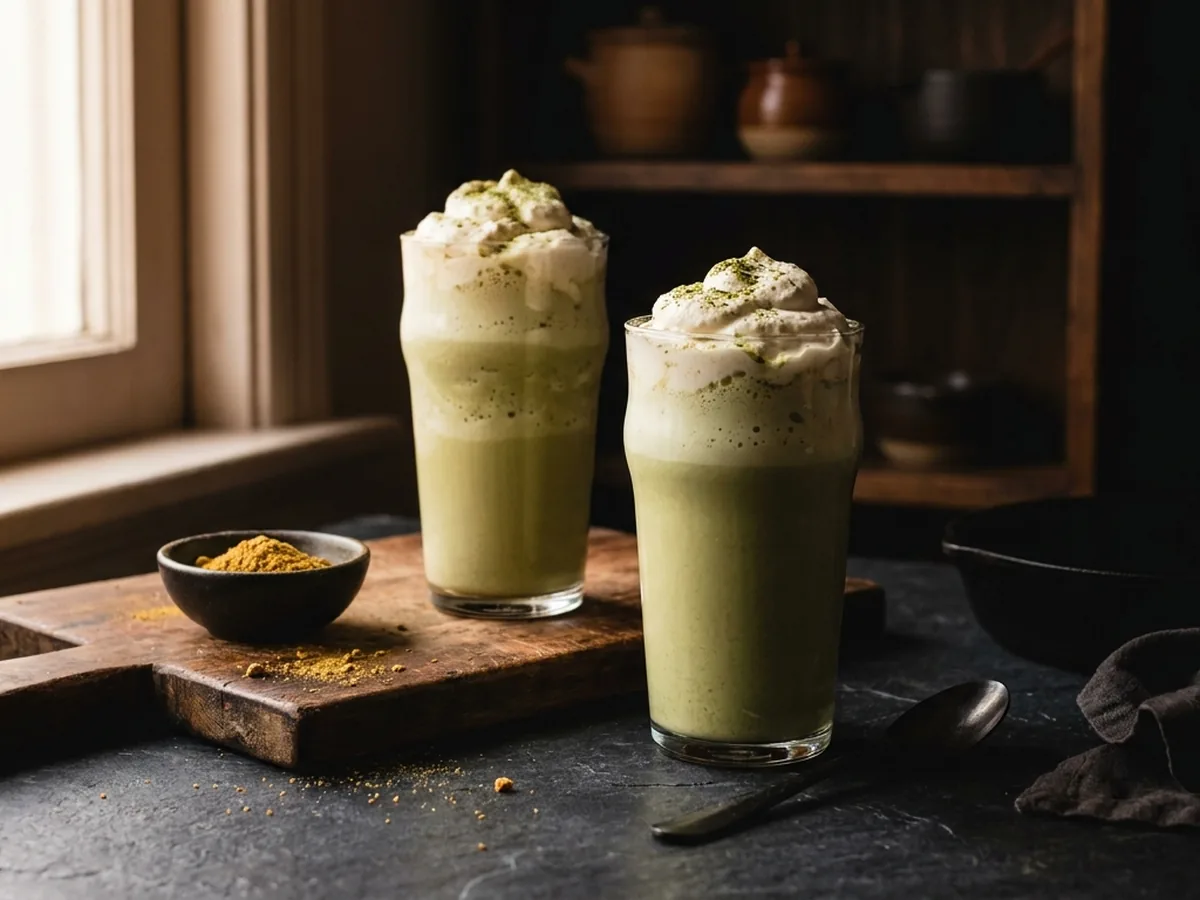
AI-generated illustration created for food.fast. It is not photographic evidence of a prepared batch.
Matcha is a powder, not an infusion, so it has to be suspended rather than brewed. Tipped straight into cold milk it clumps immediately, and once clumped it will not disperse however long you blend.
The fix is the traditional one and takes thirty seconds: sift the powder, then whisk it into a small amount of warm - not hot - water until it is a smooth paste. Only then does anything cold go near it.
Water temperature is the other variable. Above about 80 °C matcha turns harshly bitter, which is why so many home versions taste grassy and unpleasant.
The method gives quantities, timings and observable cues rather than asking you to guess. The 3 cases in If it goes wrong explain likely causes and corrective action.
See the recipe verification standard · See how the cost is calculated
Matcha is milled extremely fine and it compacts in the tin. Those compacted lumps are what survive blending.
Sift it through a tea strainer. It takes ten seconds and removes the problem at source.
Whisk it into about 60 ml of water at roughly 70 °C. A bamboo whisk is traditional and a small hand whisk works. Move in a W rather than a circle - circular stirring pushes the powder to the edges rather than breaking it up.
You want a smooth, slightly foamy paste with no visible specks before anything else joins it.
Culinary grade is the right choice here and is considerably cheaper than ceremonial. It is a coarser, more robust powder made to stand up to milk and sugar, which is exactly the job.
Ceremonial grade is bred for delicacy and drinking with water alone. Blended with milk, ice and syrup, almost everything that makes it expensive is lost.
What does matter is colour. Good matcha is vivid green. Dull, khaki-brown powder is old and oxidised, and no amount of technique rescues it.
Ten seconds, and it removes the compacted lumps that would otherwise survive blending and end up on the straw.
About 1 minAdd water at about 70 °C and whisk in a W motion until smooth and slightly foamy with no visible specks. Boiling water makes matcha harshly bitter.
About 2 minEverything into the blender together and blend for about twenty seconds until smooth. Ice needs slightly longer than a coffee frappe because the cubes are larger.
About 1 minInto tall glasses, with whipped cream on top if you want it. Serve immediately, as it separates within a few minutes.
About 2 minEach entry names a likely cause as well as a correction, so the advice remains useful when equipment, ingredients or batch size differ.
The recipes that go with this one, or that use what you have just made.
A blended iced coffee built on coffee ice cubes, so it gets stronger as it melts instead of weaker.
Coffee ice cubes, mocha sauce and a pinch of xanthan gum - the ingredient that stops it splitting. Three minutes.