Taco Bell
Taco Bell Crunchwrap Supreme Copycat Recipe
The fold is the recipe. A tostada in the centre keeps the crunch and stops the whole thing going soft. Fifteen minute…
 food.fast
Takeaway taste, kitchen prices
Nacho Cheese Sauce That Does Not Split, Using Real Cheese
A cheese sauce with the texture of the machine version and the flavour of actual cheese.
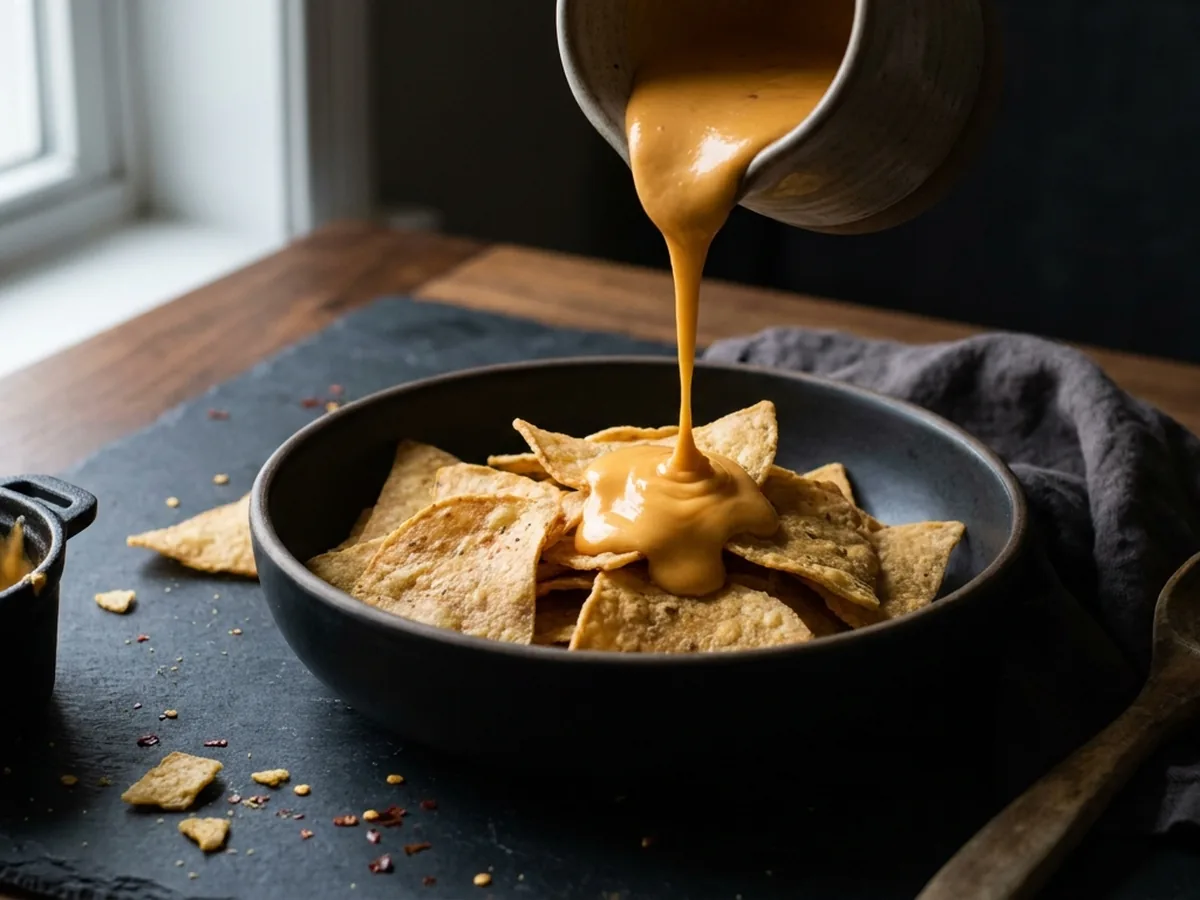
AI-generated illustration created for food.fast. It is not photographic evidence of a prepared batch.
Restaurant cheese sauce does not split and yours does, and the reason is not technique. It is an ingredient.
Cheese is an emulsion of fat in water held together by casein proteins. Heat it and the proteins clump, squeezing out the fat, which is why a melted block of cheddar in a pan turns into a grainy lump sitting in a pool of orange oil. Processed cheese does not do this because it contains emulsifying salts that keep the proteins dispersed.
You can buy those salts. Sodium citrate is sold in baking and homebrew shops and online for a few pounds, a jar lasts years, and half a teaspoon turns any cheese you like into a sauce with the texture of the stuff from the machine. It is the single highest-leverage ingredient on this entire site and almost nobody has it.
The method gives quantities, timings and observable cues rather than asking you to guess. The 5 cases in If it goes wrong explain likely causes and corrective action; 2 ingredient notes explain choices that materially affect the result.
See the recipe verification standard · See how the cost is calculated
Sodium citrate is the sodium salt of citric acid - the same compound that makes lemons sour, with the acid neutralised. In a cheese sauce it does two things at once: it raises the pH very slightly, and it binds the calcium ions that hold casein proteins together in clusters.
With the calcium tied up, the proteins disperse into the liquid instead of clumping, and they then do what dispersed proteins do - act as an emulsifier, holding the fat in suspension. The result is a sauce that is smooth when hot, smooth when cold, and smooth again when reheated, indefinitely.
It is what is in every processed cheese slice and every tub of cheese sauce on a supermarket shelf, which is why those things melt so obligingly. Having it in your cupboard means you can make a better version of any of them.
It is not an obscure chemical. It is in fizzy drinks, in medicines, and in most of the cheese products in a supermarket. A 250 g jar costs about five pounds and will outlast the kitchen.
If you do not have it and do not want to buy it, the traditional answer is a roux: butter, flour, milk, then cheese off the heat. That works and gives a perfectly good cheese sauce.
What it does not give you is this. A béchamel is thickened with starch, which means it is opaque, slightly floury, and sets firm when it cools. Nacho cheese sauce is thin, glossy, and stays pourable at room temperature - it is emulsified rather than thickened, and that is a different thing.
The béchamel version is written out in the variations below. It is the better choice for a macaroni cheese and the worse choice for nachos.
The third option - and it is not a bad one - is to build the sauce on processed cheese slices or a block of processed cheese, which already contain the emulsifying salts. Twelve slices plus half a cup of evaporated milk, melted gently, gives you something very close with no special ingredients. It tastes of processed cheese, because it is.
The brine from a jar of pickled jalapeños brings acid, salt and a vegetal green note that is unmistakably part of how this sauce tastes. Without it the sauce is correct in texture and flat in flavour. If you have no jar, use a tablespoon of white wine vinegar plus a pinch of dried oregano, which is close.
Pre-grated cheese is dusted with potato starch or cellulose to stop it clumping in the bag. In a sauce that starch does not dissolve cleanly and you get a faint grittiness that no amount of whisking removes. Two minutes with a box grater.
Whisk it into the milk in the pan before any heat. It dissolves readily in cold liquid and reluctantly in hot.
About 1 minAll the dry seasoning in, whisked. Heat until steam rises and small bubbles appear at the edge. Do not boil.
About 3 minWait until each handful has completely disappeared before adding the next. Five or six additions. The sauce will get glossier with each one.
Acid added while the sauce is over direct heat can shock the emulsion. Off the hob, whisked in, done.
About 1 minThis sauce is thickest when cold and thins as it warms, which is the opposite of a béchamel and much more useful. It will not split however many times you reheat it.
To hold it warm for a party, a slow cooker on its lowest setting or a bowl over barely simmering water. Whisk occasionally.
If it has thickened too much - usually from being held too long and losing water to evaporation - a tablespoon of hot milk at a time, whisked in. It absorbs it instantly.
If you want it deliberately thicker, for nachos where a thin sauce would run straight off, use 80 ml less milk. The citrate quantity is calculated on the liquid, so drop it to a scant teaspoon and a quarter.
Melt 2 tbsp butter, whisk in 2 tbsp flour, cook two minutes. Add 1¼ cups milk gradually. Off the heat, whisk in 200 g grated cheese and the seasoning. Thicker, opaque, sets when cold. Better for macaroni cheese.
White cheddar and Monterey Jack instead, no paprika, and add 2 tbsp of chopped green chillies. Pale, milder, very good with a burrito.
A whole finely chopped pickled jalapeño blended in, plus double the cayenne.
Each entry names a likely cause as well as a correction, so the advice remains useful when equipment, ingredients or batch size differ.
The recipes that go with this one, or that use what you have just made.
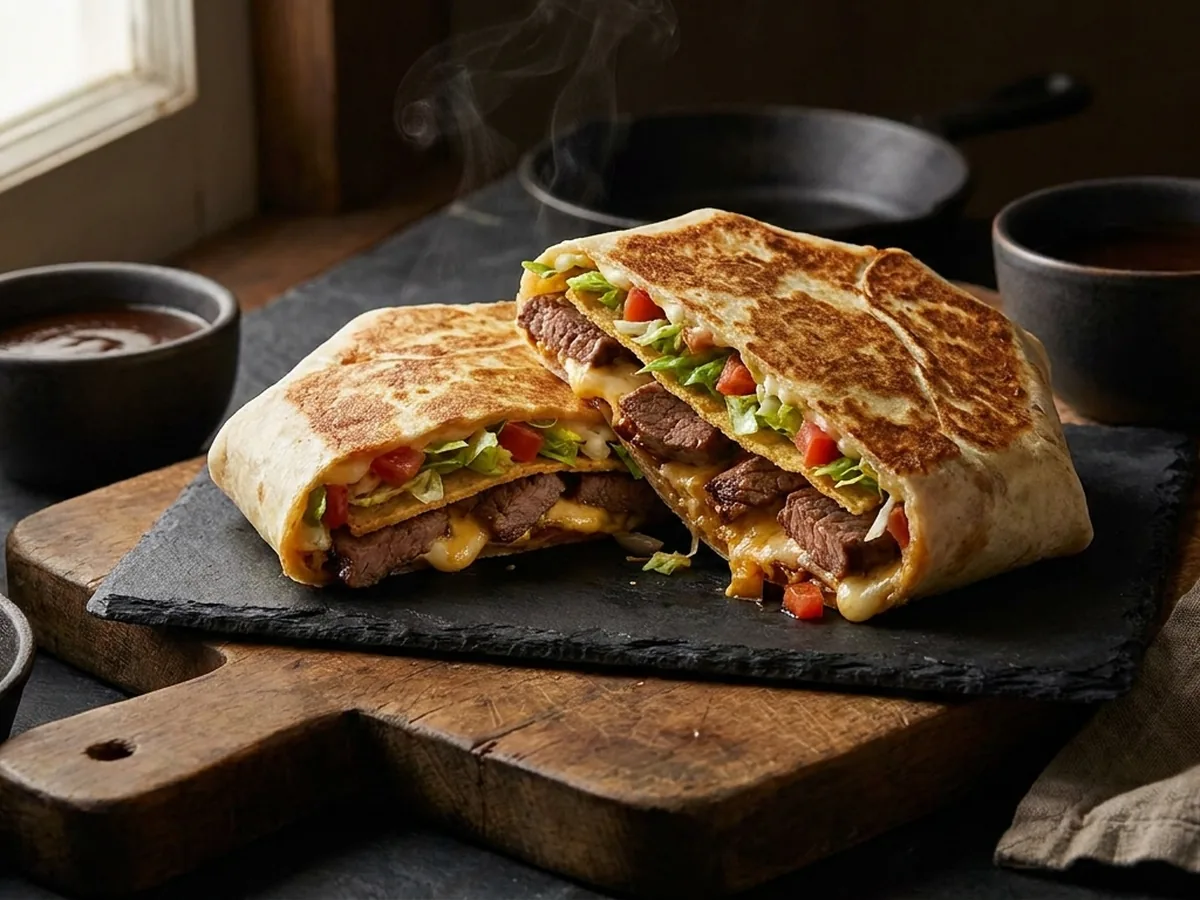
The fold is the recipe. A tostada in the centre keeps the crunch and stops the whole thing going soft. Fifteen minute…
The component that unlocks the whole menu. Oats cooked into the mince and enough water to make a paste - which is the…
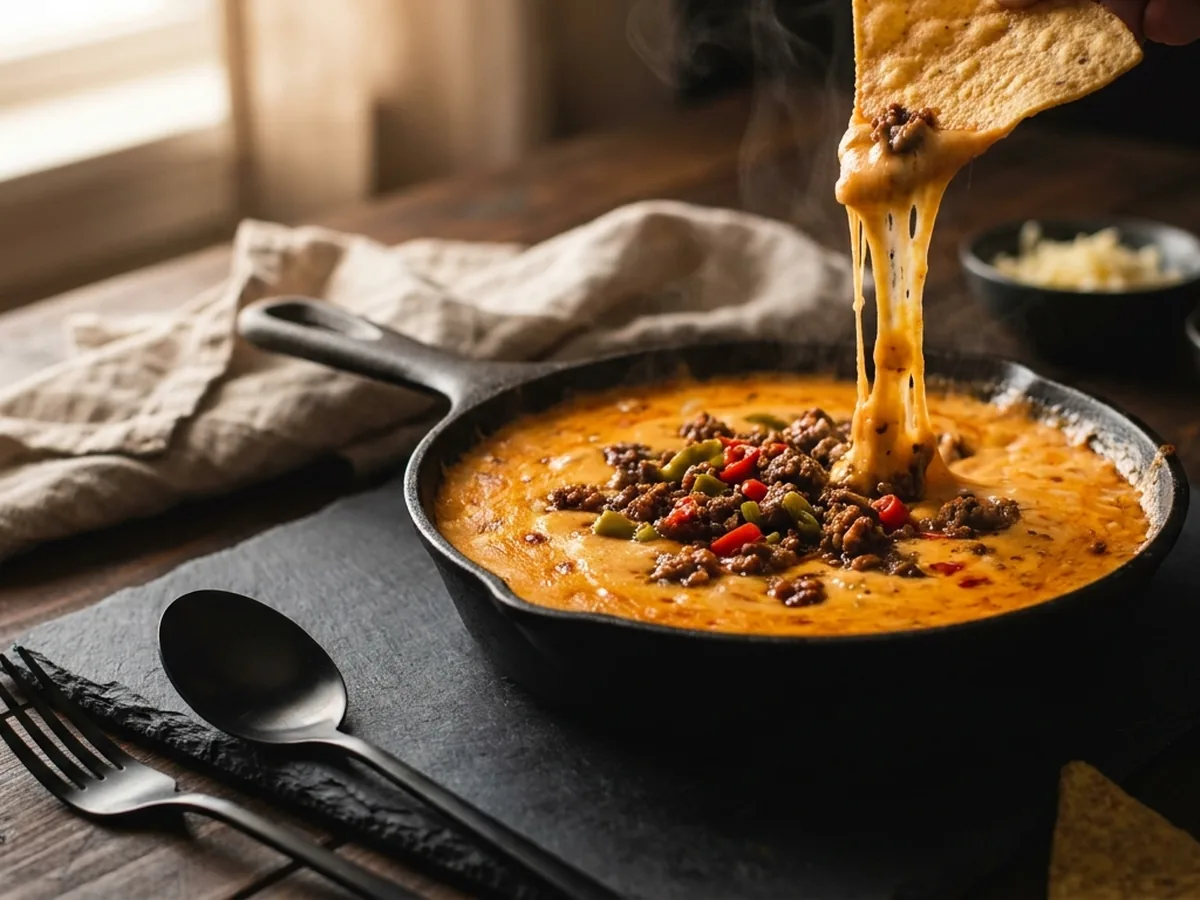
Cheese, chilli and a little seasoned beef, served in a hot skillet so it stays molten. Twelve minutes, one pan.
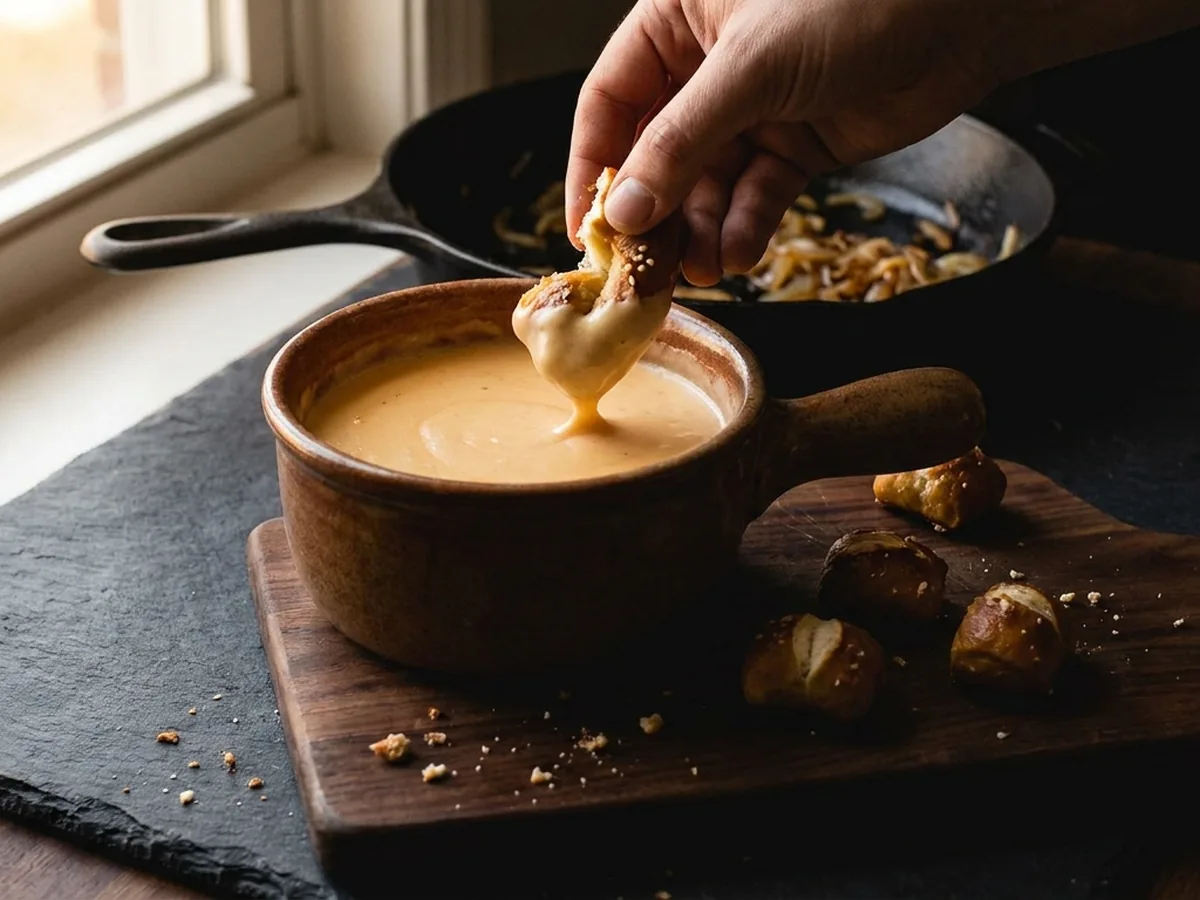
The pretzel dip - milder and thinner than a queso, built to stay liquid in a paper pot. Eight minutes.