Auntie Anne's
Auntie Anne's Soft Pretzel Copycat Recipe
An ordinary bread dough put through an alkaline bath, buttered twice, and salted with coarse crystals. Thirty minutes…
 food.fast
Takeaway taste, kitchen prices
A Cheese Dip That Stays Pourable at Room Temperature
A cheese dip that does not set into a lump while you eat it.

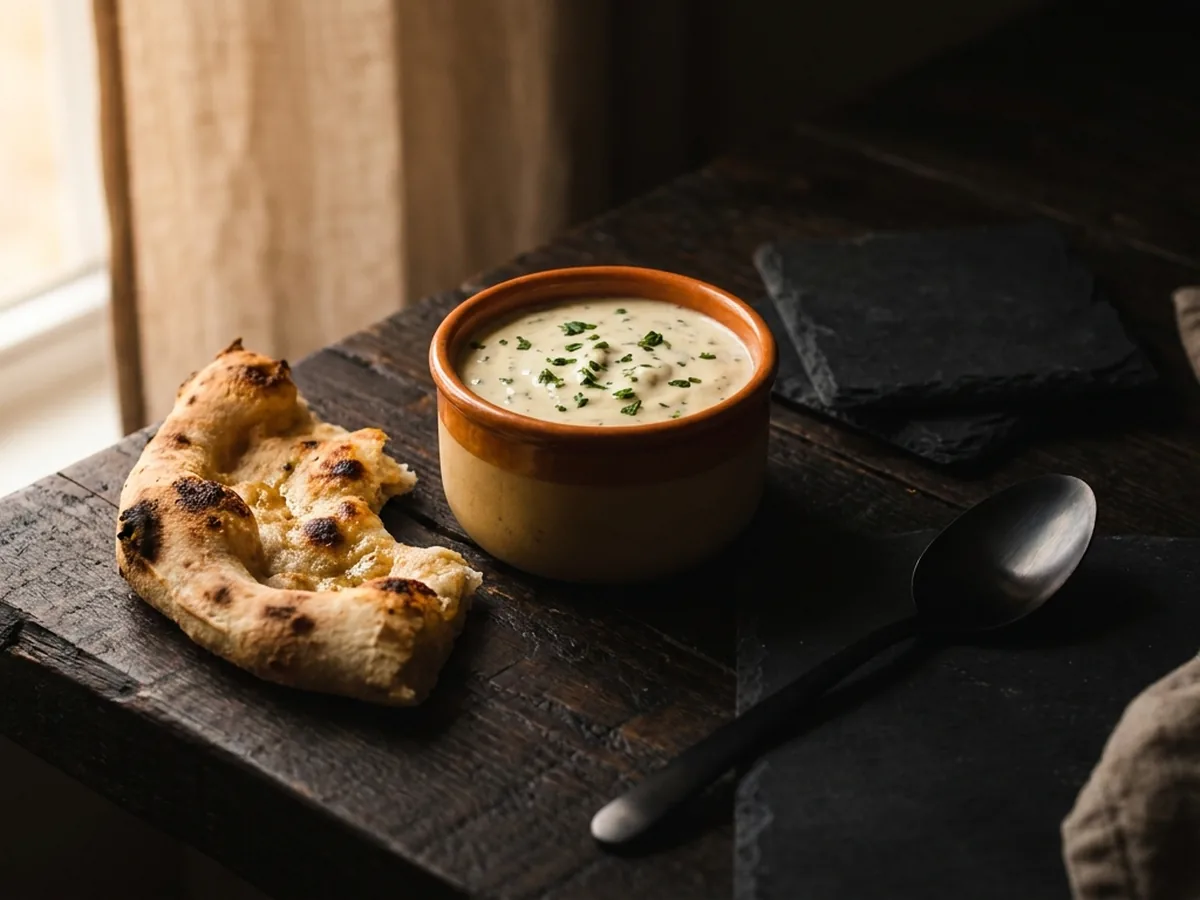
AI-generated illustration created for food.fast. It is not photographic evidence of a prepared batch.
This is a close relative of the Taco Bell nacho cheese sauce and it is deliberately different in two ways: it is milder - no cumin, no cayenne to speak of - and it is thinner, because it has to stay pourable in a paper pot for as long as it takes to eat a pretzel.
The chemistry is the same. Sodium citrate keeps the cheese proteins dispersed so the sauce never goes grainy, hot or cold, however many times you reheat it. That page explains the mechanism in detail and it is worth reading if you have not.
If you do not have sodium citrate, the evaporated milk route below is a workable alternative, though it produces a different texture.
The method gives quantities, timings and observable cues rather than asking you to guess. The 4 cases in If it goes wrong explain likely causes and corrective action.
See the recipe verification standard · See how the cost is calculated
Evaporated milk is milk with about 60 per cent of its water removed, and it contains proportionally far more milk proteins and calcium salts than ordinary milk.
Those proteins act as emulsifiers. A cheese sauce made on an evaporated milk base is considerably more stable than one made with fresh milk - not as stable as one with sodium citrate in it, but enough that it will survive being made, served and reheated once without splitting.
It is also why so many old American macaroni cheese recipes call for it. This is not a shortcut invented for the internet; it is what home cooks used before emulsifying salts were available in a jar.
The method: warm a tin of evaporated milk with a teaspoon of cornflour whisked into it, then add the grated cheese in handfuls off the direct heat. It will be slightly thicker and slightly less glossy than the citrate version, and completely acceptable.
Before any heat. It dissolves readily cold and reluctantly hot.
About 1 minWhisk until the cream cheese has completely melted in. Do not boil.
About 3 minWait until each handful has gone before adding the next. Five or six additions. It will get glossier each time.
About 4 minIt should pour easily and coat a pretzel without clinging in a lump. If it is too thick, a tablespoon of hot milk at a time.
About 1 minA slow cooker on its lowest setting, or a bowl over barely simmering water, with an occasional whisk.
With sodium citrate in it, this sauce simply will not split, however long it is held or however many times it is reheated. That is the practical reason to use it rather than a roux for anything that has to sit on a table.
It will thicken as water evaporates over an hour or two. A tablespoon of hot milk whisked in brings it straight back, and you can do that as many times as you need to.
A 400 g tin of evaporated milk with 1 tsp cornflour whisked in, warmed, then the cheese in handfuls off the heat. Genuinely good.
Two tablespoons of chopped pickled jalapeños and two of their brine. Now it is closer to a queso.
Replace half the milk with a pale ale. A classic pretzel accompaniment and very good.
Each entry names a likely cause as well as a correction, so the advice remains useful when equipment, ingredients or batch size differ.
The recipes that go with this one, or that use what you have just made.
An ordinary bread dough put through an alkaline bath, buttered twice, and salted with coarse crystals. Thirty minutes…
Sodium citrate is the whole answer. A smooth, pourable cheese sauce from real cheddar that stays smooth when it cools…
Cheese, chilli and a little seasoned beef, served in a hot skillet so it stays molten. Twelve minutes, one pan.
The most requested copycat dip in Britain. Four minutes, six ingredients, and two decisions that most versions get wrong.