Chili's
Chili's Honey Chipotle Sauce Copycat Recipe
Honey, hot sauce and adobo, simmered until it clings. Eight minutes and four ingredients that matter.
 food.fast
Takeaway taste, kitchen prices
The Whiskey Glaze: Pineapple Juice, Reduced by Half
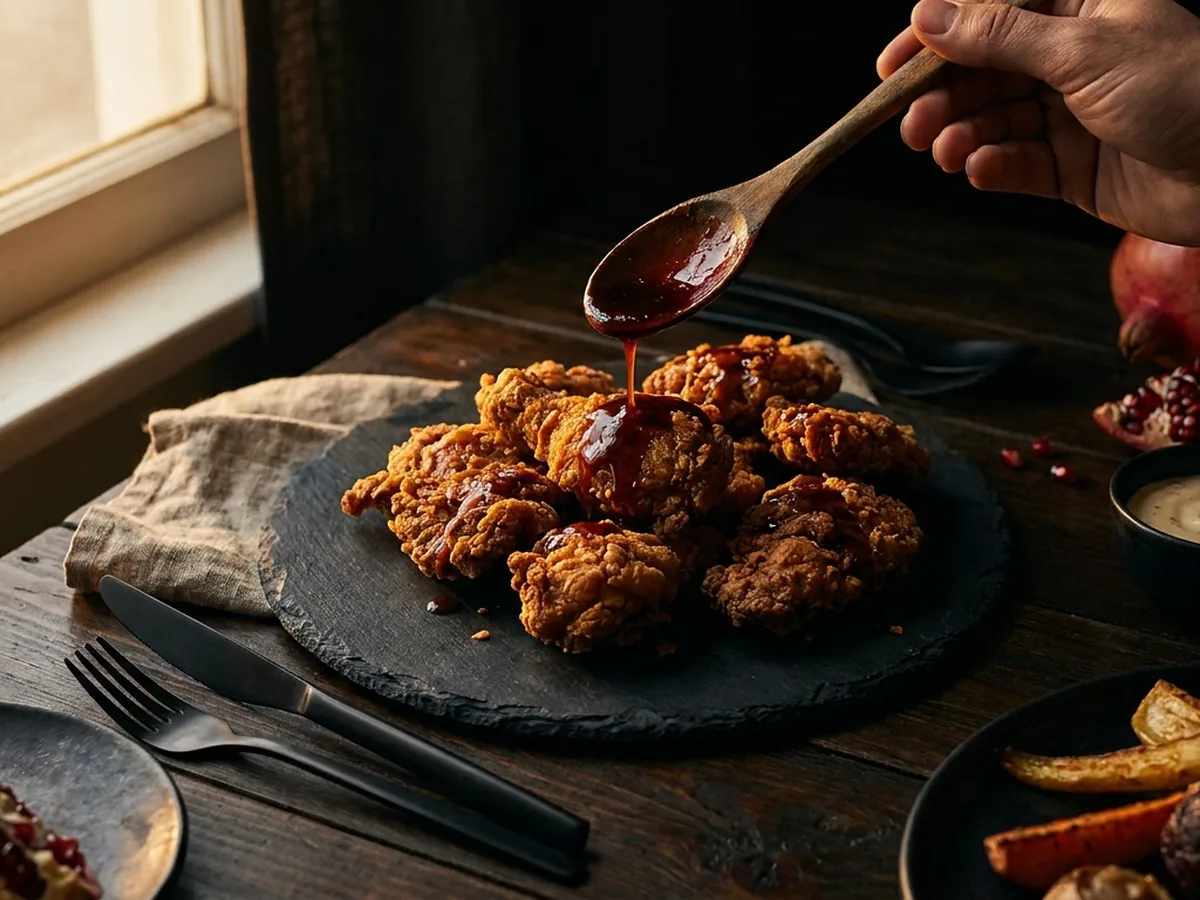
A glaze that lacquers rather than sits, which is what a hard reduction buys you.
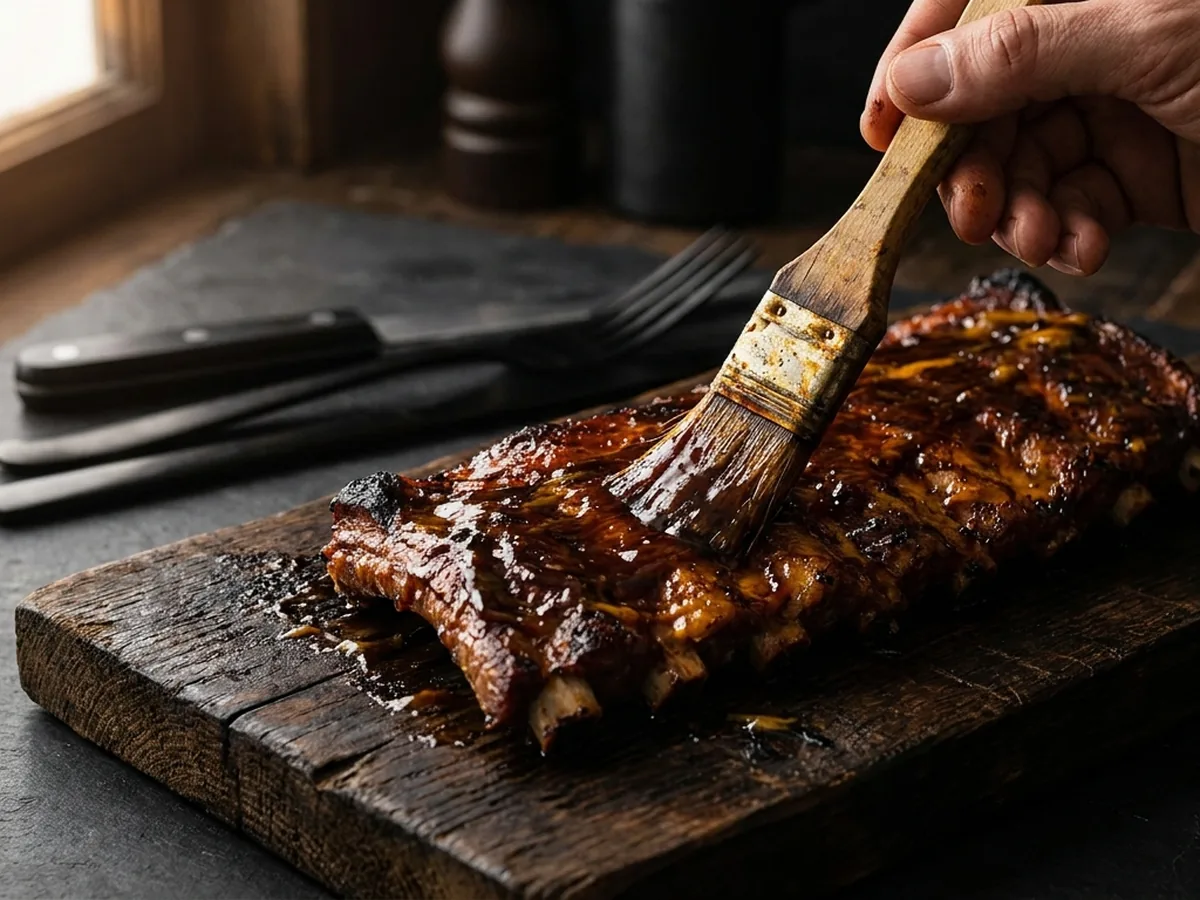
AI-generated illustration created for food.fast. It is not photographic evidence of a prepared batch.
TGI Friday's exports one recipe more than any other, and this is it. It goes on the ribs, the chicken and the sesame strips, and it is the reason people order the same dish for twenty years.
Its backbone is pineapple juice reduced hard - by at least half - which concentrates the sugars and the acid into something with real body. The soy and brown sugar sit on top of that, and the whiskey goes in at the end so it does not all cook away.
It is a long-ish recipe by the standards of this site - twenty-five minutes - and almost all of that is a pan reducing while you do something else.
The method gives quantities, timings and observable cues rather than asking you to guess. The 4 cases in If it goes wrong explain likely causes and corrective action; 1 ingredient note explains choices that materially affect the result.
See the recipe verification standard · See how the cost is calculated
Pineapple juice brings three things that no other single ingredient does: sweetness, a considerable amount of acid, and bromelain, a protease enzyme that breaks down protein.
That last one is why pineapple is a traditional meat tenderiser, and it is also why this glaze should not be used as a long marinade - leave meat in raw pineapple juice for hours and the surface turns unpleasantly mushy.
Cooking destroys bromelain at around 70 °C, so a reduced glaze has none of that problem. Another reason the reduction is not optional.
Reducing by half concentrates the sugars to the point where the glaze lacquers rather than runs. Unreduced, you have a thin sweet-salty liquid that soaks in and disappears.
Twenty minutes at a steady simmer, uncovered, in a wide pan - surface area is what drives evaporation, so a wide saucepan reduces far faster than a tall one.
Added at the start of a twenty-five minute simmer, essentially all the alcohol cooks off and most of the flavour with it. Added in the last two minutes, a small amount of alcohol remains and a great deal more of the vanilla and oak character does. If you would rather it were alcohol-free, simmer the whiskey in for the full time, or leave it out and add a quarter teaspoon of vanilla extract plus a drop of smoke flavouring.
Whisk and bring to a simmer. It will look thin and unpromising - there is a cup of juice in there that has to go.
About 4 minSteady, not violent. It should reduce by about half and darken noticeably. Stir every five minutes and scrape the base.
Stir it through and let it bubble for two minutes only.
About 2 minThrough a fine sieve, pressing the solids to get everything out. It thickens as it cools; judge it at room temperature.
About 30 minThis glaze contains a great deal of sugar, and sugar burns at around 170 °C. Timing is therefore everything.
Multiple thin coats with a couple of minutes between each builds a proper lacquer. One thick coat burns on the outside before it sets underneath.
Keep a clean portion back for the table before any brush touches raw meat.
Leave the whiskey out and add ¼ tsp vanilla extract plus two drops of liquid smoke at the end.
A full teaspoon of cayenne and a chopped fresh red chilli in the reduction.
Toss fried strips in the glaze and scatter with toasted sesame seeds and sliced spring onion.
Each entry names a likely cause as well as a correction, so the advice remains useful when equipment, ingredients or batch size differ.
The recipes that go with this one, or that use what you have just made.
Honey, hot sauce and adobo, simmered until it clings. Eight minutes and four ingredients that matter.
A thin, sharp, faintly smoky barbecue dip that is nothing like a thick American BBQ sauce. Eight minutes, one pan.
The chain's most ordered flavour, and the reason home versions taste dusty is that they skip the butter. Forty minutes.
A horseradish mayonnaise with a real kick, plus the onion technique it was designed for. Five minutes for the sauce.