Subway
Subway Double Chocolate Chip Cookie Copycat Recipe
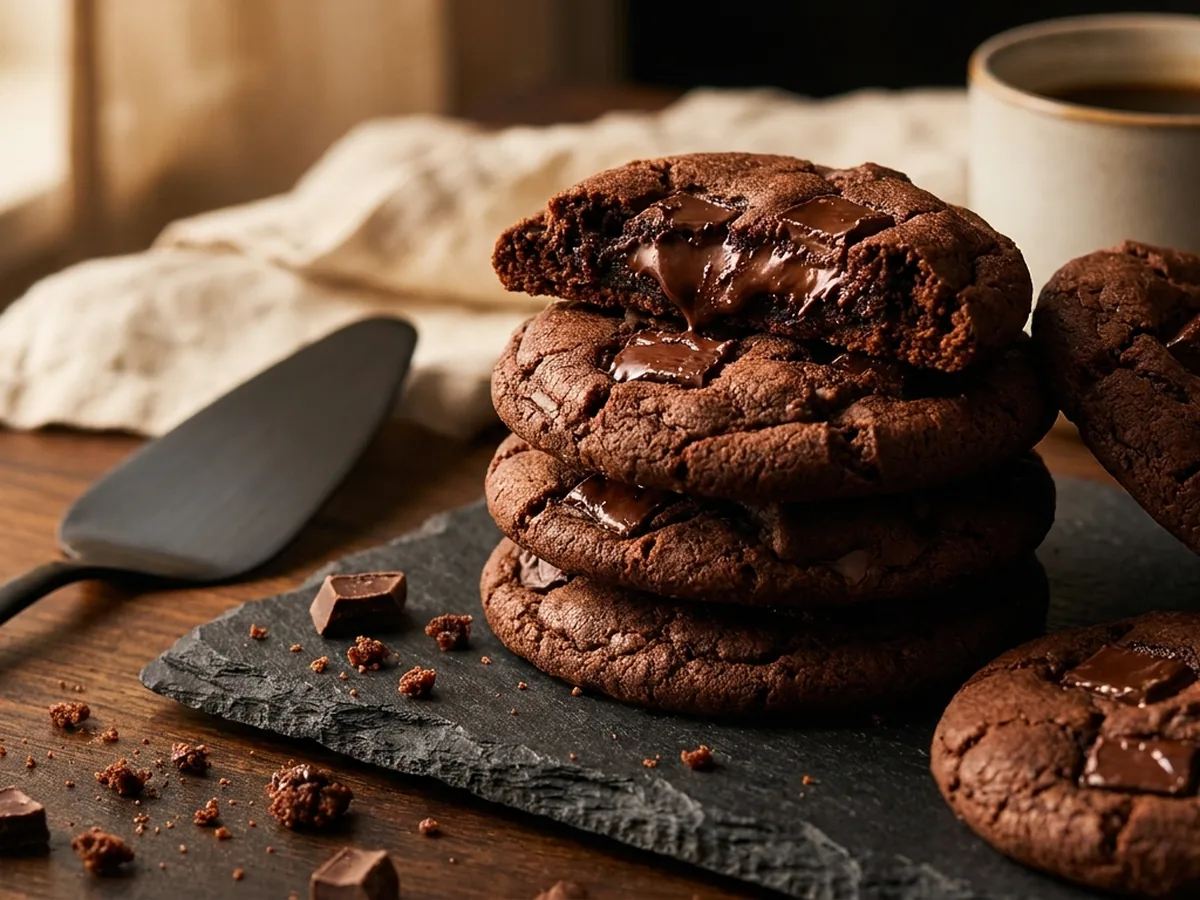
Thick, soft and deliberately under-baked so the middle stays molten. Twenty minutes, and the timing is the entire recipe.
 food.fast
Takeaway taste, kitchen prices
Edible Cookie Dough Needs Two Changes, Not One
Cookie dough chunks that are safe to eat and stay soft frozen.
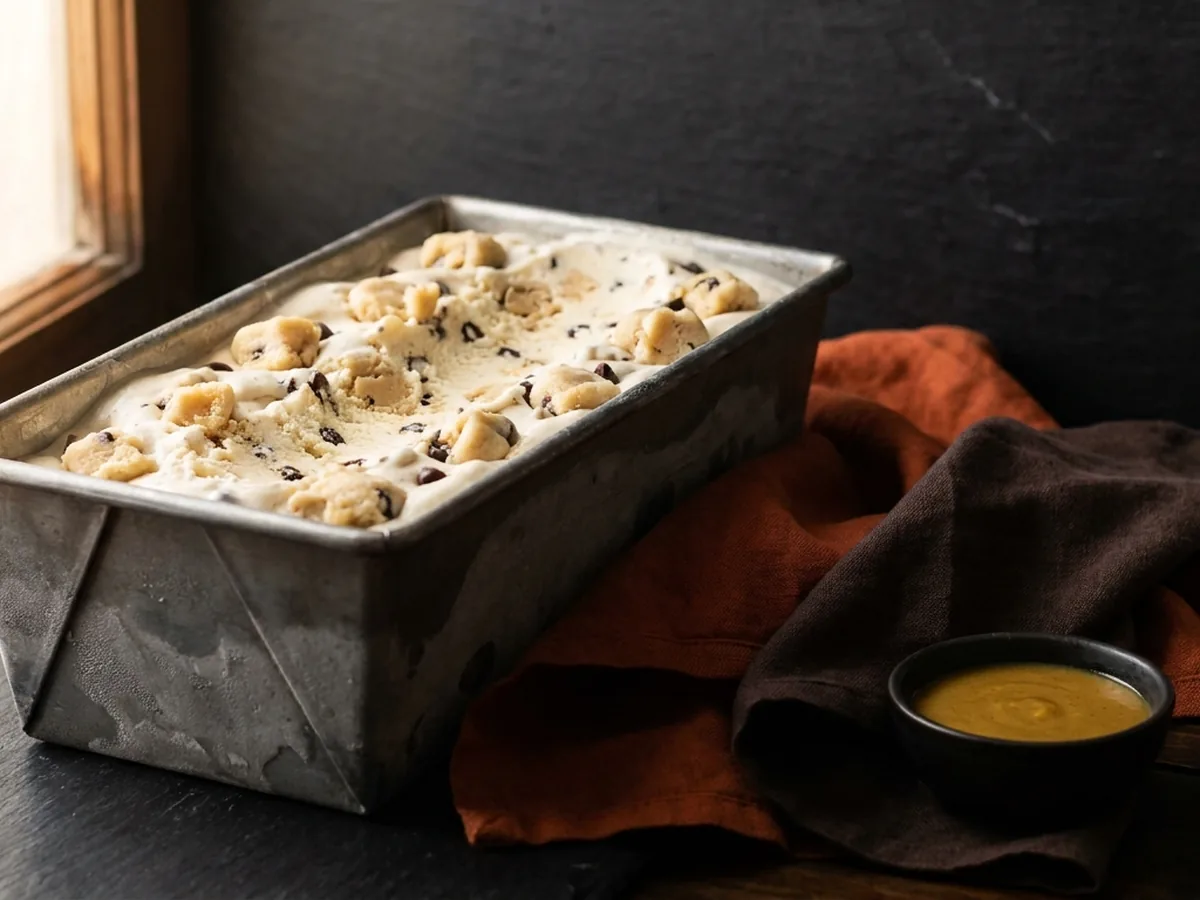
AI-generated illustration created for food.fast. It is not photographic evidence of a prepared batch.
Cookie dough for eating raw needs two changes from cookie dough for baking, and most recipes only make one of them.
The obvious one is the egg, which comes out. The one people miss is the flour: it is a raw agricultural product, it has been linked to E. coli outbreaks, and leaving the egg out does nothing about it. Eight minutes on a tray at 160 °C does.
The third consideration is texture. Ordinary cookie dough sets rock hard at freezer temperature. A little more brown sugar and a spoon of milk keep the chunks soft enough to bite.
The method gives quantities, timings and observable cues rather than asking you to guess. The 3 cases in If it goes wrong explain likely causes and corrective action.
See the recipe verification standard · See how the cost is calculated
Two levers, and both work by the same mechanism.
Brown sugar instead of some of the white. Brown sugar carries molasses, which is hygroscopic - it holds onto water and that water stays mobile at freezer temperatures instead of crystallising.
A tablespoon of milk. Ordinary cookie dough gets its moisture from egg. With the egg gone, the dough is drier than it should be and freezes harder.
Between them the chunks stay chewy rather than becoming small stones.
Egg does three things in a baked cookie: it binds, it adds moisture, and it sets as the cookie cooks. Only two of those matter in dough that is never going to see an oven.
The binding is handled by the butter and sugar, which is why creaming them properly matters more here than it would in a baked recipe - you are building the structure in the bowl rather than in the oven.
The moisture is replaced by the tablespoon of milk. Without it the dough is noticeably drier and crumblier than a baked cookie dough, and it freezes harder.
The setting is simply not needed. Nothing has to hold its shape through heat, so the dough can be softer than a baked one and still work.
Roll the dough into pieces about the size of a chickpea - roughly 1 cm. Larger and each mouthful is dominated by one lump; smaller and they vanish into the base.
Freeze the chunks solid on a tray before they meet the ice cream. Soft dough folded through a soft base smears and disappears. An hour on a lined tray in the freezer is enough, and they will keep loose rather than fusing.
Spread the flour on a tray and bake at 160 °C for eight minutes, stirring once. Cool completely - warm flour melts butter and the dough goes greasy.
About 8 minBeat the softened butter with both sugars until lighter in colour, then mix in the milk, vanilla and salt, then the cooled flour and chocolate chips.
About 6 minRoll roughly 1 cm balls onto a lined tray and freeze for an hour until hard. Soft dough folded into soft ice cream smears and disappears.
About 1 hrCream to soft peaks, vanilla stirred into the condensed milk, a third of the cream beaten in to loosen it, the rest folded through until even.
About 8 minAdd the dough pieces in the final few turns so they stay whole and distributed. Then freeze six hours under greaseproof paper.
About 6 hrEach entry names a likely cause as well as a correction, so the advice remains useful when equipment, ingredients or batch size differ.
The recipes that go with this one, or that use what you have just made.
Thick, soft and deliberately under-baked so the middle stays molten. Twenty minutes, and the timing is the entire recipe.
A sweet cream base flavoured with dry cake mix that has been heat-treated first. Ten extra minutes, and it is not optional.