Subway
Subway Italian Herbs and Cheese Bread Copycat Recipe
An enriched white dough baked in a shallow trough, finished with a herb and cheese blanket in the last four minutes. …
 food.fast
Takeaway taste, kitchen prices
The Cookie: Pulled Out Under-Baked, Every Time
A cookie that is still soft in the middle the next day, which is an oven-timer decision more than an ingredient one.
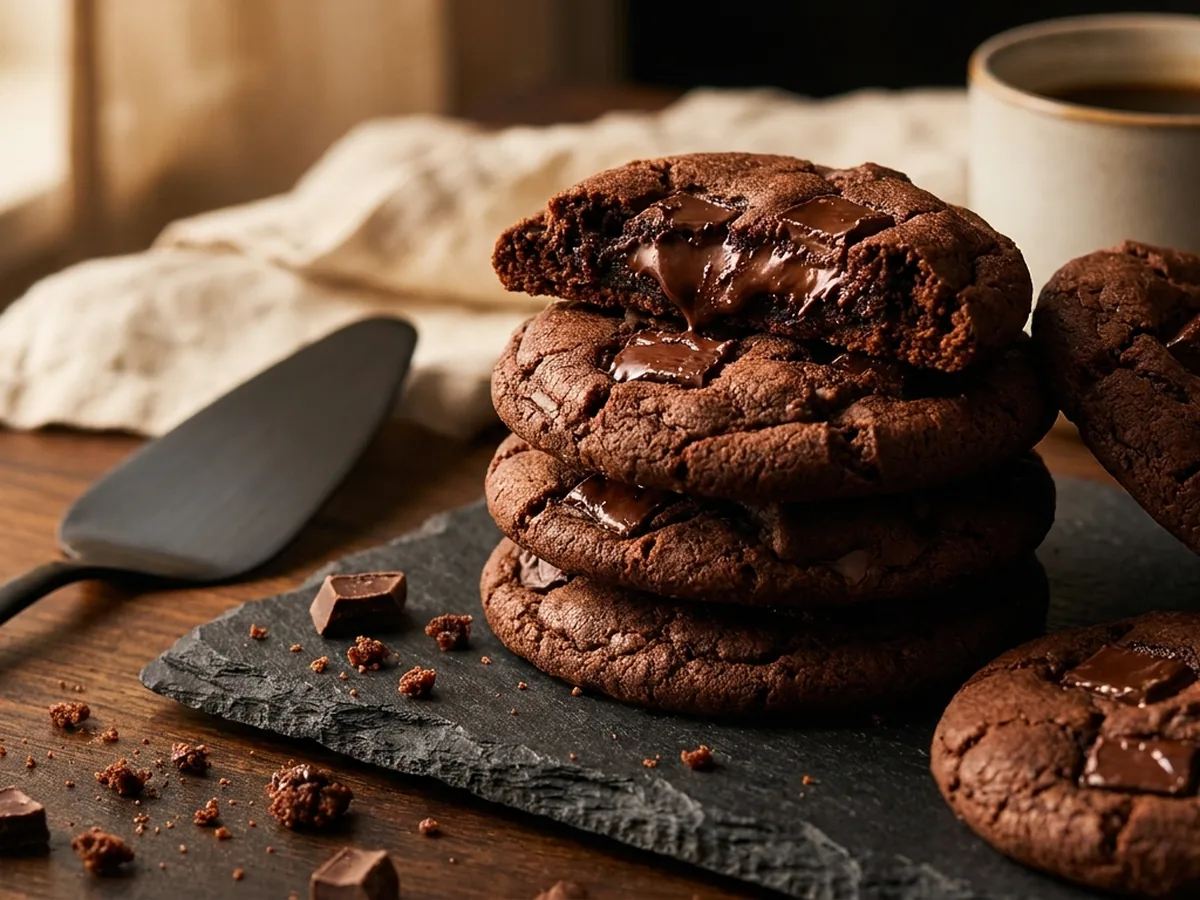
AI-generated illustration created for food.fast. It is not photographic evidence of a prepared batch.
Everything about a Subway cookie is engineered towards softness, and the most important decision is the one made at the oven door.
They come out at eleven minutes, when the edges are set and the middle still looks visibly wet and underdone. Left on the hot tray, residual heat finishes the centre without ever drying it, and the cookie sets as it cools into something soft all the way through.
Bake to what looks right - fifteen or sixteen minutes, evenly coloured, firm to a poke - and you have a good biscuit. Not this. This is a cookie that is structurally a bit of a failure and is much nicer for it.
The method gives quantities, timings and observable cues rather than asking you to guess. The 5 cases in If it goes wrong explain likely causes and corrective action; 2 ingredient notes explain choices that materially affect the result.
See the recipe verification standard · See how the cost is calculated
Brown sugar rather than white. Brown sugar contains molasses, which is hygroscopic - it actively pulls water out of the air and holds it. A cookie made mostly with brown sugar stays soft for days; the same cookie with white sugar goes crisp overnight. This recipe is three parts brown to one part white.
More flour than feels right, and a thicker ball. A thick cookie has a lower surface-area-to-volume ratio, so less water escapes during the bake. Spread-out thin cookies dry out; tall ones do not.
Under-baking. The obvious one and the most important. Water in the dough is what keeps it soft, and every extra minute in the oven drives more of it off.
There is a fourth, optional lever: cornflour. A tablespoon in place of a tablespoon of flour interferes with gluten development and gives a noticeably more tender, cakey crumb. It is in this recipe and it is one of the most useful tricks in home baking.
An hour in the fridge does three things.
The fat firms up, so the cookie spreads more slowly in the oven and stays thicker. Warm dough spreads into thin discs within four minutes.
The flour hydrates fully, which improves both texture and flavour - undissolved sugar and dry flour both taste flat.
The sugars begin to break down into simpler forms that brown more readily, so a chilled dough gives a deeper, more caramelised flavour.
An hour is the minimum that makes a visible difference. Twenty-four hours is noticeably better again, and seventy-two is where most bakers stop bothering to go further. If you are making these for somebody, make the dough the day before.
Yolk is fat, protein and emulsifier with very little water; white is mostly water. Adding a yolk without its white gives richness and chew without adding moisture that would turn to steam and puff the cookie up. This is a standard bakery trick and it is the difference between chewy and cakey.
Chocolate chips contain stabilisers that help them hold their shape in the oven, which is exactly what you do not want. A roughly chopped bar gives you large molten pools and fine shards that melt into the dough, and the texture is much more interesting.
Until visibly paler and fluffy. This is beating air in, and it is what gives the cookie its lift. Three minutes with beaters is longer than it feels.
About 3 minScrape the bowl down between each. If it looks curdled, the butter was too cold - keep beating and it comes together.
About 2 minFlour, cocoa, cornflour, bicarb and salt. Stop the moment you stop seeing dry flour. Over-mixing develops gluten and makes the cookies tough.
About 2 minCover the bowl. An hour minimum; overnight is better.
About 1 hrTwelve balls, well spaced on lined trays - they spread. Tall balls give thick cookies; flattened ones give thin ones.
About 5 minThe edges should be set and the middle should still look visibly wet and underdone. It will look wrong. Take it out anyway.
This is where the centre finishes cooking, gently, on residual heat. Moving them straight away means they will not set and will fall apart.
About 10 minScoop the whole batch into balls, freeze them on a tray until solid, then bag them. Three months.
Bake from frozen at 180 °C for thirteen minutes - two minutes longer than fresh - and they are indistinguishable from same-day cookies.
This is much better than freezing baked cookies, and it means fresh cookies in thirteen minutes with no work at all. It is also why a double batch is always the right decision here.
| Time | Out of the oven | When cool |
|---|---|---|
| 9 min | Very wet centre | Molten, collapses |
| 11 min | Edges set, middle wet | Soft throughout - this recipe |
| 13 min | Middle looks nearly done | Chewy with a firm edge |
| 15 min | Evenly coloured, firm | A good crisp biscuit, not this |
Leave out the cocoa, raise the flour to 260 g, and use 150 g white chocolate plus 80 g chopped macadamias.
No cocoa, 260 g flour, 150 g white chocolate and 60 g of freeze-dried raspberries folded in at the end.
Brown the butter first, cool it until it is solid again, then cream as usual. A nuttier, deeper cookie and an extra half hour.
Each entry names a likely cause as well as a correction, so the advice remains useful when equipment, ingredients or batch size differ.
The recipes that go with this one, or that use what you have just made.
An enriched white dough baked in a shallow trough, finished with a herb and cheese blanket in the last four minutes. …
An enriched dough, a filling that is a third cinnamon by volume, and a cream cheese frosting with a much higher chees…
A deliberately under-baked chocolate sponge with a liquid centre. Twenty minutes total, and the oven timer is the who…
A very soft enriched dough, a short proof, forty-five seconds a side, and a thin glaze applied immediately. The heat …