Starbucks
Starbucks Caramel Macchiato Copycat Recipe
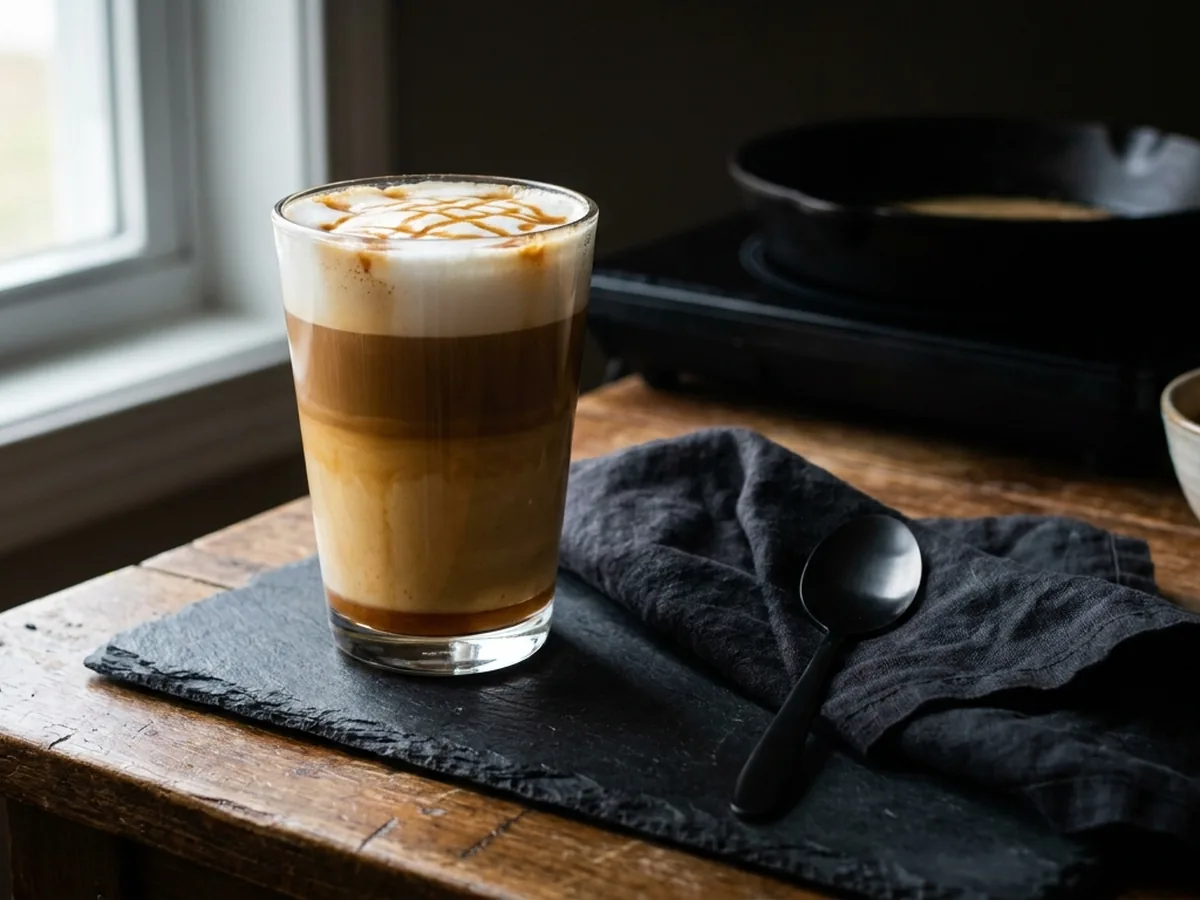
Vanilla syrup, milk, espresso poured last so it marks the foam, and a caramel drizzle. Two minutes once the syrup is made.
 food.fast
Takeaway taste, kitchen prices
The Flat White, and Why Costa's Tastes Heavier Than Everyone Else's
A flat white with body rather than froth, in under five minutes.

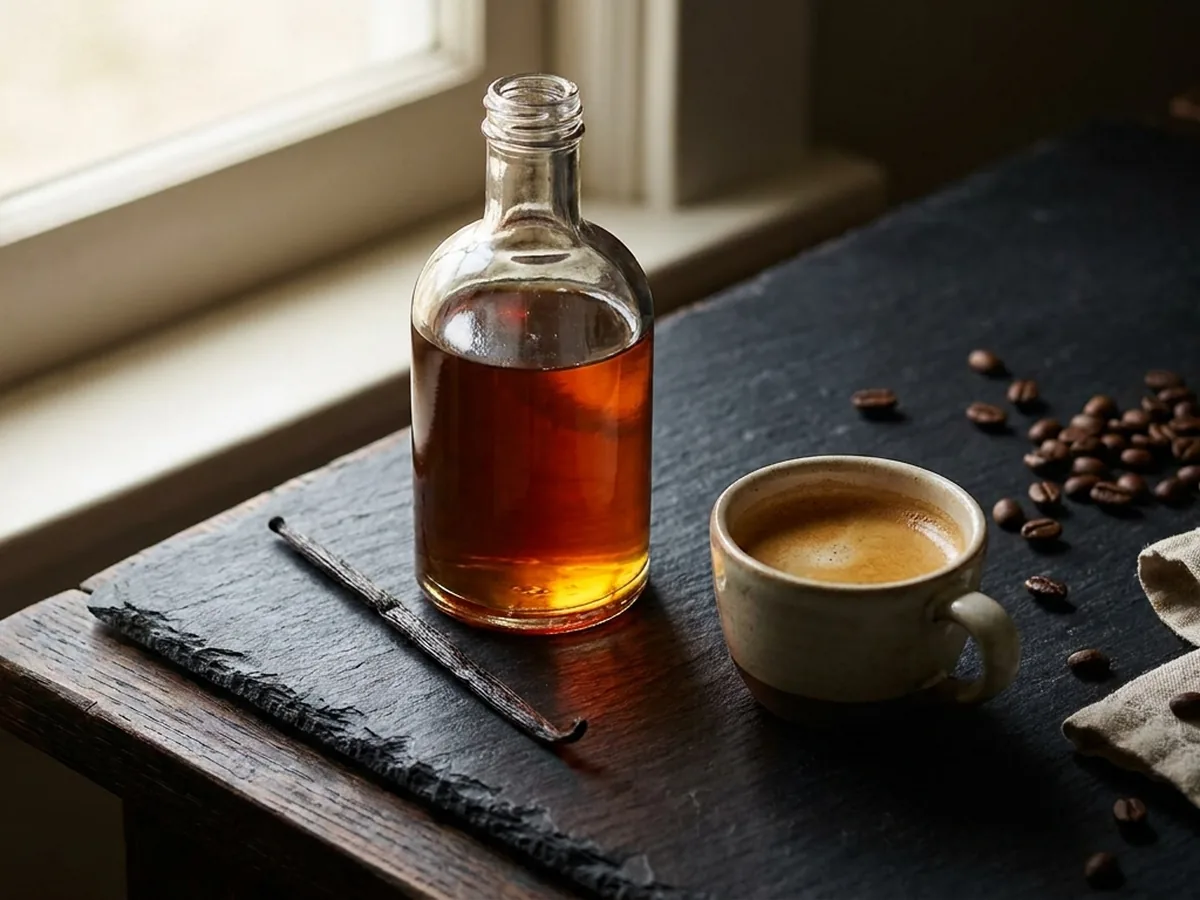
AI-generated illustration created for food.fast. It is not photographic evidence of a prepared batch.
A flat white is not a small latte and it is not a cappuccino without the chocolate. It is a specific ratio - a double ristretto against roughly 130 ml of milk - steamed to a texture the trade calls wet paint: glossy, pourable, with the bubbles so small you cannot see them individually. If you can spoon the foam off the top, it has been steamed like a cappuccino and the drink will taste thin.
What makes Costa's version taste like Costa's is the bean. Their house blend is roasted well past the third-wave standard, which strips out most of the fruit acidity and leaves cocoa, toasted nut and a frank bitterness. That bitterness is the point: it is the only thing that survives 130 ml of whole milk with anything to say.
So this recipe is really two instructions. Buy a dark roast, and steam the milk properly. Everything else is ratio, and the ratio is not hard.
The method gives quantities, timings and observable cues rather than asking you to guess. The 6 cases in If it goes wrong explain likely causes and corrective action; 2 ingredient notes explain choices that materially affect the result.
See the recipe verification standard · See how the cost is calculated
A ristretto is the same dose of coffee as an espresso, ground a touch finer, stopped at roughly half the liquid. Same grams in, less water out.
The consequence is not simply "stronger". Extraction happens in an order: acids and fruit come out first, then sugars and body, then the harsher compounds last. Cutting the shot short keeps the first two and leaves most of the third in the puck. You get a shot that is sweeter, thicker and less bitter, but far more concentrated.
In a flat white that matters more than in any other drink, because there is enough milk to drown a normal shot but not enough to hide a bad one. A ristretto has the density to stay present. Two of them, about 50 ml in total, against 130 ml of milk, is the whole recipe.
If your machine cannot pull a proper ristretto, pull a normal double and accept a slightly thinner drink. It is a better outcome than under-dosing.
Steaming milk does two separate things at once, and most people at home do only one of them.
Stretching is introducing air. The steam tip sits just under the surface and you hear a light, regular tearing sound. This is where foam comes from, and for a flat white you want very little of it - three or four seconds, no more, while the milk is still cold.
Texturing is spinning. Drop the tip deeper and angle the jug so the whole body of milk turns in a whirlpool. This breaks the big bubbles you just made into microfoam and folds them through the liquid instead of leaving them sitting on top. This is the part people skip, and it is the part that makes the difference.
Stop at 60-65 °C. Milk sugars taste sweetest just below 65 and scald above 70, and scalded milk in a drink this milk-forward is not recoverable. If you have no thermometer, the jug becomes uncomfortable to hold for more than two seconds at about the right point.
Swirl the jug on the counter before pouring. Properly textured milk looks like glossy emulsion paint and leaves no bubbles on the surface when you swirl it.
A moka pot and a French press. The moka pot gives you a concentrated, dark, slightly bitter coffee that is not espresso but is the closest cheap analogue, and it suits a dark roast particularly well. For the milk: heat it to 60 °C, put it in a French press, and pump the plunger fifteen to twenty times. The mesh does a genuinely respectable job of breaking bubbles down. This gets you perhaps 80 per cent of the way there.
An AeroPress and a jar. Pull a short, strong AeroPress with a fine grind and about 50 ml of water. Heat the milk, put it in a jam jar no more than a third full, screw the lid on tight and shake hard for thirty seconds, then microwave uncovered for twenty seconds to settle the largest bubbles. Rougher than the press method but it works.
Neither will give you a crema ring, and latte art is out of reach. The drink underneath will still be good.
Look for a bag that says Italian roast, continental roast, or simply dark roast, and check the beans themselves: they should be dark brown with a faint sheen of oil, not black and not tan. Black and shiny is over-roasted and tastes of ash. Tan is a light roast and will taste sharp and fruity in milk.
A blend with a proportion of robusta is closer to the original than a pure arabica. Robusta is coarser in flavour and carries roughly twice the caffeine, but it produces a heavier crema and a more persistent bitterness, which is exactly the Costa signature. Many Italian supermarket blends use it for this reason.
Grind immediately before pulling. Ground coffee loses most of its aromatic compounds within about fifteen minutes of grinding, and in a milk drink that loss is the difference between a coffee flavour and a coffee note.
Fat carries flavour and it stabilises foam. Whole milk at around 3.5 per cent gives microfoam that holds its texture for the two or three minutes it takes to drink the thing. Semi-skimmed foams more enthusiastically and collapses faster; skimmed produces a stiff, dry foam that sits on top like a hat and is wrong for this drink specifically.
Oat milk is the best non-dairy option here by a distance, and the barista versions are formulated with added fat and stabiliser precisely to texture like whole milk. They work. Soy foams well but curdles against a very acidic shot - less of a risk with a dark roast. Almond foams poorly and tastes thin against this much coffee.
Grind straight into the basket, then tap the side to settle it and level the surface with a finger before tamping. An uneven bed is the single most common cause of a sour, thin shot: water finds the loose channel and runs through it rather than through the coffee.
Press down with roughly 15 kg of force - lean on it with the weight of your arm rather than your shoulder - and check the surface is flat by eye. Lock the portafilter into the group and start the shot straight away; coffee sitting in a hot group head begins to bake.
About 1 minYou are looking for two ristretto shots, roughly 50 ml total, in 22 to 28 seconds from the pump starting. If it runs faster than that, grind finer. If it gags and drips, grind coarser. Adjust one variable at a time and only the grind - dose and tamp stay fixed.
Open the steam valve briefly into a cloth to clear condensed water, or you will dilute the milk. Put the tip just below the surface and open the steam fully. You want three or four seconds of a light tearing sound, no more - this is a flat white, not a cappuccino.
Drop the wand deeper and tilt the jug so the milk turns in a visible whirlpool. Hold it there. This is what folds the air you just added down into the body of the milk and turns coarse bubbles into microfoam. Keep going to about 60-65 °C, then cut the steam.
About 1 minTap the jug once on the counter to pop any surface bubbles, then swirl it steadily for ten seconds. The milk should look like glossy paint and move as one body. If you can see individual bubbles, swirl for longer.
Start pouring from about 10 cm above the cup into the centre of the crema - this puts the milk under the crema rather than through it. When the cup is about two thirds full, bring the spout right down to the surface and let the microfoam come through. Finish by lifting and cutting through the middle.
Every drink in this family is the same two ingredients in different proportions and different milk textures. Once you can see it laid out, the menu board stops being a mystery.
The thing worth noticing is that a flat white and a cappuccino contain almost the same amount of milk. What separates them is entirely what was done to it: a cappuccino is stretched for ten or twelve seconds and ends up a third foam, a flat white for three and ends up glossy throughout.
Dark roast and bitter are not the same thing, and the difference is worth understanding because it is where home attempts usually go wrong.
Good bitterness comes from the roast: cocoa, dark chocolate, toasted nuts, a dry finish. It is pleasant and it is what you are aiming for.
Bad bitterness comes from over-extraction: ashy, hollow, drying at the back of the throat, and it lingers unpleasantly. It comes from grinding too fine, running the shot too long, or water that is too hot.
If your drink tastes harsh, do not reach for a lighter bean. Shorten the shot first. Nine times in ten that is the whole problem.
| Drink | Coffee | Milk | Foam | Milk texture |
|---|---|---|---|---|
| Espresso | Double, 50 ml | None | None | - |
| Macchiato | Double, 50 ml | 15 ml | Thin | Stretched briefly |
| Cortado | Double, 50 ml | 60 ml | Minimal | Glossy |
| Flat white | Double ristretto, 50 ml | 130 ml | 2-3 mm | Wet paint |
| Cappuccino | Double, 50 ml | 120 ml | 20 mm | Stretched hard |
| Latte | Double, 50 ml | 220 ml | 5 mm | Lightly textured |
| Temperature | Result |
|---|---|
| Below 55 °C | Tastes flat and watery; the drink cools too fast |
| 60-65 °C | Sweetest point. Lactose reads as sugar. Aim here |
| 65-70 °C | Still fine, noticeably less sweet |
| Above 70 °C | Scalded. A cooked, papery note that does not go away |
Pull the shots over 60 ml of cold milk in a glass, then add ice. Do not steam anything - cold milk poured over ice keeps the drink from diluting.
Same shots, 60 ml of milk instead of 130. Sharper, far more coffee-forward, and the best test of whether your shots are actually good.
Decaf loses body, so use a dark roast decaf and pull it as a full double rather than a ristretto to compensate.
Use a barista oat milk and stretch for two seconds rather than four. Oat foams faster than dairy and overshoots easily.
Each entry names a likely cause as well as a correction, so the advice remains useful when equipment, ingredients or batch size differ.
The recipes that go with this one, or that use what you have just made.
Vanilla syrup, milk, espresso poured last so it marks the foam, and a caramel drizzle. Two minutes once the syrup is made.
Sugar, water, vanilla. Four minutes on the hob for a bottle that costs about forty pence and replaces a shelf of them.
Hot-brewed at double strength, chilled fast, and sweetened with syrup rather than granules. Five minutes plus chilling.
Dark coffee, condensed milk stirred in hot, evaporated milk poured over ice. Five minutes and about thirty pence a glass.