Starbucks
Starbucks Vanilla Syrup Copycat Recipe
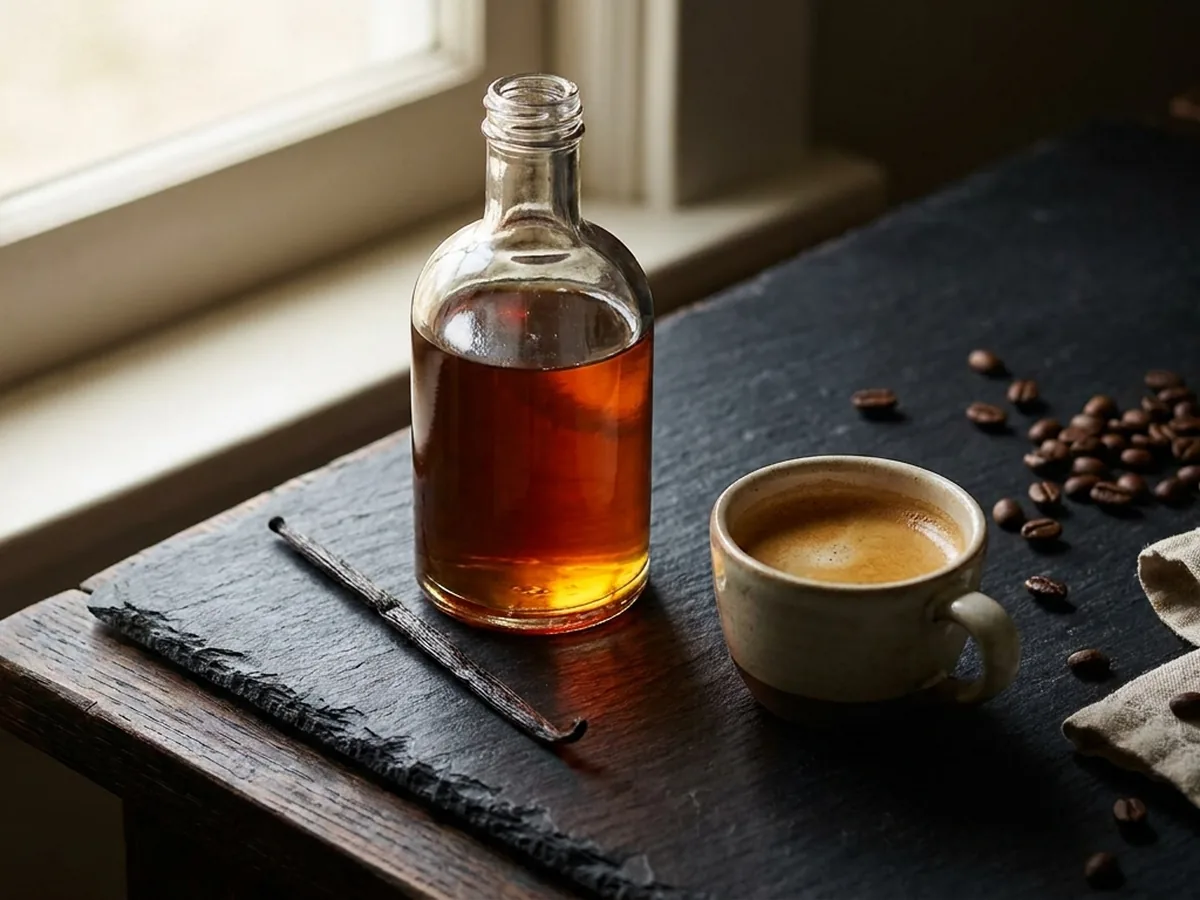
Sugar, water, vanilla. Four minutes on the hob for a bottle that costs about forty pence and replaces a shelf of them.
 food.fast
Takeaway taste, kitchen prices
The Caramel Macchiato, Built in the Order That Makes It Layer
The layered look, which is entirely about the order things go in.
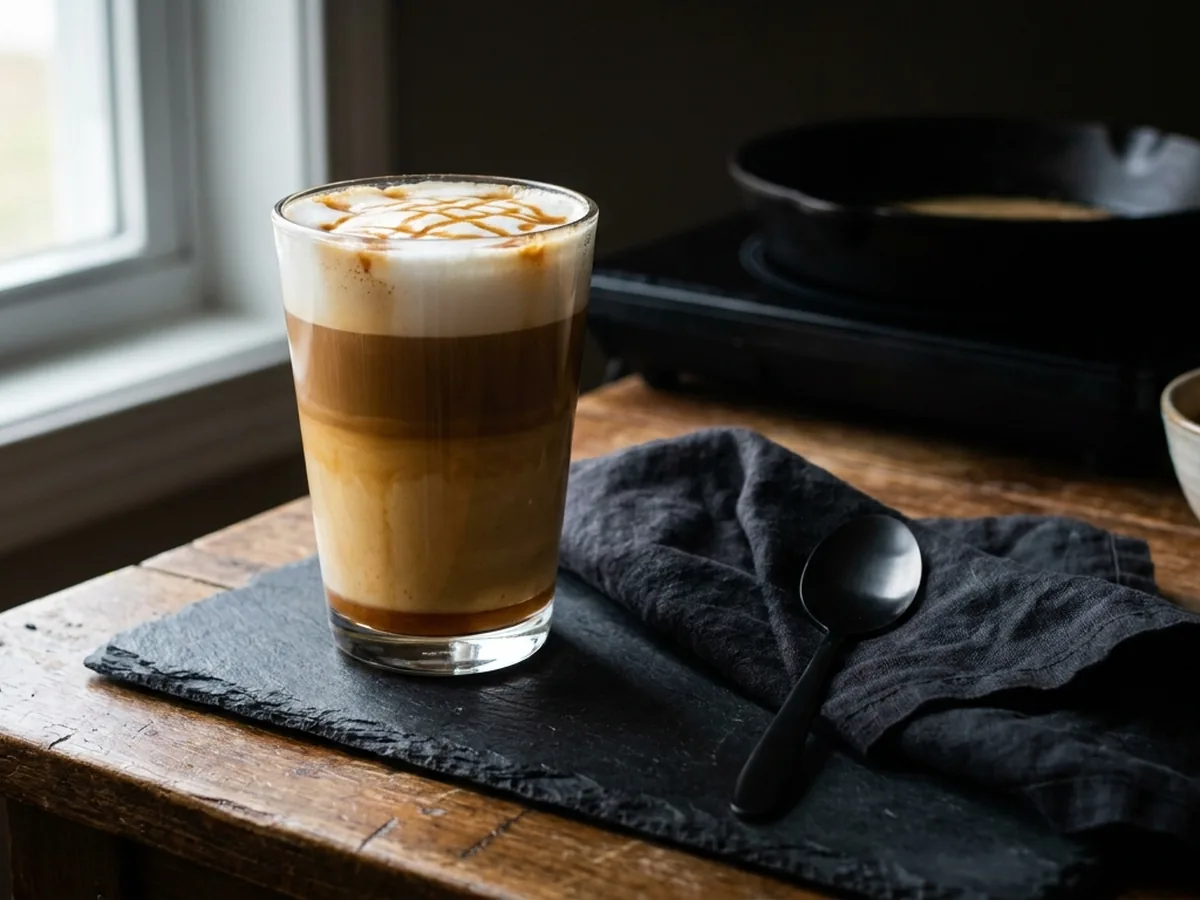
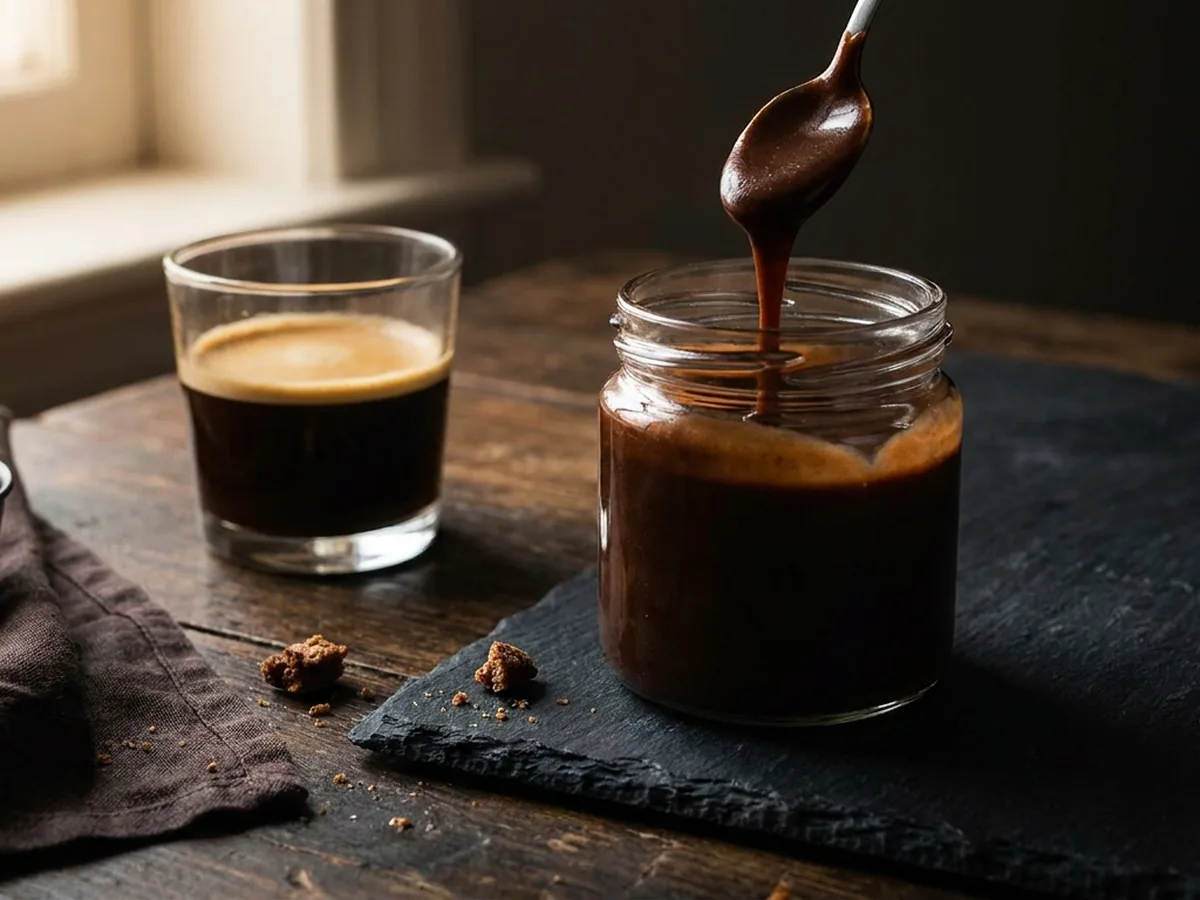
AI-generated illustration created for food.fast. It is not photographic evidence of a prepared batch.
Macchiato means marked or stained, and that is literally what this drink is: a cup of vanilla-flavoured milk with espresso poured through it so it marks the foam. The espresso goes in last, which is the opposite of every other milk drink and the reason a home version usually looks like a beige latte.
Beyond the order, there are two components: the vanilla syrup, which has its own page, and a caramel drizzle, which is here.
The drizzle is worth making properly. Shop caramel sauce is too thick and too sweet for this job; the one below is thinner, saltier and holds a crosshatch on top of foam instead of sinking through it.
The method gives quantities, timings and observable cues rather than asking you to guess. The 5 cases in If it goes wrong explain likely causes and corrective action.
See the recipe verification standard · See how the cost is calculated
In a latte, espresso goes in first and milk is poured through it, which mixes them completely. In a macchiato the milk goes in first and the espresso is poured gently through the foam, so it sits in visible layers with a dark cap on top.
The technique is to pour slowly, from a low height, into the centre of the foam. A fast pour from high up punches straight through and mixes everything.
The layers do not last - within two or three minutes the espresso has diffused and you have a latte. That is fine and it is what happens in the shop too. The layering is for the first look and the first sip, where you get a hit of concentrated coffee against sweet milk.
If you are drinking it iced, the layers hold much longer - cold liquids of different densities mix far more reluctantly, and an iced caramel macchiato will stay visibly layered for ten minutes.
A caramel drizzle is sugar cooked until it browns, then let down with cream. The whole difficulty is in the browning.
Do not stir it. Sugar and water in a pan, heat, and leave it entirely alone once it starts to colour. Stirring encourages crystals to form on the pan sides and seed the whole batch back into a grainy mess. Swirl the pan instead if you need to even it out.
Take it off the heat when it is one shade lighter than you want. Caramel carries on cooking in a hot pan for another twenty or thirty seconds, and the line between amber and burnt is narrow. Bitter caramel is not rescuable.
The cream will erupt. Adding cold cream to 170 °C sugar produces a violent burst of steam. Take the pan off the heat, add the cream in three additions, and stand back. Warming the cream first makes it much calmer.
Swirl the pan gently to wet all the sugar at the start, then leave it. It will bubble, go clear, then slowly start to colour at the edges.
About 6 minRoughly the colour of a copper coin. It will darken further off the heat. If it starts to smoke, it has gone.
About 1 minIt will bubble violently. Add a third, let it settle, whisk, repeat. Then the butter, the salt and the vanilla.
It thickens as it cools. If it is too thick to drizzle when cold, warm it with a teaspoon of water.
About 20 minOne tablespoon. It sits at the bottom and is the first thing the milk hits.
About 1 minFill to about 2 cm from the top with milk, leaving a good centimetre of foam floating on top. The foam is what the espresso is going to mark.
About 2 minLow and slow, into the middle. You should see it sink through and sit as a distinct dark band.
About 1 minTwo teaspoons, drizzled in lines one way then the other. Onto the foam, not stirred in.
About 1 minVanilla syrup in the bottom of a tall glass, then cold milk to about two-thirds, then ice, then espresso poured slowly over the back of a spoon held just above the surface.
The spoon is the trick and it makes a visible difference - it breaks the fall of the espresso so it spreads across the surface instead of punching down through the milk. The same technique is used for layered cocktails.
Cold liquids mix much more reluctantly than hot ones, so an iced caramel macchiato stays sharply layered for ten minutes or so. It is a considerably more impressive-looking drink than the hot version and takes the same two minutes.
Double the flaky salt in the drizzle to a full teaspoon. Better, and closer to what most people actually want.
Hazelnut syrup in place of vanilla. The caramel still works.
60 ml of moka pot coffee or a double-strength AeroPress shot. Pour it just as carefully - it layers just as well.
Each entry names a likely cause as well as a correction, so the advice remains useful when equipment, ingredients or batch size differ.
The recipes that go with this one, or that use what you have just made.
Sugar, water, vanilla. Four minutes on the hob for a bottle that costs about forty pence and replaces a shelf of them.
Cocoa, sugar and condensed milk cooked into something that clings. Eight minutes, and the reason home mochas taste thin.
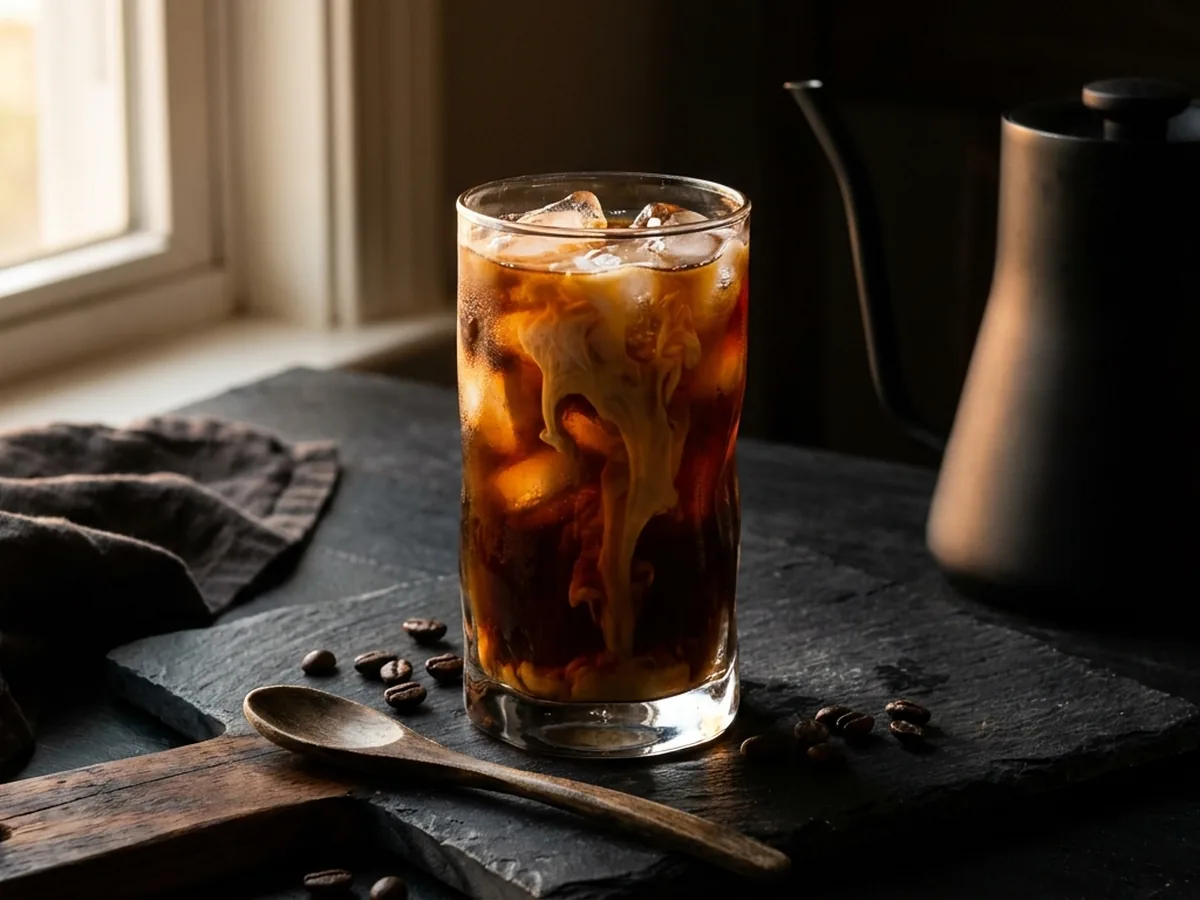
Coffee steeped in cold water for sixteen hours, and a frothed vanilla cream that cascades through it. Five minutes of work.
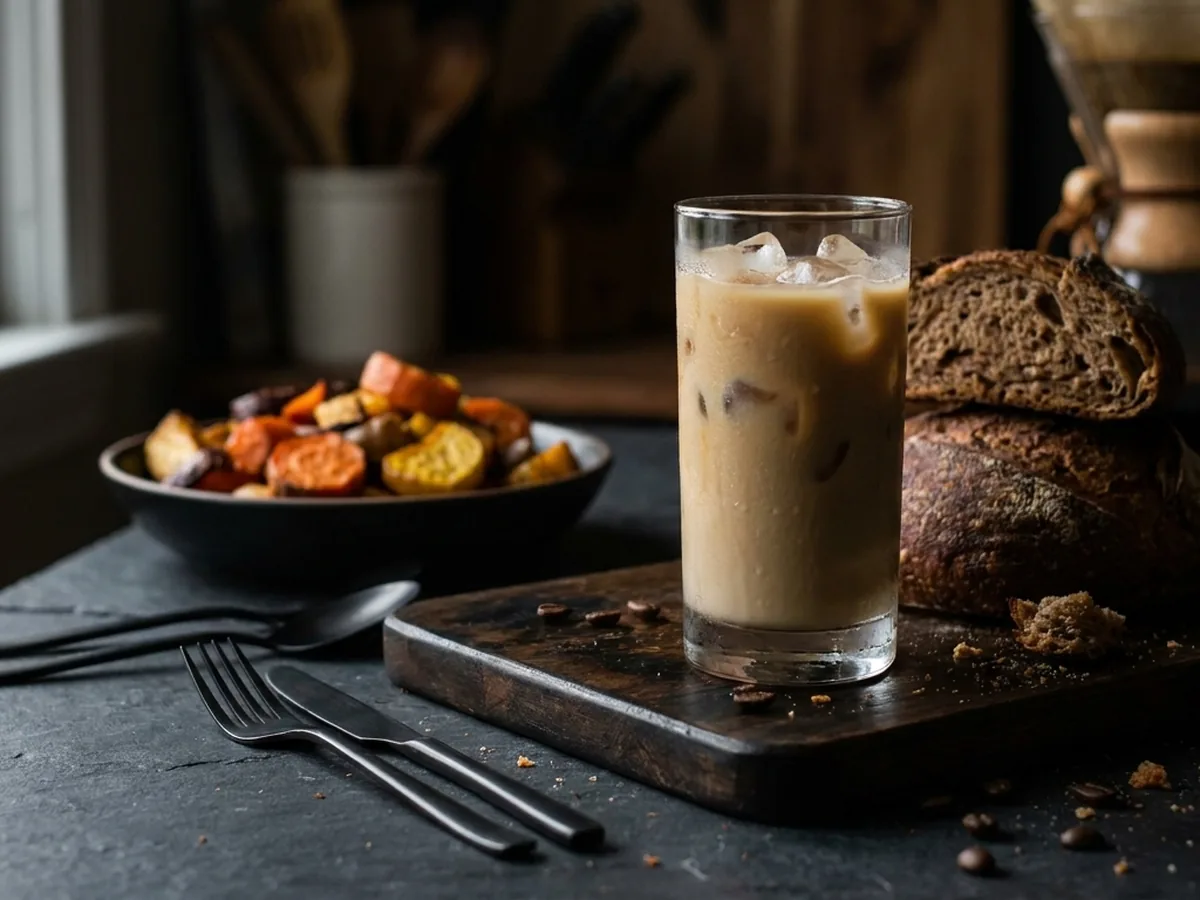
Hot-brewed at double strength, chilled fast, and sweetened with syrup rather than granules. Five minutes plus chilling.