KFC
KFC Original Recipe Fried Chicken Copycat
Buttermilk brine, a double dredge with a rest, and controlled shallow frying. Honest about the one thing a home kitch…
 food.fast
Takeaway taste, kitchen prices
The Dark, Peppery Gravy That British Branches Are Actually Known For
Gravy dark enough and peppery enough that people ask what is in it.
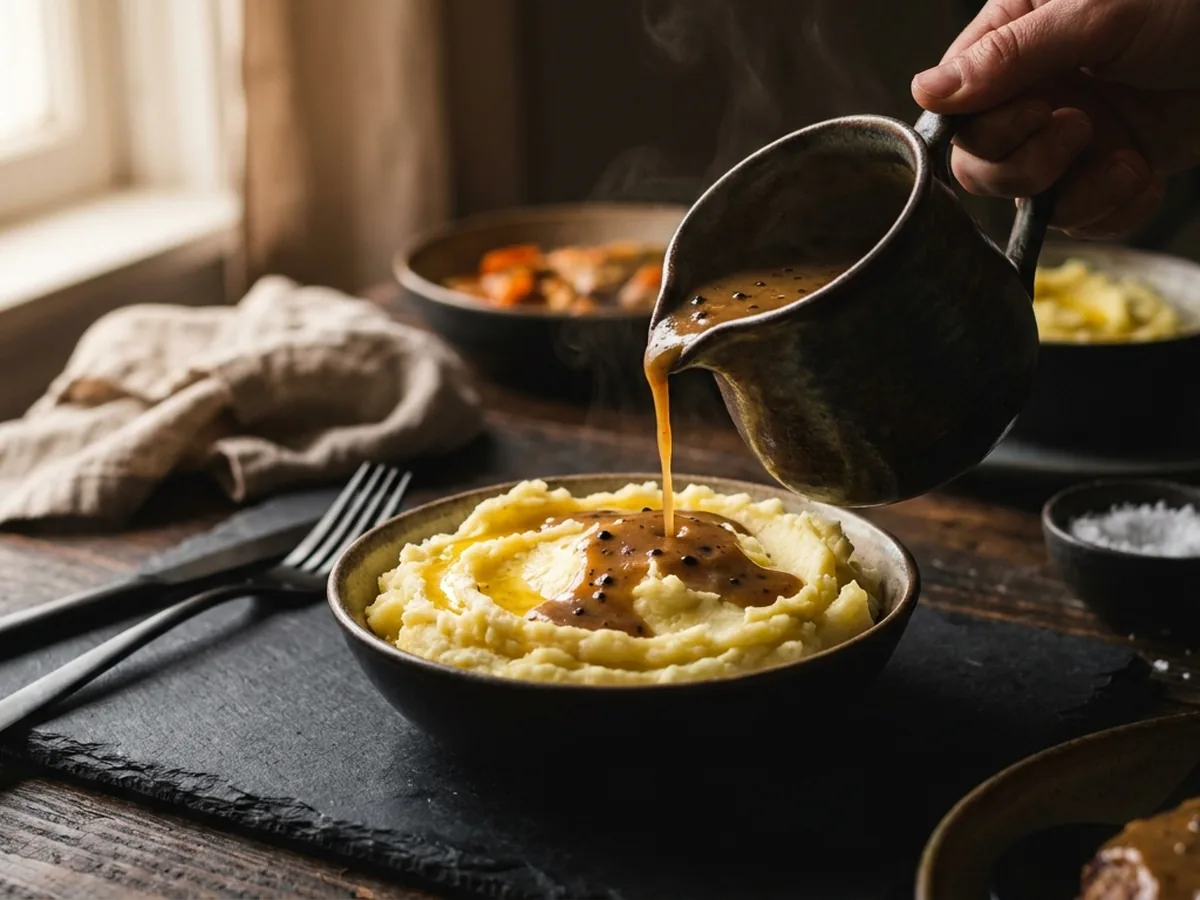
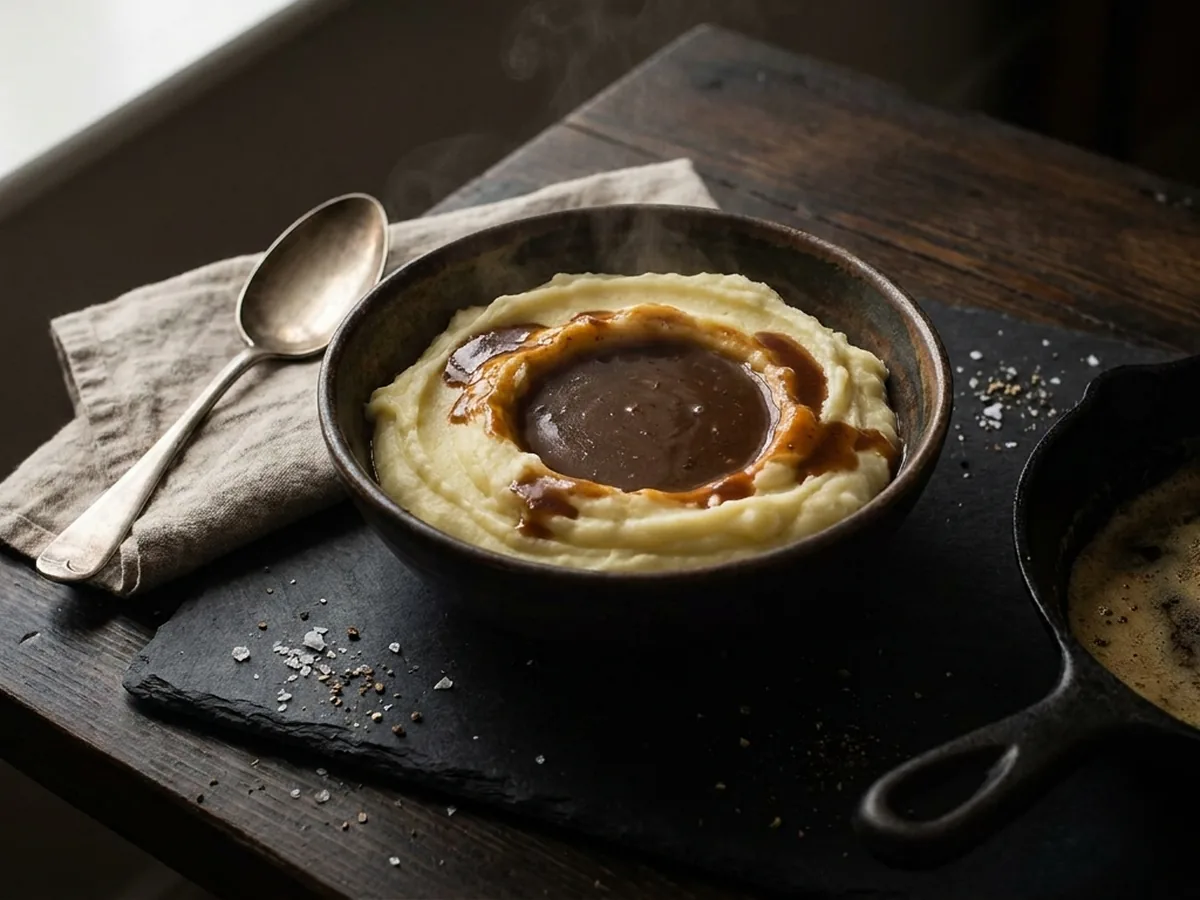
AI-generated illustration created for food.fast. It is not photographic evidence of a prepared batch.
In Britain and Ireland this gravy has a following that borders on the unreasonable. People order it on its own. There is a persistent rumour that it is made from the crackling and scrapings left in the fryer, which the company has neither confirmed nor especially discouraged, and which is plausible enough that it has become part of the folklore.
What is certainly true is that it is much darker and much more peppery than a British roast-dinner gravy, and that the darkness is a cooked roux rather than a bottle of gravy browning. Getting that roux right is ninety per cent of this recipe and it is the step people rush.
The other ten per cent is pepper. Whatever amount you think is right, it is more than that. This gravy should have a distinct peppery bite on the finish - if it tastes like Sunday gravy, it is under-peppered.
The method gives quantities, timings and observable cues rather than asking you to guess. The 5 cases in If it goes wrong explain likely causes and corrective action.
See the recipe verification standard · See how the cost is calculated
A roux is flour cooked in fat, and its colour tells you two things at once: how much nutty, toasted flavour it has developed, and how much thickening power it has lost. Those move in opposite directions, which is why gravy recipes are specific about the shade.
You want a peanut-butter brown - well past blond, well short of chocolate. On a medium heat with constant stirring that takes six to eight minutes, and the smell changes before the colour does: raw flour smells of paste, and at about five minutes it turns distinctly biscuity. That smell is your first signal.
Two things go wrong here:
Because a darker roux thickens less, this recipe uses slightly more flour than a pale gravy would. That is deliberate, not an error.
The ideal version of this uses the fat and browned bits left from frying chicken. If you have just made the fried chicken, pour off all but three tablespoons of the oil, scrape the base, and build the roux in that pan. It is the single biggest upgrade available and it costs nothing.
If you have not, the substitute is a good chicken stock plus two things that put back what the fryer would have contributed:
Butter works as the fat but chicken fat or a neutral oil is closer. Butter browns faster than oil, so if you use it, watch the roux a minute earlier than the timings say.
Medium heat. Add the flour and whisk immediately - it will look like wet sand and then come together into a paste.
About 1 minSix to eight minutes. It will go from pale to sandy to biscuit to peanut butter, and the smell will turn toasty around the five-minute mark. Do not walk away and do not raise the heat.
The first addition will seize and hiss and look wrong. Keep whisking and it will come smooth before you add the next. Cold stock into a hot roux is the classic route to lumps - use it hot.
About 3 minCrumbled cube, soy, Worcestershire, both peppers, onion and garlic powder. Simmer gently, whisking occasionally, until it coats the back of a spoon.
About 5 minThe stock cube brings a lot of salt, so season at the end or not at all. Then taste for pepper - it should leave a distinct warm bite at the back of the throat. If it does not, add another half teaspoon.
About 1 minThis gravy is thicker than a roast gravy and thinner than a sauce, and it sits in different places depending on the job:
It thickens further as it cools and again when reheated, so make it a touch looser than you want it. A splash of hot water brings it back every time.
This gravy is carried by the roux, the pepper and the seasoning rather than by the chicken, which means a vegetarian version is genuinely close rather than a sad approximation.
Use butter or a neutral oil for the roux, a good vegetable stock plus a vegetable stock cube, and add a teaspoon of yeast extract (Marmite or similar) with the soy sauce. The yeast extract is doing the savoury-depth job that chicken fat would otherwise do, and half a teaspoon is enough to be noticed while a full teaspoon is enough to be identified - use the full one.
A teaspoon of mushroom ketchup, if you have it, is even better and less identifiable.
| Stage | Time | Colour | Thickening | Use |
|---|---|---|---|---|
| White | 2 min | Pale, no colour | Strongest | Béchamel, cheese sauce |
| Blond | 4 min | Straw | Strong | Velouté, pale gravies |
| Peanut butter | 7 min | Mid brown | Moderate | This gravy |
| Chocolate | 12 min | Dark brown | Weak | Gumbo, where flavour beats thickening |
After frying chicken, pour off all but three tablespoons of oil and build the roux in the same pan, scraping the base as you go. This is the best version of this recipe by a clear margin.
Butter, vegetable stock and stock cube, plus a teaspoon of yeast extract with the soy. Genuinely close.
Thicken slightly and add a tablespoon of cider vinegar at the end. The acid is what makes it work against cheese curds.
Each entry names a likely cause as well as a correction, so the advice remains useful when equipment, ingredients or batch size differ.
The recipes that go with this one, or that use what you have just made.
Buttermilk brine, a double dredge with a rest, and controlled shallow frying. Honest about the one thing a home kitch…
Deliberately softer and smoother than a British mash, seasoned to be eaten with gravy rather than alone. Twenty-five …
Chopped to rice-grain size rather than shredded, dressed sweet and sharp, and left overnight. Fifteen minutes of work.
A dark roux gravy with soy and more black pepper than seems reasonable. Fifteen minutes.