KFC
KFC Gravy Copycat Recipe
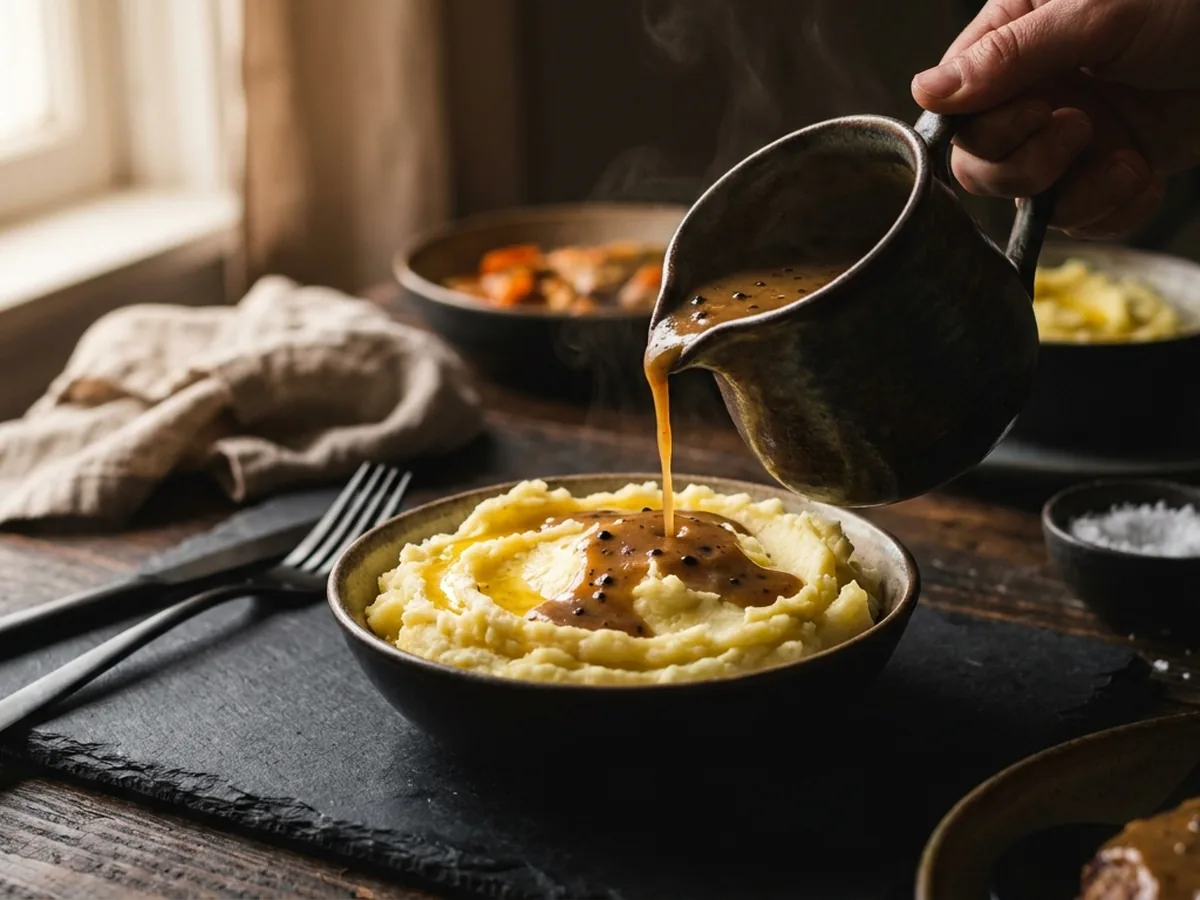
A properly dark roux, chicken stock and a genuinely startling amount of black pepper. Fifteen minutes, and the colour…
 food.fast
Takeaway taste, kitchen prices
The Smooth, Soft Mash Underneath the Gravy
Mash with a slack, spoonable texture that holds a pool of gravy without absorbing it instantly.
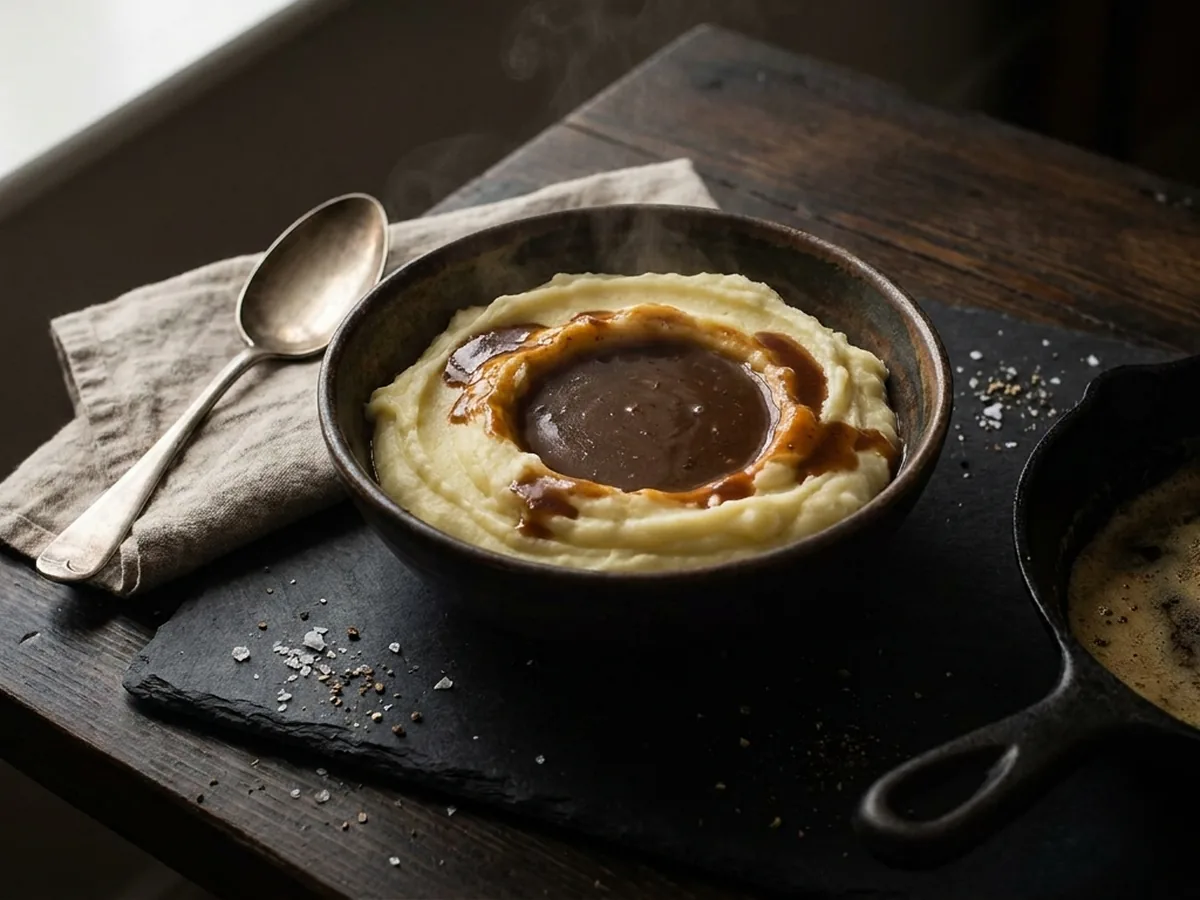
AI-generated illustration created for food.fast. It is not photographic evidence of a prepared batch.
This is a mash designed around a sauce, and it is worth saying so at the start because it explains everything that is different about it. It is looser than a British roast-dinner mash, smoother, less buttery, and seasoned more lightly - because it is going to have a very dark, very peppery gravy poured over it.
Made to the standards of a good side-dish mash it would be under-seasoned and slightly bland. Made to sit under that gravy it is exactly right, and a richer, firmer mash would fight with it.
The technique that matters is warm liquid and a ricer. Cold milk into hot potato makes mash gluey; a masher or a fork leaves lumps that this particular dish should not have.
The method gives quantities, timings and observable cues rather than asking you to guess. The 4 cases in If it goes wrong explain likely causes and corrective action.
See the recipe verification standard · See how the cost is calculated
Potatoes fall into floury and waxy. Floury varieties - Maris Piper, King Edward, Russet, Agria - have more starch and less water, and their cells separate cleanly when cooked, which is what gives a light mash. Waxy potatoes hold together and go dense and slightly gluey however you treat them.
The processor point is not fussiness, it is chemistry. Potato starch granules are held inside cells. A ricer or a masher breaks the cells apart and leaves the granules mostly intact. A blade in a food processor ruptures the granules themselves and releases free starch into the mix, which hydrates into a sticky paste. Thirty seconds in a processor turns good mash into wallpaper glue, and nothing reverses it.
A potato ricer costs about ten pounds and is the single best tool for this. A mouli or a fine sieve and a spatula also work. A masher works but leaves texture this recipe does not want.
Even 4 cm pieces, covered by 3 cm of cold water, a tablespoon of salt. Bring to the boil, then simmer. Starting in boiling water cooks the outside to mush before the middle is done.
About 18 minA blade should slide in and out with no resistance at all. Under-cooked potato will not rice and will leave hard flecks through the mash.
About 1 minBack into the dry pan over a low heat, shaking occasionally. Steam should visibly rise. Wet potato makes watery mash, and this minute removes a surprising amount.
Just to steaming, not boiling. This is the step that prevents gluey mash more than any other.
About 2 minRice straight back into the pan. Pour in about two-thirds of the warm liquid and fold gently with a spatula. Add more until it is slacker than a British mash - it should slump slowly rather than hold a peak.
Salt, white pepper and onion powder. Taste a spoonful on its own and then a spoonful with a little gravy - the second one is the one that matters.
About 1 minMash sitting in a pan on a low heat forms a skin and then a crust, and stirring the crust back in gives you lumps of dried potato through the middle.
The way to hold it is a bowl over a pan of barely simmering water, covered, with an extra splash of warm milk folded in every fifteen minutes. That will keep it right for an hour.
If it has already stiffened, warm milk fixes it. Add it a tablespoon at a time off the heat and fold - never beat a cold, stiff mash back to life, because that is exactly the condition in which it turns elastic.
Double the butter, use cream in place of half the milk, and season harder. No longer a gravy vehicle but a very good mash.
Oat milk and a good plant butter work well. Soy milk can curdle against hot potato - oat does not.
Leave a third of the potatoes unpeeled and mash rather than rice. Completely different dish, very good under the same gravy.
Each entry names a likely cause as well as a correction, so the advice remains useful when equipment, ingredients or batch size differ.
The recipes that go with this one, or that use what you have just made.
A properly dark roux, chicken stock and a genuinely startling amount of black pepper. Fifteen minutes, and the colour…
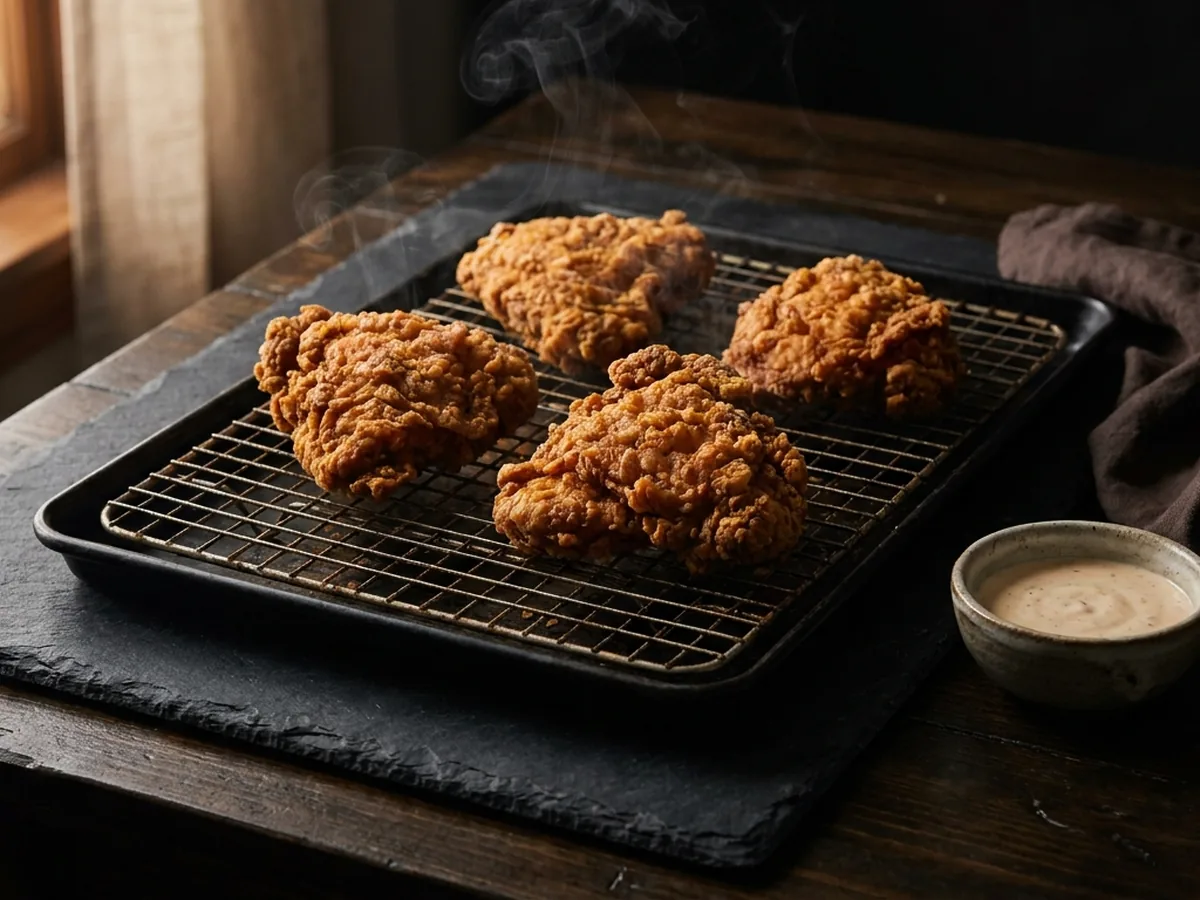
Buttermilk brine, a double dredge with a rest, and controlled shallow frying. Honest about the one thing a home kitch…
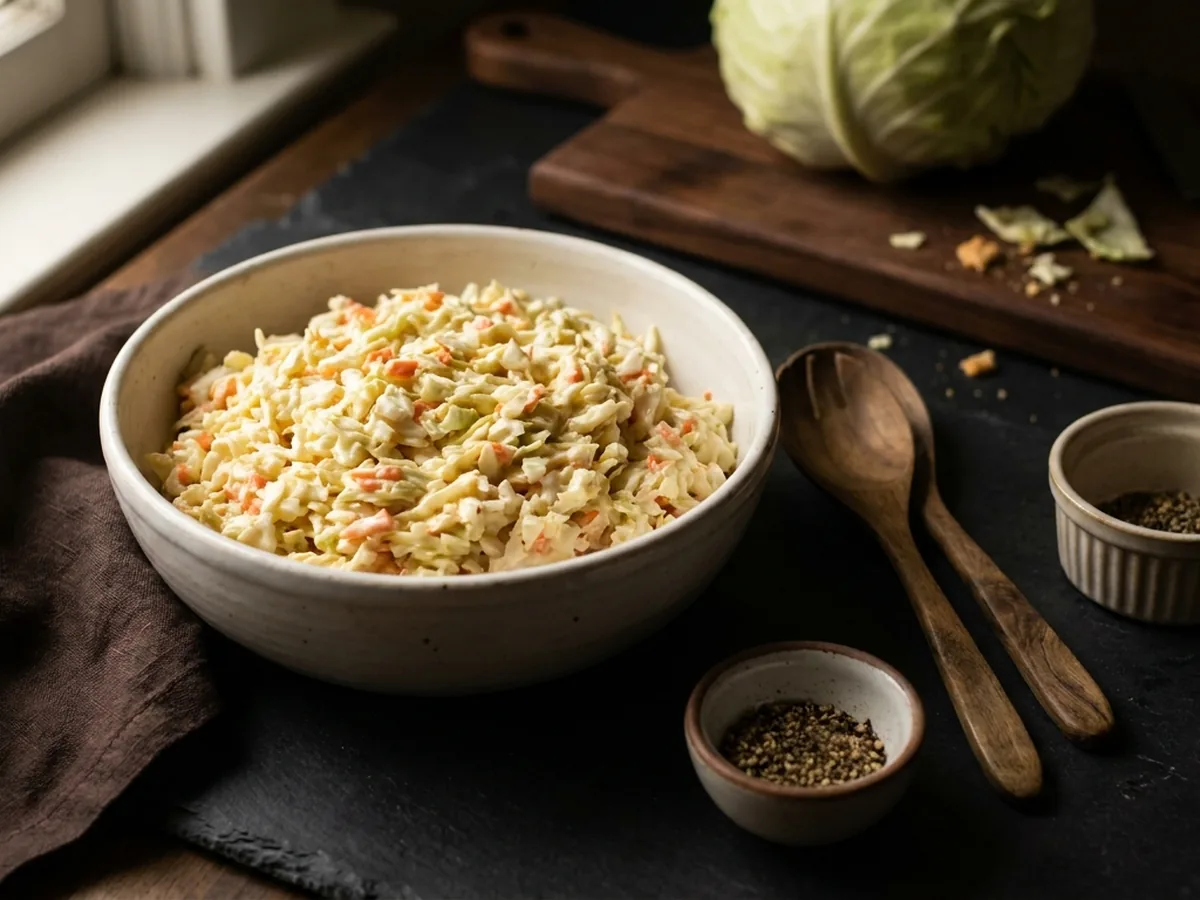
Chopped to rice-grain size rather than shredded, dressed sweet and sharp, and left overnight. Fifteen minutes of work.
Browned breakfast sausage, a roux in its own fat, milk and a startling amount of black pepper. Fifteen minutes.