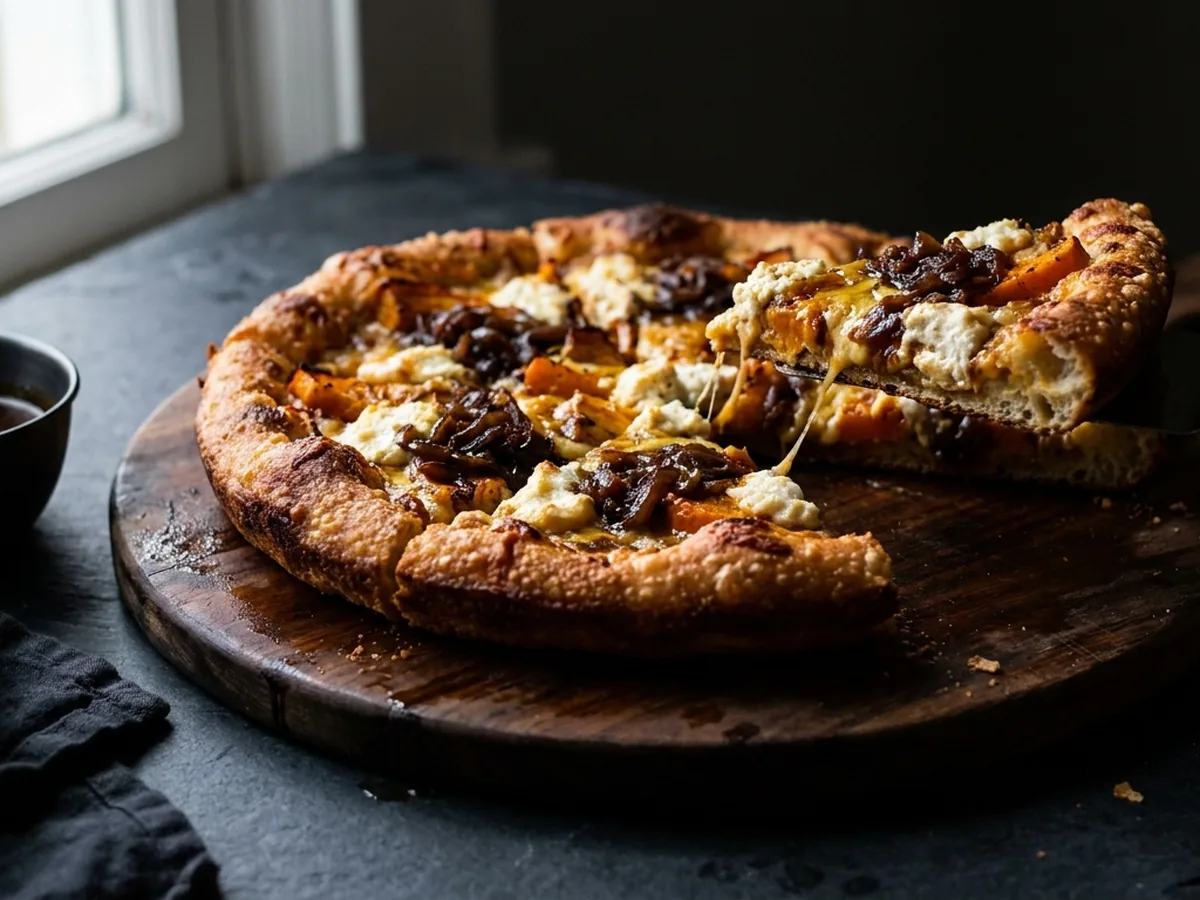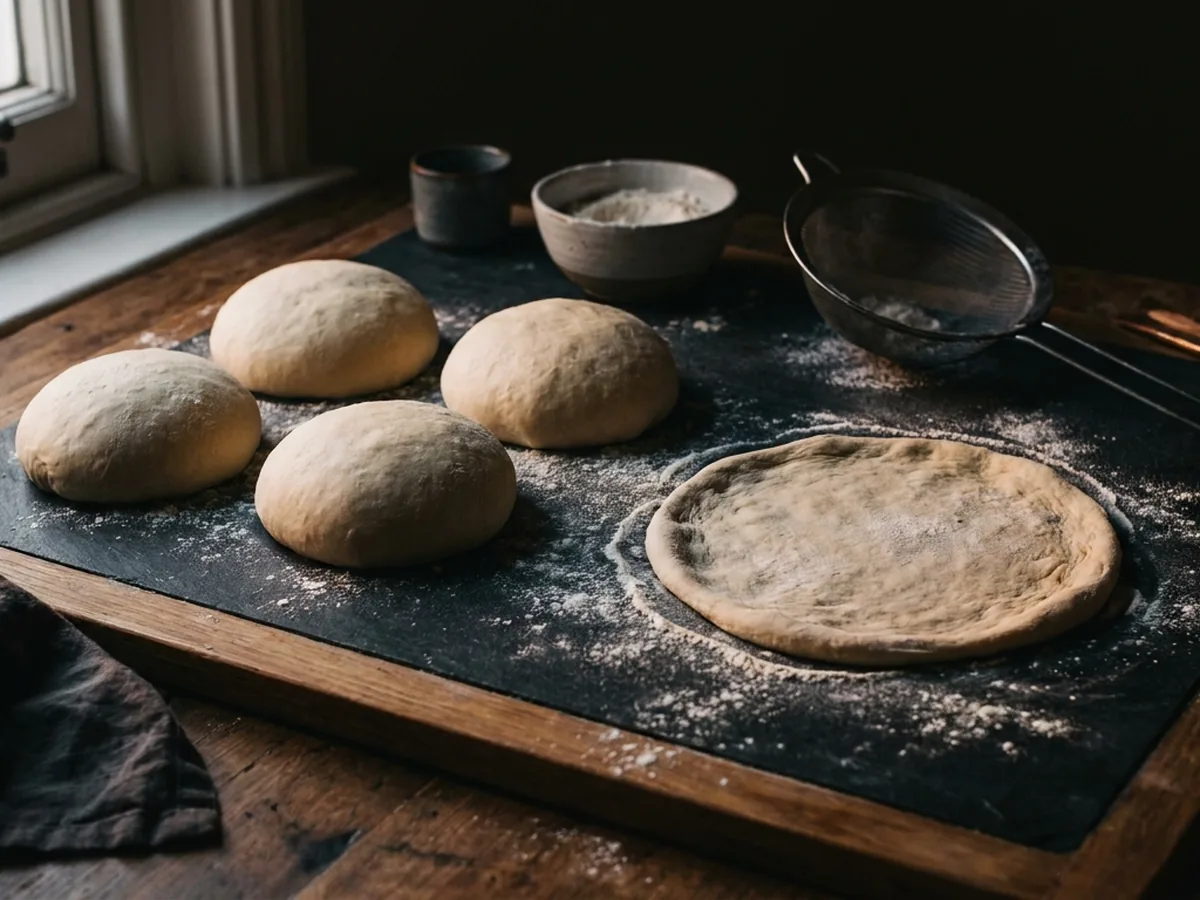
Domino's Pizza
Domino's Pizza Dough Copycat Recipe
A pressed rather than tossed dough, cold-fermented for two days. Fifteen minutes of work, and the fridge does the rest.
 food.fast
Takeaway taste, kitchen prices
The Pan Base Is Fried, Not Baked, and That Is the Whole Trick
A pan base with a fried, crunchy underside rather than a bready one.
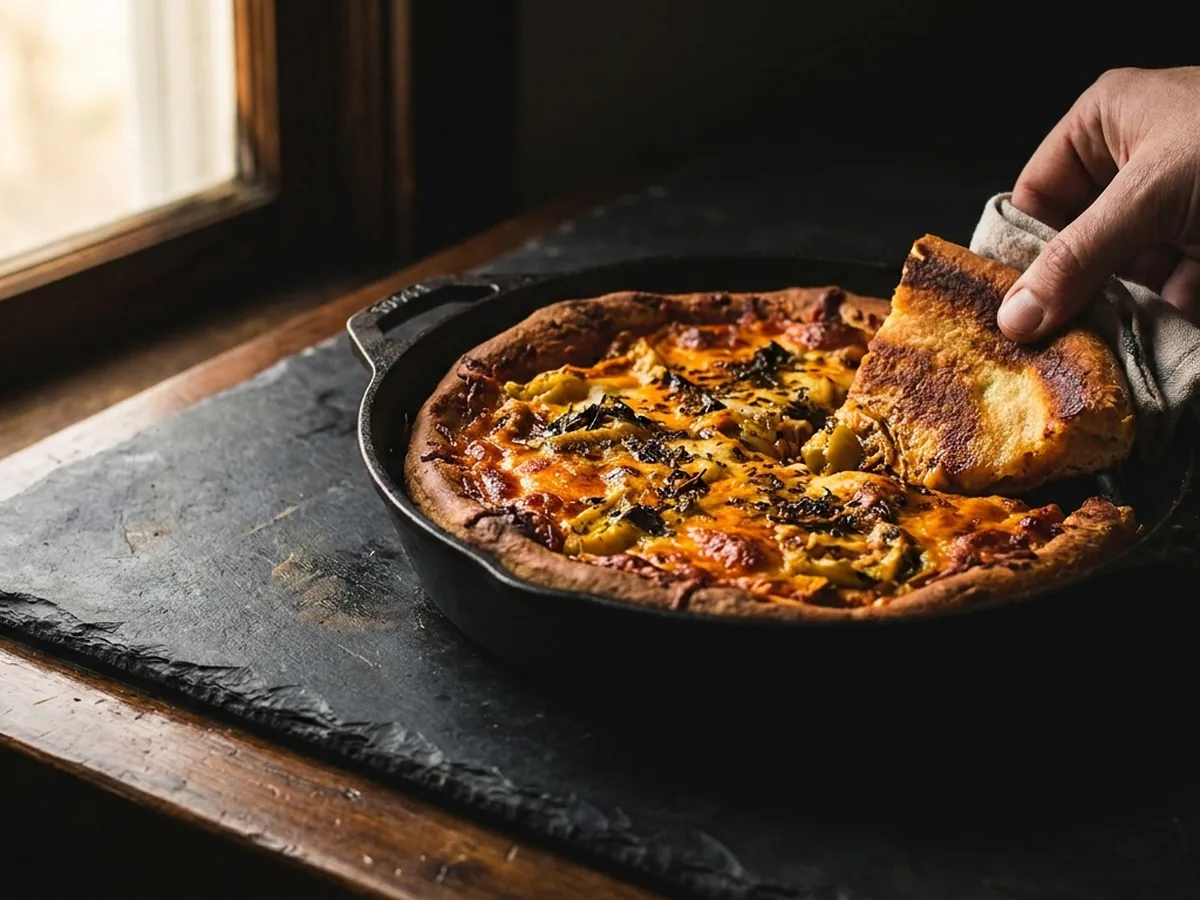
AI-generated illustration created for food.fast. It is not photographic evidence of a prepared batch.
Pan pizza is the one style where the base is genuinely a different food from the topping. It is not a thicker version of a normal pizza. The dough sits in a film of oil in a steel tin and the bottom surface fries while the rest of it bakes, which is why a good one has a crunchy, almost crisp underside and a soft, open crumb above it.
Home attempts almost always fail in the same place: not enough oil. A tablespoon greases a tin. What this needs is closer to three, sitting in the bottom as a shallow pool, so the dough is frying rather than merely not sticking.
The second thing is the tin itself. A dark, heavy, straight-sided tin gets hot and stays hot. A flimsy light-coloured one reflects heat and gives a pale base whatever you do.
The method gives quantities, timings and observable cues rather than asking you to guess. The 3 cases in If it goes wrong explain likely causes and corrective action; 1 ingredient note explains choices that materially affect the result.
See the recipe verification standard · See how the cost is calculated
Three tablespoons in a 23 cm tin is about 2 mm deep. That sounds like a lot and it is the correct amount.
At that depth the underside of the dough is in contact with hot oil rather than hot metal. Oil transfers heat far faster than air and it reaches every dimple in the surface, so the base browns evenly and develops a texture closer to a fried bread than a baked one.
Less oil gives you a pale, tough bottom. The dough sticks in patches, those patches dry out, and the result is bread baked in a tin - which is a perfectly nice thing and is not pan pizza.
The second prove happens in the oiled tin, which does two jobs at once.
The dough relaxes into the corners on its own, so you are not fighting it into shape and tearing the gluten you just built. And the underside sits in oil for the whole rise, so by the time it goes into the oven the surface is already saturated and starts frying immediately rather than after ten minutes.
Press it out gently with oiled fingertips, cover, and leave it. If it springs back and will not reach the edges, wait fifteen minutes and press again - that is gluten telling you it needs more time, not more force.
Strong bread flour carries around 12 to 14 per cent protein against roughly 9 to 10 in plain flour. That protein becomes the gluten network that traps gas, and a pan base has to hold a deep, open crumb without collapsing under the topping.
Plain flour gives a base that tastes fine and sinks in the middle. If it is all you have, drop the water to about 60 per cent so the dough is stiffer and can hold itself up.
Stir the flour, yeast, sugar and water together until no dry flour remains, then cover and walk away. This rest hydrates the flour and does most of the kneading for you.
About 20 minWork the salt and olive oil in and knead for six to eight minutes until the dough is smooth and springs back slowly when pressed. Salt goes in after the rest because it slows hydration if added at the start.
About 8 minCover and leave somewhere warm for about an hour, until roughly doubled and visibly domed. A finger pressed into it should leave a dent that fills back slowly.
About 1 hrPour three tablespoons of oil into the tin and tilt it so the bottom is covered. Put the dough in and press it towards the edges with oiled fingertips. If it resists, leave it fifteen minutes and try again.
About 5 minCover loosely and leave for about thirty minutes, until the dough has risen to roughly half the depth of the tin and looks pillowy rather than tight.
About 30 minBake at 240 °C on the bottom shelf for 16 to 18 minutes. The low shelf puts the tin closest to the heat source, which is what drives the frying on the underside. Lift an edge with a palette knife to check it is golden.
About 18 min| Tin | Dough | Bake |
|---|---|---|
| 20 cm | 380 g | 15-17 min |
| 23 cm | 500 g | 16-18 min |
| 25 cm | 590 g | 18-20 min |
| Rectangular 20x30 cm | 700 g | 20-22 min |
Each entry names a likely cause as well as a correction, so the advice remains useful when equipment, ingredients or batch size differ.
The recipes that go with this one, or that use what you have just made.
A pressed rather than tossed dough, cold-fermented for two days. Fifteen minutes of work, and the fridge does the rest.
Three tablespoons of oil in the tin, a dough that proves where it bakes, and a base that fries from underneath. The o…