Domino's Pizza
Domino's Pizza Dough Copycat Recipe
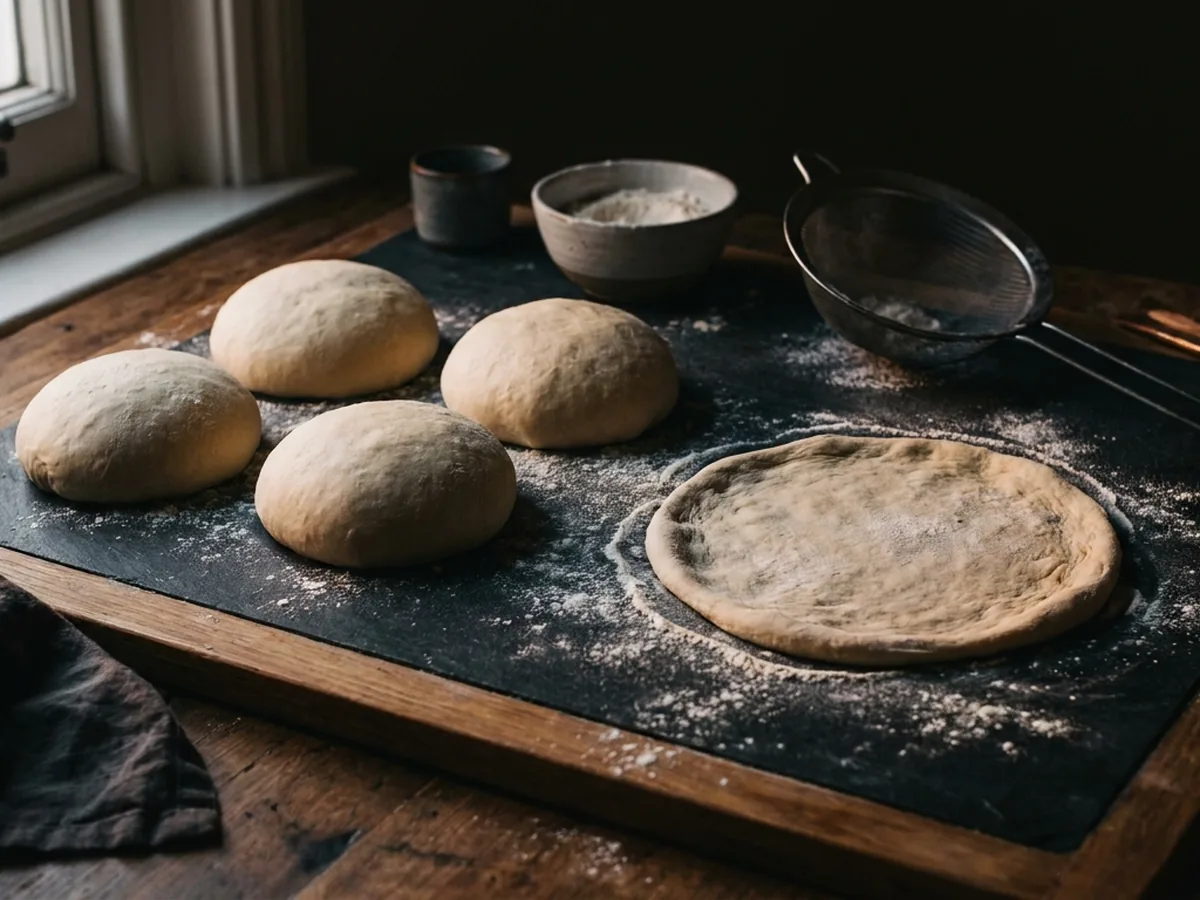
A pressed rather than tossed dough, cold-fermented for two days. Fifteen minutes of work, and the fridge does the rest.
 food.fast
Takeaway taste, kitchen prices
Pan Pizza Is a Frying Recipe Wearing a Pizza Costume
The golden, almost doughnut-like base, which comes from oil rather than from technique.
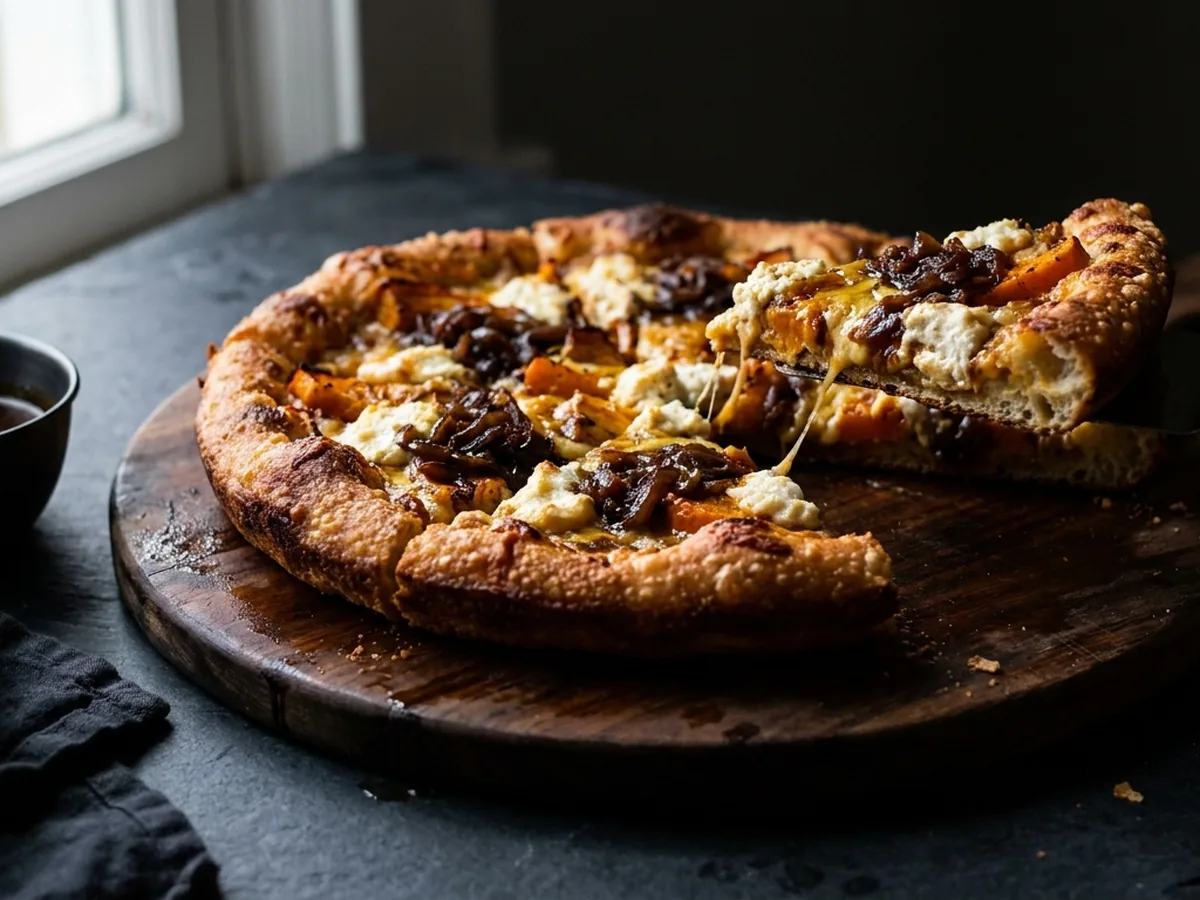
AI-generated illustration created for food.fast. It is not photographic evidence of a prepared batch.
Pan pizza is the most misunderstood item in chain food. People try to make it with a pizza recipe and it fails, because it is not really a pizza technique at all.
The dough is pressed into a tin containing a startling quantity of oil, proved in that tin, and baked in it. The bottom of the dough is therefore sitting in hot fat for the whole bake - it fries while the top bakes. That is where the golden, crunchy, faintly doughnut-like base comes from, and no amount of stretching, stone-baking or high heat will produce it any other way.
Three tablespoons of oil per 25 cm tin. Everybody quietly reduces this on the first attempt and everybody is disappointed. It is not a mistake in the recipe.
The method gives quantities, timings and observable cues rather than asking you to guess. The 6 cases in If it goes wrong explain likely causes and corrective action; 2 ingredient notes explain choices that materially affect the result.
See the recipe verification standard · See how the cost is calculated
Three tablespoons - 45 ml - of oil in each 25 cm round tin. Not one. Not "enough to grease it".
Poured in and swirled, it forms a layer perhaps two millimetres deep across the base. The dough sits on top of that layer, and in a 220 °C oven that oil reaches frying temperature within a few minutes. From then on the underside of the dough is being shallow fried.
What you get is a base that is deep golden brown, crisp, slightly bubbled, and tastes faintly of fried bread - because it is. Compare it to a stone-baked base, which is dry, matte and cracker-like. They are different products.
Use a neutral oil with a high smoke point - rapeseed, sunflower, groundnut. Olive oil smokes at this temperature and gives a bitter, acrid note.
The other half of the trick is the tin. A dark, heavy, straight-sided cake tin is ideal: dark metal absorbs radiant heat and transfers it into the oil. A shiny thin tin reflects heat and the base stays pale. A cast iron skillet is the best thing most kitchens already own.
Ordinary pizza dough is proved as a ball, then stretched thin. This one is pressed into the tin at the end of its first rise and proved a second time in the tin, for about ninety minutes, until it has risen to fill it.
That second prove in place does two things. It gives a thick, open, bready crumb rather than a thin one - which is what pan pizza is. And it means the dough is never degassed by stretching, so the gas bubbles that formed during the first rise survive into the bake.
It also means you cannot rush it. A dough pressed in and baked immediately gives a dense, flat base. Ninety minutes somewhere warm, or two hours in a cool kitchen, and it should have visibly domed and feel pillowy when you press it.
Press it out gently with oiled fingertips, from the centre outward, and let it relax for ten minutes if it springs back before it reaches the edges. Fighting a springy dough tears the gluten and gives an uneven base.
Pizza Hut's sauce is not cooked before it goes on the pizza. It is tinned tomatoes blended with sugar, oregano, garlic and salt, used straight, and it cooks on the base during the bake.
This matters for two reasons. An uncooked sauce is brighter and fresher-tasting than a reduced one, which balances a rich fried base. And it contains more water, which steams up into the dough during the bake and keeps the crumb soft under a crisp bottom.
The sweetness is real - about a tablespoon of sugar to a 400 g tin. It reads as "American pizza sauce" and it is one of the two or three things that make a copy recognisable. Leave it out and the sauce tastes sharp and European.
Dried oregano, heavily. Not fresh basil, not mixed herbs. Dried oregano is the herb note of this specific pizza.
Fresh mozzarella is stored in water and is roughly 55% water by weight. On a pan pizza that water has nowhere to go and the surface becomes a shallow pool. Low-moisture block mozzarella is about 45% water and melts into a sheet. Grate it yourself - pre-grated cheese carries potato starch or cellulose to stop it clumping, and that starch prevents it melting smoothly.
Twenty grams gives a softer crumb, a slightly sweeter flavour and noticeably better browning, because the lactose caramelises at a lower temperature than the dough's own sugars. Every commercial enriched bread contains it and almost no home recipe calls for it.
Flour, water, oil, sugar, yeast and milk powder mixed to a shaggy mass. Ten minutes' rest - an autolyse - lets the flour hydrate fully before the gluten development starts, which makes the kneading considerably easier.
In a mixer on medium, or by hand with a scraper. It is a wet dough and it will stick - resist adding flour. It should end up smooth, elastic and still slightly tacky.
About 8 minCovered bowl somewhere warm. It should roughly double and feel airy.
About 1 hr 30 minPour it in, tilt the tin until the base and the first centimetre of the sides are coated. It will look like far too much oil. It is the correct amount.
About 2 minHalf into each tin. Press from the centre outward with fingertips. If it springs back before reaching the edge, cover it and wait ten minutes, then finish.
About 6 minCovered, somewhere warm. It should visibly dome and feel pillowy - a fingertip pressed in should spring back slowly, leaving a faint dent.
About 1 hr 30 minBlend until smooth. Do not cook it. Taste it - it should be noticeably sweet and heavily oregano.
About 3 minThe lowest shelf, so the heat from the oven floor is driving the frying action underneath. Preheat for a full twenty minutes.
About 20 minSix tablespoons of sauce per pizza, spread with the back of a spoon. Then cheese right out to the tin wall - cheese touching the metal caramelises into the crisp brown rim that is the best part of a pan pizza.
The top should be blistered and the cheese deep gold at the rim. Slide a palette knife under one edge and look at the base - it should be evenly deep golden brown. If it is pale, give it three more minutes.
About 18 minLeaving it in the tin steams the base you have just spent eighteen minutes frying. Out straight away, five minutes on a rack, then cut.
About 5 minThe recipe above is same-day and works. A cold ferment makes it noticeably better.
After the first rise, cover the bowl and put it in the fridge for 24 to 72 hours. Then take it out, let it come back to room temperature for an hour, press it into the oiled tins and prove as written.
What changes is flavour. Yeast and bacteria continue working slowly at fridge temperature, producing organic acids and alcohols that a two-hour dough never develops. Twenty-four hours gives a noticeably deeper, breadier flavour; seventy-two gives something with a faint tang.
It is also more convenient rather than less - the dough is made on a day you have time and baked on a day you do not.
The dough scales cleanly by weight. What does not scale is oven space.
Two pan pizzas fit on one shelf of most domestic ovens. Four do not, and stacking shelves gives you one pale pizza and one burnt one, because the heat distribution in a domestic oven is nothing like even.
For 4X, bake in two rounds and accept that the first two pizzas will be eaten while the second two cook, which is how pizza works anyway.
The sauce and cheese quantities scale linearly and the bake time does not - eighteen minutes is eighteen minutes whether there are one or two tins in the oven, though two tins may want an extra two minutes because they pull more heat out of the cavity.
| Ingredient | Baker's % | For 400 g flour | For 1 kg flour |
|---|---|---|---|
| Strong white flour | 100% | 400 g | 1000 g |
| Water | 65% | 260 g | 650 g |
| Oil (in dough) | 6% | 24 g | 60 g |
| Sugar | 4% | 16 g | 40 g |
| Milk powder | 5% | 20 g | 50 g |
| Salt | 2% | 8 g | 20 g |
| Instant yeast | 1.4% | 5.5 g | 14 g |
| Component | Amount | Cost |
|---|---|---|
| Bread flour | 400 g | £0.42 |
| Mozzarella | 300 g | £1.85 |
| Tinned tomatoes | 400 g | £0.45 |
| Oil, yeast, sugar, herbs | - | £0.48 |
| Two pizzas at home | £3.20 | |
| Two large pan pizzas, UK collection price | £27.98 |
24 to 72 hours in the fridge after the first rise. More flavour and more convenient.
The best tin most people own. Same oil quantity. The heavy base holds heat and gives an exceptionally even fry.
Lay a ring of mozzarella sticks around the edge of the pressed dough and fold the dough over them before the second prove. Seal firmly - unsealed crust leaks and welds the pizza to the tin.
Each entry names a likely cause as well as a correction, so the advice remains useful when equipment, ingredients or batch size differ.
The recipes that go with this one, or that use what you have just made.
A pressed rather than tossed dough, cold-fermented for two days. Fifteen minutes of work, and the fridge does the rest.
Butter with the milk solids skimmed off, garlic powder and salt. Six minutes, and the skimming is what keeps it clear…
The most requested copycat dip in Britain. Four minutes, six ingredients, and two decisions that most versions get wrong.
Walnut-sized, baked hot and fast so they stay pale and pillowy, with a soft garlic butter that melts into them. About…