Starbucks
Starbucks Vanilla Syrup Copycat Recipe
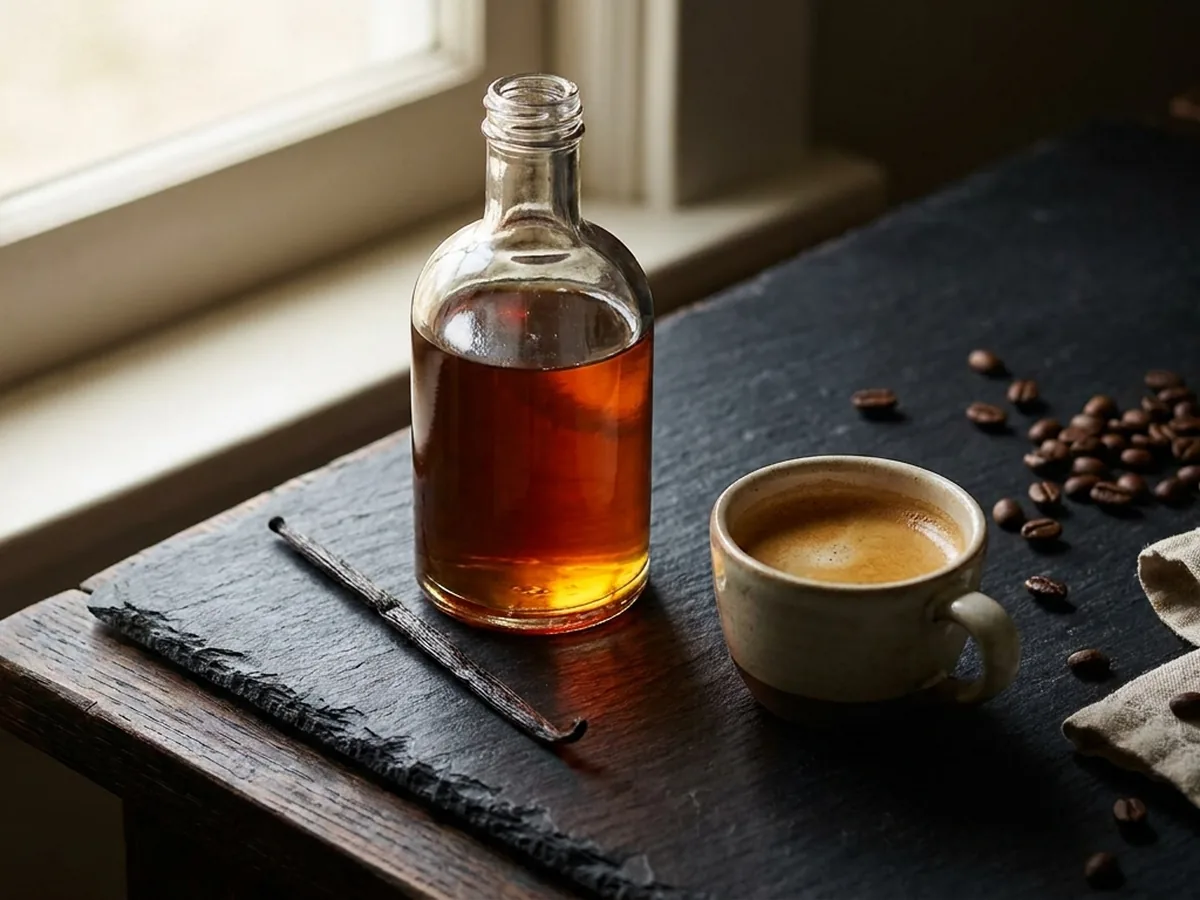
Sugar, water, vanilla. Four minutes on the hob for a bottle that costs about forty pence and replaces a shelf of them.
 food.fast
Takeaway taste, kitchen prices
Cold Brew and Sweet Cream: Two Simple Things, One of Them Overnight
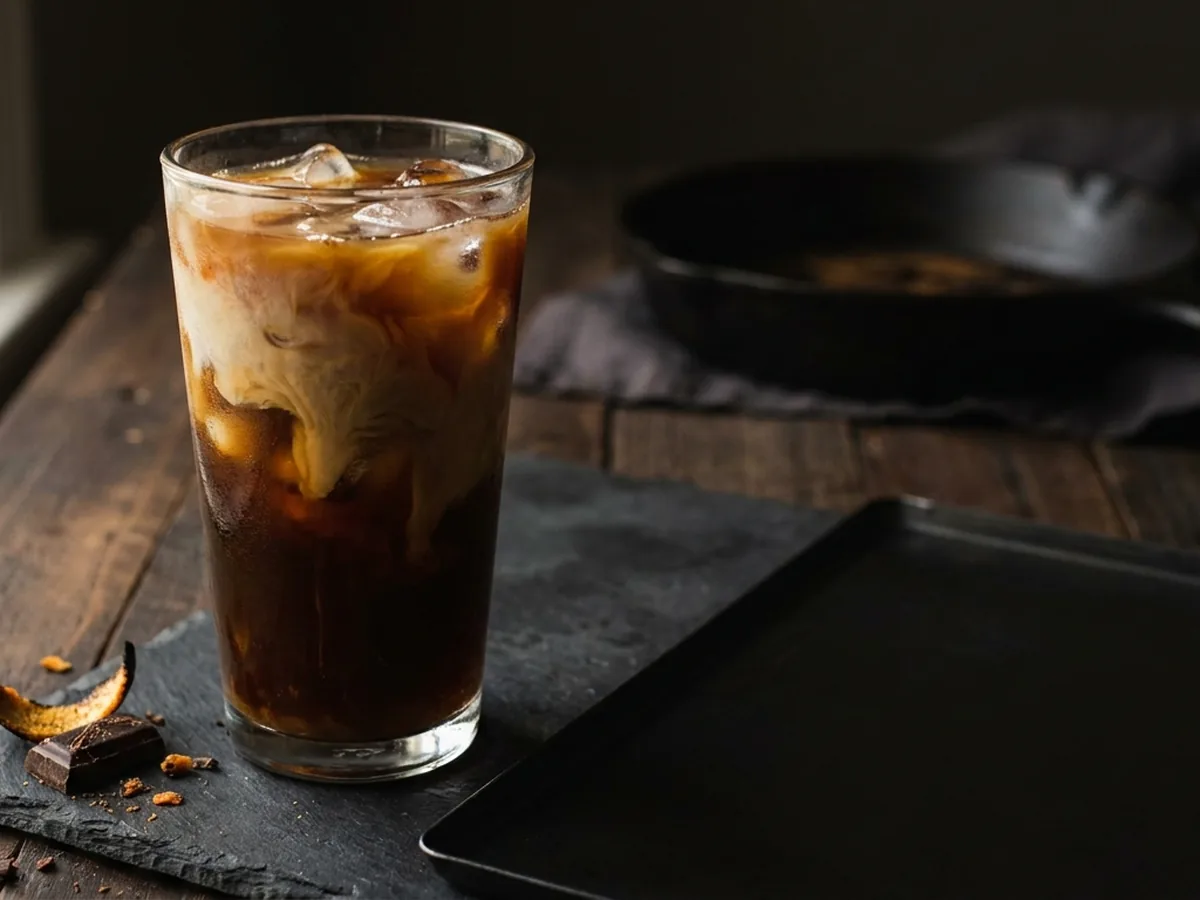
Cold brew that is smooth rather than sour, and the cream that falls through it in ribbons.
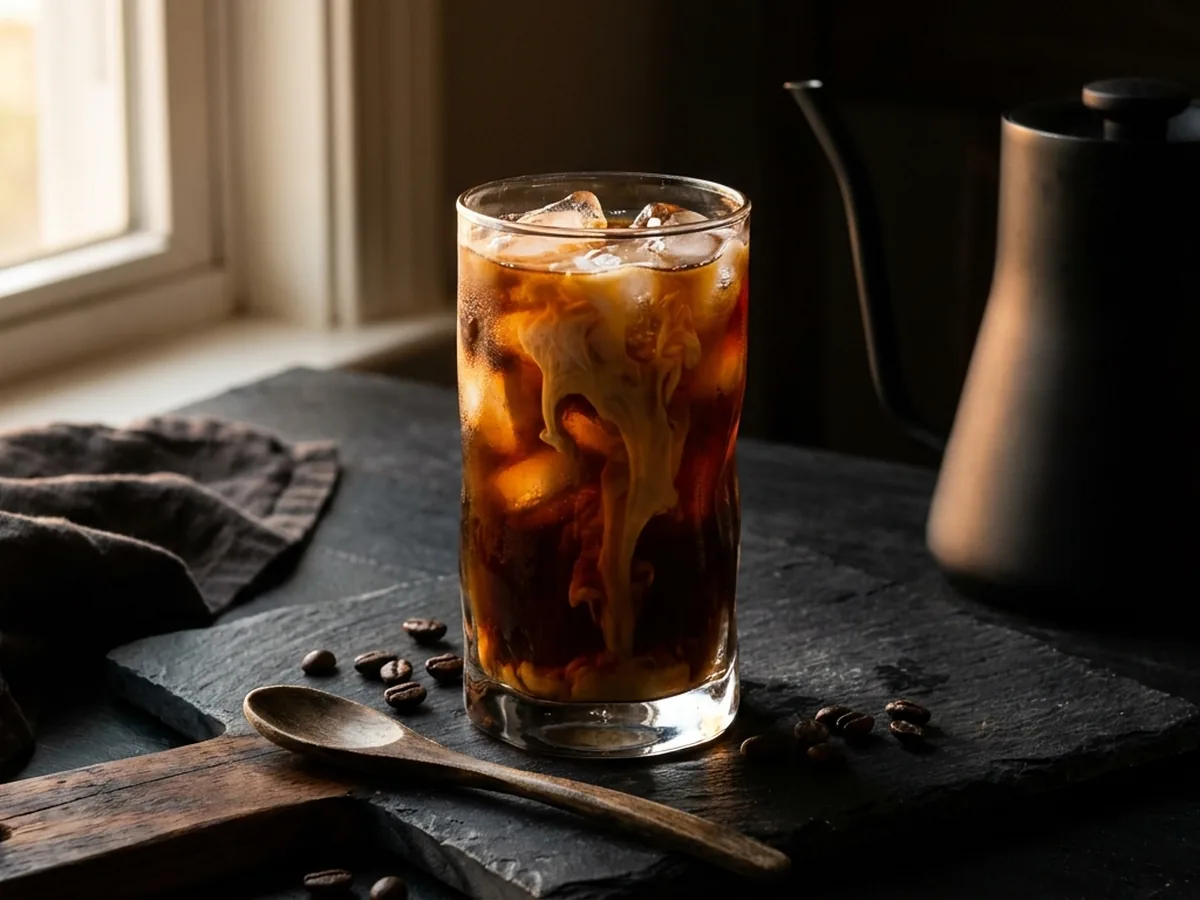
AI-generated illustration created for food.fast. It is not photographic evidence of a prepared batch.
Cold brew is not iced coffee. Iced coffee is brewed hot and chilled; cold brew is steeped in cold water for many hours and never heated at all. The difference is chemistry rather than temperature.
Most of the compounds that make coffee taste sour and bitter are extracted quickly and need heat. Steep the same grounds in cold water and they barely come out at all, while the sugars and the heavier aromatic compounds come out slowly over hours. The result is roughly 60 per cent less acidic than the same coffee brewed hot, noticeably sweeter, and much smoother.
The sweet cream on top is the other half. It is two parts cream to one part milk with vanilla syrup, frothed cold, and the thing it does - falling through the coffee in slow white ribbons - is a density effect that is genuinely satisfying to watch.
The method gives quantities, timings and observable cues rather than asking you to guess. The 5 cases in If it goes wrong explain likely causes and corrective action.
See the recipe verification standard · See how the cost is calculated
Grind coarse. Like breadcrumbs, or what you would use for a cafetière. Fine grounds have more surface area and will over-extract even in cold water, giving a muddy, bitter brew, and they are almost impossible to filter out.
Sixteen hours at room temperature, or twenty-four in the fridge. Cold extraction is slow and the curve is quite forgiving - anywhere from twelve to twenty hours produces something good. Under twelve is thin and under-extracted; past about thirty it starts to pick up a woody, papery note.
The ratio here is 1:5 by weight - 200 g of coffee to 1 litre of water - which gives a concentrate you dilute roughly half and half with water or milk. Brewing at drinking strength directly works but wastes fridge space and gives you less flexibility.
Filter twice. Once through a sieve to get the grounds out, then once through a paper coffee filter or muslin to catch the fines. The second filter is what takes it from cloudy and slightly gritty to clear.
The cascade - cream falling through the coffee in slow ribbons rather than mixing straight in - happens because the frothed cream is less dense than the coffee and full of tiny air bubbles that slow its descent.
Two things break it:
Warm cream is thinner and mixes immediately. Everything must be refrigerator-cold, including the jug.
Unfrothed cream has no air in it and sinks as a lump. Thirty seconds with a handheld frother, or forty-five seconds shaken hard in a sealed jar, incorporates enough air to change the behaviour completely.
Pour it slowly over the back of a spoon held just above the coffee's surface and it will spread and then fall in sheets. Pour it fast from height and it simply mixes.
All the grounds into the jar, all the water over them, stirred once so nothing is sitting dry on top. Lid on, room temperature.
About 3 minDo not stir it again. Agitating the bed during extraction pulls out the bitter compounds the whole method exists to avoid.
About 16 hrSieve first to get the bulk of the grounds, then through a paper coffee filter or a double layer of muslin. The second pass is slow - give it ten minutes and do not push it.
Everything fridge-cold. It should thicken noticeably and hold soft ripples - somewhere between pourable and whipped.
A tall glass of ice, 150 ml of concentrate, 100 ml of cold water. Stir once.
About 1 minHold a spoon just above the surface and pour onto it. The cream will spread across the top and then fall through in white ribbons.
About 1 minThe grounds have had a long cold extraction and still hold plenty of structure. They are excellent in a compost heap, and they work as a mild abrasive for scrubbing a pan. What they are not good for is a second brew - the soluble material is gone.
The concentrate keeps two weeks in the fridge, which makes this the most practical coffee recipe here: fifteen minutes of work on a Sunday gives you six drinks across the fortnight, at about eight pence a drink.
It is also a better base than hot coffee for anything cold. An iced latte made with cold brew rather than chilled espresso is smoother and less sour, and an espresso martini made with it is genuinely better than one made with a shot.
| Ratio | Coffee to 1 l | Result | Use |
|---|---|---|---|
| 1:4 | 250 g | Very strong concentrate | Dilute 1:2 |
| 1:5 | 200 g | Concentrate - this recipe | Dilute 1:1 |
| 1:8 | 125 g | Ready to drink | Straight over ice |
| 1:12 | 85 g | Weak | Not recommended |
| Cold brew | Hot brewed, chilled | |
|---|---|---|
| Acidity | Low | High |
| Bitterness | Low | Moderate |
| Perceived sweetness | High | Low |
| Time | 16 hours | 5 minutes |
| Keeps | 2 weeks | 1 day |
Add a quarter teaspoon of flaky salt to the cream. It makes the sweetness read as caramel.
Barista oat milk plus 2 tbsp of coconut cream, frothed. Oat milk alone will not hold the ribbons.
A cream whipper charged with nitrous oxide gives the cascading bubbles and thick head. Considerable equipment for a small gain, but it works.
Each entry names a likely cause as well as a correction, so the advice remains useful when equipment, ingredients or batch size differ.
The recipes that go with this one, or that use what you have just made.
Sugar, water, vanilla. Four minutes on the hob for a bottle that costs about forty pence and replaces a shelf of them.
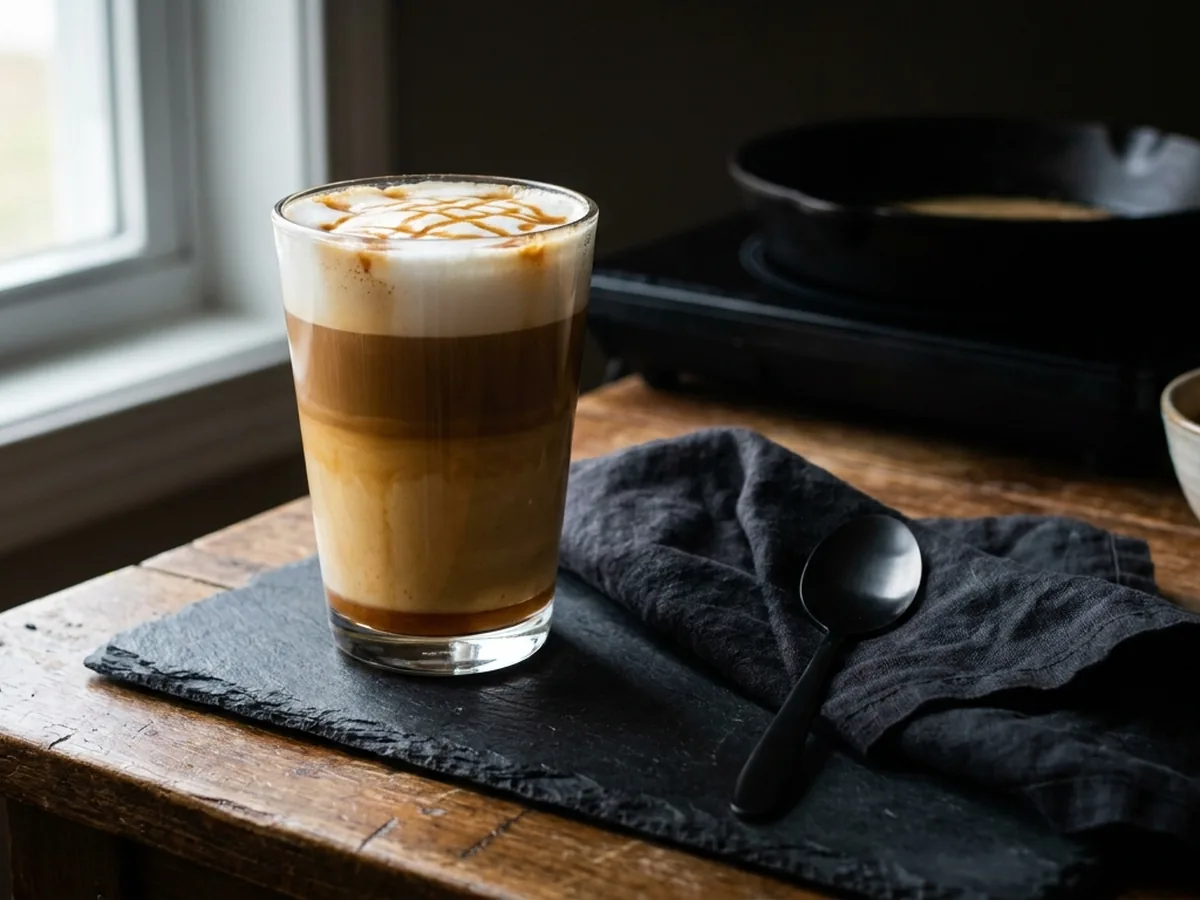
Vanilla syrup, milk, espresso poured last so it marks the foam, and a caramel drizzle. Two minutes once the syrup is made.
Hot-brewed at double strength, chilled fast, and sweetened with syrup rather than granules. Five minutes plus chilling.
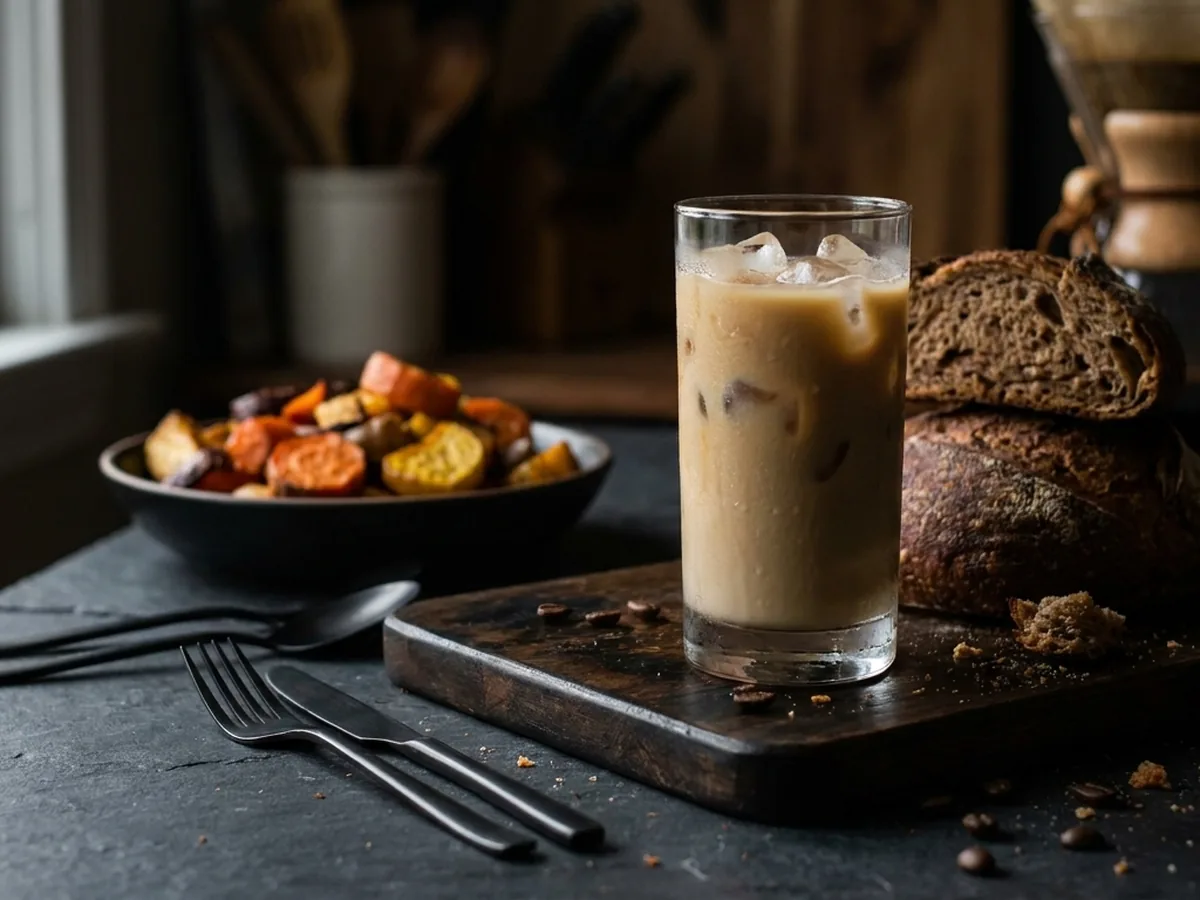
Dark coffee, condensed milk stirred in hot, evaporated milk poured over ice. Five minutes and about thirty pence a glass.