Five Guys
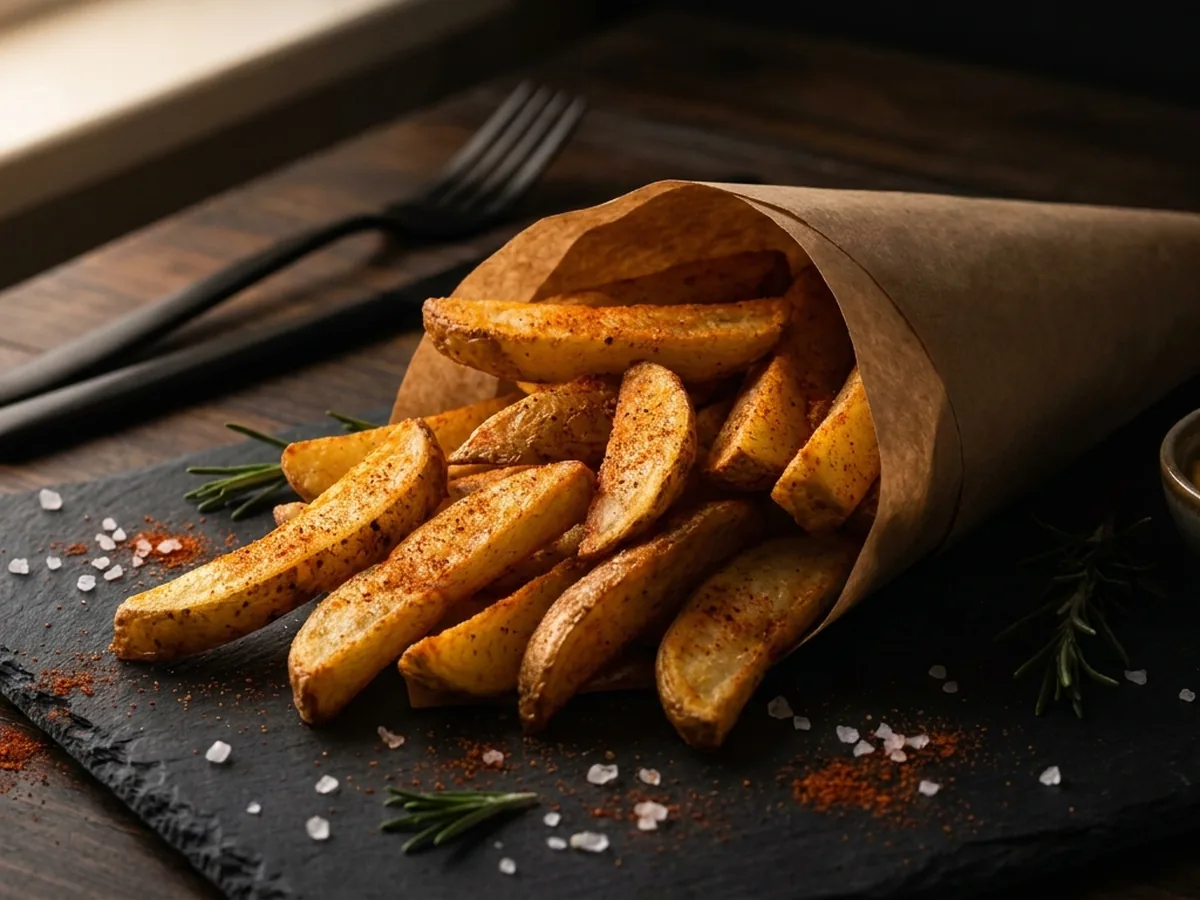
Five Guys Cajun Fries Copycat Recipe
Skin-on potatoes, fried twice at two temperatures, tossed hot in Cajun seasoning. The oil is doing more of the flavou…
 food.fast
Takeaway taste, kitchen prices
It Is Rarely the Burger. It Is Almost Always the Drink and the Sauce
People are reliably wrong about which parts of a fast food meal carry the calories. The pattern is consistent across chains and it is worth knowing.
Drinks. A large regular soft drink is 200 to 300 kcal and no satiety at all - liquid calories do not register as food in the same way, so they do not reduce how much you eat afterwards. A large milkshake is 600 to 900. A blended coffee with cream can pass 500. In a typical meal the drink is frequently the second or third largest contributor and the one people account for least.
Sauces and dressings. Mayonnaise-based anything is around 700 kcal per 100 g. A generous portion of burger sauce is 90 to 120 kcal, a pot of garlic dip 110, a "salad" dressing sachet 150 to 250. Small volumes, very high density.
Sides. A large chips is 400 to 550 kcal, which frequently exceeds the burger it accompanies. Onion rings, loaded fries and garlic bread are higher again.
Desserts and add-ons. Cookies, doughnuts, sundaes and pies run 300 to 500 each and are ordered as an afterthought to a meal that is already complete.
The burger, meanwhile, is usually 350 to 550 - substantial, and rarely the largest single item on the tray.
| Item | Approximate kcal |
|---|---|
| Single cheeseburger | 300-400 |
| Large burger with sauce and cheese | 500-700 |
| Large chips | 400-550 |
| Large regular soft drink | 200-300 |
| Large milkshake | 600-900 |
| Blended coffee with cream | 350-550 |
| Burger sauce, one portion | 90-120 |
| Creamy salad dressing sachet | 150-250 |
| Cookie or doughnut | 250-450 |
| Grilled chicken salad, dressed, with croutons | 450-650 |
The most reliably misjudged item on any chain menu is the grilled chicken salad, and the reason is that the calories are almost entirely in the parts people do not think of as the salad.
A typical build:
That is comparable to a cheeseburger and chips, and people routinely estimate it at half.
It is not that salads are a trick. It is that dressing, cheese and croutons are dense, arrive as separate items that feel incidental, and are frequently used in their entirety because they came in a sachet sized for the portion.
The fix is not to avoid salads. Use half the dressing sachet, which most people find is plenty, and the same salad comes in at 490. Skip the croutons and it is 380.
The same logic applies to wraps, which feel lighter than burgers and frequently are not, because a large flour tortilla is 250 to 300 kcal on its own.
Ranked by how much they change, from published figures:
1. The drink. Sugary to water or a diet version: 200 to 300 kcal, with no change to the food at all. This is the single largest available change on a typical order.
2. The side. Large chips to a small, or to a side salad: 200 to 450 kcal.
3. Skip the dessert. 250 to 450 kcal, and it was an addition to a meal that was already complete.
4. Half the sauce or dressing. 50 to 125 kcal, and most people do not notice.
5. Single rather than double patty. 200 to 250 kcal, and the single is better balanced against the bun anyway.
6. Skip the cheese. 70 to 100 kcal, and it costs you the melt that holds the burger together, so this one has a real trade-off.
What barely moves it: changing which burger, choosing chicken over beef (often higher, once coating and mayonnaise are counted), or choosing a wrap over a sandwich.
At home the same ordering applies, and the biggest one - the drink - is free to change.
The same pattern holds in our own figures, which are all calculated from our ingredient lists.
The lightest things here are the sauces that contain no fat. The sweet onion sauce is 28 kcal a tablespoon; the mild sauce is 5 kcal a portion. Both are genuinely useful for anybody wanting flavour without density.
The heaviest are the mayonnaise-based ones at around 90 kcal a tablespoon, and the fried mains.
The sides are where a home meal quietly grows, exactly as on a menu board. Four portions of Cajun fries from a kilo of potatoes is 384 kcal a portion - and the air fryer version is 250, which is the single easiest change available in this kitchen.
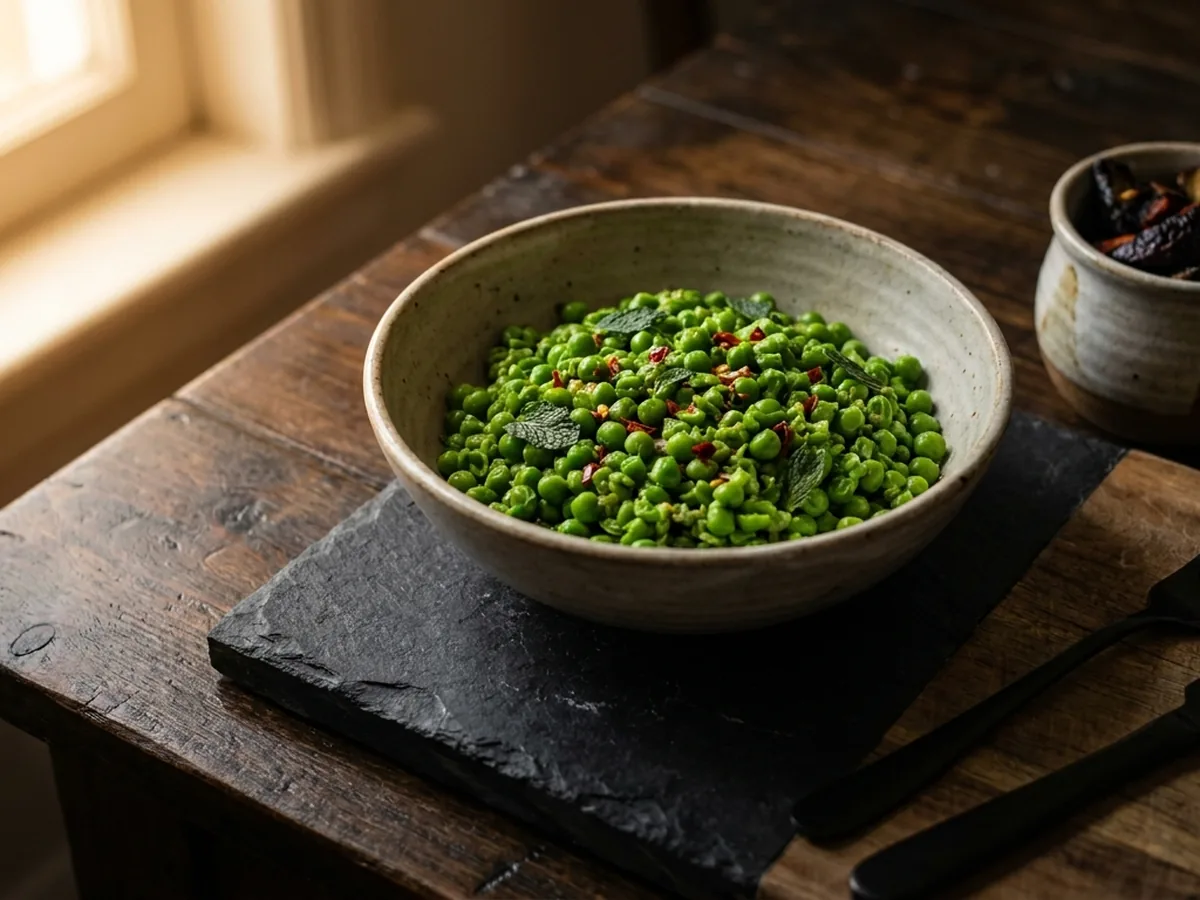
The genuinely light things are on the vegetable side and there are fewer of them than there should be: macho peas at 118 kcal a portion and 6.4 g of fibre is the best of them, and it is one of the cheapest recipes here as well.
Skin-on potatoes, fried twice at two temperatures, tossed hot in Cajun seasoning. The oil is doing more of the flavou…
Crushed rather than mashed, with fresh mint and a lot of chilli. The cheapest side on this site and one of the best.
A fat-free sweet-and-sour glaze thickened with cornflour. Ten minutes, and every version built on mayonnaise fails.
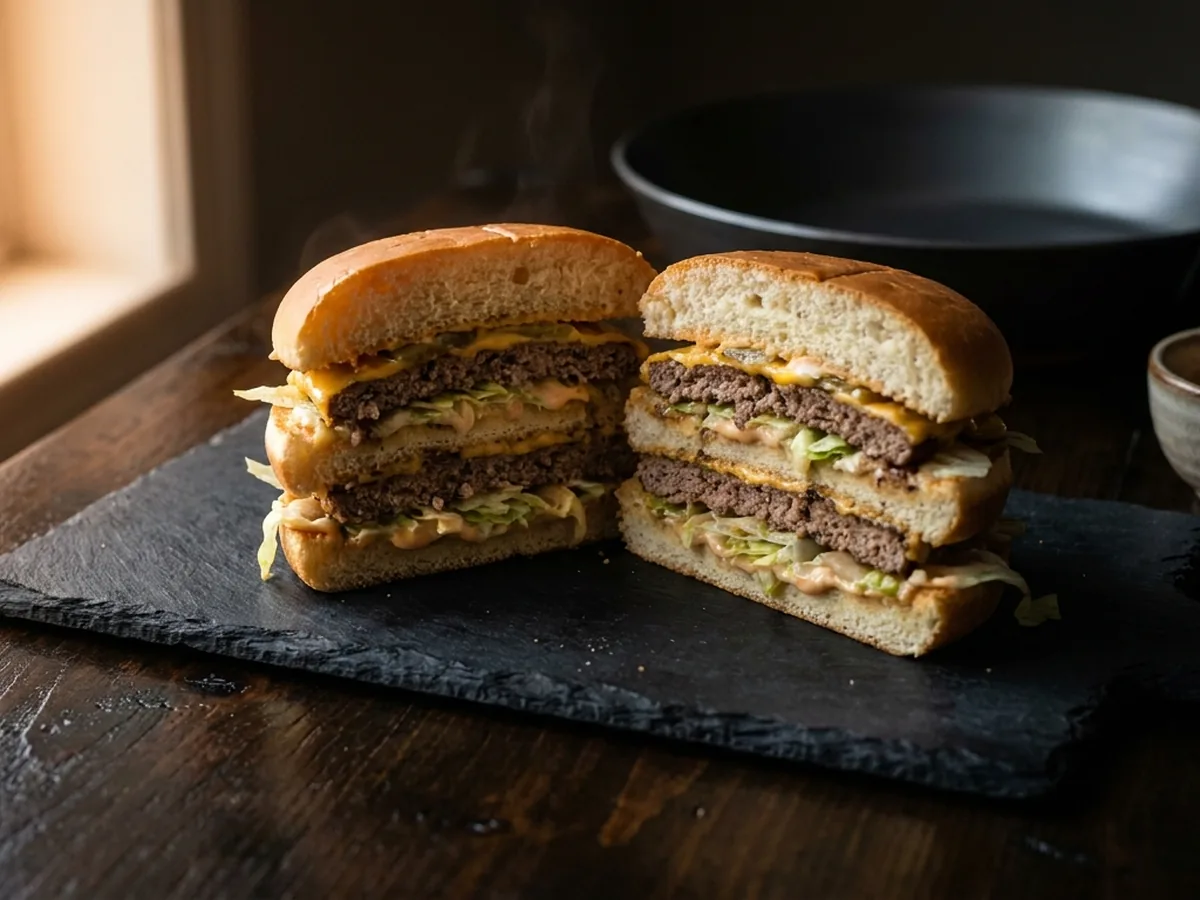
Two thin patties, a three-piece bun and the assembly order that stops the whole thing sliding apart on the second bit…