McDonald's
McDonald's Big Mac Copycat Recipe
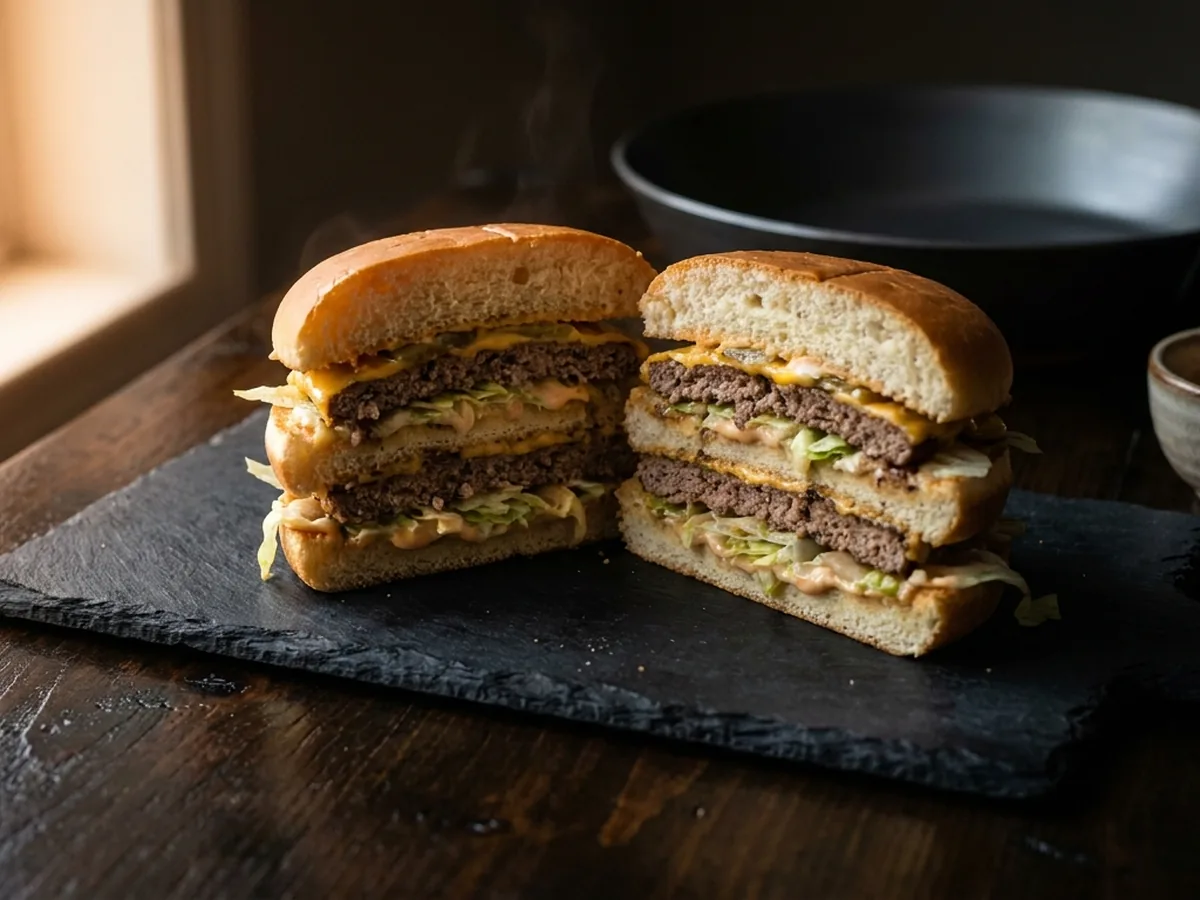
Two thin patties, a three-piece bun and the assembly order that stops the whole thing sliding apart on the second bit…
 food.fast
Takeaway taste, kitchen prices
A Home-Made Burger Is Still a Burger. Four Things Do Change
There is a dishonest version of this article where a copycat recipe becomes a health food because you made it. This is not that. Here is the narrow, real list of what changes.
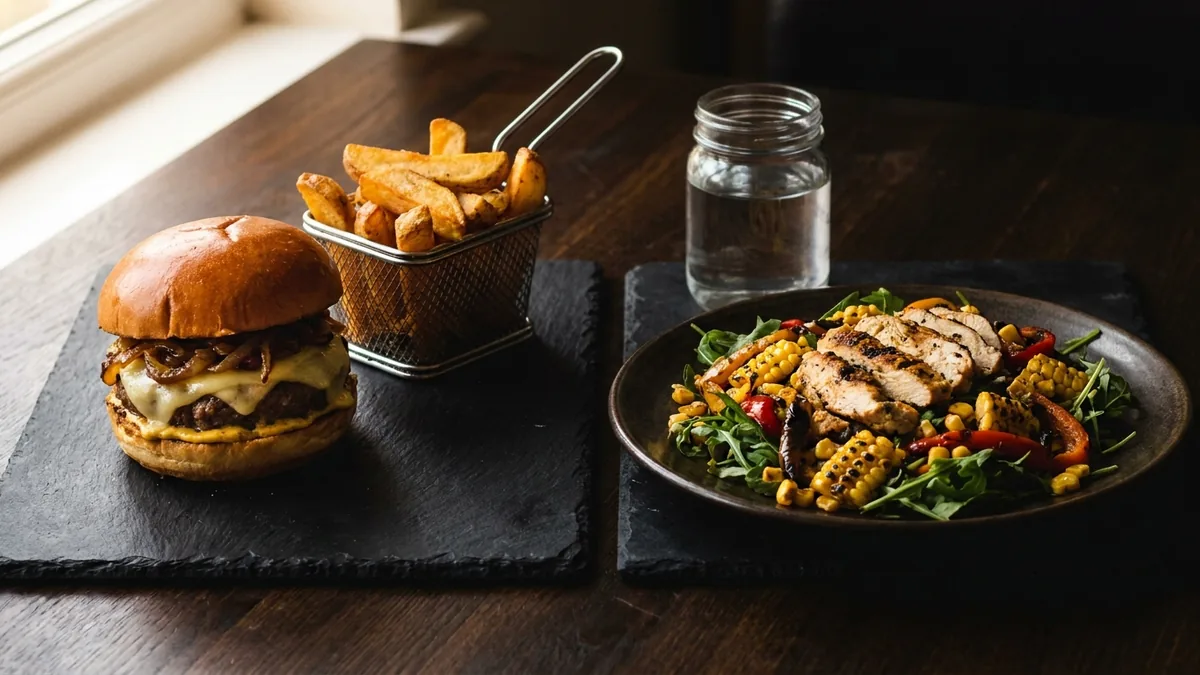
Calories barely move. A burger made from 20 per cent beef mince with cheese and a sauce contains roughly what the restaurant's does. Our figures sometimes come in slightly lower and sometimes slightly higher - the Big Mac copy is above McDonald's published figure, because our patties are slightly heavier and we are generous with the sauce.
Saturated fat barely moves. It is in the beef, the cheese and the butter, and those are the same ingredients.
It is still fried food. A chip cooked in fresh oil at home absorbs a comparable amount of fat to one cooked in a restaurant fryer. The oil is different; the quantity is not.
Refined carbohydrate barely moves. A bun is a bun.
Which means: if the reason for cooking at home is health, the honest answer is that this is not the biggest lever available to you. The biggest lever is eating fewer of these meals, and this site is about making the ones you do eat cheaper and better rather than making them virtuous.
Chain food is salted for a particular job: an occasional, intense experience, served to a national palate, with a specification that has to be identical in every outlet.
A home cook controls the amount added, but that does not prove the result is lower than a chain's version. The comparison has to be made item by item using the restaurant's published nutrition figure and the calculated panel on the recipe page. Where either side is missing, no percentage claim is made.
For context, the NHS recommends no more than 6 g of salt a day for adults. That is a reference point, not a health claim for these recipes. Every nutrition panel here is calculated from the listed ingredients and labels itself as an estimate.
Sugar in savoury items. Chain buns, sauces, marinades and coatings carry far more sugar than a home cook would add. Our versions typically come in 10 to 30 per cent lower - and unchanged in the glazes where the sugar is structural and reducing it would stop the recipe working. The sugar article covers what it is doing and where it can be cut.
Frying oil. A restaurant fryer holds oil that has been through many cycles. Repeated heating produces polar compounds, free fatty acids and aldehydes, and commercial kitchens monitor and filter for exactly this reason. Yours is clean and used two or three times. This is a genuine difference and it is also, to be clear, a difference between two portions of fried food.
Additives you leave out. Preservatives, anti-caking agents, colourings and stabilisers that exist to survive a supply chain. Whether that matters to you is a judgement this site does not make for you.
What you can actually see. Every ingredient in a home recipe is one you bought. That is not a nutritional claim and it is a real thing, particularly for anybody managing allergies or intolerances.
This is the largest single variable and it is entirely within your control at home, which is precisely why it is uncomfortable.
At a counter, the portion is decided for you. At home, you decide - and most people making a batch of something make restaurant-sized portions or larger, because that is the reference point.
A few practical implications of the portion arithmetic:
None of which requires a different recipe. It requires a smaller plate, which is not something a recipe site can do for you.
Every recipe carries a panel and every panel says the same thing at the bottom: calculated from this recipe's own ingredient list.
What that means:
What we do not do:
The editorial standards page sets all of this out formally.
Two thin patties, a three-piece bun and the assembly order that stops the whole thing sliding apart on the second bit…
Buttermilk brine, a double dredge with a rest, and controlled shallow frying. Honest about the one thing a home kitch…
Beef browned hard and broken into chunks rather than crumbled, a sweet tomato-juice base, and two kinds of bean. Nine…
The component that unlocks the whole menu. Oats cooked into the mince and enough water to make a paste - which is the…