Auntie Anne's
Auntie Anne's Cheese Dip Copycat Recipe
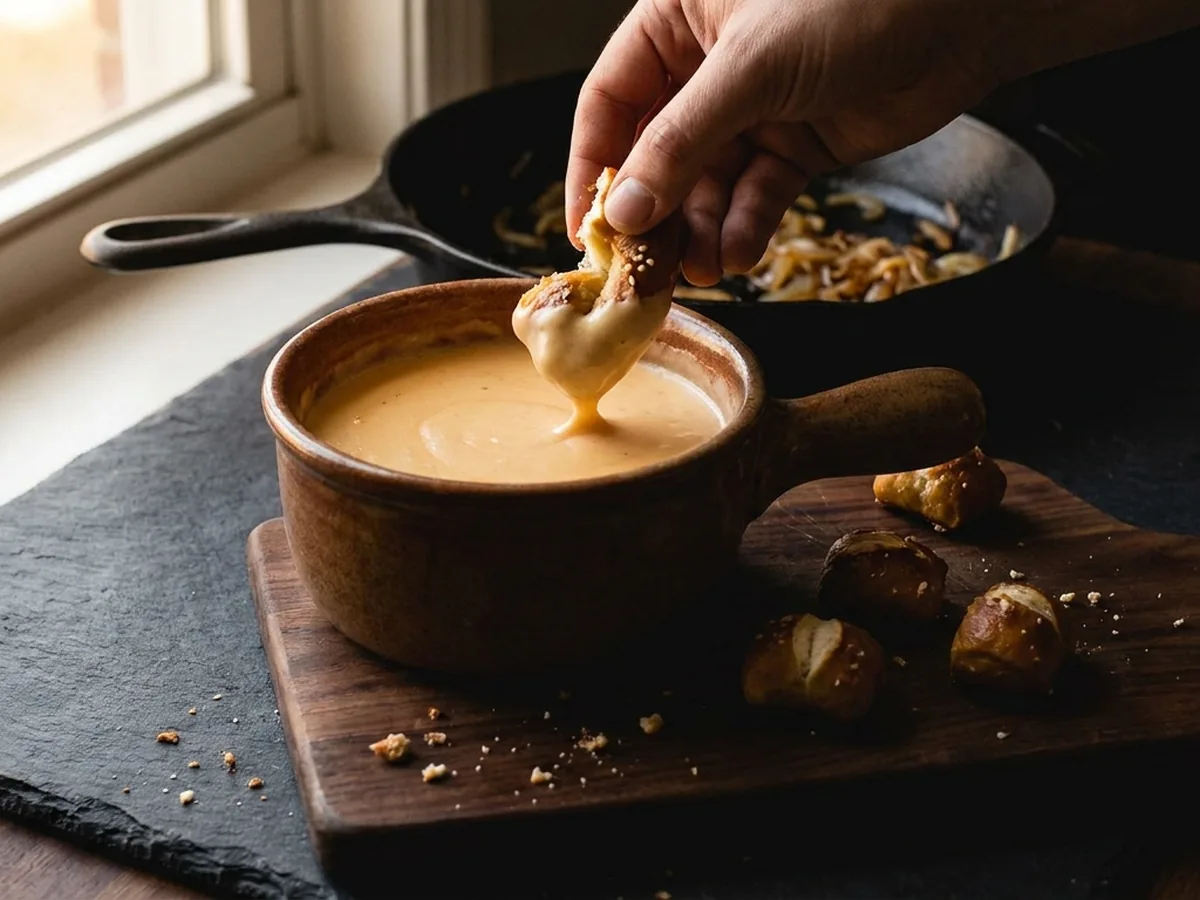
The pretzel dip - milder and thinner than a queso, built to stay liquid in a paper pot. Eight minutes.
 food.fast
Takeaway taste, kitchen prices
Bake Your Bicarbonate of Soda First - That Is the Whole Secret
The shopping-centre smell, the mahogany skin and the chew - without lye.
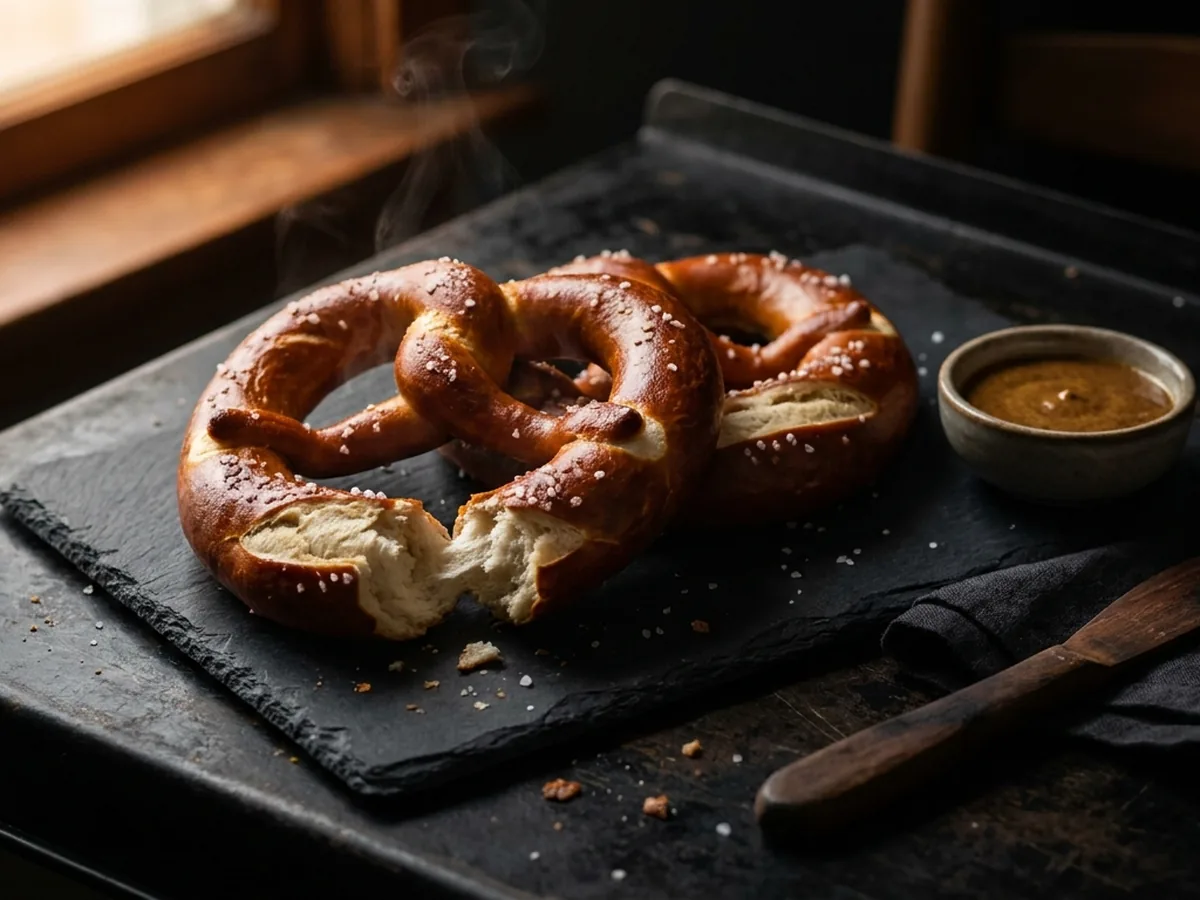
AI-generated illustration created for food.fast. It is not photographic evidence of a prepared batch.
A soft pretzel is a very ordinary bread dough put through one extraordinary step. Everything that distinguishes it - the mahogany colour, the distinctive faintly mineral tang, the chewy skin over a soft crumb - comes from a brief dip in an alkaline solution before baking.
Commercial bakeries use food-grade lye, which is genuinely caustic, requires gloves and goggles, and is not something this site is going to recommend for a domestic kitchen.
The home alternative is baked bicarbonate of soda. Thirty minutes at 150 °C converts sodium bicarbonate into sodium carbonate, which is substantially more alkaline - pH around 11.5 rather than 8.3 - and gets you most of the way to a lye pretzel with no risk at all. It is the single most useful trick in this recipe and almost nobody does it.
The method gives quantities, timings and observable cues rather than asking you to guess. The 5 cases in If it goes wrong explain likely causes and corrective action; 1 ingredient note explains choices that materially affect the result.
See the recipe verification standard · See how the cost is calculated
Two things happen when dough hits an alkaline solution.
Browning accelerates dramatically. The Maillard reaction - amino acids and sugars combining under heat to produce brown colour and roasted flavour - runs much faster at high pH. A pretzel dipped in an alkaline bath goes deep mahogany in fourteen minutes, where the same dough baked plain would be pale gold.
The surface proteins are partly broken down, which produces the smooth, slightly glassy skin and the distinctive tang. That flavour is not salt and it is not yeast; it is a genuinely different taste that only alkaline treatment produces.
Plain bicarbonate of soda in water gets you a little of both. Baked bicarb gets you most of it. Lye gets you all of it, and is not worth the risk at home.
To bake bicarb: spread it on a foil-lined tray, 150 °C for 30 minutes. It loses about a third of its weight as carbon dioxide and water. Store it in a sealed jar - it is hygroscopic and will reabsorb moisture from the air.
Handle it with a little care. It is not caustic like lye, but it is noticeably alkaline, so avoid getting it in your eyes and rinse your hands after handling it. Use a stainless steel or ceramic pan, not aluminium, which reacts.
Auntie Anne's brushes butter on before baking and again the moment the pretzels come out, and the two brushings do different jobs.
Before baking, butter helps the surface brown evenly and stops the alkaline skin drying into something leathery. It also holds the salt on.
After baking, butter gives gloss, flavour and the smell - which is, let us be honest, a substantial part of what the shops are actually selling. A pretzel brushed with butter straight out of the oven smells like the thing you remember.
The second brushing is the one people skip and it is the one that matters more. Do not be shy about the quantity: a generous tablespoon per pretzel.
Pretzel salt is a coarse, very white, non-melting salt made in chunky crystals that sit on the surface without dissolving into the crust. Coarse sea salt is the best supermarket substitute. Flaky salt like Maldon dissolves and disappears within minutes. Table salt disappears immediately and makes the pretzel taste uniformly salty rather than giving you bursts.
Spread it on a foil-lined tray and bake at 150 °C for thirty minutes. It will look identical and will have lost about a third of its weight. Cool and store in a sealed jar.
Everything except the salt, rested ten minutes, then salt in and kneaded until smooth. This is a fairly stiff dough - firmer than a pizza dough.
About 18 minCovered, somewhere warm. This is a firmer dough than a pizza dough and it will not look as dramatically risen - doubled in volume with a smooth, slightly domed surface is what you are looking for.
About 1 hrRoll from the middle outward with flat palms, on an unfloured surface. If it springs back, leave it for two minutes and come back - fighting it makes it worse.
Lay the rope as a U. Cross the two ends over each other, then cross them again. Fold the twisted point down onto the bottom of the U and press to stick.
About 6 minUncovered on a tray. A brief skin forms, which helps them hold their shape in the bath.
About 15 min60 g of baked bicarb dissolved in 2 litres of water at a bare simmer. Two pretzels at a time, thirty seconds a side, lifted out with a slotted spoon and drained well.
Straight onto a lined tray. Brush each with melted butter, scatter coarse salt, and bake until deep mahogany brown.
About 14 minGenerously. This is the brushing that gives the gloss and the smell, and it is the one people skip.
About 2 minSkip the salt entirely. Bake as written, then dunk the whole hot pretzel in melted butter - not brush, dunk - and immediately toss it in a bowl of caster sugar mixed with two tablespoons of cinnamon.
Dunking rather than brushing is what gets the sugar to adhere all over, including in the crevices of the twist.
The alkaline bath still happens. It seems counterintuitive for a sweet pretzel and it is exactly what gives it the chew and the colour, both of which are the point.
No salt. Dunk the hot pretzel in melted butter and toss in cinnamon sugar.
Cut the ropes into 3 cm pieces before the bath. Bath for 20 seconds, bake for 10 minutes. Much easier and arguably better.
Work 80 g of grated cheddar and two chopped pickled jalapeños into the dough at the end of kneading.
Each entry names a likely cause as well as a correction, so the advice remains useful when equipment, ingredients or batch size differ.
The recipes that go with this one, or that use what you have just made.
The pretzel dip - milder and thinner than a queso, built to stay liquid in a paper pot. Eight minutes.
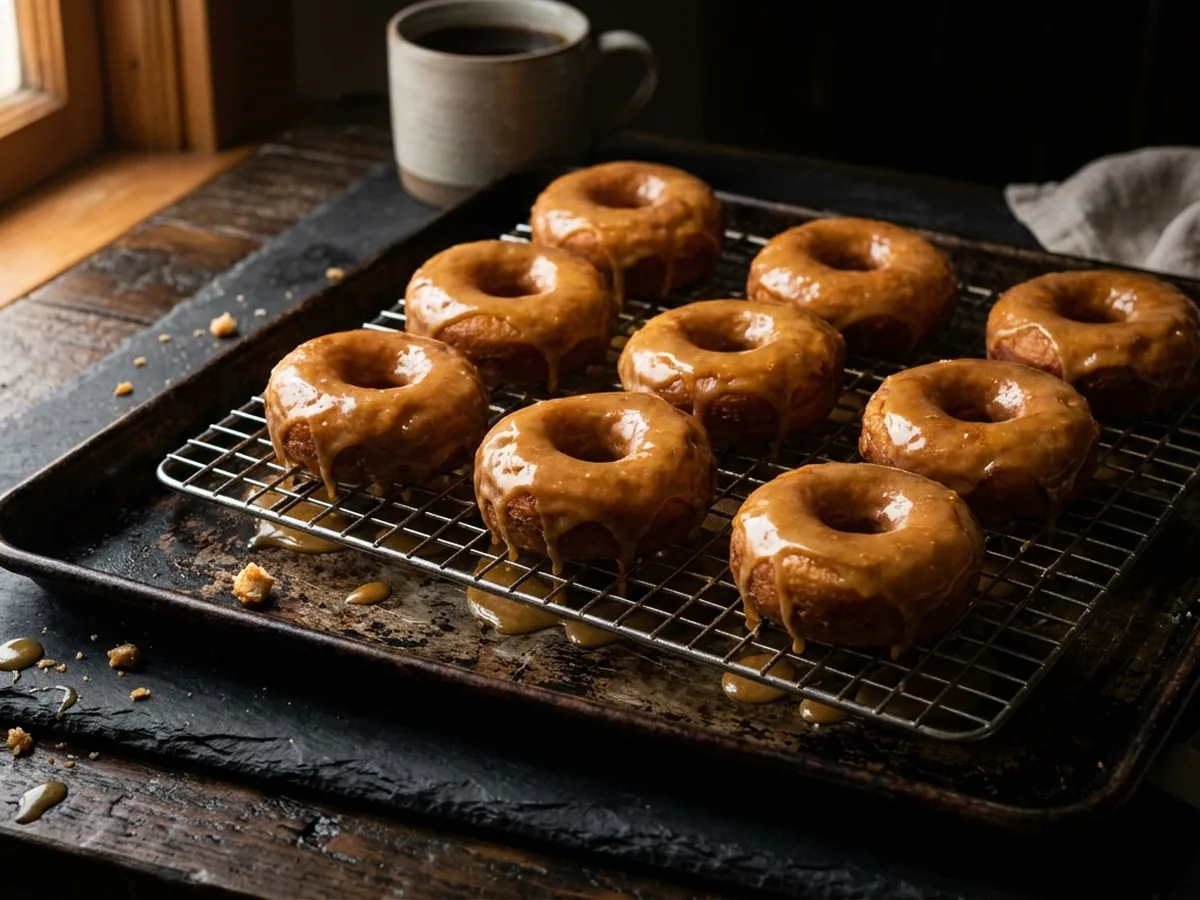
A very soft enriched dough, a short proof, forty-five seconds a side, and a thin glaze applied immediately. The heat …
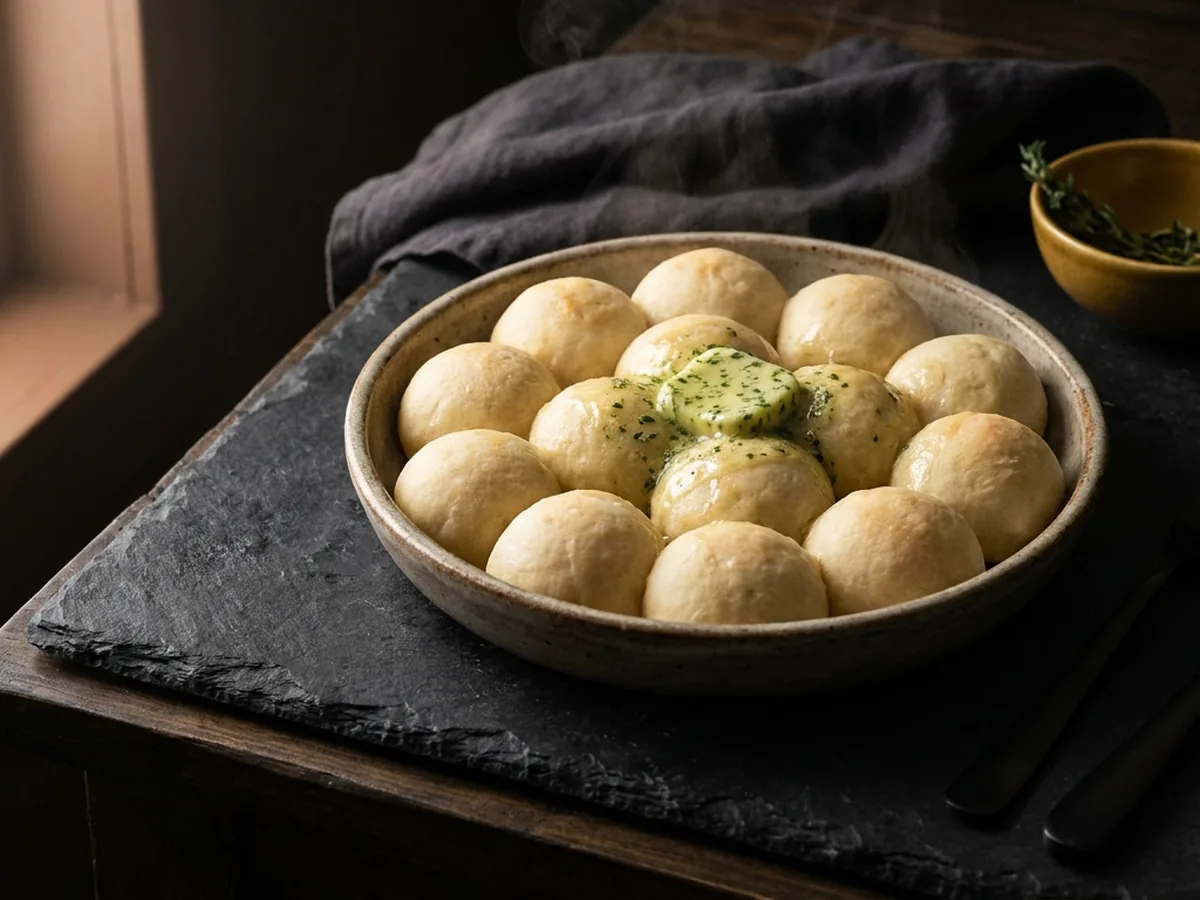
Walnut-sized, baked hot and fast so they stay pale and pillowy, with a soft garlic butter that melts into them. About…
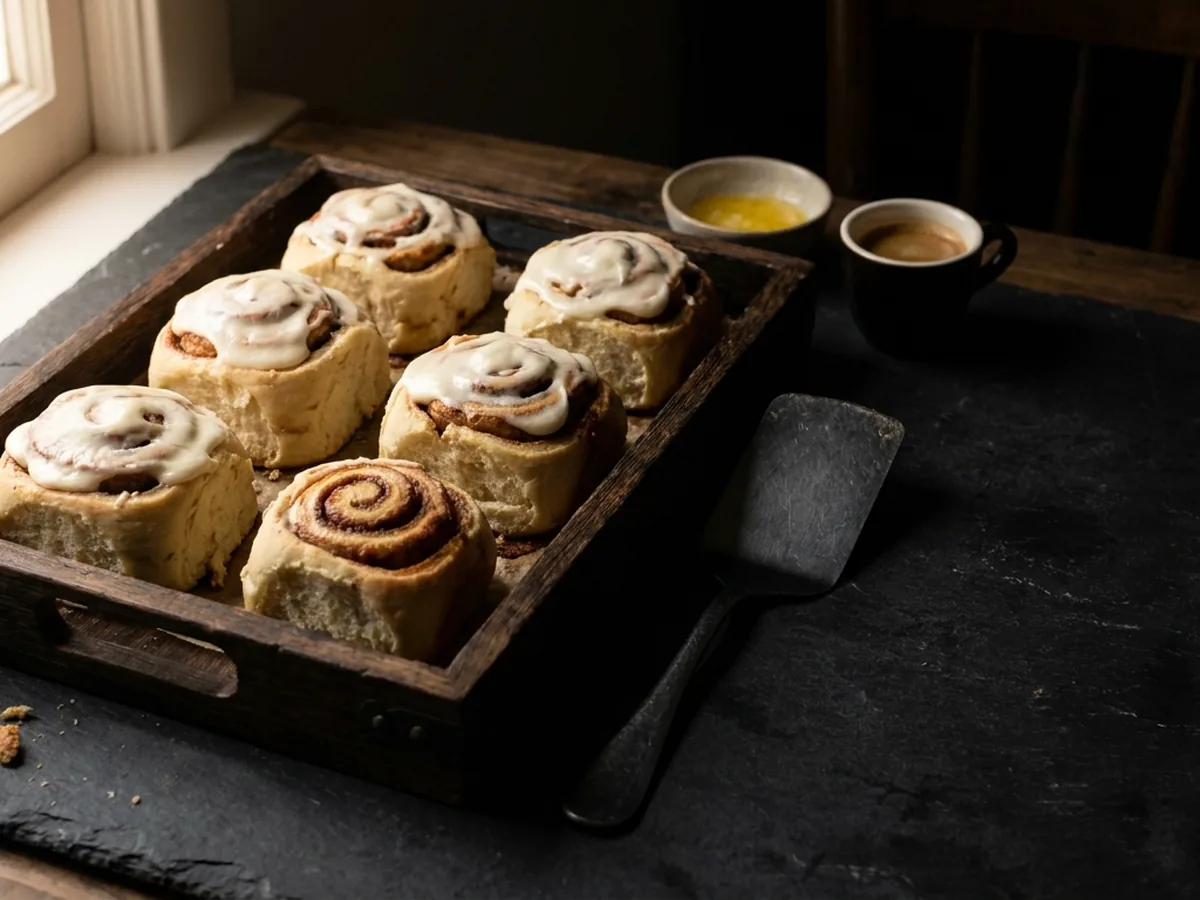
An enriched dough, a filling that is a third cinnamon by volume, and a cream cheese frosting with a much higher chees…