Domino's Pizza
Domino's Pizza Dough Copycat Recipe
A pressed rather than tossed dough, cold-fermented for two days. Fifteen minutes of work, and the fridge does the rest.
 food.fast
Takeaway taste, kitchen prices
Garlic Bread Built on Pizza Dough, Not on a Baguette
Garlic bread with a pizza-shop texture, from dough you already have.
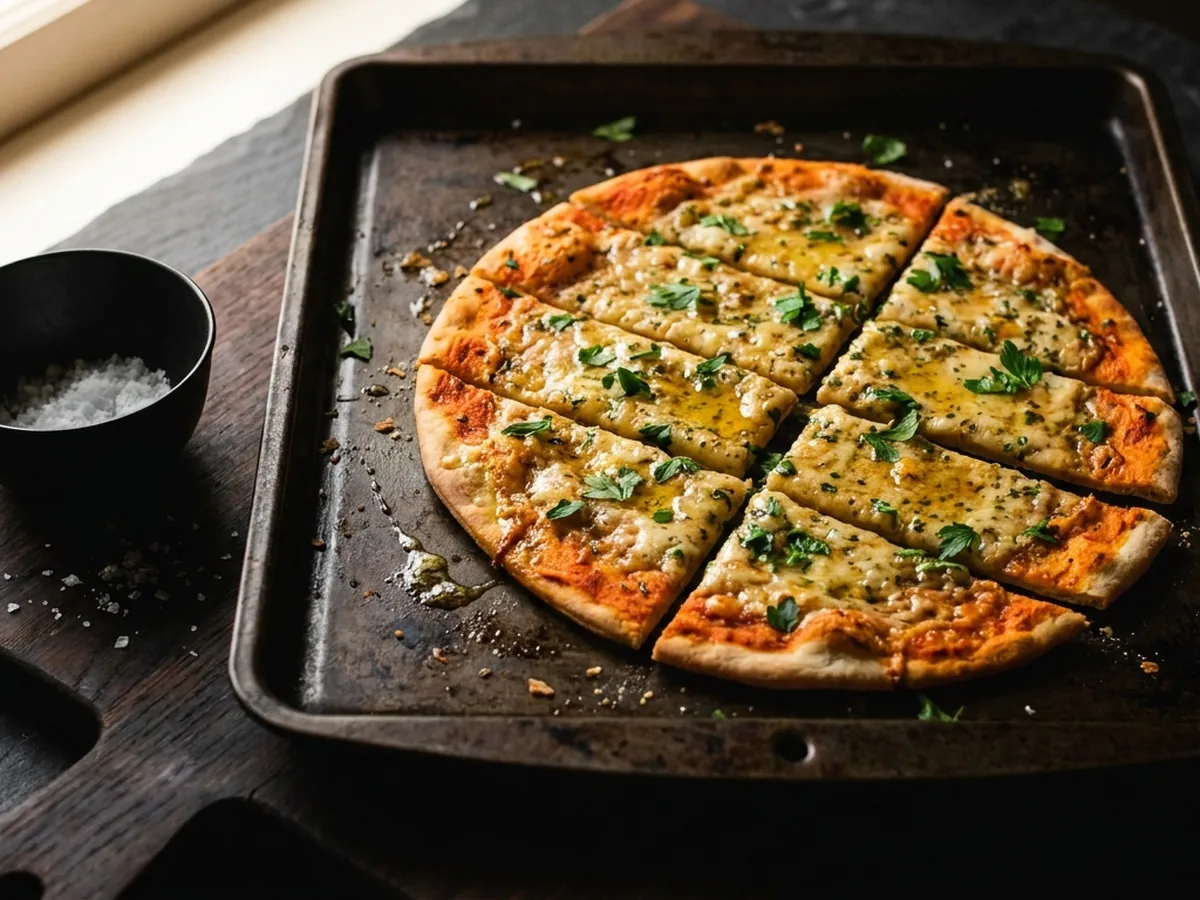
AI-generated illustration created for food.fast. It is not photographic evidence of a prepared batch.
Chain garlic bread is not bread with garlic butter on it. It is a pizza base, rolled thinner than usual, brushed rather than spread, and baked at pizza temperature. That is why it has crisp edges and a soft, chewy middle instead of the uniform crunch of a garlic baguette.
Because it starts from pizza dough, it is the single cheapest item on a pizza menu to make at home. The dough for a whole round costs less than twenty pence.
The butter goes on before baking, not after. Brushed on raw dough it soaks in slightly and then fries the surface as it bakes, which is what gives the finished bread its gloss.
The method gives quantities, timings and observable cues rather than asking you to guess. The 3 cases in If it goes wrong explain likely causes and corrective action.
See the recipe verification standard · See how the cost is calculated
Roll or press the dough to about 5 mm, which is noticeably thinner than you would for a pizza you intended to top.
There is no sauce and no cheese holding moisture on the surface, so the base dries and crisps much faster. At normal pizza thickness the middle stays doughy while the edges are already dark. At 5 mm the whole round finishes at the same time.
Melted butter with raw garlic in it will scorch at 240 °C, and burnt garlic is bitter in a way nothing rescues.
Two ways around it. Use garlic powder, which is already cooked and cannot catch. Or warm crushed fresh garlic gently in the butter for two minutes off a low heat first, then strain it out and brush the infused butter on. The second is better; the first is what a chain does.
Get the oven to 240 °C with the tray or stone already inside, and give it a full twenty minutes. Dough hitting a hot surface starts cooking immediately, which is most of the difference between crisp and pale.
About 20 minMelt the butter, then stir in the garlic powder, parsley, oregano and salt. Let it stand while the oven comes up so the dried herbs soften in the fat.
About 3 minPress or roll to a round roughly 25 cm across and 5 mm thick - thinner than a pizza base. Dust the hot tray with semolina so it does not stick.
About 5 minBrush the whole surface generously, including the rim. The butter soaks in slightly and then fries the top as it bakes, which is where the gloss comes from.
About 2 minTen to twelve minutes at 240 °C, until the rim is golden with a few dark blisters and the middle is set. Cut into strips straight away and brush any remaining butter over the hot bread.
About 12 minEach entry names a likely cause as well as a correction, so the advice remains useful when equipment, ingredients or batch size differ.
The recipes that go with this one, or that use what you have just made.
A pressed rather than tossed dough, cold-fermented for two days. Fifteen minutes of work, and the fridge does the rest.
The most requested copycat dip in Britain. Four minutes, six ingredients, and two decisions that most versions get wrong.
Breaded chicken strips baked on a rack rather than fried, with a dredge that crisps in a domestic oven. Thirty minute…