KFC
KFC Original Recipe Fried Chicken Copycat
Buttermilk brine, a double dredge with a rest, and controlled shallow frying. Honest about the one thing a home kitch…
 food.fast
Takeaway taste, kitchen prices
Small, Very Crunchy, and the Heat Is Baked Into the Flour
A hard, brittle coating rather than a sticky one, which is a different thing entirely from a buffalo wing.
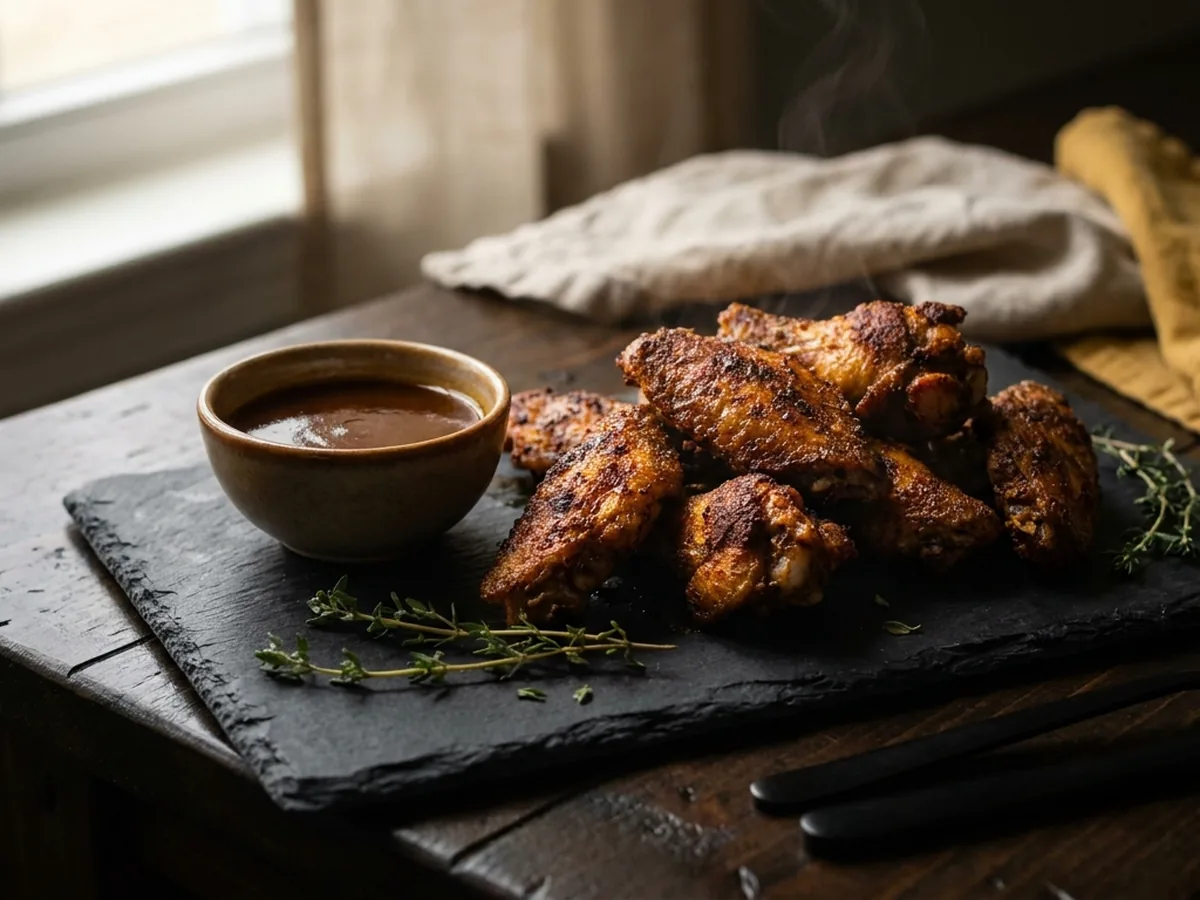
AI-generated illustration created for food.fast. It is not photographic evidence of a prepared batch.
These are not buffalo wings and the difference is worth stating up front. A buffalo wing is fried naked and then tossed in a butter-and-hot-sauce emulsion; the coating is wet and the wing underneath is plain. A KFC hot wing is dredged in seasoned flour with the chilli in the flour, and it is never sauced at all.
The result is a thin, hard, brittle coating that shatters rather than yielding, and heat that is distributed through the crust rather than sitting on it. They also stay crisp for far longer, because there is no moisture in a dry coating.
They are smaller than most chain wings, which is deliberate - the point is a high ratio of crust to meat.
The method gives quantities, timings and observable cues rather than asking you to guess. The 4 cases in If it goes wrong explain likely causes and corrective action.
See the recipe verification standard · See how the cost is calculated
The Original Recipe dredge is a double dredge with a wet dip between, deliberately built to be uneven and craggy. On a large bone-in piece that gives texture and holds seasoning.
On a wing it would be wrong. A wing is small, mostly skin and bone, and a thick craggy coating overwhelms the meat and takes too long to cook through - the crust darkens before the wing is done.
So this is a single dredge on a wet surface, pressed thin, with no second flour pass. You want a coating that is barely thicker than the skin.
Two consequences:
Less flour means more spice per gram of coating. The cayenne quantity looks high because it is diluted into much less flour.
It cooks faster. Eight to ten minutes at 175 °C, against thirteen to fifteen for a bone-in thigh.
Buttermilk, salt and hot sauce. Wings brine faster than large pieces; four hours is plenty and eight starts to soften them.
About 4 hrStraight from the brine into the seasoned flour, pressed on and then shaken to knock the excess off. One pass only - you want a thin coating.
About 8 minSpread out, not touching. The coating goes tacky as it hydrates.
About 10 minSix or seven pieces at a time. Deep golden and rigid. Probe for 74 °C - wings are better taken to 80, which renders more fat out of the skin.
About 20 minNo sauce toss. These are finished as they come out.
About 2 minAir fryer, 200 °C for 20 to 22 minutes, turned at 11. Spray generously before and again at the turn. A dry flour dredge needs fat to cook rather than dehydrate, and this is the step people under-do.
Oven, 220 °C fan for 30 minutes on a rack, turned at 18, drizzled with oil until the coating looks wet.
Both give a coating that is crisp rather than brittle. For a dredged wing the difference from frying is more noticeable than it is for a bare wing - see getting crisp without a fryer for why.
Drop the cayenne to a teaspoon and raise the paprika to a tablespoon. Still recognisably the same wing.
Skip the dredge entirely, fry naked for nine minutes, and toss in equal parts melted butter and Frank's. A completely different wing and worth making once to see the difference.
Half a teaspoon of ground habanero in the dredge alongside the cayenne.
Each entry names a likely cause as well as a correction, so the advice remains useful when equipment, ingredients or batch size differ.
The recipes that go with this one, or that use what you have just made.
Buttermilk brine, a double dredge with a rest, and controlled shallow frying. Honest about the one thing a home kitch…
The chain's most ordered flavour, and the reason home versions taste dusty is that they skip the butter. Forty minutes.
Buttermilk, mayonnaise and a proper quantity of dill, thicker than any bottled ranch. Five minutes and an overnight rest.
The blend itself, in proportions that actually work, with the two ingredients that carry it and the one nobody wants …