Domino's Pizza
Domino's Garlic and Herb Dip Copycat Recipe
The most requested copycat dip in Britain. Four minutes, six ingredients, and two decisions that most versions get wrong.
 food.fast
Takeaway taste, kitchen prices
Clarified Garlic Butter, and the Two Minutes That Stop It Separating
The little pot of garlic butter, clear and stable, for about nine pence.
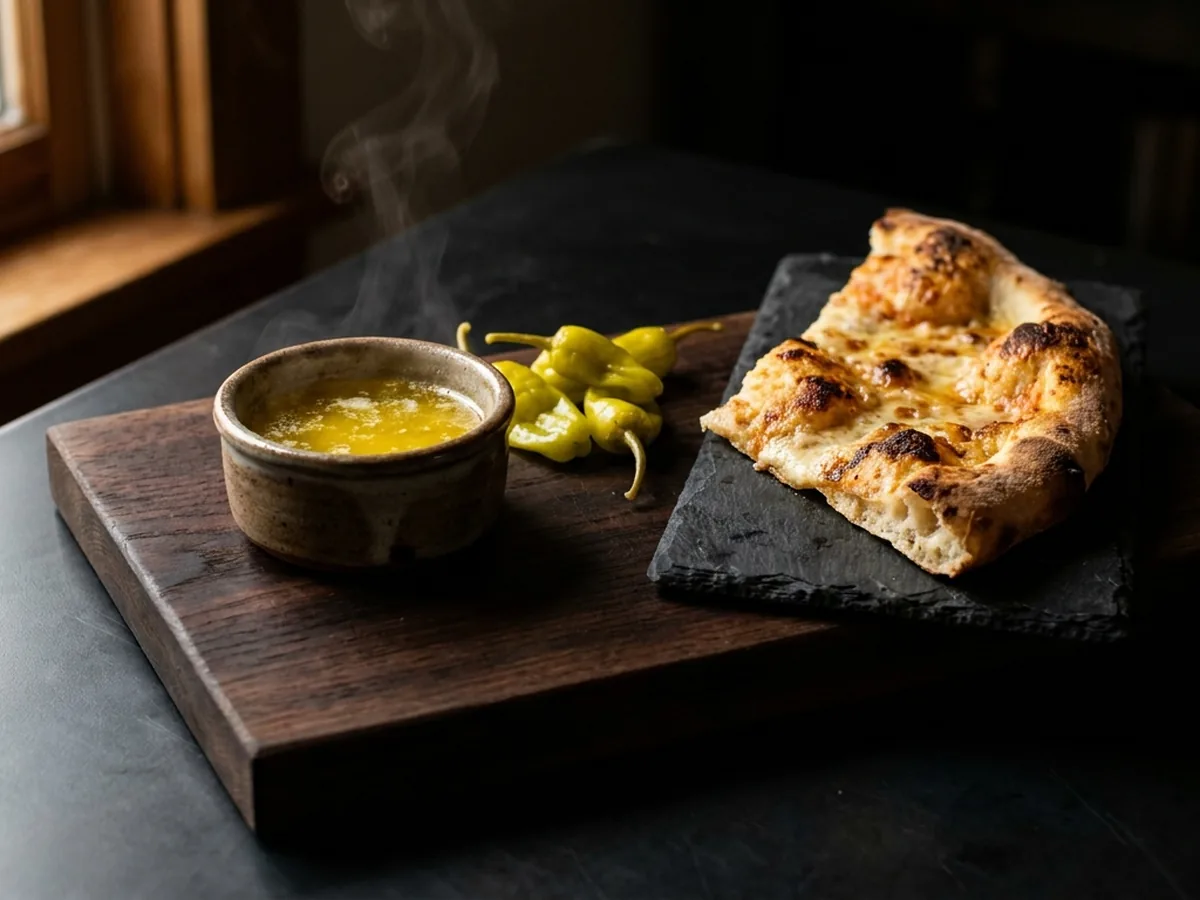
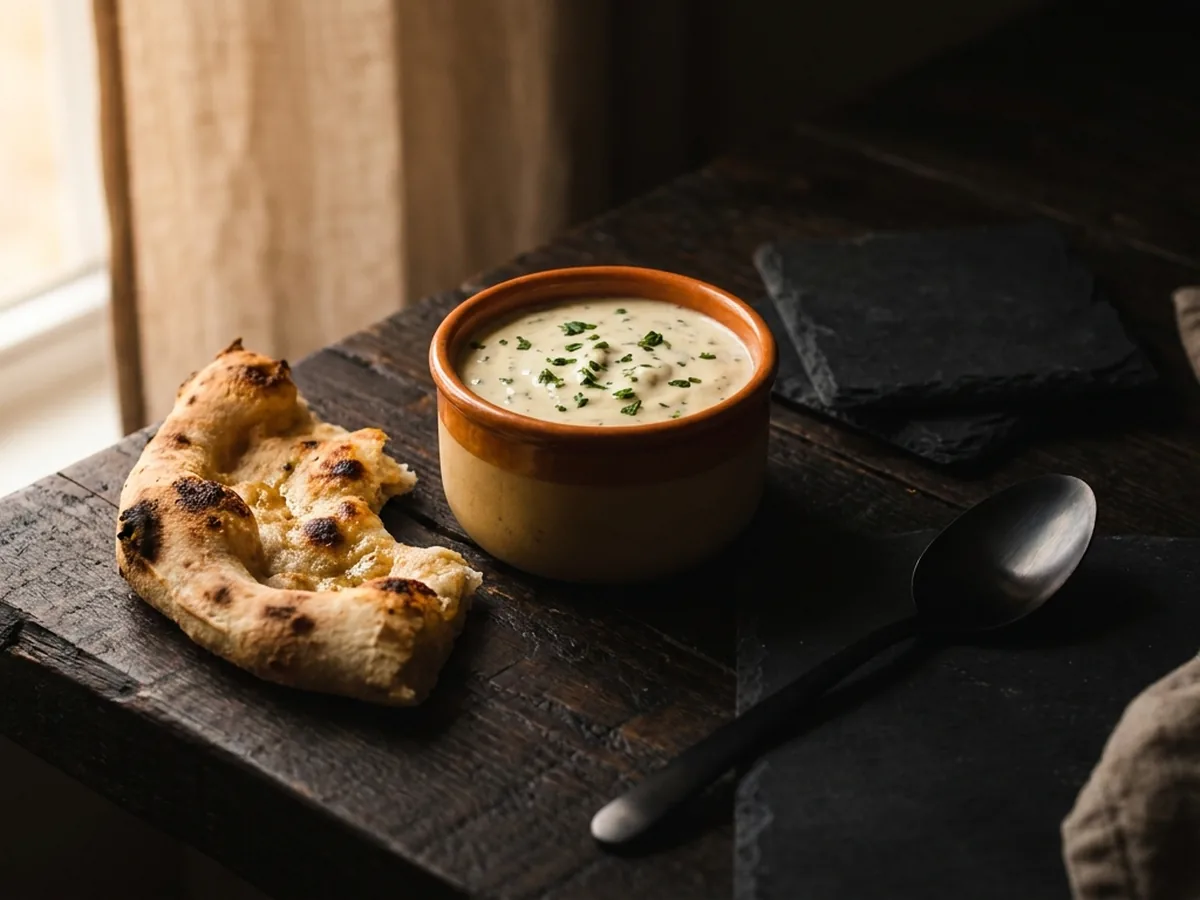
AI-generated illustration created for food.fast. It is not photographic evidence of a prepared batch.
This is the other great chain dipping sauce, and unlike the Domino's one it genuinely is butter-based. It is also the simplest recipe on this entire site - butter, garlic powder, salt - with one technique that makes the difference between a good result and the real thing.
That technique is clarifying. Butter is roughly 80 per cent fat, 16 per cent water and 4 per cent milk solids. Melt it plain and those solids stay suspended, the sauce looks cloudy, and as it cools they settle out and the whole thing separates into layers in the pot.
Skim them off and you have clarified butter: clear, golden, stable at room temperature, and it keeps for a month rather than a week. It takes an extra four minutes.
The method gives quantities, timings and observable cues rather than asking you to guess. The 5 cases in If it goes wrong explain likely causes and corrective action; 1 ingredient note explains choices that materially affect the result.
See the recipe verification standard · See how the cost is calculated
Melt the butter slowly over a low heat and do not stir it. Three layers form:
Once the foam has been skimmed and the bubbling has quietened - which means the water has boiled off - pour the clear middle layer carefully into your bowl, stopping when you reach the sediment. A sieve lined with muslin makes this foolproof.
You lose about 20 per cent of the volume. That is why the recipe starts with more butter than the yield suggests.
Take it slightly further and it becomes ghee: keep the heat on until the sediment browns and the butter smells nutty, then strain. This is not the Papa John's flavour - it is browner and nuttier - but it is very good and it is the same technique one minute later.
Salted butter varies enormously between brands - anywhere from 1.2% to 2.5% salt - which makes a small batch like this unpredictable. Unsalted butter plus a measured half teaspoon puts you in control.
Lowest heat. It will melt, then foam, then start to separate into three visible layers. This takes five or six minutes and cannot be hurried without browning it.
About 6 minWith a shallow spoon. Take your time - anything you leave will cloud the finished sauce.
About 1 minCarefully, stopping when you see the milky layer start to move. Or pour everything through muslin, which is easier.
Warm butter dissolves the powder; cold butter leaves it gritty. Whisk for thirty seconds until completely smooth.
About 1 minButter is solid below about 32 °C, so this sauce is a soft solid in a fridge and a liquid at room temperature. That is correct and it is why the pots come warm.
To serve, take it out twenty minutes ahead or warm it for fifteen seconds in a microwave. Do not boil it - overheated clarified butter separates into oil and a grainy residue, which is difficult to bring back.
It stays liquid at room temperature for hours, which is one of the practical advantages of clarifying. Un-clarified melted butter solidifies unevenly and looks unappealing within twenty minutes.
For a party, a small warmed ceramic pot keeps it right for the evening.
Two crushed cloves simmered in the butter for two minutes and then strained out. The flavour is in the butter and the garlic itself is gone, which removes the food safety question. Keeps two weeks rather than a month.
A teaspoon each of dried parsley, oregano and basil whisked in warm.
Half a teaspoon of chilli flakes steeped in the warm butter for ten minutes. Excellent on a pizza crust and better on pasta.
Each entry names a likely cause as well as a correction, so the advice remains useful when equipment, ingredients or batch size differ.
The recipes that go with this one, or that use what you have just made.
The most requested copycat dip in Britain. Four minutes, six ingredients, and two decisions that most versions get wrong.
Three tablespoons of oil in the tin, a dough that proves where it bakes, and a base that fries from underneath. The o…
Walnut-sized, baked hot and fast so they stay pale and pillowy, with a soft garlic butter that melts into them. About…
A baguette, a compound butter with peri-peri in it, twelve minutes in the oven. About twenty pence a portion.