Domino's Pizza
Domino's Pizza Dough Copycat Recipe
A pressed rather than tossed dough, cold-fermented for two days. Fifteen minutes of work, and the fridge does the rest.
 food.fast
Takeaway taste, kitchen prices
A Softer, Sweeter Base Built for a Domestic Oven
A soft American-style base that browns in a normal oven.
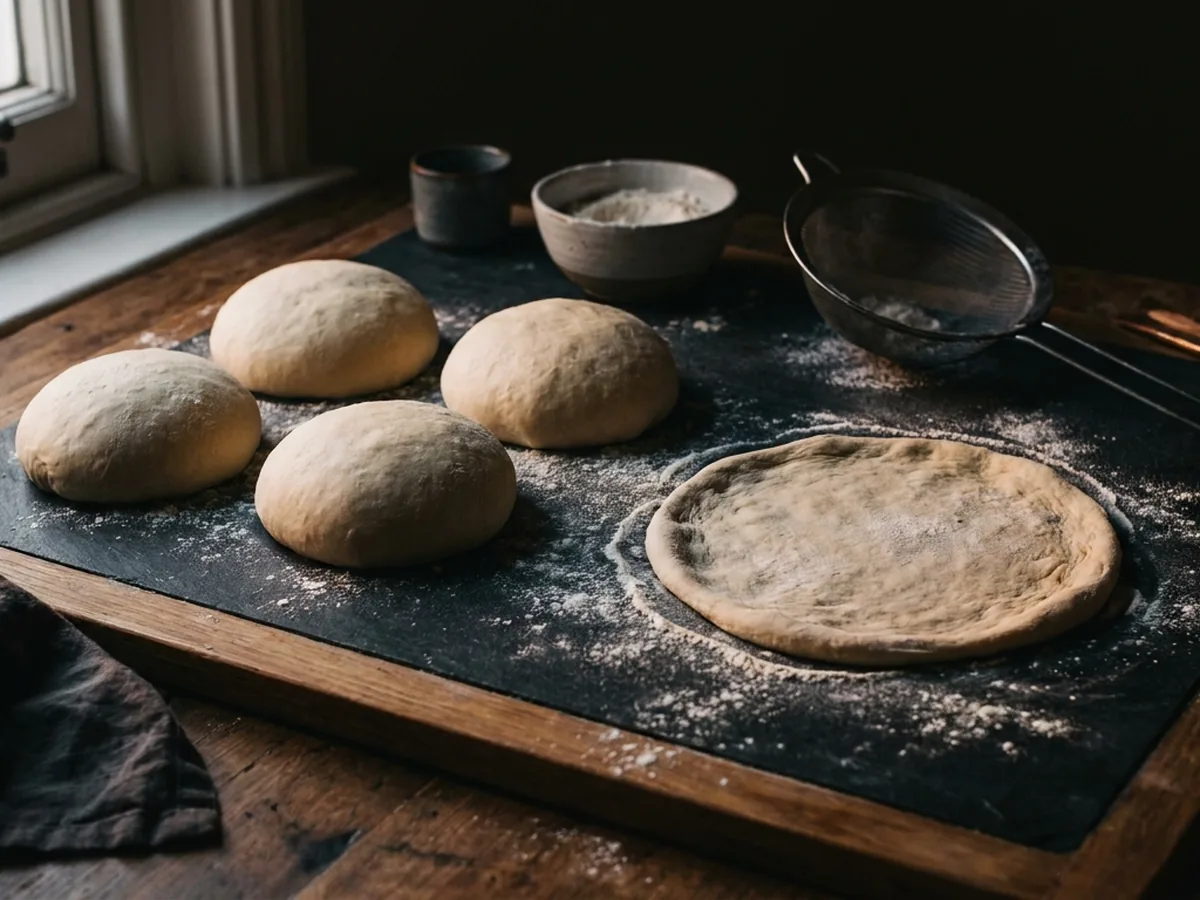
AI-generated illustration created for food.fast. It is not photographic evidence of a prepared batch.
A Neapolitan base wants 450 °C and gets it from a wood oven. A domestic oven tops out around 250 °C, which is why authentic recipes so often disappoint at home: the dough dries out before it colours.
American chain dough is built for lower temperatures. A little sugar and a little oil in the mix mean it browns at 240 °C in the time the base takes to cook through, so the two finish together.
That is the whole reason this dough works where a purist one does not. It is not a worse recipe; it is a recipe written for the oven most people own.
The method gives quantities, timings and observable cues rather than asking you to guess. The 3 cases in If it goes wrong explain likely causes and corrective action.
See the recipe verification standard · See how the cost is calculated
Neither is there for flavour, though both contribute a little.
Sugar browns. Yeast eats some of it, and what is left caramelises and feeds the Maillard reaction at a temperature where flour alone would still be pale. Two teaspoons across 500 g of flour is enough.
Oil softens and slows drying. It coats strands of gluten, which gives a more tender crumb, and it slows moisture loss so the base stays pliable rather than turning into a cracker.
Leave both out and you have a perfectly good lean dough that needs an oven you do not have.
The schedule here is flexible and the cold version is better.
Same day: two hours at room temperature, knocked back once at the hour. Perfectly good, mild flavour.
Overnight: knead, then straight into the fridge for 24 to 48 hours. The yeast barely works at 4 °C but the flour's own enzymes carry on breaking starch into sugars, which gives a base that tastes faintly sweet and browns much more readily.
Bring cold dough to room temperature for an hour before shaping, or it will fight you.
Stir the flour, yeast, sugar and water together until no dry flour remains, then cover and leave it. This rest hydrates the flour and does much of the kneading for you.
About 20 minAdd the salt and olive oil and knead for six to eight minutes until smooth and elastic. The dough should be slightly tacky but should not stick to a clean dry hand.
About 8 minCover and leave at room temperature for about two hours until doubled, or refrigerate for 24 to 48 hours for a better flavour and easier browning.
About 2 hrSplit into two pieces of about 400 g and shape each into a tight ball by folding the edges underneath. Rest them covered for twenty minutes so the gluten relaxes.
About 20 minPress each ball out to about 30 cm, leaving a slightly thicker rim. Top, then bake at 240 °C on a preheated steel or stone for 10 to 12 minutes until the rim is golden and blistered.
About 12 minEach entry names a likely cause as well as a correction, so the advice remains useful when equipment, ingredients or batch size differ.
The recipes that go with this one, or that use what you have just made.
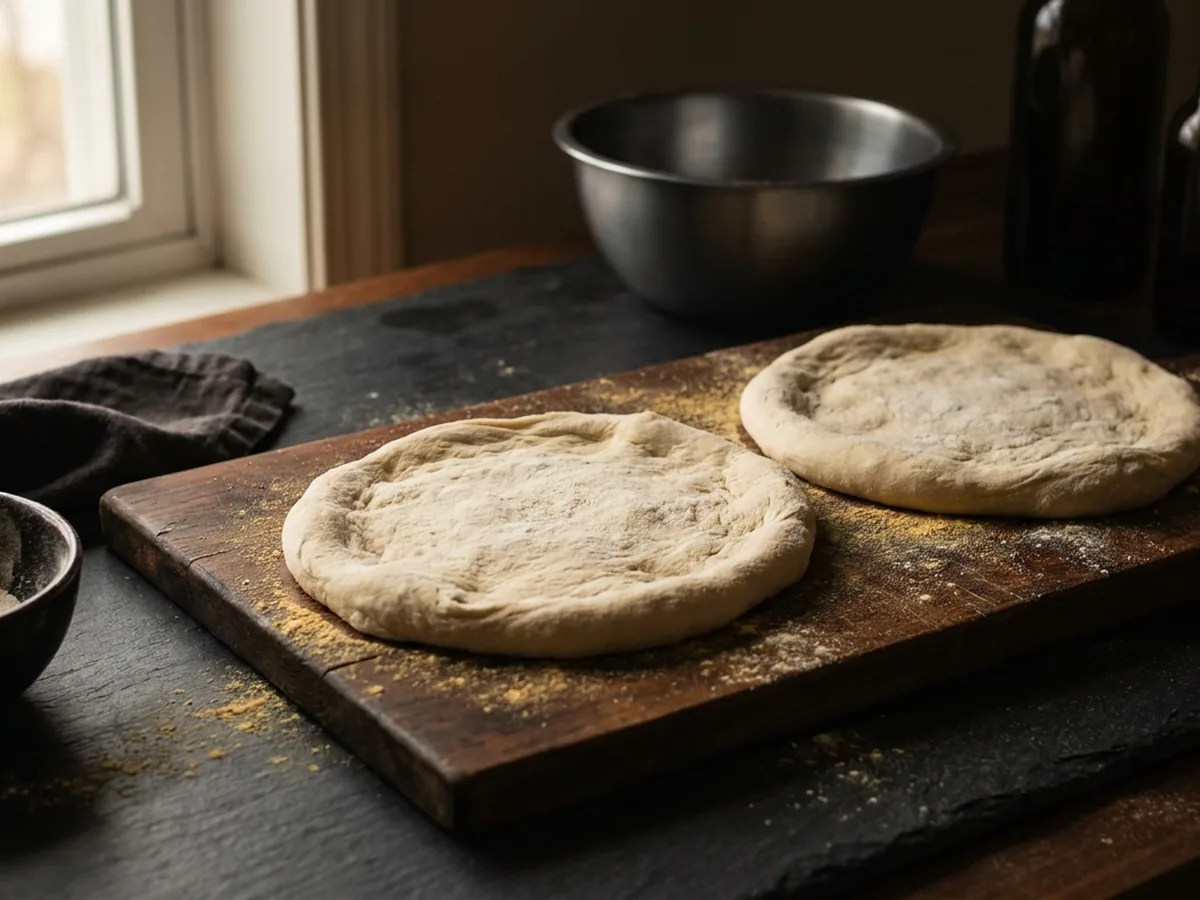
A pressed rather than tossed dough, cold-fermented for two days. Fifteen minutes of work, and the fridge does the rest.
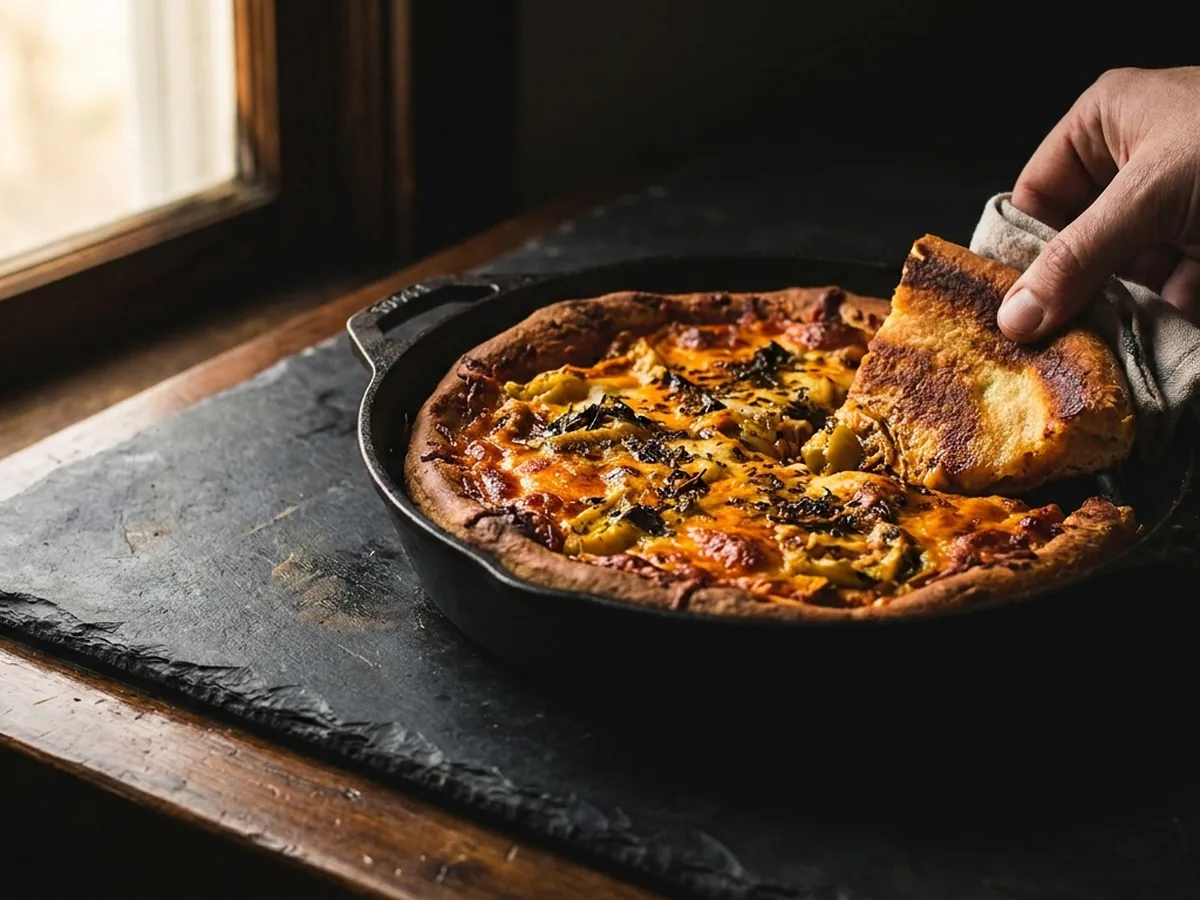
A high-hydration dough proved in a pool of oil, so the base fries against the tin while the top bakes. Two hours, mos…
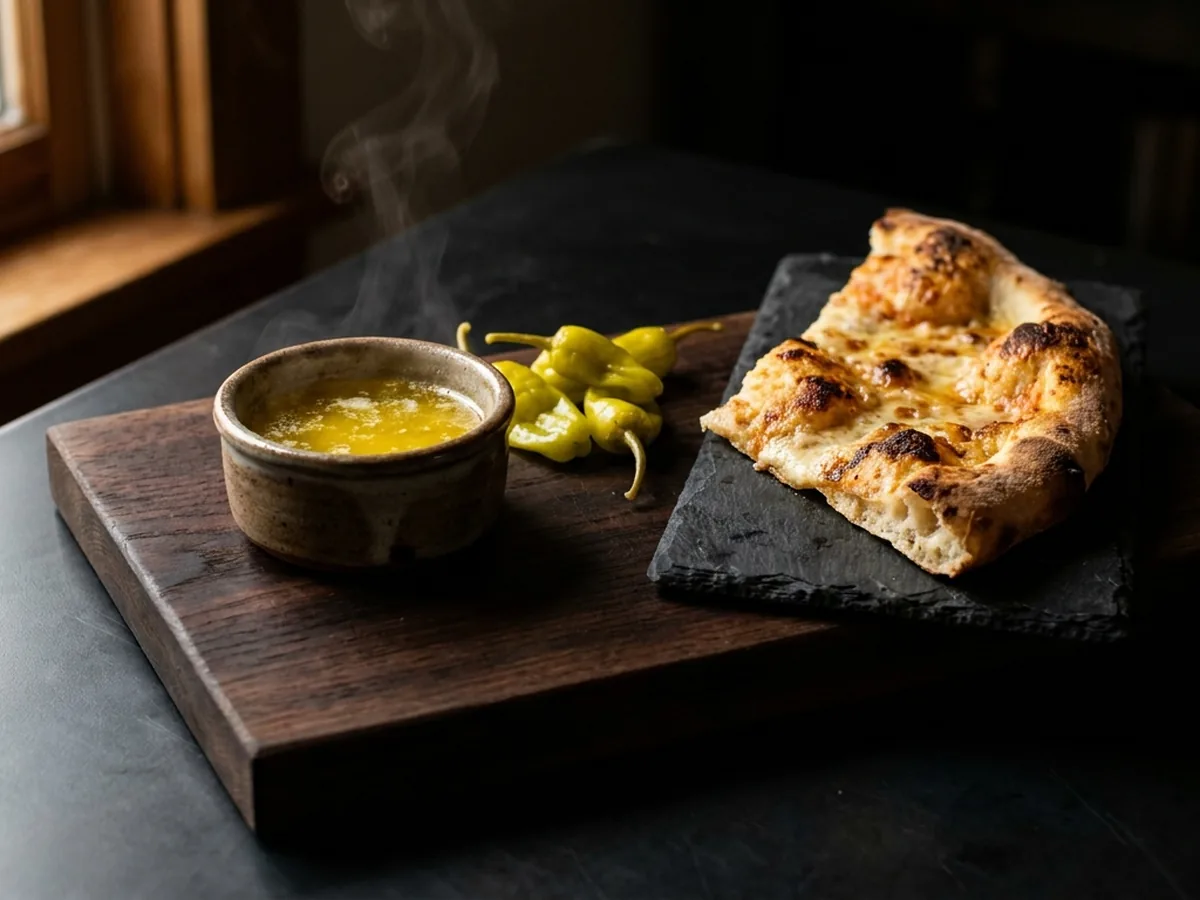
Butter with the milk solids skimmed off, garlic powder and salt. Six minutes, and the skimming is what keeps it clear…