Starbucks
Starbucks Vanilla Syrup Copycat Recipe
Sugar, water, vanilla. Four minutes on the hob for a bottle that costs about forty pence and replaces a shelf of them.
 food.fast
Takeaway taste, kitchen prices
A Daily Coffee Is a Small Number That Becomes a Large One
The per-cup saving on coffee is modest. The annual figure is not, and the payback period on equipment is shorter than most people assume. Here is the arithmetic, including the case for not bothering.
The reason coffee-shop drinks are profitable is that the flavouring - which is what people are actually buying - costs almost nothing.
A pump of vanilla syrup is about 15 ml. Made from the syrup recipe on this site, that is a little over one penny. It is sold as part of a drink priced near five pounds.
| Drink | Ingredients at home | Typical UK shop price |
|---|---|---|
| Filter coffee, black | £0.12 | £2.60 |
| Latte | £0.31 | £3.85 |
| Flat white | £0.29 | £3.75 |
| Iced coffee | £0.32 | £3.95 |
| Vanilla latte | £0.33 | £4.25 |
| Caramel macchiato | £0.55 | £4.45 |
| Pumpkin spice latte | £0.68 | £4.85 |
| Cold brew with sweet cream | £0.48 | £4.75 |
Home figures are ingredients at UK supermarket prices for the quantity used, including a share of any syrup batch. Every one has a recipe on this site.
Per-cup differences of three or four pounds are easy to dismiss. The annual figure is harder to.
Five drinks a week, 52 weeks:
Two drinks a day, five days a week:
For a household where two people both have a daily coffee habit, the annual difference is comfortably into four figures, and it is money that is leaving in three-pound increments that nobody notices.
That is the whole argument of this hub in miniature: nothing about the "little" purchase is little once you multiply it by the number of times you make it.
The temptation is to buy an espresso machine. For most people that is the wrong first purchase.
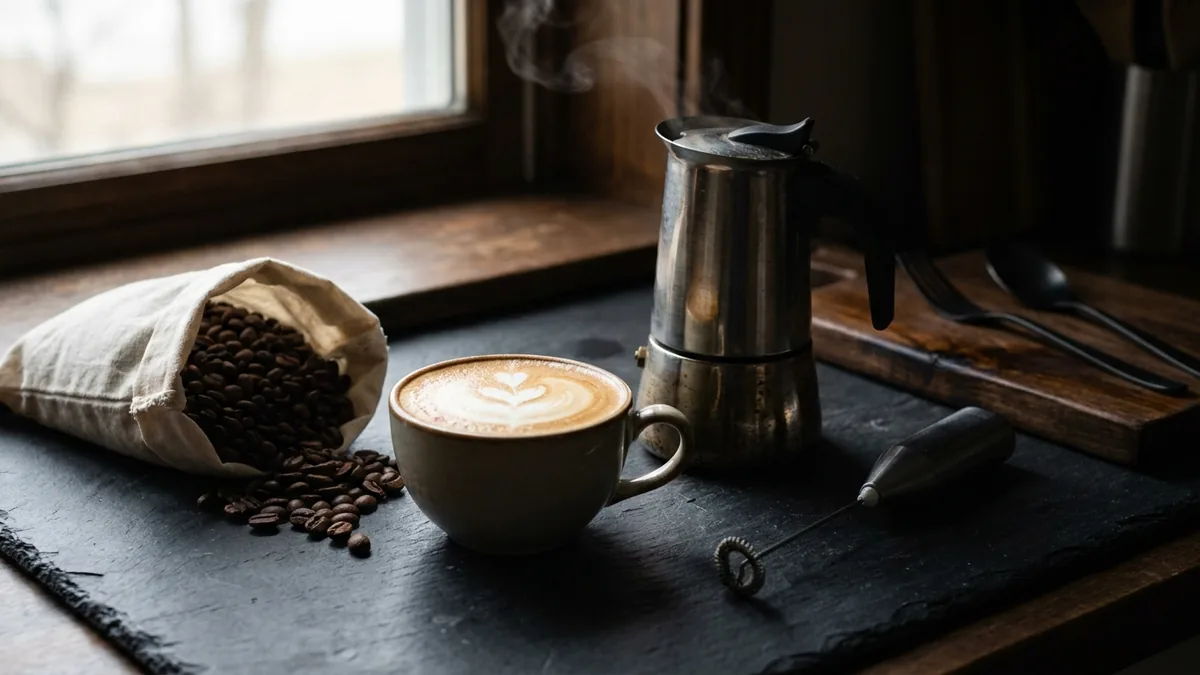
What covers most drinks, for about £40:
That kit pays for itself in about twelve days of a daily-latte habit.
An espresso machine at £250 to £600 pays for itself in three to six months at the same rate, and produces better short drinks - an actual espresso, a proper flat white. If you drink long milky drinks, the moka pot gets you 85 per cent of the way and the syrup decides the rest.
A grinder matters more than the machine, and this is the genuinely useful upgrade. Pre-ground coffee loses most of its aromatics within about two weeks of opening. A £40 burr grinder improves every drink you make more than a £400 machine does.
Frother, then better beans, then a grinder, then a machine. Most people do it in exactly the opposite order and end up with an expensive machine making drinks from stale supermarket pre-ground.
This is the recipe category where the counter-argument is strongest, and it would be dishonest not to make it.
The walk might be the point. If the coffee shop is ten minutes of being out of the house and away from a desk, the coffee is not what you are buying. That has value and it does not appear in a cost table.
Time in the morning is scarce. Ninety seconds is not nothing when you are already late, and a drink somebody else makes while you queue is a different proposition from one you make.
It is a place. Working in a café, meeting somebody, waiting for an appointment. The drink is the rent.
The per-cup saving is small in absolute terms. Unlike a takeaway, where a single order can save twenty pounds, coffee saves in three-pound units. It requires the habit to change, not one decision.
What the arithmetic is genuinely for is the unconsidered habit - the second coffee bought on autopilot, the drink you would happily have made at home if the kit were there. Fix that one and leave the ones you enjoy alone.
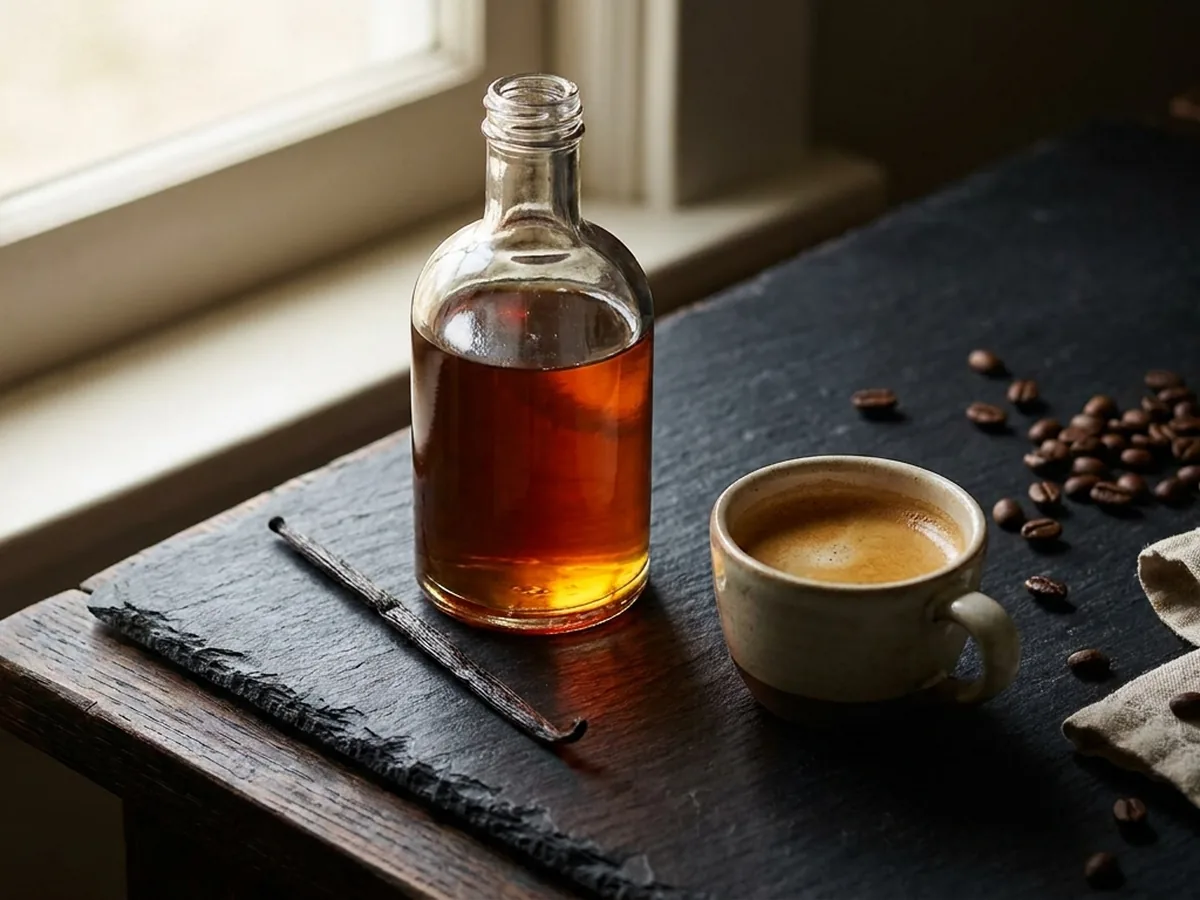
Sugar, water, vanilla. Four minutes on the hob for a bottle that costs about forty pence and replaces a shelf of them.
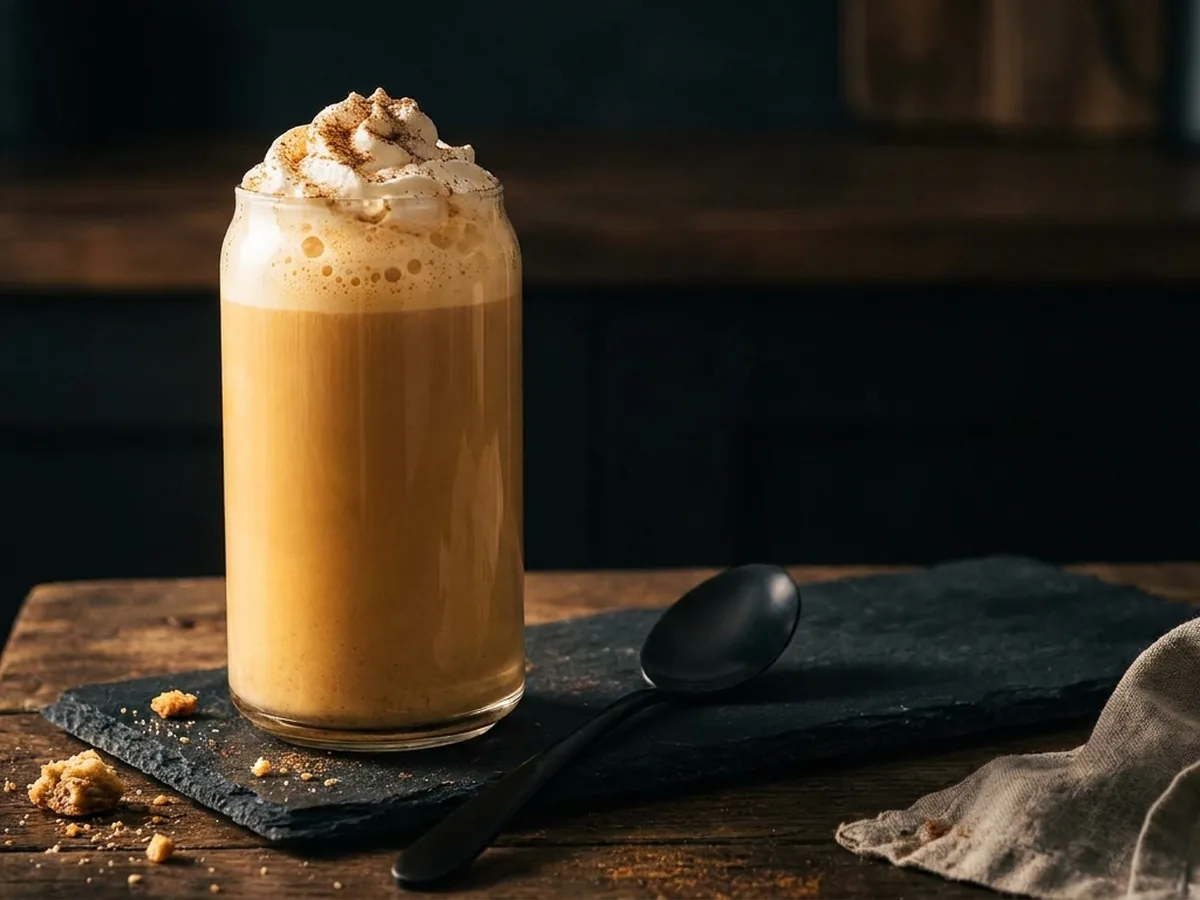
A pumpkin spice sauce made in fifteen minutes that keeps two weeks, and the drink built from it in ninety seconds.
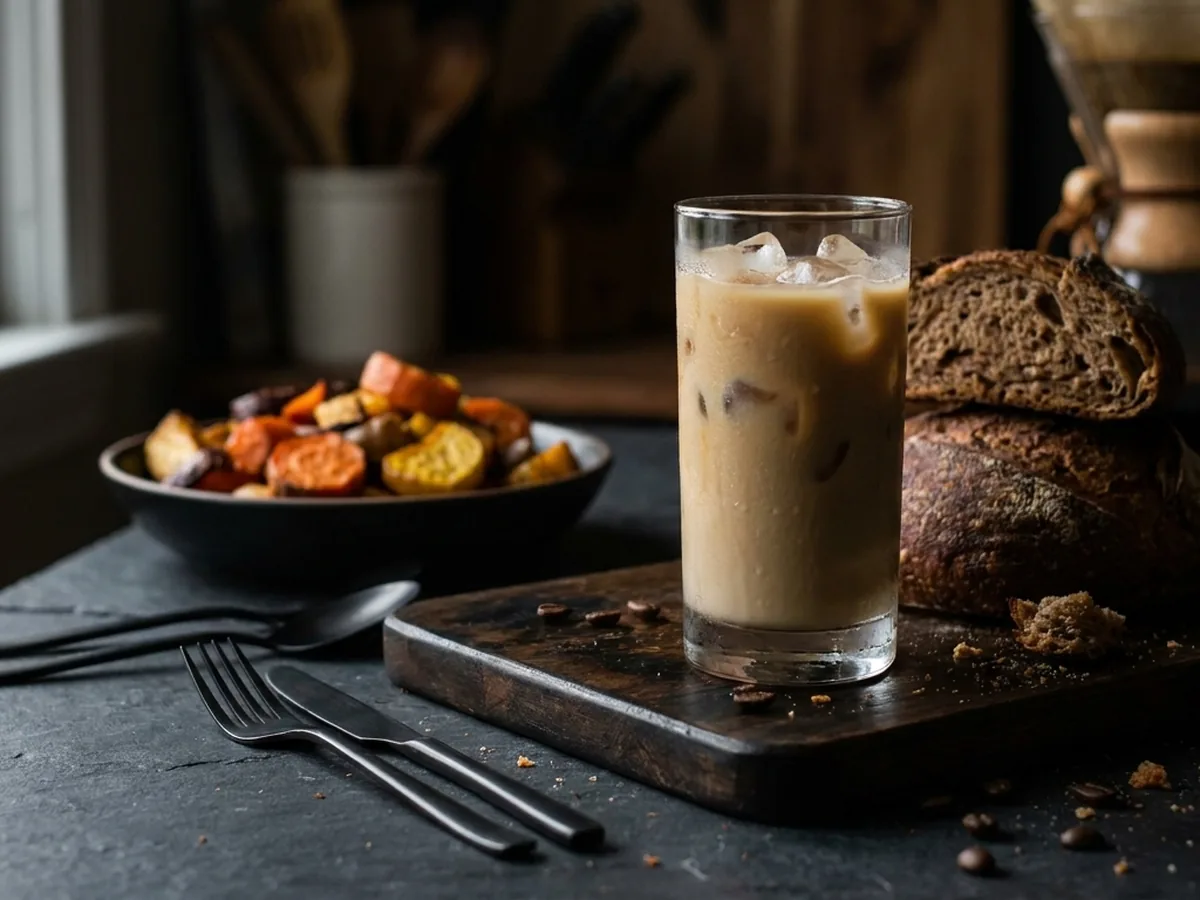
Hot-brewed at double strength, chilled fast, and sweetened with syrup rather than granules. Five minutes plus chilling.
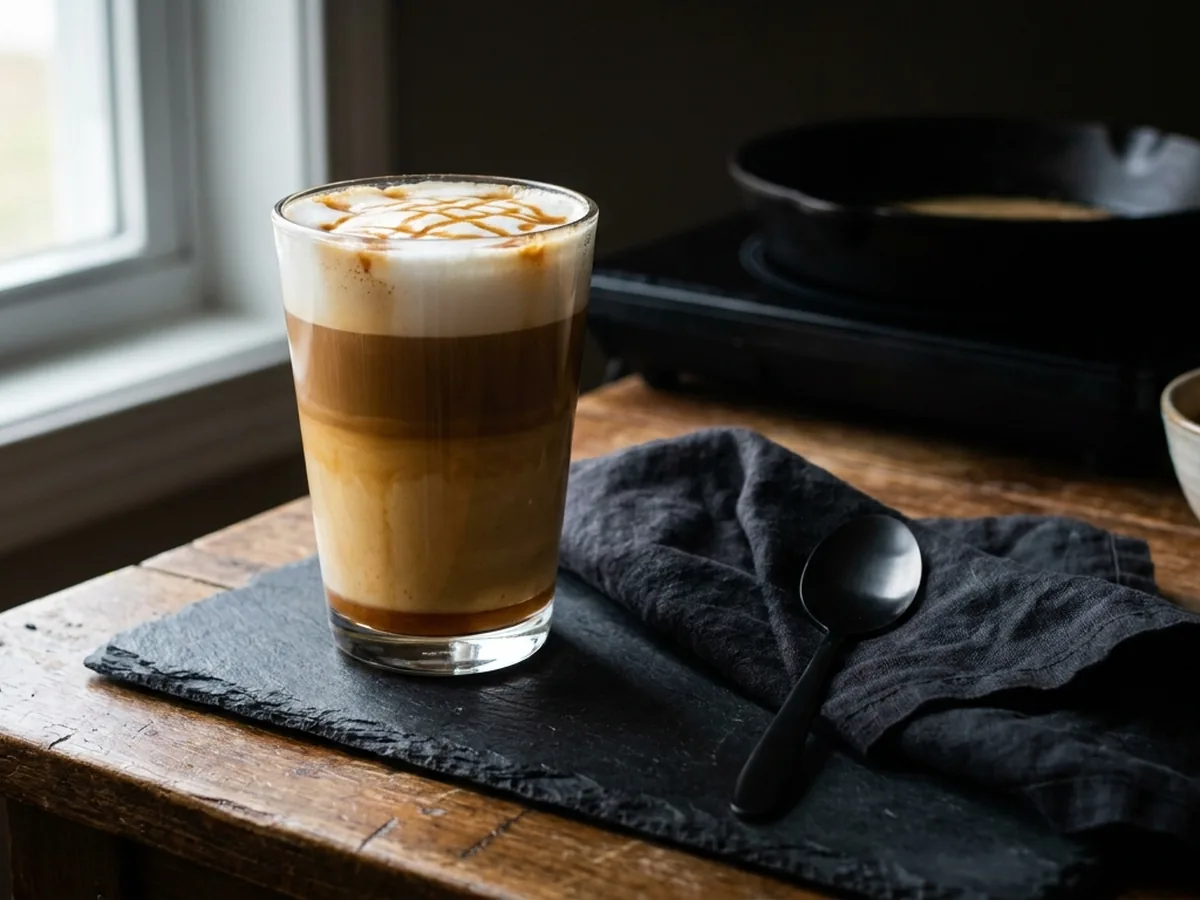
Vanilla syrup, milk, espresso poured last so it marks the foam, and a caramel drizzle. Two minutes once the syrup is made.