McDonald's
Big Mac Sauce Copycat Recipe
Eight minutes, one bowl, no cooking. The sweet pickle relish base that every 'secret sauce' recipe gets wrong, and th…
 food.fast
Takeaway taste, kitchen prices
The Ingredient List Is Published. Almost Nobody Reads It Properly
Food law requires most chains to publish what is in their food. Those lists are in descending order by weight, which makes them the single most useful document in copycat cooking - and almost every blogger guesses instead.
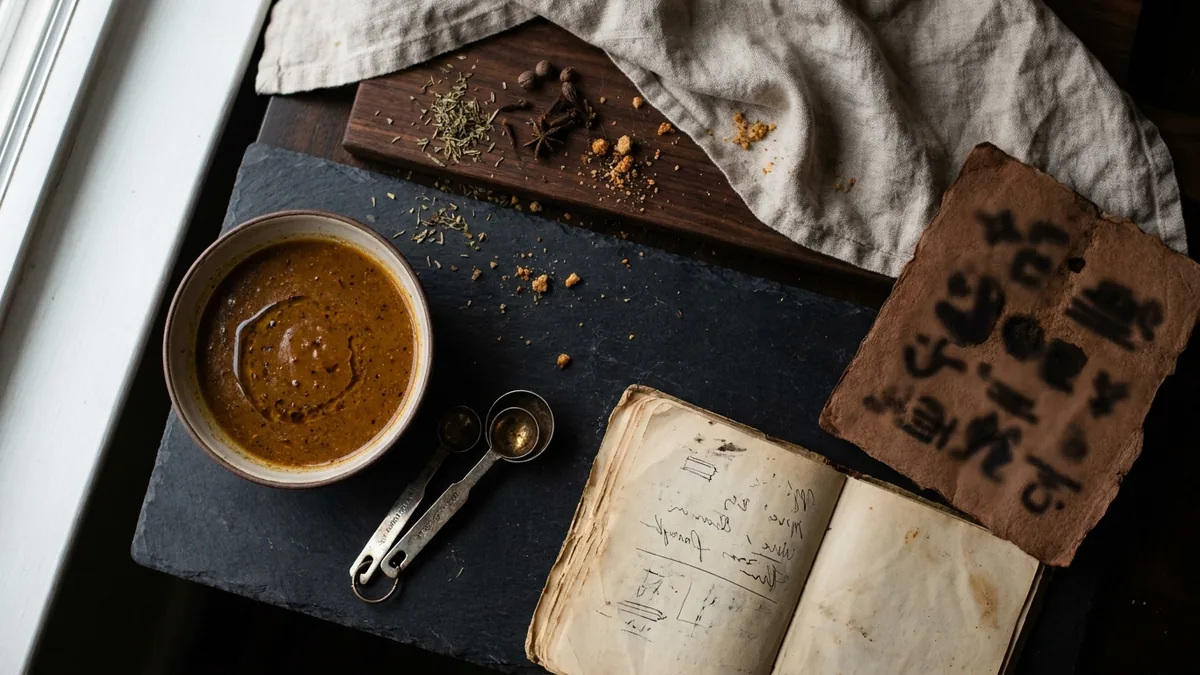
In the UK, the EU and Australia, a business selling prepacked food must declare its ingredients. For food sold loose - which is what a restaurant sells - the rules are narrower, covering the fourteen major allergens rather than a full list. But almost every large chain publishes a full ingredient list anyway, because allergen questions are easier to answer with a document than with a conversation, and because the same information already exists for their retail products.
Where to look, in order of usefulness:
What you should not do is rely on a third-party site's transcription. They go out of date, and they introduce errors that then propagate.
This is the single most useful fact about an ingredient list: items are listed in descending order of weight at the time of manufacture.
That means the first three ingredients are usually most of the product, and the relative position of any two ingredients is a hard fact rather than an opinion.
Take the most-argued-about example on this site. A very large number of published Big Mac sauce recipes start from Thousand Island dressing or a ketchup base. But McDonald's own ingredient lists put pickle relish above tomato paste in every market that publishes one.
That is not a hint. It means there is more relish than tomato by weight, which means it is a relish sauce and not a tomato sauce, which means every recipe starting from ketchup is wrong about the most fundamental thing in it.
One caution. "At the time of manufacture" matters for anything that loses water during processing. Water is frequently first on a list for a sauce and tells you nothing useful. Skip past it and look at what comes next.
Find the chain's published ingredient list and check whether the recipe's main ingredient matches the list's first non-water ingredient. If it does not, the recipe is probably a copy of a copy. This one check eliminates most of what is published online.
When an ingredient is itself made of several things, the rules require those things to be broken out in brackets. That is where the detail lives.
A list might say:
Mayonnaise (Rapeseed Oil, Water, Pasteurised Egg Yolk, Spirit Vinegar, Salt, Sugar, Lemon Juice Concentrate)
which tells you the base is a standard mayonnaise rather than something exotic. Or:
Seasoning (Salt, Monosodium Glutamate, Spices, Dried Garlic, Dried Onion, Anti-caking Agent)
which tells you three useful things at once: MSG is in it and is second by weight within the seasoning, the aromatics are dried rather than fresh, and "spices" is doing a lot of unspecified work.
That last point is worth knowing. "Spices" and "flavourings" are legitimate collective terms and a manufacturer is not required to break them down, which is precisely where a genuinely proprietary blend hides. When a list says "spices", the list has told you everything it is going to.
A chain ingredient list will usually contain a handful of things you would never buy. Most of them exist to survive a supply chain, not to taste of anything, and you can leave them out.
The ones that do change the food, and are worth knowing:
| Additive | What it actually does | Do you need it? |
|---|---|---|
| Monosodium glutamate | Savoury depth | Yes, if you want the flavour |
| Sodium citrate / emulsifying salts | Stops cheese sauce splitting | Yes, and it is transformative |
| Xanthan gum | Thickens and suspends | Rarely - reduce liquid instead |
| Modified starch | Thickens, survives freezing | No - cornflour is fine |
| Baking powder in a coating | Crisper, browner crust | Yes |
| Calcium chloride in pickles | Keeps them crunchy | No |
| Potassium sorbate, sodium benzoate | Shelf life | No - you are eating it this week |
| Caramel colour | Colour only | No |
| Anti-caking agents | Stops powder clumping in a warehouse | No |
The rule of thumb: if it is there to make the food last, skip it. If it is there to make the food behave - emulsify, crisp, thicken, taste savoury - it is worth understanding, and sometimes worth buying.
Here is how the process actually runs on a real sauce.
Step one, read the order. Water, rapeseed oil, pickle relish, sugar, spirit vinegar, egg yolk, tomato paste, salt, dried onion, dried garlic, spices, paprika extract.
Step two, ignore water and identify the base. Oil plus egg yolk plus vinegar is mayonnaise. The list has separated the components rather than declaring "mayonnaise" as a compound ingredient, which some manufacturers do.
Step three, note what is above what. Relish is above sugar and well above tomato paste. So: a mayonnaise base, heavily relished, sweetened, with tomato as a minor colour-and-depth ingredient rather than a primary one.
Step four, look for the surprises. Paprika extract is at the end - it is a colouring, which tells you the sauce is expected to be a specific shade and the relish alone does not get it there. That is why the recipe on this site includes a little paprika.
Step five, work out the process. Nothing here needs heat. It is a cold emulsion, which means mixing and resting rather than cooking.
That is the whole method. Five steps, no tasting required, and you have the shape of the recipe before you have bought anything. The tasting is for adjusting the proportions, which is the next article.
Fried chicken coating lists are less useful for composition and more useful for technique, and knowing which kind of list you are reading saves time.
A typical one reads: wheat flour, salt, spices, monosodium glutamate, dried garlic, dried onion, raising agent (sodium bicarbonate, diphosphates), dextrose, paprika extract.
The composition half is unremarkable - seasoned flour, and "spices" is hiding the interesting part, as it always does.
The process half is where the value is:
None of that is about what is in the flour. All of it is about what happens in the fryer, and it is the half that most people skip.
Eight minutes, one bowl, no cooking. The sweet pickle relish base that every 'secret sauce' recipe gets wrong, and th…
The blend itself, in proportions that actually work, with the two ingredients that carry it and the one nobody wants …
Sodium citrate is the whole answer. A smooth, pourable cheese sauce from real cheddar that stays smooth when it cools…