KFC
KFC Original Recipe Fried Chicken Copycat
Buttermilk brine, a double dredge with a rest, and controlled shallow frying. Honest about the one thing a home kitch…
 food.fast
Takeaway taste, kitchen prices
The Gaps That Do Not Close, and What to Do Instead
Most of the distance between a home copy and the original is technique. Some of it is equipment that costs more than a car and one of them is a genuine safety line. Here is the honest list, and the best available substitute for each.
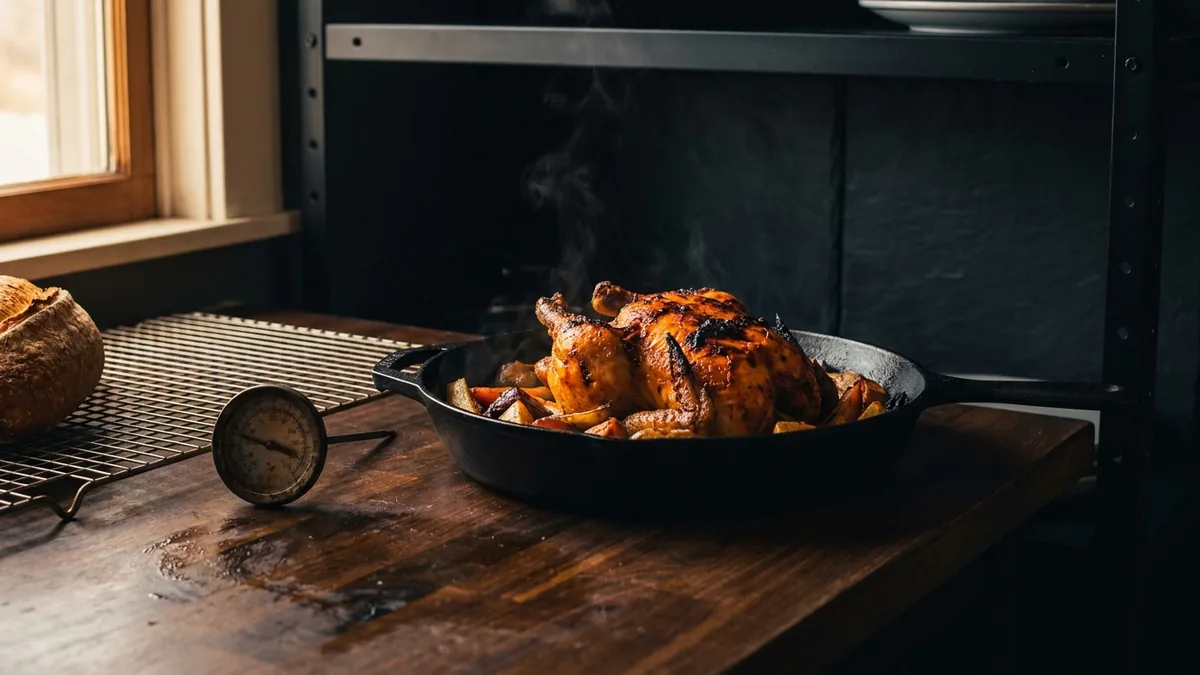
KFC's Original Recipe chicken is cooked in a commercial pressure fryer: a sealed vessel holding oil at roughly one atmosphere of gauge pressure. Raising the pressure raises the boiling point of the water inside the meat, so a bone-in thigh cooks through in nine or ten minutes without the surface drying out.
Those machines have pressure relief valves, interlocks that prevent opening under pressure, thermal cut-offs and a lid designed to contain a failure.
A domestic pressure cooker has none of the features needed to hold hot oil safely. Every major manufacturer explicitly prohibits it. The failure mode is a sudden release of superheated oil, and people have been very seriously injured.
There is no version of this that is worth the risk, and no recipe on this site will ever describe it. If you find a recipe anywhere that tells you to pressure-fry in a consumer appliance, it should end your trust in that source entirely.
What to do instead: brine the chicken for eight to twelve hours so it holds its own moisture, then shallow fry with controlled heat. That closes most of the gap, and the fried chicken recipe sets out exactly how.
Pressure frying in a domestic pressure cooker is prohibited by the manufacturers of every major consumer model and has caused serious injuries. It is the only technique on this site we refuse to describe at all.
A chain chip has been through a process no home kitchen replicates:
Every one of those steps contributes. The blast freeze in particular is not reproducible - a domestic freezer runs at −18 °C and freezes slowly, forming large crystals that rupture cells and give a mushier chip.
What to do instead: twice-fry fresh potatoes, as set out in the Cajun fries recipe. You get a genuinely excellent chip. It has a thicker, crunchier shell and a fluffier, more potato-y interior than a chain chip, which many people prefer and which is not the same thing. Our page says so rather than implying you have matched it.
Soft-serve machines whip a measured quantity of air into the mix as they freeze it, a quantity the trade calls overrun. Typical soft serve runs at 30 to 50 per cent overrun - meaning the finished product is a third to a half air by volume.
That air is what makes soft serve light, smooth and servable at around −4 °C without being either hard or runny. It is also why a Blizzard can be held upside down: the mix has enough structure from air and stabilisers to resist gravity briefly.
A domestic ice cream machine achieves maybe 20 per cent overrun. A no-churn method achieves close to zero beyond whatever you whip in by hand.
What to do instead: work from a good ice cream rather than trying to make soft serve. Softened, beaten briefly with a little milk and refrozen for twenty minutes gives a texture close enough to be satisfying, and the Frosty recipe uses condensed milk to suppress ice crystals in the same way commercial stabilisers do. The page is explicit that this is an approach rather than a replication.
A pizza chain's conveyor oven runs at 250 to 290 °C with forced air from above and below, and a pizza travels through it on a belt in five or six minutes. A burger chain's flat-top is a 25 mm steel plate held at 230 °C with enough thermal mass that a cold patty barely dents it.
The domestic equivalents are worse in a specific way: they lose temperature when food goes on them and recover slowly. A non-stick frying pan drops forty degrees the instant a patty lands and then steams the meat. A domestic oven opens, loses eighty degrees, and takes four minutes to get back.
This gap is narrower than the others and it is the one most worth spending money on.
What to do instead:
Get those right and a home burger and a home pizza are genuinely competitive, which is not true of chips or soft serve.
It would be a dishonest article that only listed the disadvantages. Four things a home kitchen does better, and all of them are real:
Fresh oil. A restaurant fryer holds oil that has been through many cycles and has developed breakdown products that affect flavour. Yours is clean. Whatever you think about frying generally, this is a measurable difference in the finished food.
Fresh spices. A commercial blend has been mixed, shipped and stored. Ground white pepper loses a great deal of its character within a year. A blend you mixed this morning is more intense than the original, which is why the KFC seasoning page says a home version is not a compromise.
Time. A 48-hour cold-fermented pizza dough develops flavour that no same-day process produces, and a restaurant that needs 400 dough balls a day cannot always afford the fridge space. You can.
No holding. The single biggest one. A Krispy Kreme is measurably better hot, and the company built a lit sign to tell people so. Your doughnut is ninety seconds old. Nothing on this site closes that gap in the restaurant's favour.
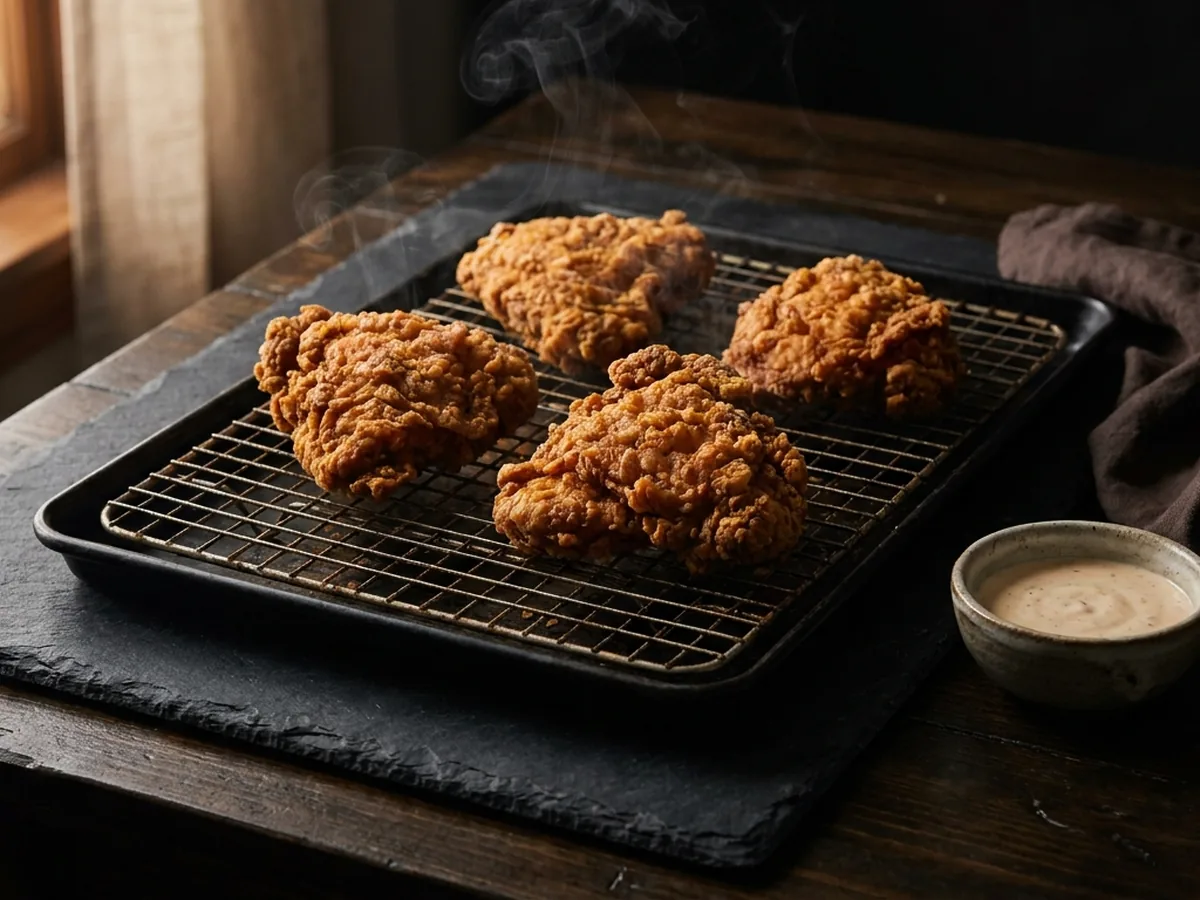
Buttermilk brine, a double dredge with a rest, and controlled shallow frying. Honest about the one thing a home kitch…
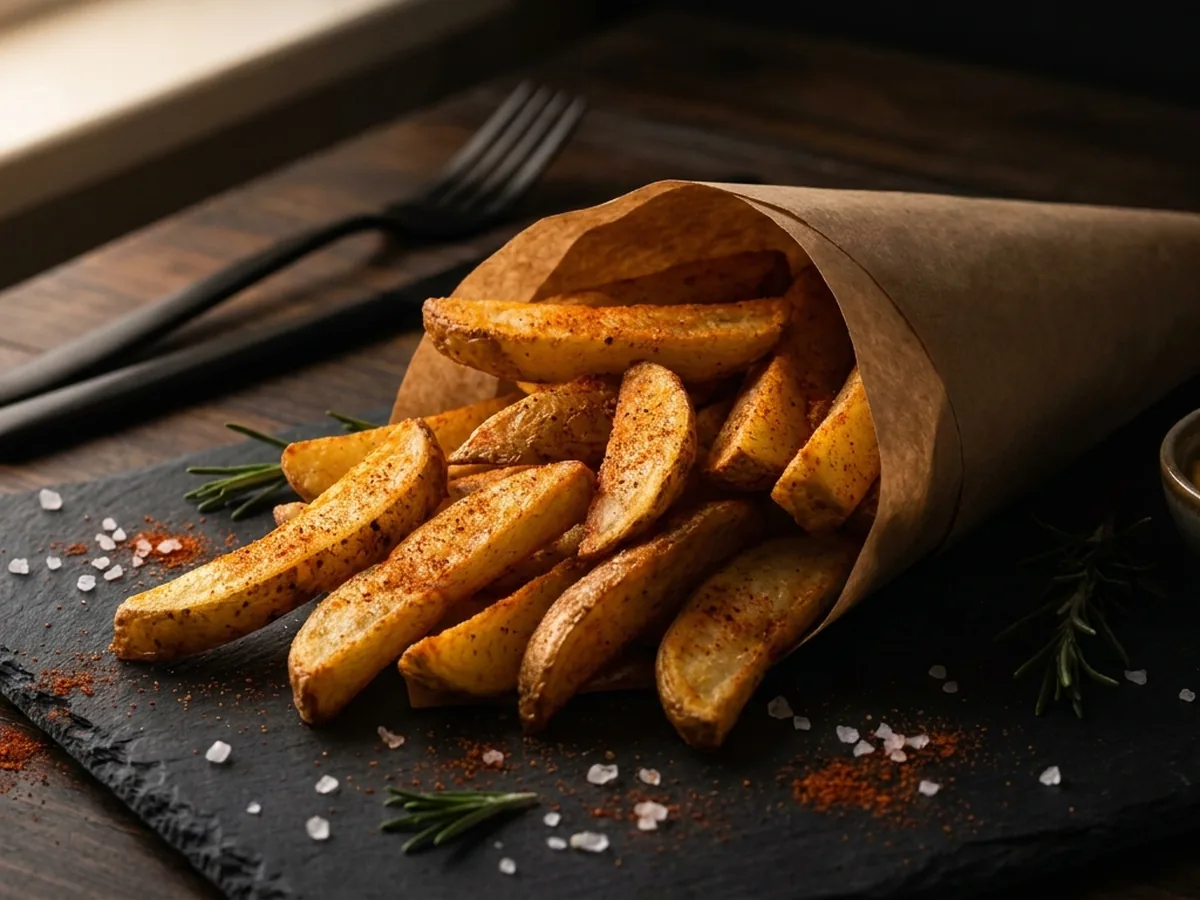
Skin-on potatoes, fried twice at two temperatures, tossed hot in Cajun seasoning. The oil is doing more of the flavou…
Malted milk powder and a deliberately under-frozen texture. Five minutes of work, four hours in the freezer, no machine.
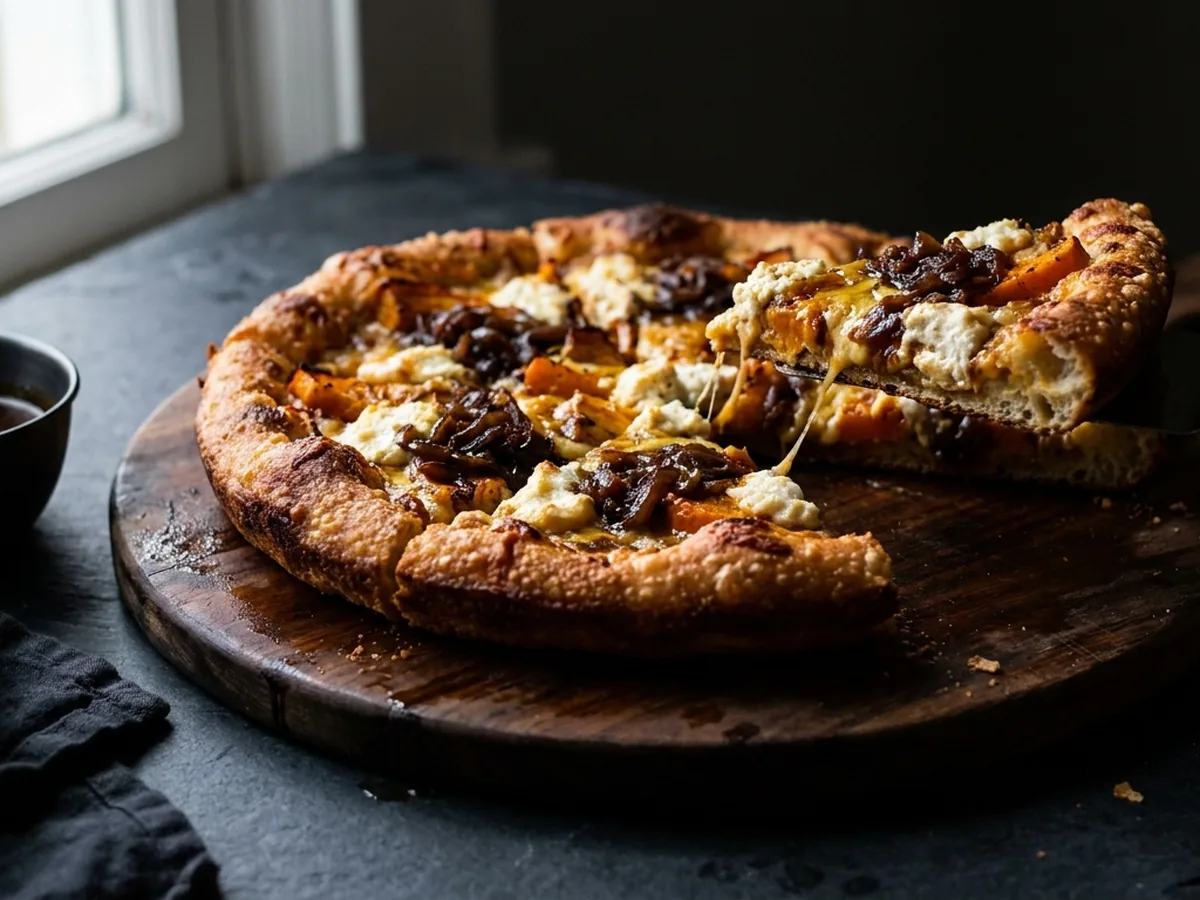
Three tablespoons of oil in the tin, a dough that proves where it bakes, and a base that fries from underneath. The o…