McDonald's
McDonald's Tangy BBQ Sauce Copycat Recipe
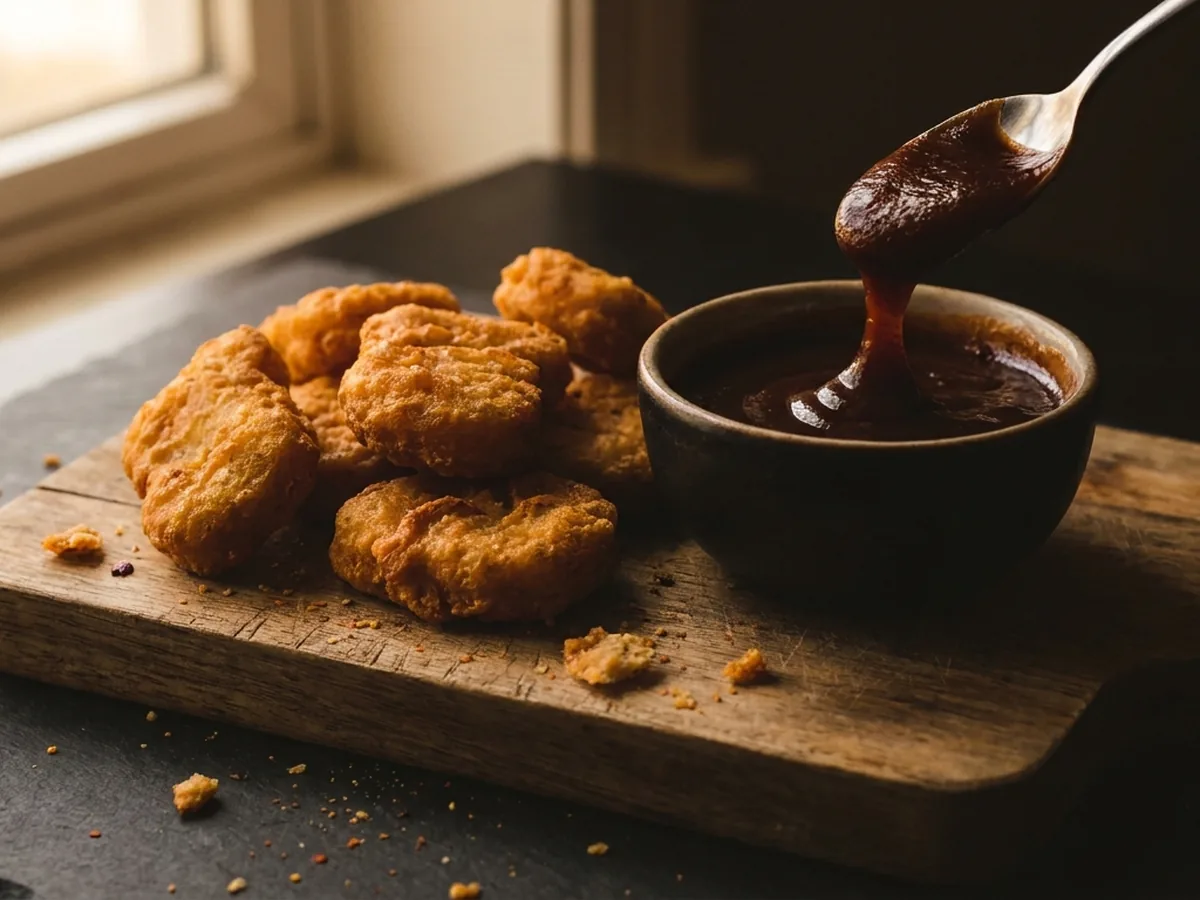
A thin, sharp, faintly smoky barbecue dip that is nothing like a thick American BBQ sauce. Eight minutes, one pan.
 food.fast
Takeaway taste, kitchen prices
Sugar Is the Seasoning Nobody Admits To
Chain savoury products carry far more sugar than a home cook would add, and it is doing a specific job. Here is what it is doing, how much there actually is, and where you can cut it without wrecking the sauce.
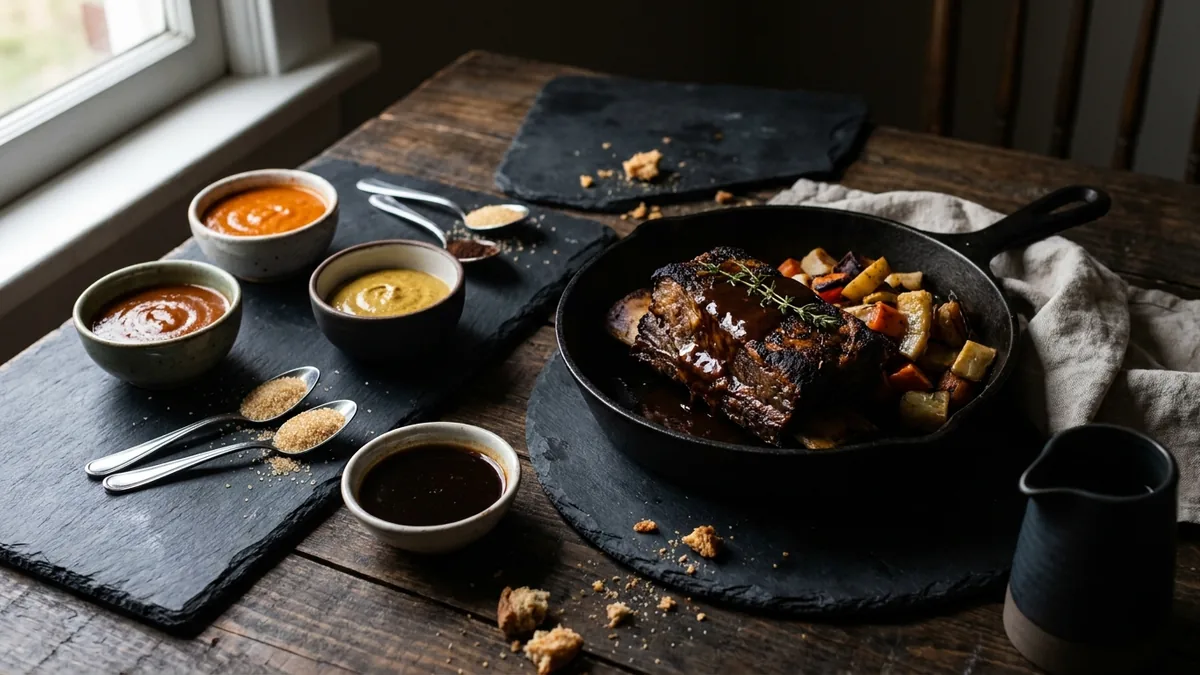
Sugar in a savoury sauce is a seasoning before it is a flavour, and it performs three jobs.
It suppresses bitterness. Sweetness and bitterness compete for attention, and sugar reliably wins. Tomato, vinegar, cocoa, burnt-sugar notes in molasses and the astringency in some spices are all softened by it. A tomato sauce with no sugar tastes sharper and more metallic, which is why almost every commercial one has some.
It balances acid. Vinegar-heavy sauces are unbearable without it. The relationship is close to linear - halve the sugar in a barbecue sauce and you have to halve the vinegar or the result is aggressive.
It browns. In anything cooked or glazed, sugar caramelises and participates in the Maillard reaction. The lacquer on TGI Friday's glaze and the charred edges on peri-peri chicken are both sugar doing structural work that no other ingredient does.
That third job is why a low-sugar barbecue sauce never glazes properly, however good it tastes cold.
Per 100 g, from our own calculations of our recipes and from published figures for typical supermarket equivalents. The point is the order of magnitude.
| Sauce | Sugars per 100 g | Roughly |
|---|---|---|
| Typical bottled BBQ sauce | 38 g | Over a third sugar |
| Sweet chilli sauce | 42 g | Nearly half |
| Sweet and sour dip | 34 g | A third |
| Subway sweet onion | 43 g | Nearly half |
| Tomato ketchup | 23 g | Just under a quarter |
| Our tangy BBQ | 26 g | A quarter |
| Big Mac sauce | 6 g | Low, for a chain sauce |
| Mayonnaise | 1.5 g | Essentially none |
Two things stand out. Mayonnaise-based sauces are low in sugar - the fat is doing the balancing work instead. And the thinner and more acidic a sauce is, the more sugar it needs, which is why sweet onion sauce, with no fat at all, is the sweetest thing on this list.
For context: 43 g per 100 g means a 15 ml portion of sweet onion sauce carries about 6.5 g of sugar - a teaspoon and a half.
Four rules, from doing it badly first.
Reduce acid proportionally. This is the big one. Cut the sugar in half and cut the vinegar in half, or the sauce becomes harsh in a way that no amount of salt fixes.
Add fat if you can. Fat and sugar do overlapping jobs in mouthfeel and bitterness suppression. A tablespoon of oil often does what a tablespoon of sugar was doing, in a sauce where fat is acceptable.
Use fruit rather than refined sugar in the cooked sauces. Apple juice concentrate, apricot preserve and tomato purée all bring sweetness with acidity and body attached. The sweet and sour sauce is built this way deliberately.
Accept that glazes will not glaze. If a sauce's job is to lacquer on hot meat, the sugar is structural. Reduce it and you have a marinade, which is a fine thing and not a glaze. Our pages say which is which.
Sweeteners are a poor substitute in cooked sauces: erythritol crystallises, sucralose contributes no body, and none of them brown. Allulose is the one that behaves most like sugar and it is expensive and hard to find.
Our recipes generally come in lower on sugar and noticeably lower on salt than the commercial equivalents, and there is no virtue in that - it is simply what happens when you season to taste rather than to a specification that has to survive a warehouse and please a national palate.
Typical reductions across the sauces on this site, against equivalent commercial products:
What we do not claim is that this makes the food healthy. A home-made Big Mac is a burger. The nutrition hub is explicit about the narrow set of things that genuinely change, and a sauce with 26 g of sugar per 100 g instead of 38 is still a sweet sauce.
Every nutrition panel on this site says it was calculated from our own ingredient list, and where a chain publishes a figure for the equivalent item we show both rather than quietly presenting ours as theirs.
A thin, sharp, faintly smoky barbecue dip that is nothing like a thick American BBQ sauce. Eight minutes, one pan.
A fat-free sweet-and-sour glaze thickened with cornflour. Ten minutes, and every version built on mayonnaise fails.
Eight minutes, one bowl, no cooking. The sweet pickle relish base that every 'secret sauce' recipe gets wrong, and th…
Pineapple juice, soy, brown sugar and a small amount of bourbon added at the end. Twenty-five minutes, mostly waiting.