Wingstop
Wingstop Lemon Pepper Wings Copycat Recipe
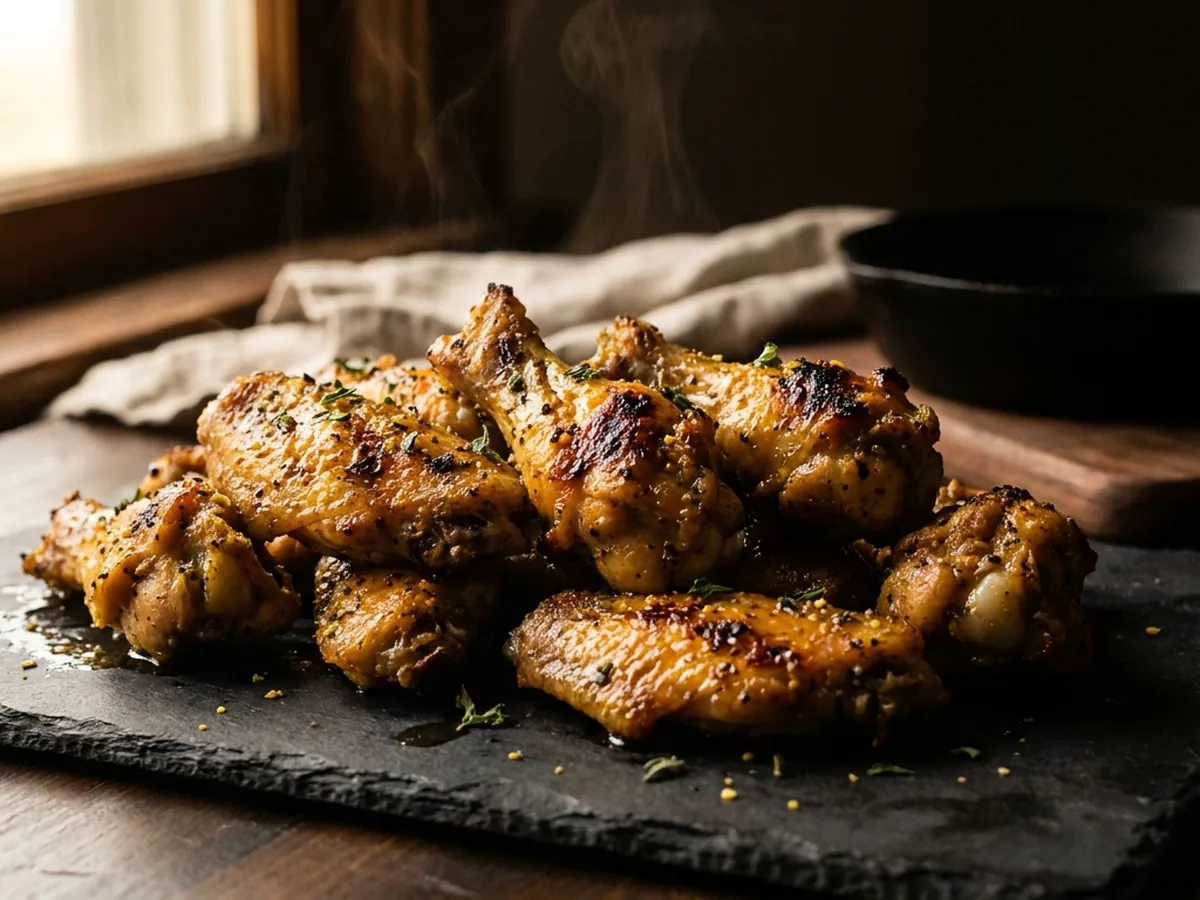
The chain's most ordered flavour, and the reason home versions taste dusty is that they skip the butter. Forty minutes.
 food.fast
Takeaway taste, kitchen prices
When to Season Before the Heat and When to Sauce After It
A rub seasons the food and builds crust. A sauce coats what is already cooked. Using one where the other belongs is behind most burnt glazes and most dusty wings.
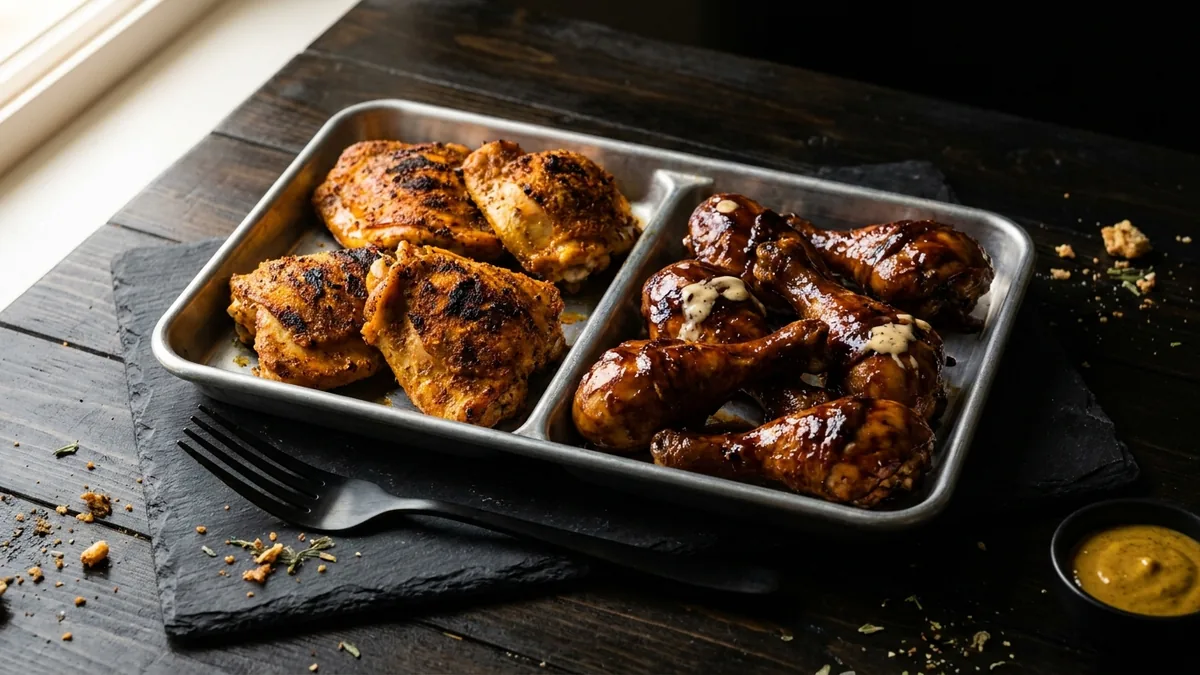
A dry rub seasons the food itself and participates in the crust. It goes on before cooking, its salt draws moisture to the surface and then back in carrying flavour with it, and its spices brown along with the surface of the meat. The finished food tastes seasoned all the way through the outer layer.
A wet sauce coats food that is already cooked. It sits on the surface. It cannot penetrate, because the surface has already set, and it is not trying to. Its job is to add a layer of flavour and moisture at the end.
The consequences of using one where the other belongs:
Most chain flavours are a combination: a rub before, a sauce or a butter-bound toss after.
| What | When it goes on | Why |
|---|---|---|
| Salt-led dry rub | 45 min to 24 hr before | Salt needs time to travel in |
| Low-sugar spice rub | Immediately before | Spices brown with the surface |
| High-sugar rub | Last 20 min of cooking | Or it burns |
| Vinegar-based sauce | Last 10 min, or after | Thin, will not lacquer |
| Sugar-based glaze | Last 5 to 15 min | Enough to set, not to burn |
| Butter-bound rub | Immediately after cooking | Needs residual heat to cling |
| Cold sauce or dip | At the table | Cold contrast is the point |
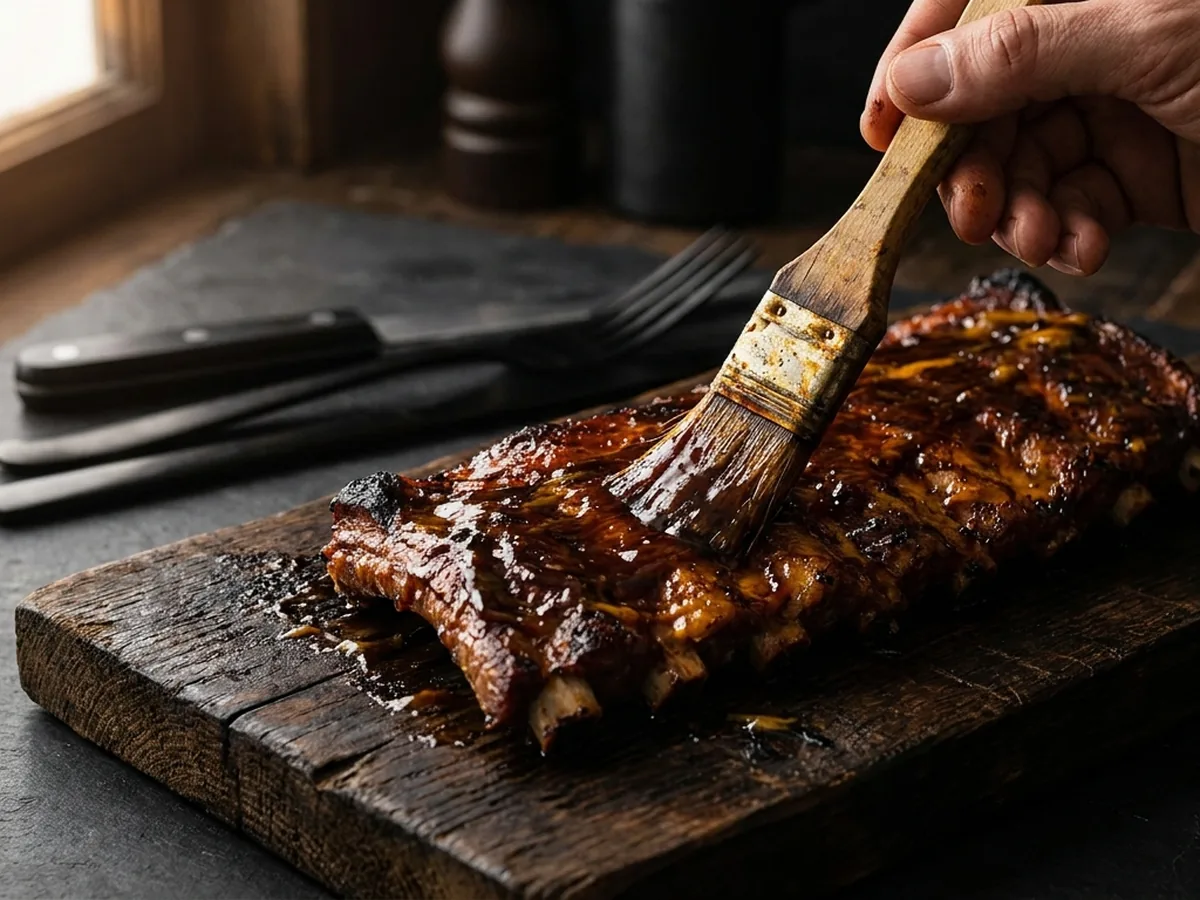
The most common mistake is the glaze one. People brush a barbecue sauce onto ribs at the start of a two-hour cook and produce something black and acrid. The Jack Daniel's glaze page gives the timings for each kind of food for exactly this reason.
The second most common is salting immediately before cooking and expecting the benefit of a brine. Forty-five minutes is roughly the minimum for salt to do anything beyond sit on the surface; overnight is where it is genuinely working.
Most chain wing flavours are neither a dry rub nor a wet sauce. They are a dry blend tossed with melted butter at the moment the wings come out of the heat.
This matters because it behaves differently from both:
The technique is always the same: melted butter into a large bowl, hot food straight in, tossed, then the seasoning in two additions with a toss between.
Roughly 60 g of butter per kilo of wings, and about a tablespoon of dry blend. More butter than that and the coating goes soft; less and the seasoning does not stick.
The Lemon Pepper wings recipe is built around this and the whole flavour wall at Wingstop uses it, which is why one wing technique unlocks eleven flavours.
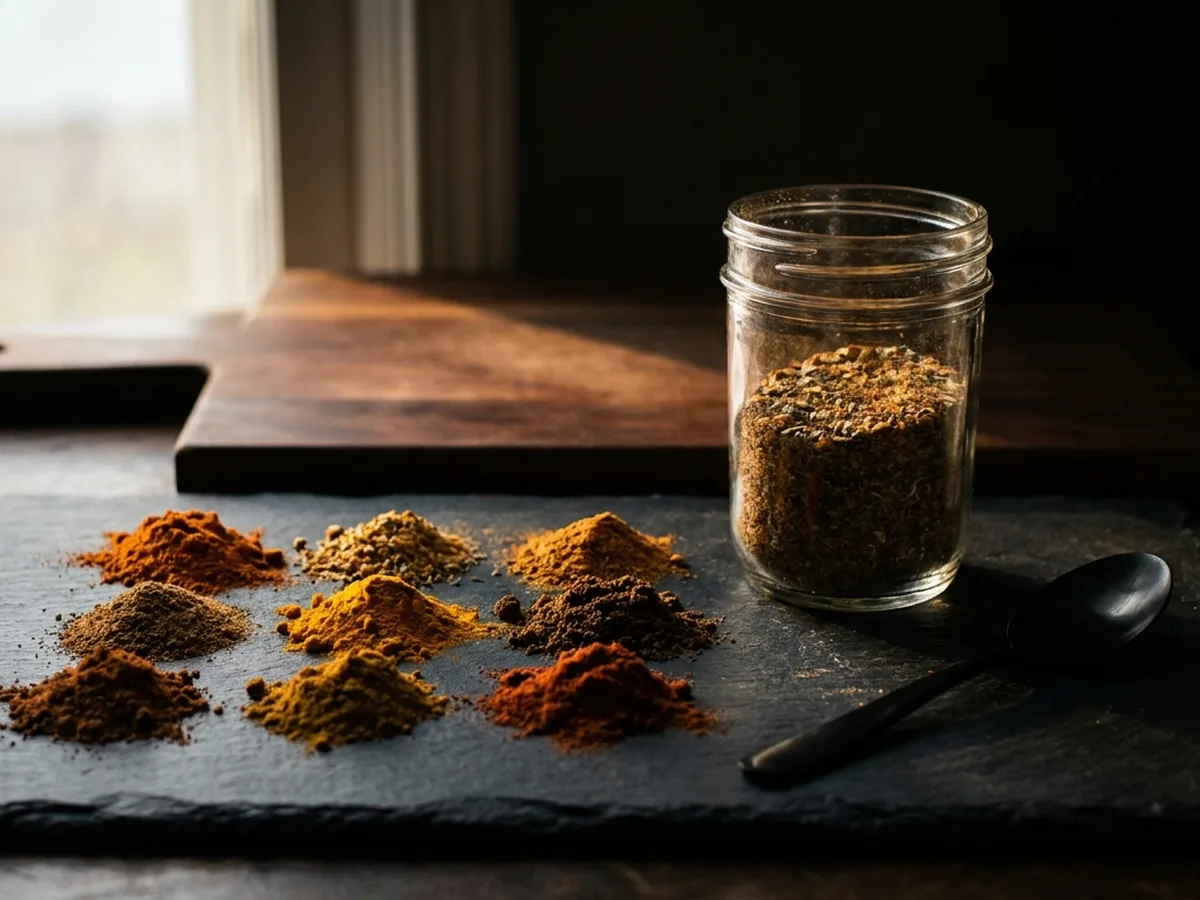
Every dry rub on this site is built from the same five components in different proportions.
Salt, 20 to 40 per cent. The largest single component in most rubs. It seasons and it draws moisture. The KFC blend is about a third salt, because it is diluted into two kilos of flour.
A bulk spice, 20 to 35 per cent. Usually paprika, sometimes chilli powder. Provides colour, body and a mild base flavour that everything else sits on.
Aromatics, 10 to 20 per cent. Garlic powder, onion powder, celery salt. These are the savoury backbone.
Heat, 2 to 10 per cent. Cayenne, black pepper, white pepper. The dial.
Character, 1 to 5 per cent. The thing that makes it identifiable. White pepper in a KFC blend, celery salt in a Cajun blend, dried lemon zest in a lemon pepper. Small quantities, enormous effect.
Sugar, 0 to 25 per cent, and only if the cooking is low-temperature. Above 170 °C it burns.
Get those proportions roughly right and you can build a rub for anything without a recipe.
The chain's most ordered flavour, and the reason home versions taste dusty is that they skip the butter. Forty minutes.
Paprika-heavy, salty, with celery salt underneath. Ninety seconds and a jar that lasts six months.
The blend itself, in proportions that actually work, with the two ingredients that carry it and the one nobody wants …
Pineapple juice, soy, brown sugar and a small amount of bourbon added at the end. Twenty-five minutes, mostly waiting.