Dunkin'
Dunkin' Boston Kreme Doughnut Copycat Recipe
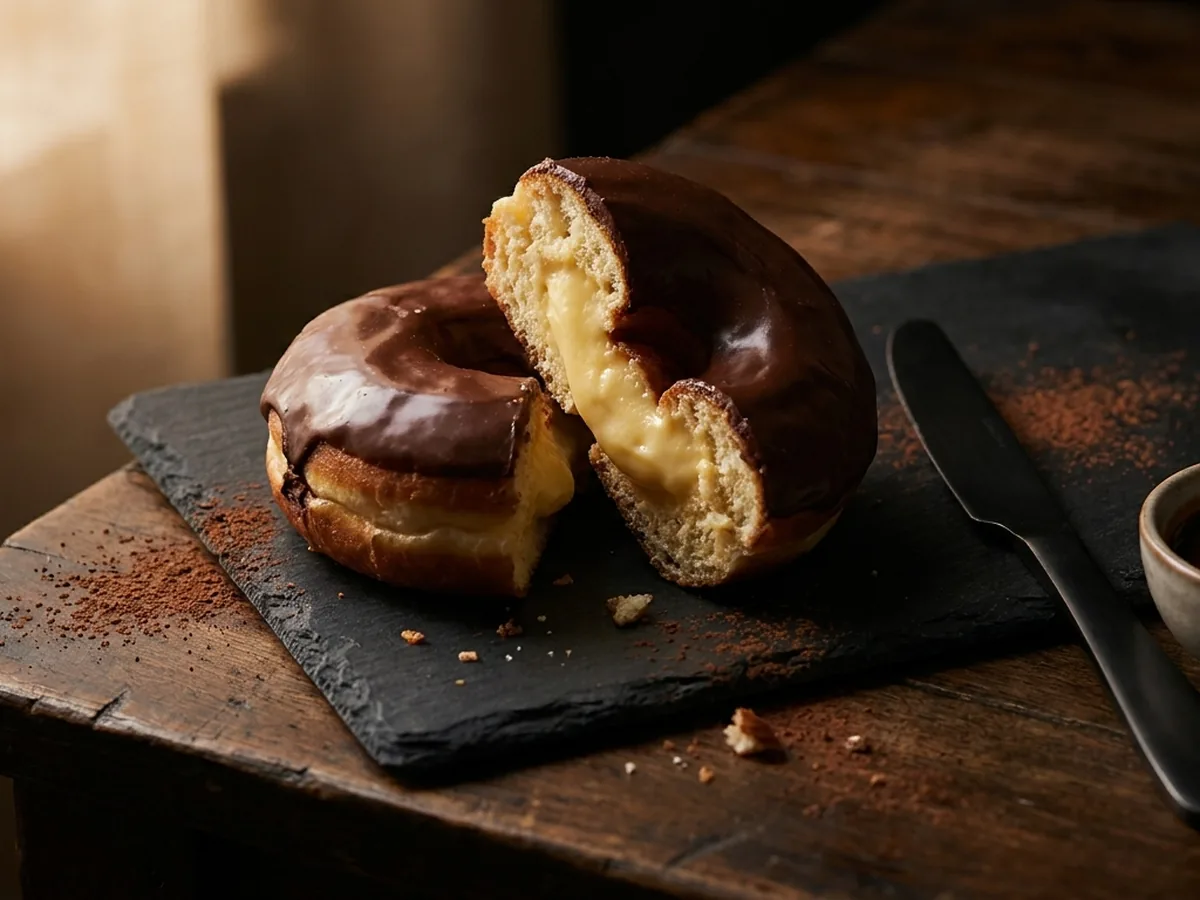
The same yeasted dough with no hole, filled with crème pâtissière and topped with a chocolate glaze. The custard is t…
 food.fast
Takeaway taste, kitchen prices
The Glaze Goes On While the Doughnut Is Too Hot to Hold
A doughnut ninety seconds out of the fryer, which is genuinely better than the shop's.
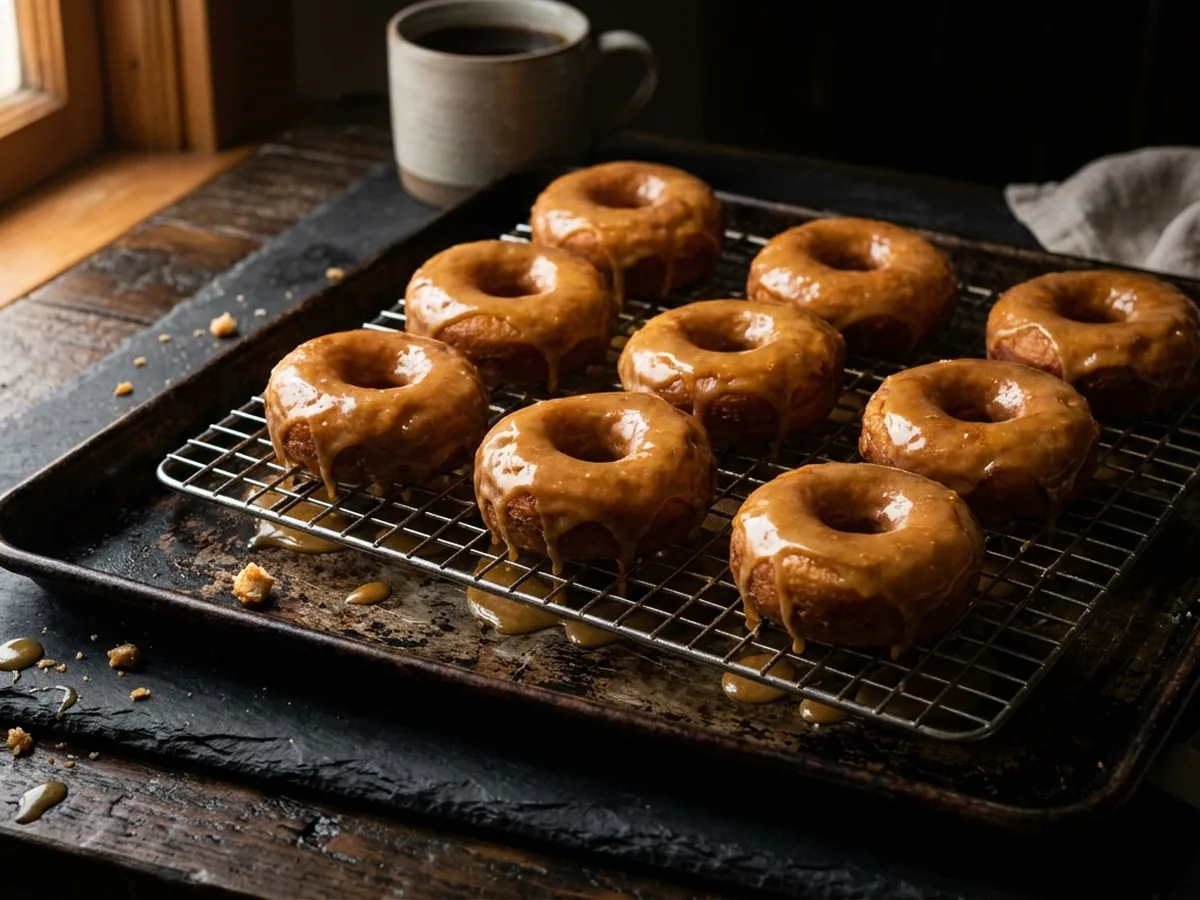
AI-generated illustration created for food.fast. It is not photographic evidence of a prepared batch.
The 'Hot Now' sign exists because Krispy Kreme is being unusually honest: the Original Glazed is a measurably different product four hours after it was made. The company built a lit sign to tell people when to come.
That is the home cook's advantage, and it is a large one. A doughnut you have just fried and glazed yourself, eaten ninety seconds later, is better than one that has been in a box since the morning. There is no version of this where the shop wins.
The technique is not difficult but it is specific. A very soft, high-fat enriched dough. A short second proof. Forty-five to sixty seconds a side at 175 °C. And a thin glaze applied while the doughnut is still too hot to hold comfortably, which is what makes it set into a crackle rather than sitting on top as icing.
The method gives quantities, timings and observable cues rather than asking you to guess. The 5 cases in If it goes wrong explain likely causes and corrective action.
See the recipe verification standard · See how the cost is calculated
This dough is about 60 per cent hydration with a lot of fat and egg in it, and it will feel slack and sticky in a way that makes you want to add flour.
Do not. The softness is the crumb. Every gram of flour you add to make it easier to handle takes the doughnut a step towards being a bread roll.
Three things make a soft dough manageable without adding flour:
The shortening - or butter - is doing real structural work. Fat coats gluten strands and shortens them, which is why an enriched dough tears rather than chews. That tenderness is the entire character of this doughnut.
The glaze is icing sugar, milk, a little melted butter and vanilla, thinned until it runs off a spoon in a continuous ribbon. If it drops off in blobs it is too thick.
It goes on the doughnut within about thirty seconds of it leaving the oil, while it is still too hot to hold comfortably. Three things happen at that temperature:
Let the doughnut cool first and the glaze sits on top as opaque white icing, never sets properly, and slides off. It will still taste good. It will not be this.
The method is to dip one side, lift, let it drip for two seconds, then place it glazed side up on a rack. Some people dunk both sides; the shop glazes one.
Flour, warm milk, sugar, yolks, yeast and vanilla to a shaggy mass, rested. Butter and salt both slow gluten development, so they go in after.
About 12 minThe butter in small pieces. It will look greasy and broken for several minutes and then suddenly come together into a smooth, very soft dough.
Covered, until doubled. The thirty minutes in the fridge afterwards is optional and makes rolling out considerably easier.
About 2 hrOn a lightly floured surface. 8 cm rings with a 3 cm hole. Keep the holes - they fry in twenty seconds and are the best part.
One doughnut per square, so you can lower them into the oil without deflating them. They should look visibly puffed and feel like a marshmallow.
Lower them in on their parchment square - the paper floats free after a few seconds and can be lifted out. They will puff immediately and show a pale band around the middle, which is what you want.
Everything whisked smooth. Thin with milk a teaspoon at a time until it runs off a spoon in a ribbon.
About 3 minStraight from the oil onto a rack for ten seconds, then dip one side in the glaze, lift, let it drip, and back on the rack glazed side up. Too hot to hold comfortably is the right temperature.
About 3 minThe oil from doughnuts should not then be used for chips - it carries sugar and vanilla.
These are at their best for about two hours and noticeably worse the next day. That is not a flaw in the recipe; it is what the Hot Now sign is about.
The dough, though, keeps. After the first rise, refrigerate it for up to 24 hours. Roll, cut and prove from cold - allow forty-five minutes rather than thirty - and fry.
That means you can make the dough the night before and have hot doughnuts at breakfast with forty-five minutes of mostly waiting.
Cut and proved doughnuts can also be frozen raw: freeze on a tray, bag, and prove from frozen for two hours before frying. The texture is very slightly denser and it is a reasonable trade.
| Ingredient | Baker's % | For 500 g flour |
|---|---|---|
| Strong white flour | 100% | 500 g |
| Whole milk | 60% | 300 g |
| Shortening or butter | 12% | 60 g |
| Sugar | 12% | 60 g |
| Egg yolk | 10% | 2 yolks |
| Instant yeast | 2% | 10 g |
| Salt | 1.6% | 8 g |
Replace 60 g of the icing sugar with cocoa and add an extra 2 tbsp of milk. Applied the same way, hot.
No glaze - toss the hot doughnuts in caster sugar mixed with a tablespoon of cinnamon. Easier and arguably better.
Do not cut a hole. Fry the rounds, then fill with jam or crème pâtissière through a piping nozzle once cool enough to handle.
Each entry names a likely cause as well as a correction, so the advice remains useful when equipment, ingredients or batch size differ.
The recipes that go with this one, or that use what you have just made.
The same yeasted dough with no hole, filled with crème pâtissière and topped with a chocolate glaze. The custard is t…
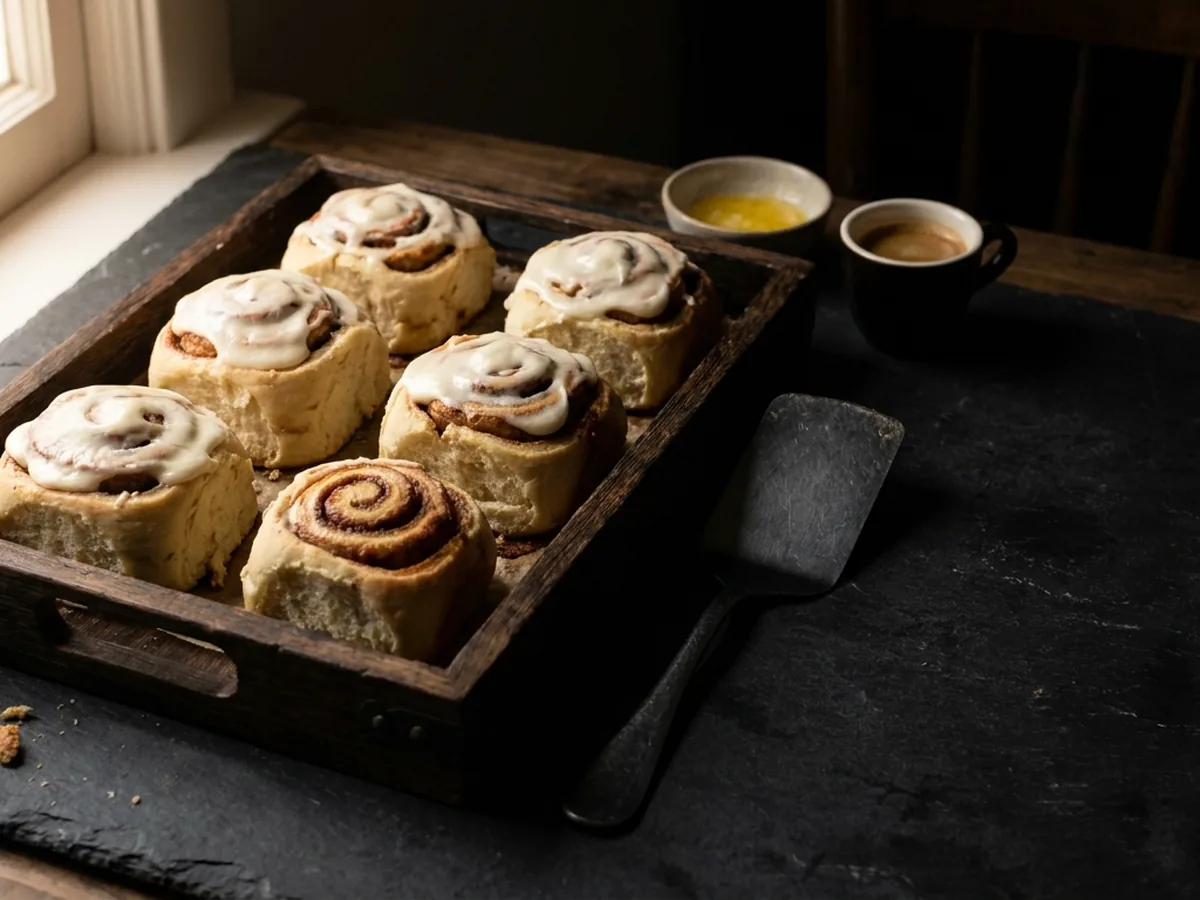
An enriched dough, a filling that is a third cinnamon by volume, and a cream cheese frosting with a much higher chees…
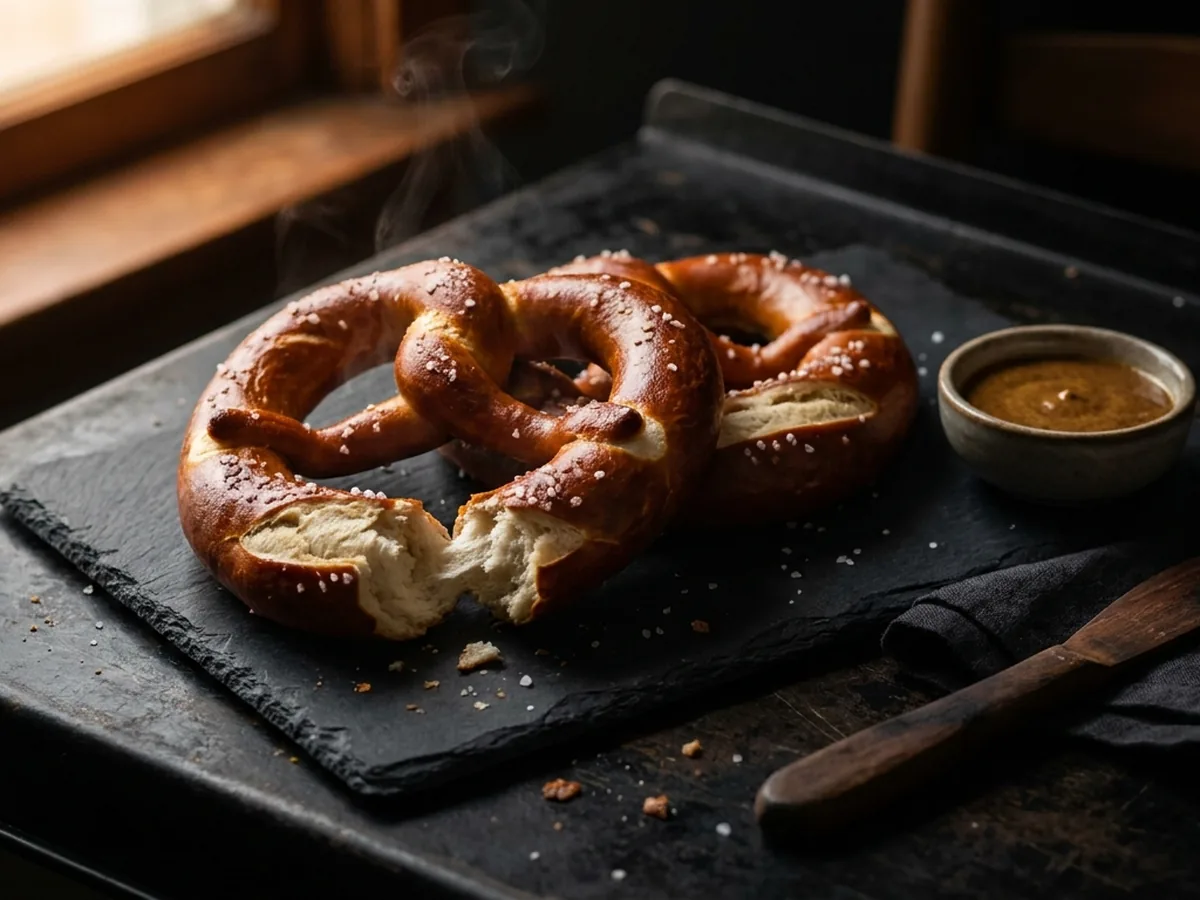
An ordinary bread dough put through an alkaline bath, buttered twice, and salted with coarse crystals. Thirty minutes…
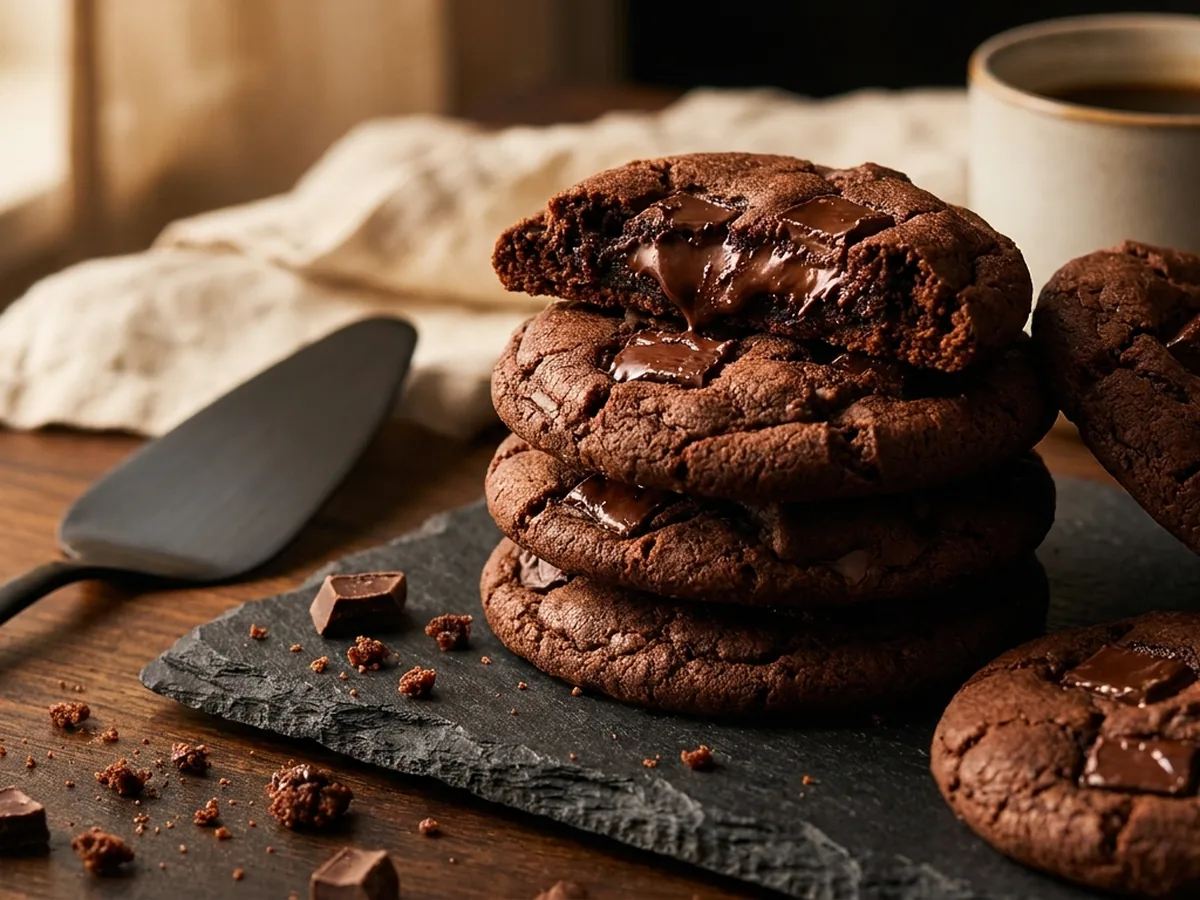
Thick, soft and deliberately under-baked so the middle stays molten. Twenty minutes, and the timing is the entire recipe.