Five Guys
Five Guys Cajun Fries Copycat Recipe
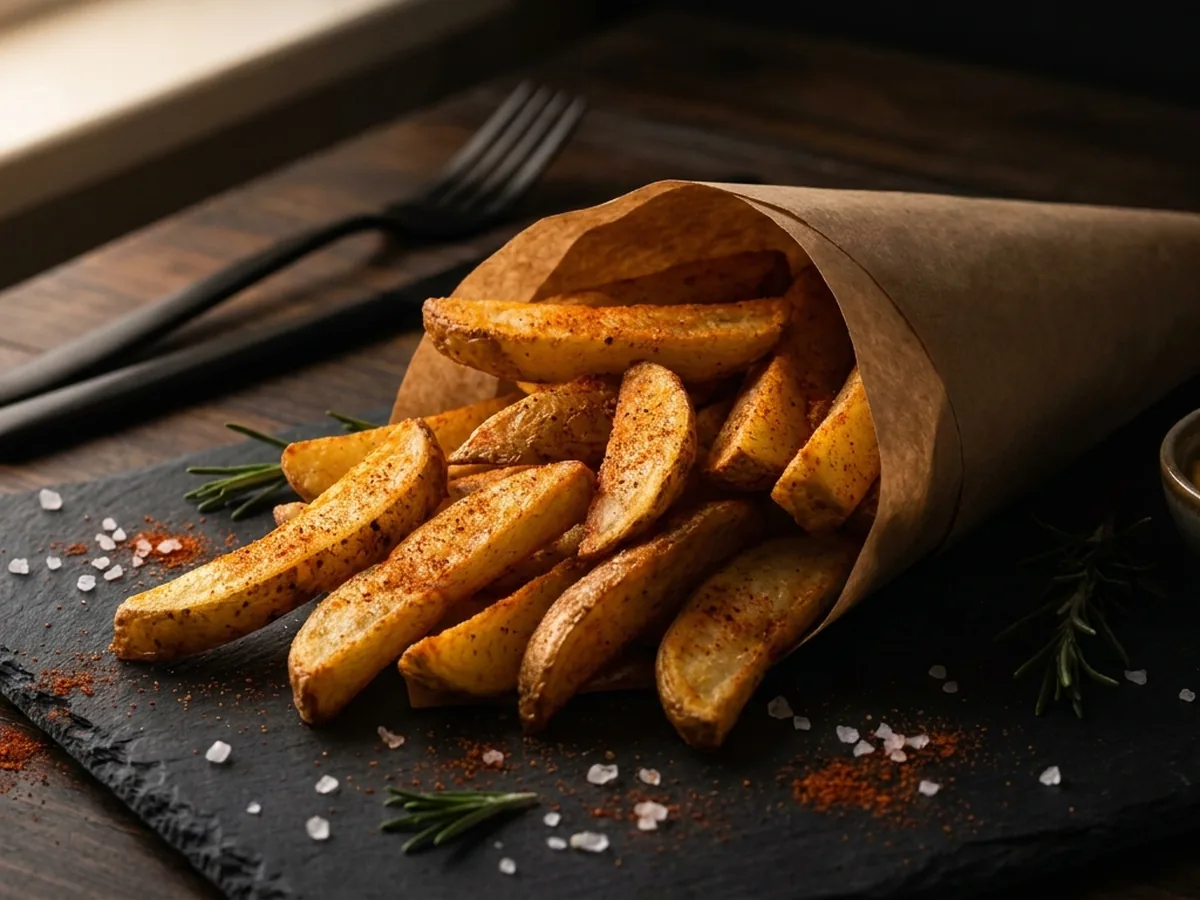
Skin-on potatoes, fried twice at two temperatures, tossed hot in Cajun seasoning. The oil is doing more of the flavou…
 food.fast
Takeaway taste, kitchen prices
The Closest a Home Kitchen Gets, and an Honest Account of the Gap
The thin, pale-gold, salty chip - and a clear statement of the one thing that does not close.
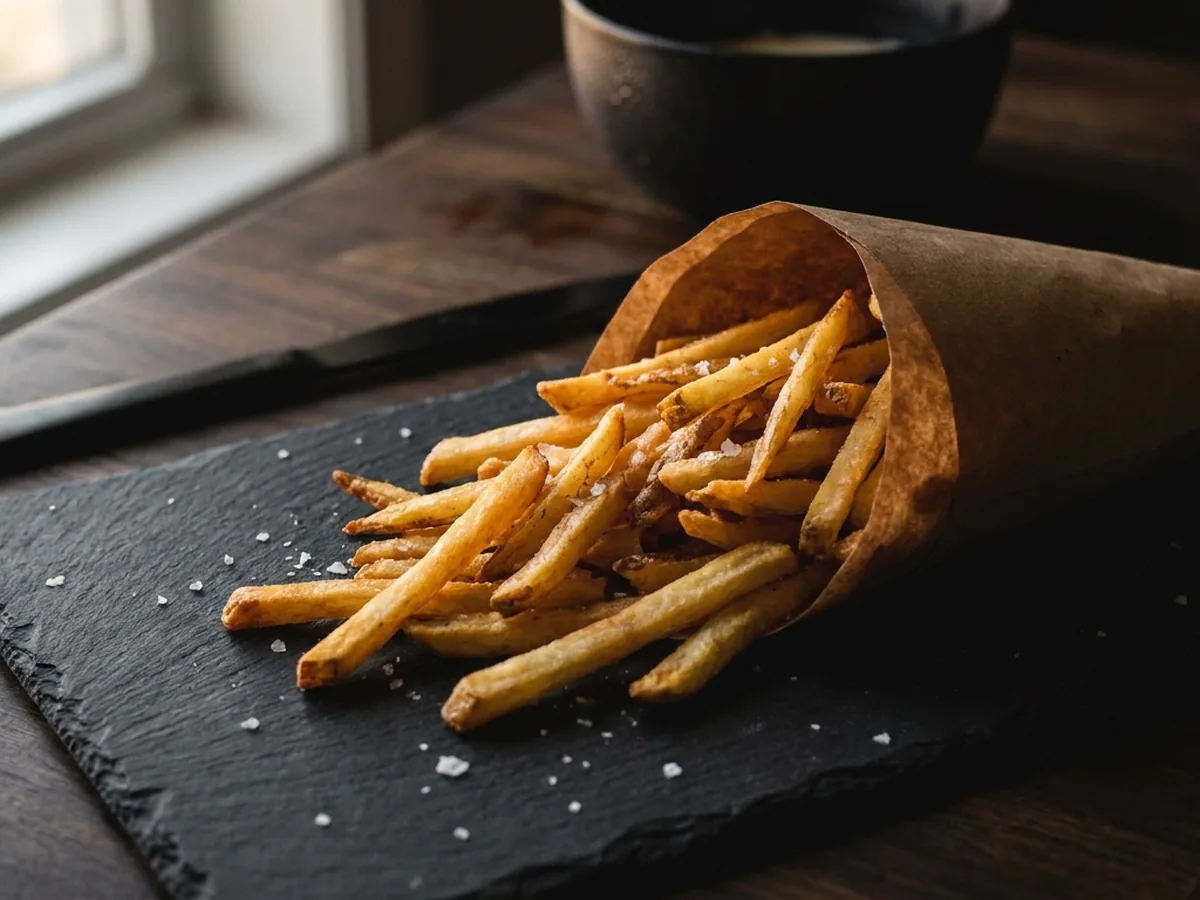
AI-generated illustration created for food.fast. It is not photographic evidence of a prepared batch.
This is the recipe on this site with the largest honest gap between the home version and the original, and it is worth saying so before you buy potatoes.
A chain fry has been cut, washed, blanched in hot water with dextrose and a sequestrant, par-fried for about fifty seconds, blast frozen at around −35 °C, and finish-fried in the shop. The blast freeze is the part a domestic freezer cannot reproduce: at −18 °C the potato freezes slowly, large ice crystals form, cells rupture, and the interior is mushier than the original.
What this recipe gets you is a thin, pale-gold, crisp-shelled, fluffy chip that is recognisably the same kind of thing and is arguably better on flavour, because it is fresh potato in fresh oil. It is not a clone and the page will not claim it is.
The method gives quantities, timings and observable cues rather than asking you to guess. The 4 cases in If it goes wrong explain likely causes and corrective action; 1 ingredient note explains choices that materially affect the result.
See the recipe verification standard · See how the cost is calculated
Chain fries are blanched in hot water containing dextrose before they are par-fried, and the dextrose is not there for sweetness.
Potatoes vary enormously in their natural sugar content depending on variety, age and storage temperature, and sugar is what browns. Without controlling it, a batch of fries from an old potato comes out dark and one from a new potato comes out white. A commercial operation cannot have that.
Blanching in a sugar solution puts a uniform, controlled amount of sugar on every surface, so every chip browns to the same pale gold.
At home: a tablespoon of sugar in two litres of water, brought to a simmer, potatoes in for three minutes. Then drain and dry.
It also explains something people notice: chain fries are pale gold and slightly sweet-edged rather than deep brown. That is the dextrose, and without it your chips will be darker and more potato-flavoured - which some people prefer, and which is a different chip.
A McDonald's fry is about 7 mm square. A Five Guys chip is nearer 12, and a British chip-shop chip is 15 or more.
At 7 mm the ratio of surface to interior is very high, which is why these are crisp all the way through in a way a thick chip is not, and why they go cold and limp so much faster.
The consequences for cooking:
Cut them evenly. A mandoline with a julienne attachment or a chip cutter does it in seconds; by hand it is slow and worth the effort because uneven chips cook unevenly.
Until 1990 McDonald's fried in a beef tallow blend, which is a large part of why older customers remember the fries tasting different. In the US the current product contains a beef-derived flavouring; in the UK and much of Europe it does not and the fries are suitable for vegetarians. If you want the older flavour, fry in beef dripping - it is a superb chip and it is not what the current product tastes of.
Rinse in cold water until it runs clear - unlike a thick chip, surface starch on something this thin makes them stick together in the pan.
About 15 minTwo litres of water with a tablespoon of sugar and a teaspoon of salt, at a simmer. Three minutes, then drain.
About 5 minSpread on a tea towel, patted dry, then on a rack in the fridge. Surface water is both a safety issue and the enemy of crispness.
About 32 minIn batches. They should come out limp and completely pale. If they are colouring, the oil is too hot.
About 12 minOn a rack. The surface dries and the starch retrogrades. This is also the point to freeze them if you want your own bag of chips - spread on a tray until solid, then bag.
About 30 minThey will colour very fast at this thickness. Pale gold and rigid.
About 6 minWithin thirty seconds of the oil while the surface is still oily enough for salt to stick - and eat them within four minutes.
About 1 minWhat this recipe matches well: the cut, the pale gold colour, the thin crisp shell, the salt level, and the specific sweetness at the edges that comes from the dextrose blanch.
What it does not match: the interior. A blast-frozen chip has very small ice crystals and an intact cell structure; a domestic-frozen or fresh one does not. The chain chip has a slightly denser, more uniform interior as a result.
What is arguably better here: flavour. Fresh potato in fresh oil, salted by somebody who is eating it.
What is definitely worse: holding. These are excellent for four minutes and noticeably poor after ten. The chain's product is engineered to survive a warming cabinet, and ours is not.
Anyone telling you a home chip is indistinguishable from a McDonald's fry has not done the comparison. It is a very good chip and it is a different one, which is the honest position and the one taken on what a home kitchen cannot do.
The pre-1990 flavour, and a superb chip. Not what the current product tastes of.
190 °C for 16 to 18 minutes after the blanch, tossed in 2 tbsp of oil, shaken twice. Good, and noticeably less crisp at this thickness than a thicker chip would be.
Par-fry, cool, freeze on a tray, bag. Better than anything you can buy and the reason to make a double batch.
Each entry names a likely cause as well as a correction, so the advice remains useful when equipment, ingredients or batch size differ.
The recipes that go with this one, or that use what you have just made.
Skin-on potatoes, fried twice at two temperatures, tossed hot in Cajun seasoning. The oil is doing more of the flavou…
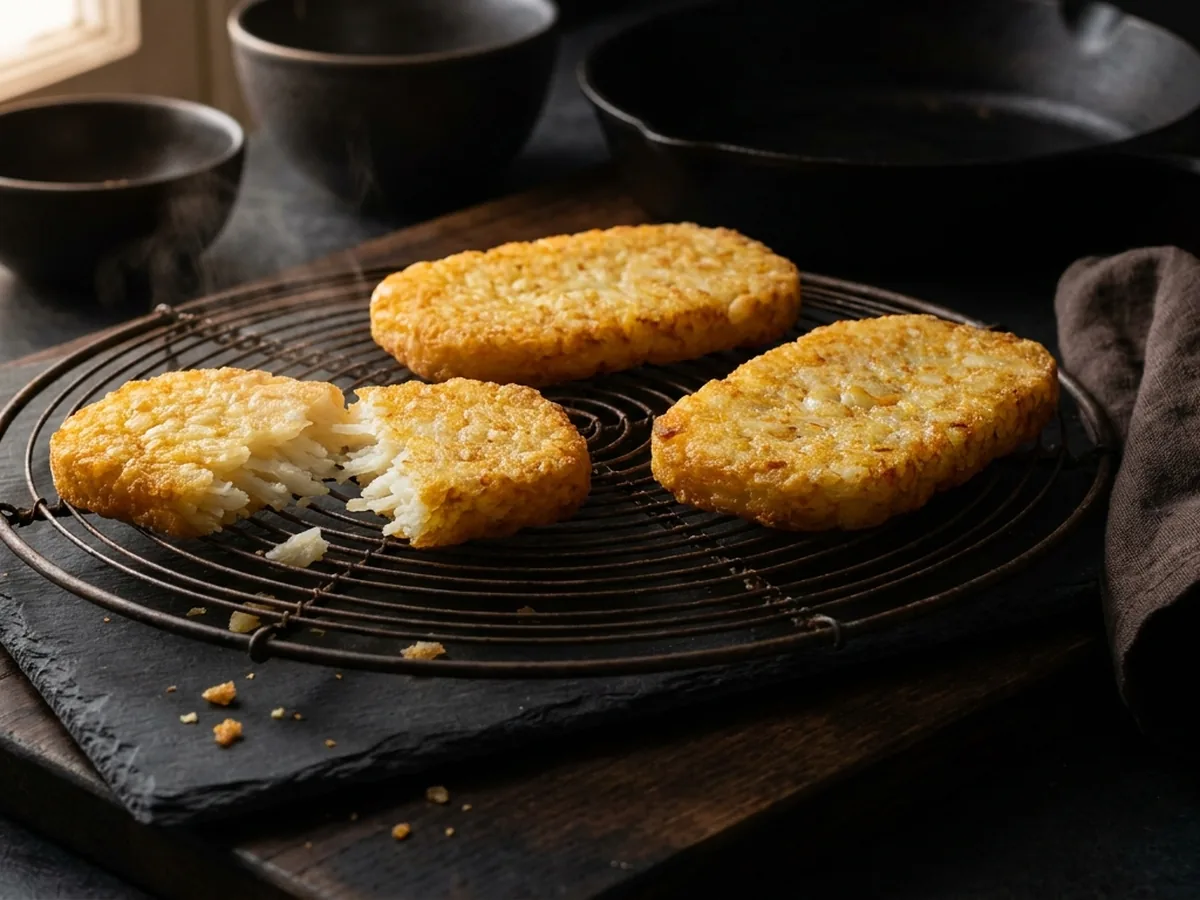
Grated potato, parboiled, squeezed brutally dry, formed into ovals and shallow fried. The squeezing is the recipe.
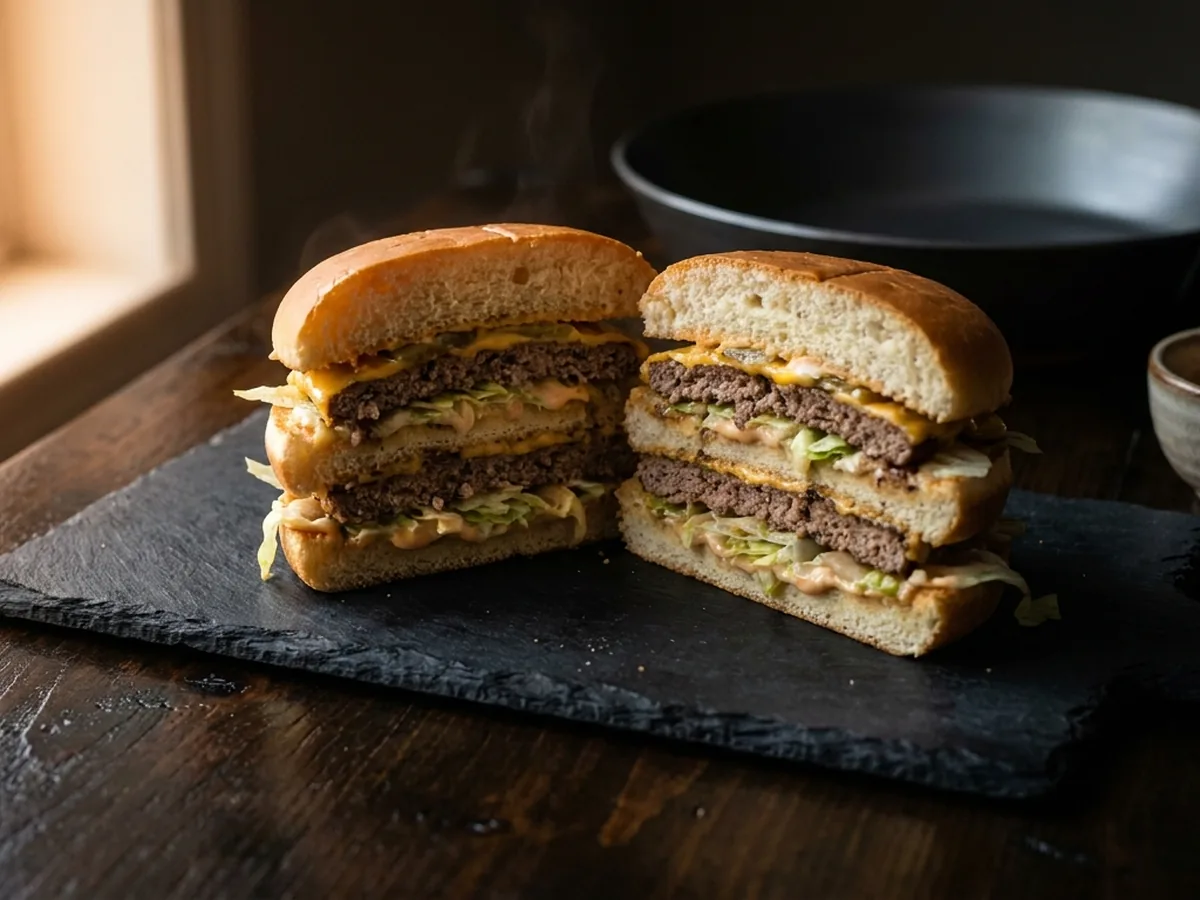
Two thin patties, a three-piece bun and the assembly order that stops the whole thing sliding apart on the second bit…
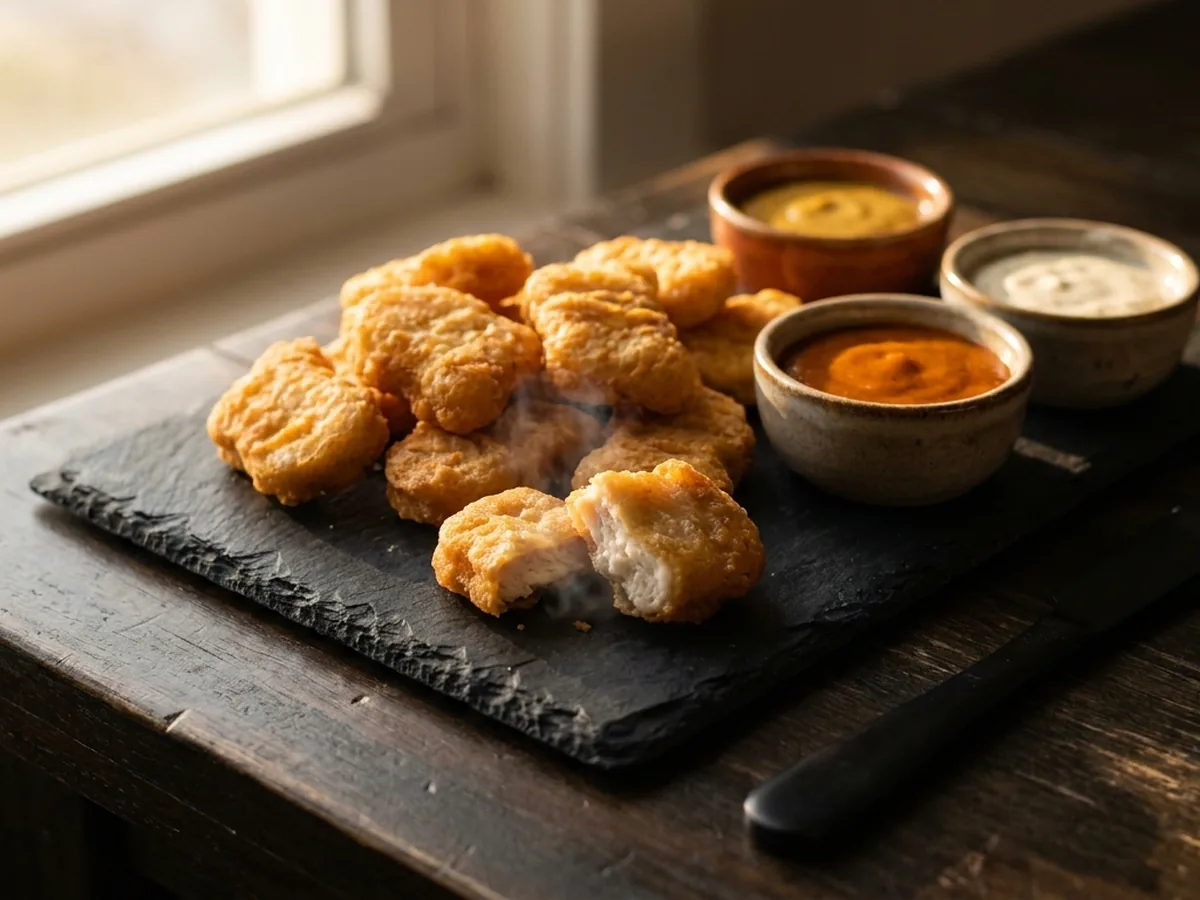
Minced and re-formed chicken in a thin tempura-style batter. The smooth interior is the whole point and it needs a fo…