McDonald's
McDonald's Big Mac Copycat Recipe
Two thin patties, a three-piece bun and the assembly order that stops the whole thing sliding apart on the second bit…
 food.fast
Takeaway taste, kitchen prices
Why a Tomato Above the Patty Destroys the Bun
A burger that falls apart on the second bite was assembled wrong. Every layer has a job, and the order is a set of engineering decisions disguised as a recipe.
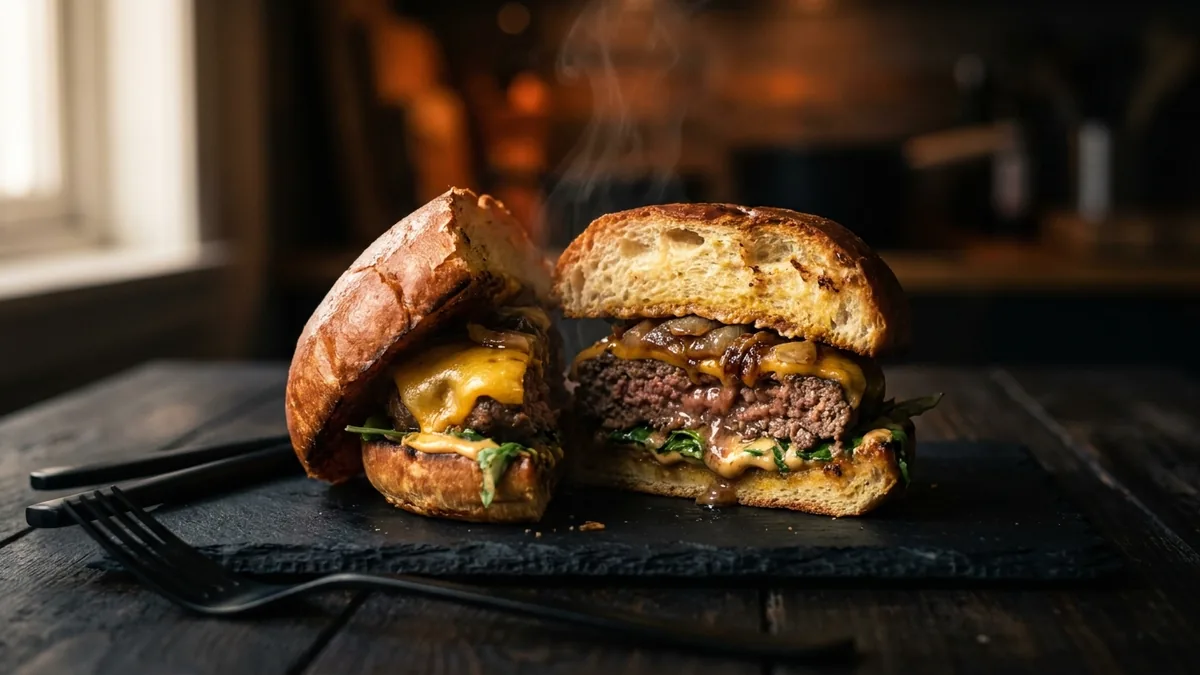
Water. Tomato, lettuce, pickles, raw onion and sauce all carry water, and bread absorbs it. A saturated bun has no structural integrity at all - it tears under its own weight.
Heat. A hot patty puts out steam. Steam rises, so whatever is directly above the patty gets it. This is why lettuce above a patty wilts within ninety seconds and lettuce below it does not.
Shear. Biting a burger applies a sideways force. Smooth, wet layers slide against each other - a whole lettuce leaf against a flat tomato slice is almost frictionless, which is exactly how the filling shoots out of the back.
Every rule below is a response to one of those three.
From the bottom up, for a single-patty burger:
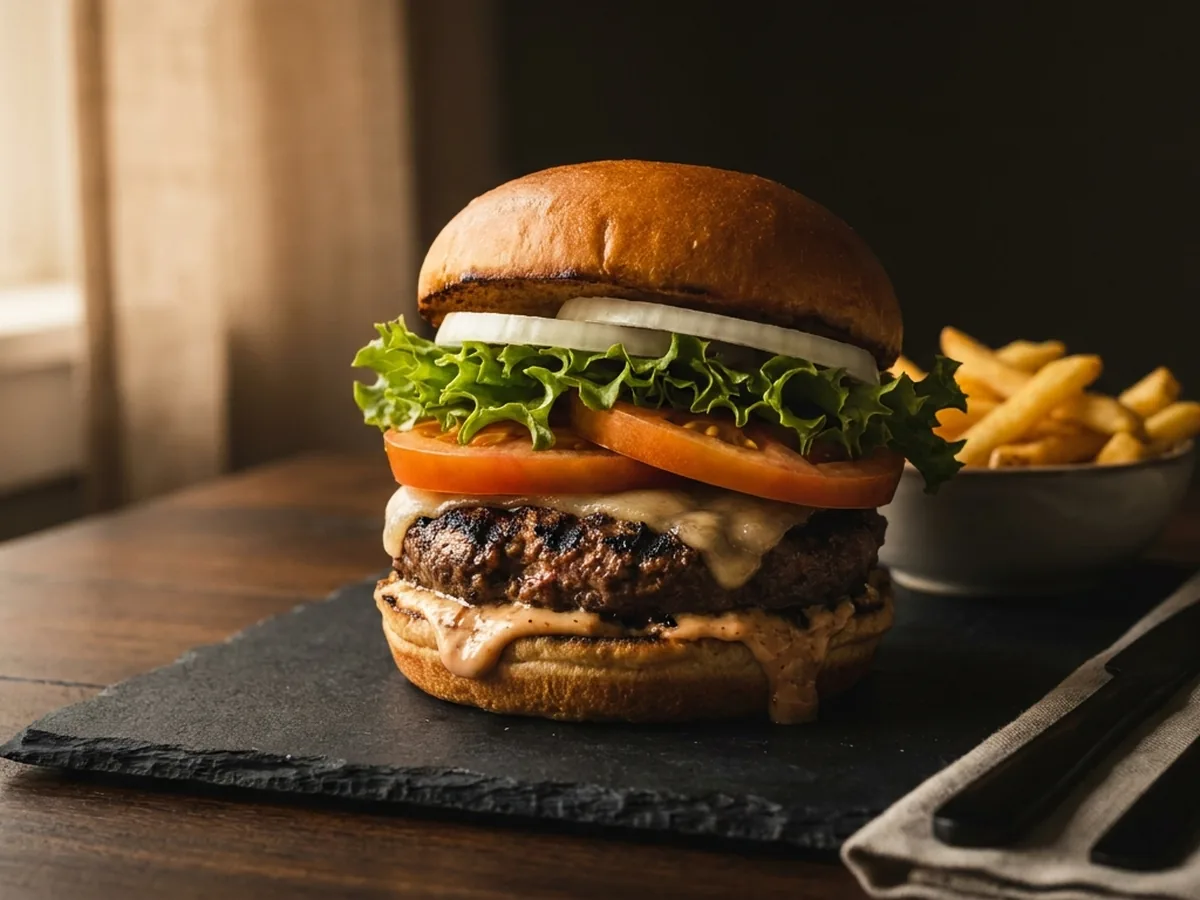
1. Bottom bun, toasted on the cut face. Toasting dries the surface and partially seals it - a waterproof layer between the bread and everything above.
2. Sauce. Spread to the edges. It is the adhesive that holds the next layer down and stops it sliding. Sauce on the top bun instead simply drips onto the patty and softens the crust.
3. Lettuce. A second waterproof layer, and it grips the sauce. Shredded grips better than whole leaf; whole leaf is used where the burger is tall and needs a flexible sheet.
4. Tomato, then onion, then pickles. All the wet, cold things, below the patty so its heat cannot reach them. Salt the tomato and drain it first - it sheds a surprising amount of water.
5. The patty, with cheese melted onto it. Cheese is structural: it flows between layers and sets, welding the stack together. This is why a cheeseburger holds together better than a hamburger.
6. Top bun, toasted.
Then press once and wait sixty seconds. The steam softens the bun, the layers compress, and the whole thing becomes something you can pick up. Cutting into it immediately gives a much messier result.
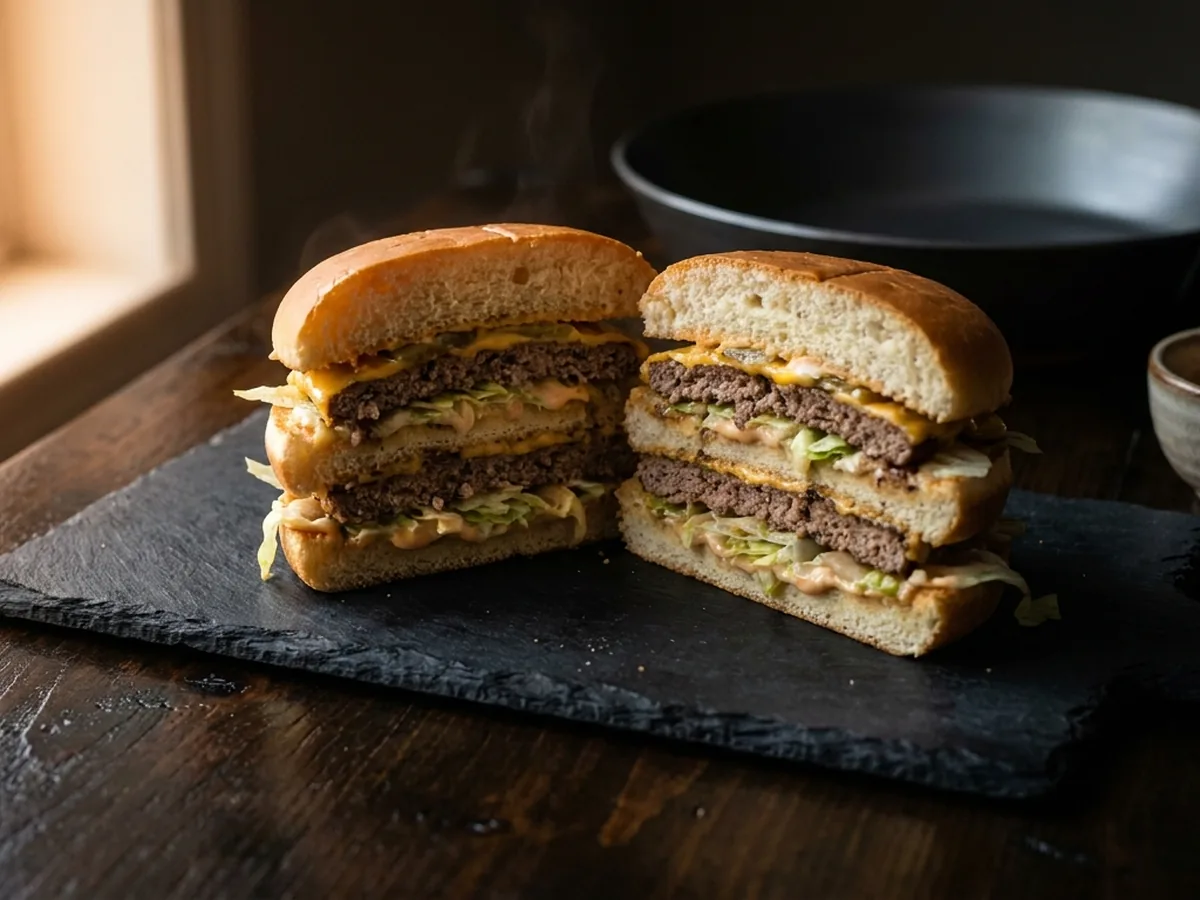
A Big Mac inverts the rule: lettuce sits above the sauce and below the patty on two levels, with a third piece of bun between them.
That middle bun - the part people leave out because it seems fussy - is doing three structural jobs at once:
It distributes weight. Two patties and two sets of filling on a single bottom bun is more load than it can carry. The middle bun spreads it.
It absorbs sauce from both sides, keeping it away from the outer buns.
It separates the shredded lettuce from the hot lower patty, which is why the lettuce in a Big Mac is still crisp when you eat it.
Leave it out and you have a double cheeseburger with Big Mac sauce - a perfectly good sandwich that collapses differently.
The other structural detail on that burger: pickles go on the upper layer, not the lower. On the lower layer they sit against the cheese and slide, and the whole top half rotates off as you bite.
The instinct to use good bread is the most common way people make a worse burger.
A chain burger bun is soft, enriched, slightly sweet and structurally weak on purpose. It compresses when you bite, so the filling does not squeeze out sideways. A crusty roll does not compress - it resists, and the pressure goes into the filling, which then leaves.
What matters:
The one thing worth spending on is potato rolls or a decent brioche. The ShackBurger page covers what to buy in the UK, where the American potato roll is not sold.
Two thin patties, a three-piece bun and the assembly order that stops the whole thing sliding apart on the second bit…
A flame-grilled quarter-pound patty, a serious quantity of mayonnaise, and more raw vegetable than any other chain bu…
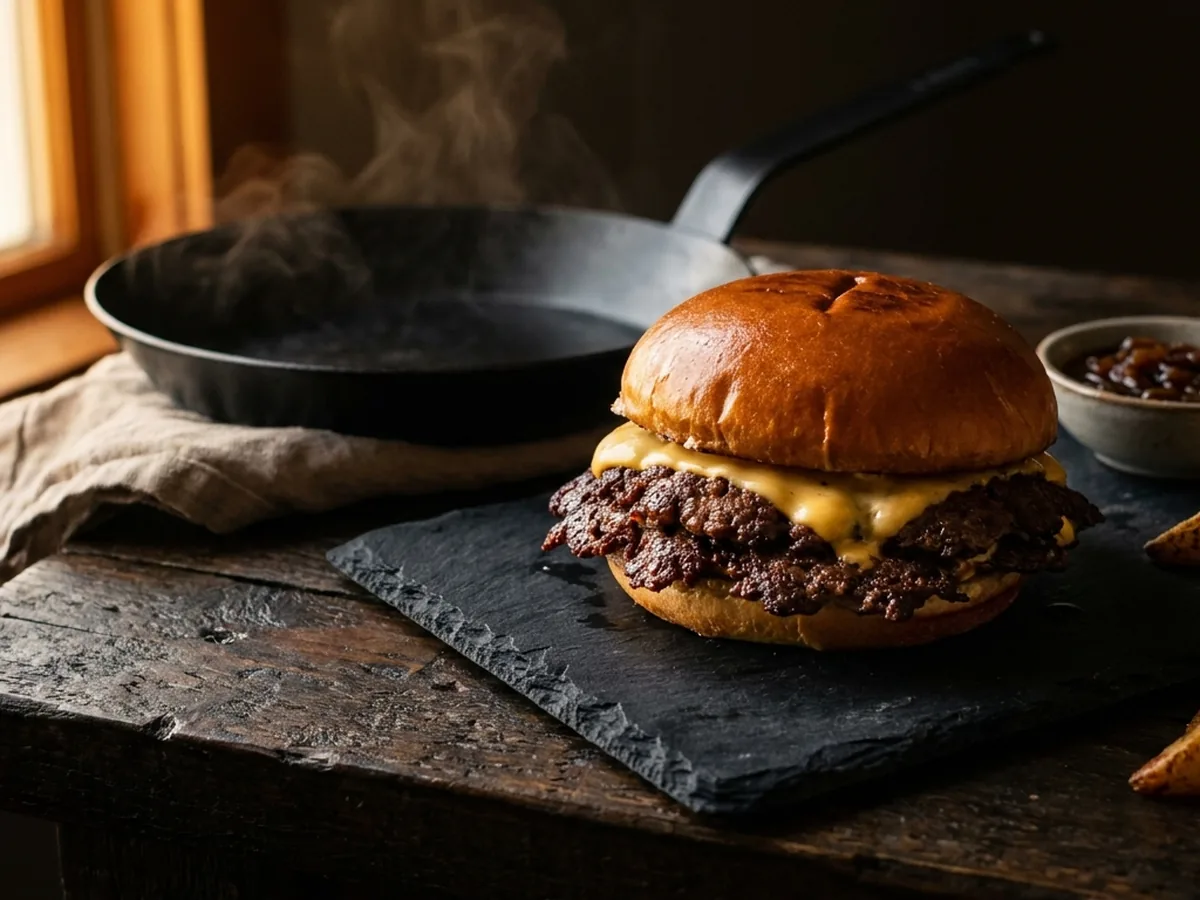
A crust taken further than feels comfortable, on a soft sweet roll, with ShackSauce underneath. Twelve minutes.
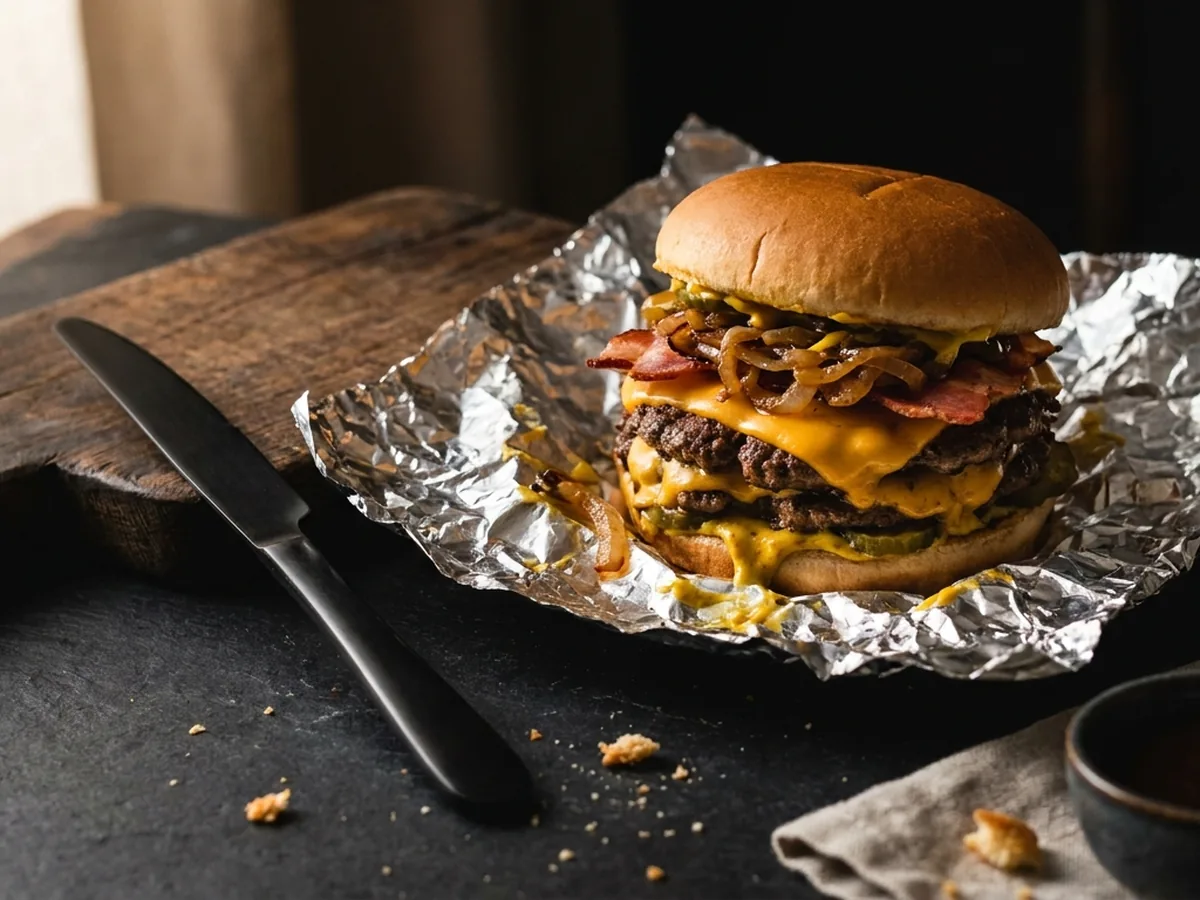
Two smashed patties by default, no seasoning in the meat, and a free-for-all of toppings. Fifteen minutes.