Burger King
Burger King Whopper Copycat Recipe
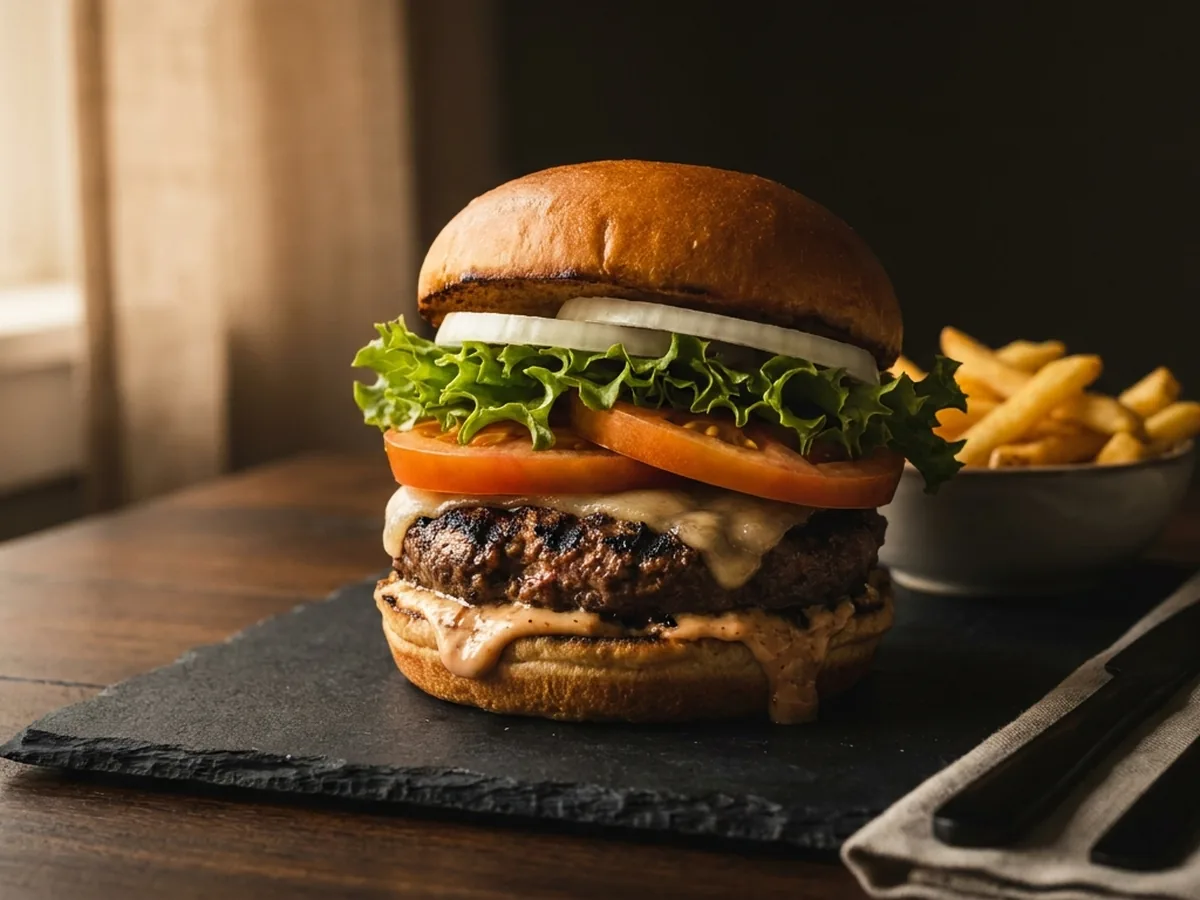
A flame-grilled quarter-pound patty, a serious quantity of mayonnaise, and more raw vegetable than any other chain bu…
 food.fast
Takeaway taste, kitchen prices
Griddled and Grilled Are Different Products, Not Different Preferences
McDonald's griddles, Burger King flame-broils, and the difference is not marketing. Here is what each heat source does to a patty and how to reproduce both at home.
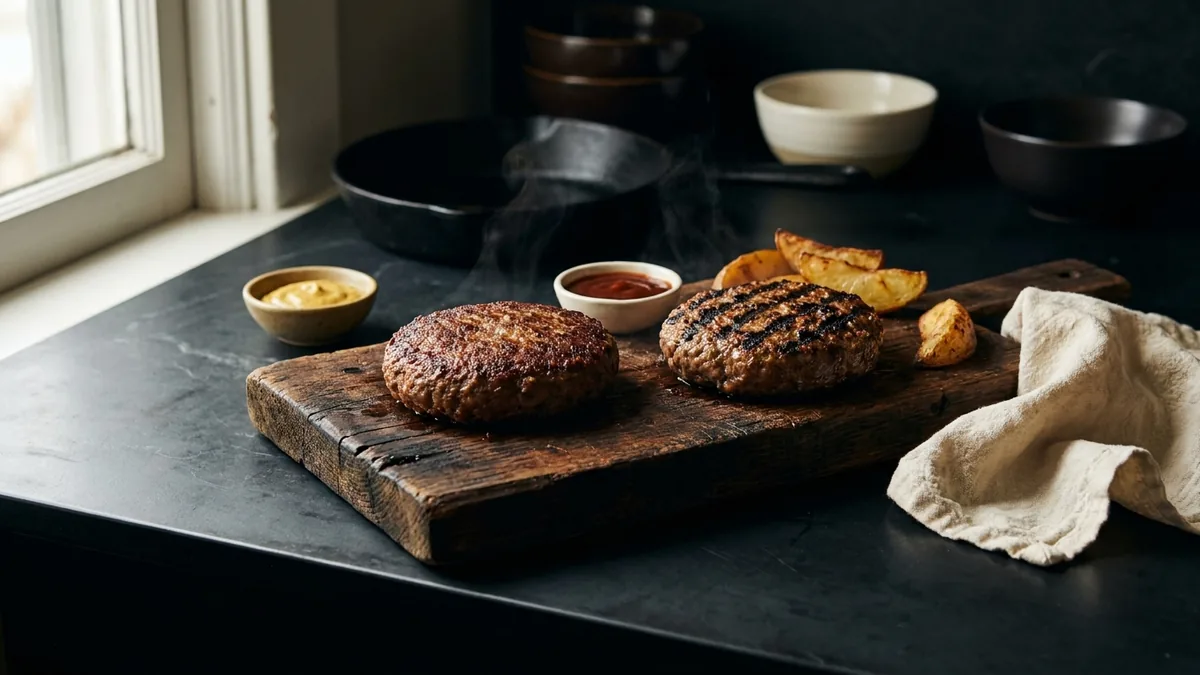
A flat-top is a thick steel plate held at 200 to 230 °C by burners underneath. Its defining property is total contact: every square millimetre of the patty's face touches hot metal.
That gives the maximum possible Maillard browning across the whole surface, which is why a griddled patty has an even, edge-to-edge brown crust rather than stripes.
It also means the patty sits in its own rendered fat, which is not a fault - that fat conducts heat into the surface and effectively fries the crust, deepening it further. A griddle cook will often push the fat back under the patty rather than scrape it away.
Reproducing it at home: a flat cast iron or carbon steel pan, preheated five minutes. Nothing else - no ridges, no oil beyond what renders out, no lid.
Which chains: McDonald's, Shake Shack, Five Guys, most smashburger operations and almost every American diner. If a chain's patty is thin, it is griddled.
Burger King's patties travel through a gas flame broiler on a chain conveyor, and three things happen that do not happen on a griddle.
Char stripes. Contact with the grate gives intense localised browning past the point of browning into actual charring. Those stripes taste different from the rest of the patty - more bitter, more intense - and the contrast is a large part of the flavour.
Fat drips and flares. Rendered fat falls onto the flame, partially combusts, and the resulting smoke rises back onto the meat. This is the source of the "grilled" flavour and it is a genuine chemical process - polycyclic compounds depositing on the surface.
The patty loses fat. Because the fat falls away rather than pooling, a flame-grilled patty ends up drier and less rich than a griddled one of the same mince. Which is why a Whopper carries so much mayonnaise - the sandwich needs the fat back.
Reproducing it at home: charcoal barbecue is best, and genuinely better than the original. Indoors, a ridged cast iron pan gives contact char and keeps the patty out of its fat, plus a quarter-teaspoon of smoked paprika in the seasoning to stand in for the smoke.
| Flat-top | Flame | |
|---|---|---|
| Crust | Even, edge to edge | Striped, charred where it touches |
| Fat | Stays under the patty | Drips away |
| Flavour | Rich, beefy, fried | Smoky, charred, leaner |
| Best patty thickness | Thin, 45-80 g | Thick, 110-150 g |
| Home equivalent | Flat cast iron | Charcoal, or ridged cast iron |
| Chains | McDonald's, Shake Shack, Five Guys | Burger King, Hardee's |
A 45 g smashed patty is about 4 mm thick. On a grill grate it would fall through the bars, and the parts between the bars would get almost no browning at all - you would have a thin, mostly grey patty with two stripes on it.
Thin patties need total contact because there is so little meat that the crust is the burger.
A 140 g patty at 15 mm can afford stripes, because there is enough meat underneath for the interior to matter. The char provides contrast against a substantial, juicy middle.
The practical rule:
If you want to barbecue thin patties, put a cast iron pan or plate on the grill bars. You get the flat-top contact plus some ambient smoke, which is arguably the best of both and is how a lot of barbecue smashburgers are actually made.
Four options, in order of how well they work.
A ridged cast iron pan, preheated hard. Gives real contact char and keeps the patty out of its fat. This is the honest indoor answer and it gets perhaps 70 per cent of the way.
Smoked paprika in the seasoning. A quarter-teaspoon per 480 g of mince. Adds a smoky top note without any of the bitterness of a real char, and it is very difficult to overdo.
Liquid smoke, carefully. Condensed smoke from actual burning wood. It works and it is brutally strong - an eighth of a teaspoon for a pound of mince, no more. Overdo it and everything tastes like an ashtray, permanently.
A smoking gun or a stovetop smoker. Genuine cold smoke, genuine result, and a piece of equipment for one job.
What does not work: adding barbecue sauce and calling it grilled, or cooking under a grill element. Radiant heat from above browns the top without any of the contact char or fat-drip smoke that makes flame-grilling what it is.
A flame-grilled quarter-pound patty, a serious quantity of mayonnaise, and more raw vegetable than any other chain bu…
Two thin patties, a three-piece bun and the assembly order that stops the whole thing sliding apart on the second bit…
A crust taken further than feels comfortable, on a soft sweet roll, with ShackSauce underneath. Twelve minutes.