Dunkin'
Dunkin' Iced Coffee Copycat Recipe
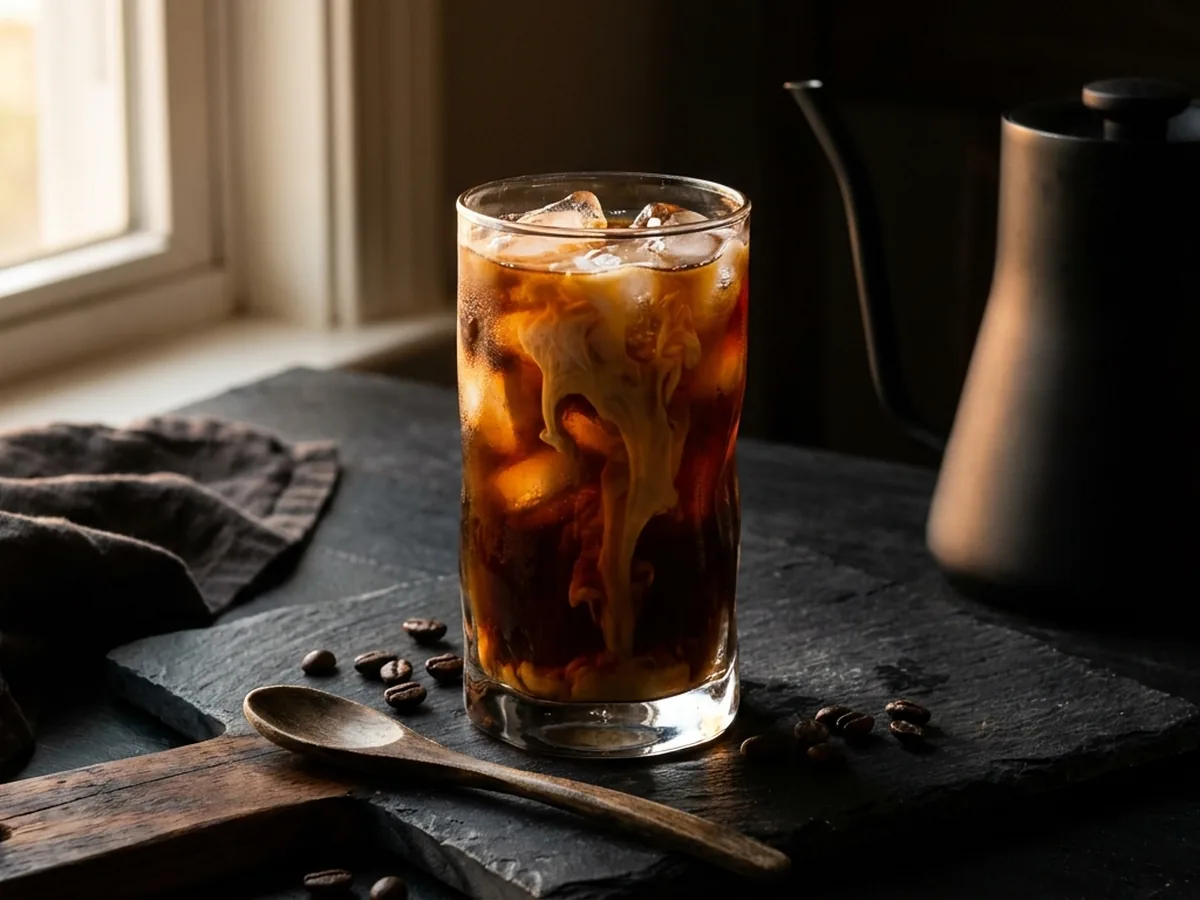
Hot-brewed at double strength, chilled fast, and sweetened with syrup rather than granules. Five minutes plus chilling.
 food.fast
Takeaway taste, kitchen prices
Ice Is Water, and Every Good Iced Coffee Method Is About That
Hot-brewed and chilled, flash-chilled, or cold-brewed. Each produces a genuinely different drink and each solves the dilution problem differently.
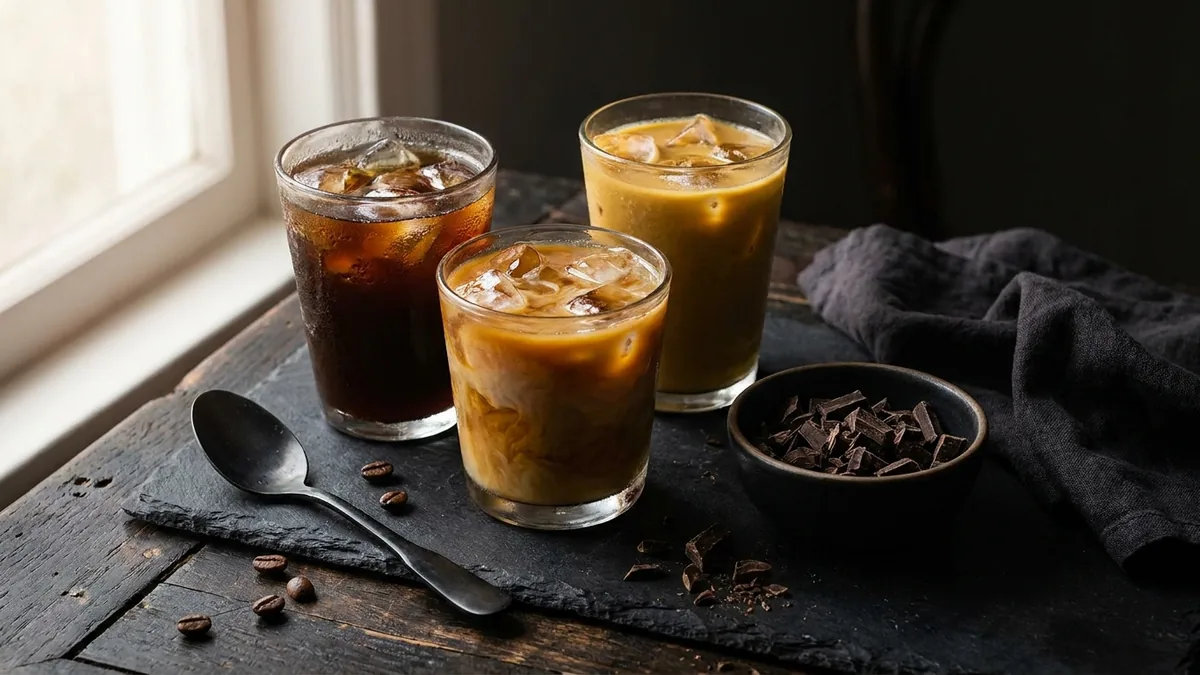
A tall glass holds roughly 200 g of ice. As it melts, that is 200 ml of water joining the drink.
Pour 250 ml of normal-strength coffee over it and, by the time it is half melted, you have 250 ml of coffee and 100 ml of water - a drink at 71 per cent of the strength you brewed. By the end it is 55 per cent.
Coffee at half strength does not taste like weaker coffee; it tastes thin and disproportionately sour, because the acidic compounds are perceptible at lower concentrations than the body-giving ones.
Every good method is a response to this:
The mistake is to brew normally, pour it over ice, and conclude that iced coffee is not very good.
Hot brewed and chilled. Brew at double strength - 120 g of coffee to a litre - then chill fast. Simple, uses any brewer, and tastes like the coffee you know. The risk is slow cooling: hot coffee left to reach room temperature over two hours oxidises and develops a dull, papery flavour. An ice bath fixes it.
Flash chilled. Brew at double strength directly onto ice - so 120 g of coffee with 500 ml of brewing water, dripping into a jug holding 500 g of ice. The coffee hits the ice and drops to fridge temperature in seconds, which locks in the volatile aromatics that slow cooling loses. This is what good coffee shops do and it is the best fast method.
Cold brew. Coarse grounds steeped in cold water for sixteen hours, then filtered twice. Roughly 60 per cent less acidic than the same coffee brewed hot, noticeably sweeter, much smoother, and a completely different drink rather than a cold version of the same one. Keeps two weeks as a concentrate.
| Hot and chilled | Flash chilled | Cold brew | |
|---|---|---|---|
| Time | 10 min + chilling | 10 min | 16 hours |
| Acidity | High | High | Low |
| Sweetness | Low | Moderate | High |
| Aromatics | Some lost | Best retained | Different profile |
| Keeps | 1 day | 1 day | 2 weeks |
| Best for | Convenience | Flavour, fast | Batch, smoothness |
Freeze coffee in an ice cube tray and use those cubes. The drink gets stronger as it sits rather than weaker, which for anybody who takes half an hour over a coffee is a genuine improvement.
Two practical notes: coffee ice never freezes as hard as water ice because of the dissolved solids, so give it longer. And it stains plastic trays - use silicone.
It is also the best use for the last of a cold brew batch approaching its two weeks.
Other approaches that work:
Roast level. A medium to dark roast suits iced coffee better than a light one. Light roasts are more acidic, and cold accentuates acidity while suppressing sweetness, so a light roast iced can taste sharply sour. This is also why chain iced coffee tastes the way it does - those companies roast dark.
Grind. Standard for hot brewing; coarse for cold brew. Fine grounds over-extract even in cold water, giving a muddy, bitter brew, and they are nearly impossible to filter out.
Dose. Double for hot-brewed iced. 1:5 by weight for cold brew concentrate - 200 g of coffee to a litre - diluted about half and half in the glass.
Freshness. Pre-ground coffee loses most of its aromatics within about two weeks of opening, and cold drinks are less forgiving of that than hot ones because there is no aroma rising off the cup to compensate. A £40 burr grinder improves iced coffee more than any other purchase.
The iced coffee and cold brew recipes have the full methods.
Hot-brewed at double strength, chilled fast, and sweetened with syrup rather than granules. Five minutes plus chilling.
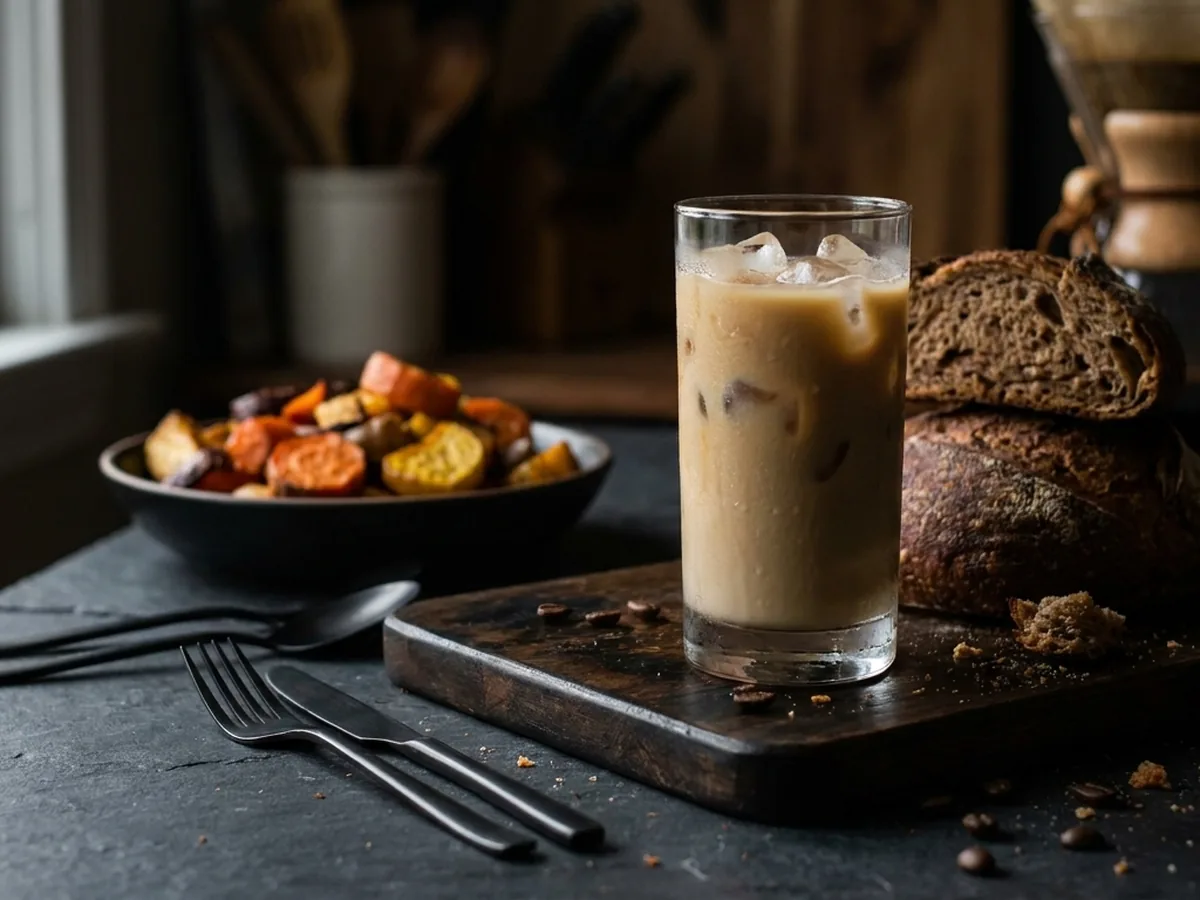
Coffee steeped in cold water for sixteen hours, and a frothed vanilla cream that cascades through it. Five minutes of work.
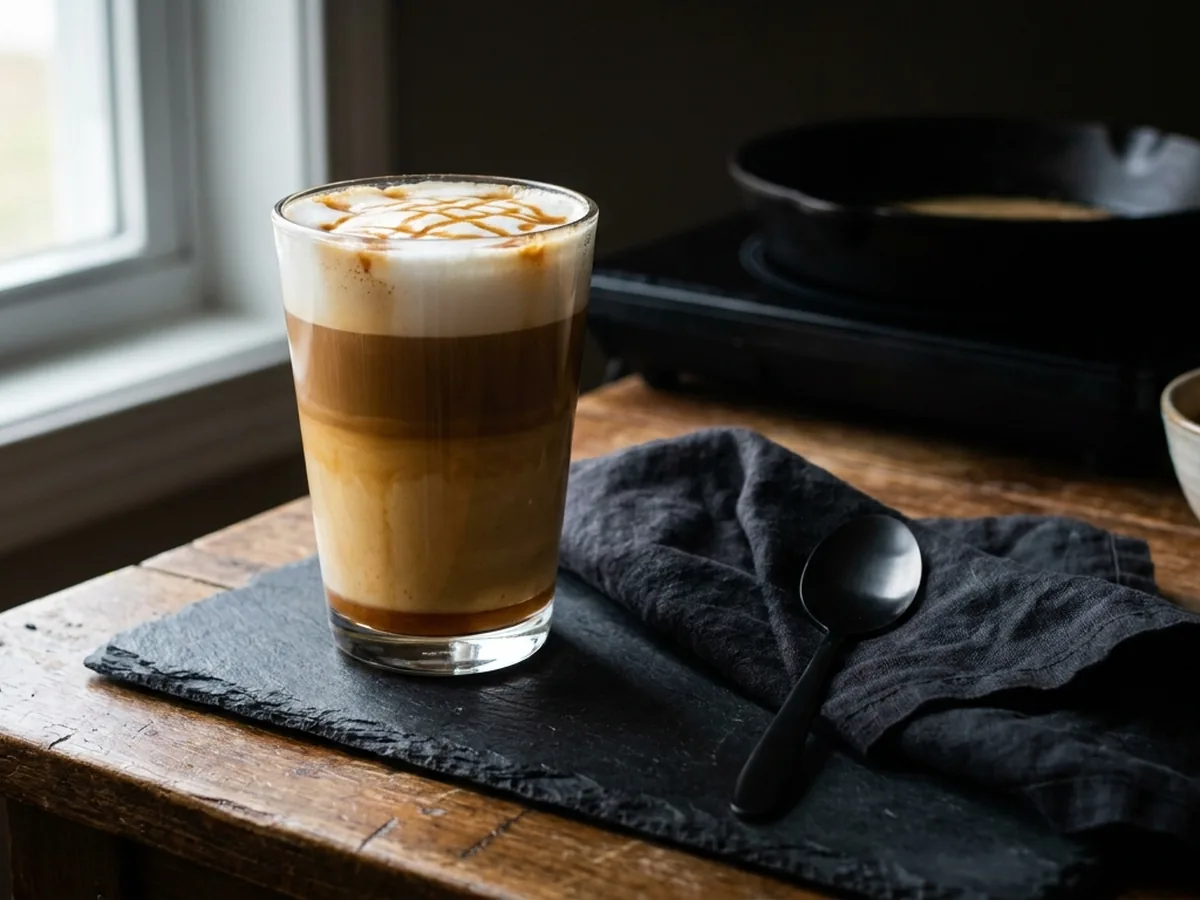
Vanilla syrup, milk, espresso poured last so it marks the foam, and a caramel drizzle. Two minutes once the syrup is made.