Starbucks
Starbucks Pumpkin Spice Latte Copycat Recipe
A pumpkin spice sauce made in fifteen minutes that keeps two weeks, and the drink built from it in ninety seconds.
 food.fast
Takeaway taste, kitchen prices
Which Drinks Need Real Espresso and Which Genuinely Do Not
A moka pot costs twenty pounds and covers most of a coffee-shop menu. Here is which drinks it handles, which it does not, and what to buy if you want to go further.
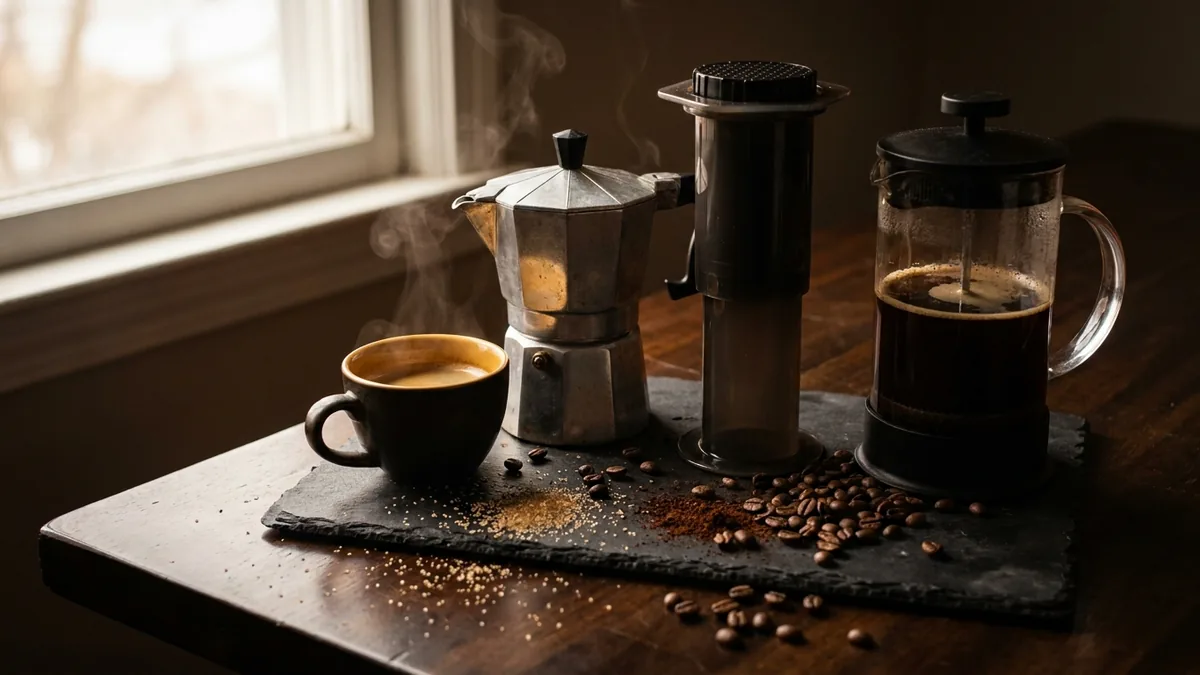
Espresso is coffee brewed by forcing water at about 9 bar of pressure through a compacted bed of finely ground coffee, in roughly 25 to 30 seconds, producing 25 to 30 ml of concentrated coffee.
That pressure does two things nothing else does:
It emulsifies coffee oils into the liquid, giving espresso its heavy, syrupy body.
It produces crema - the layer of fine bubbles on top - by dissolving carbon dioxide under pressure which comes out of solution as the pressure drops.
A moka pot generates roughly 1 to 2 bar from steam pressure - a tenth of an espresso machine. So it produces coffee that is strong, dark and concentrated, with less body and essentially no crema. It is often described as "espresso-like" and that is fair: similar strength, different texture.
An AeroPress generates modest pressure from hand pressing and produces a clean, strong, low-bitterness concentrate.
Strong filter or cafetière produces no pressure at all - just strong coffee.
For drinks where the coffee is diluted with milk and flavoured with syrup, those differences largely disappear.
| Drink | Without a machine? | Notes |
|---|---|---|
| Latte | Yes | Moka pot is fine - milk and syrup dominate |
| Flat white | Mostly | Less body, still good |
| Cappuccino | Mostly | The foam is doing the work |
| Mocha | Yes | The sauce carries it entirely |
| Caramel macchiato | Yes | Layering matters more than the shot |
| Pumpkin spice latte | Yes | The sauce is the drink |
| Iced latte | Yes | Cold brew is arguably better |
| Frappuccino-style | Yes | Blended and frozen; texture dominates |
| Espresso | No | The whole point is the extraction |
| Macchiato (true) | No | Espresso with a spot of foam - nowhere to hide |
| Cortado, piccolo | No | Short, and the body is the drink |
| Americano | Nearly | Moka pot plus hot water is close |
The rule: the more milk and syrup a drink contains, the less the brewing method matters. In a 300 ml latte with a tablespoon of vanilla syrup, the coffee is a flavouring. In a 30 ml espresso it is everything.
Moka pots have a reputation for bitterness and it is almost always technique.
Fill the base with hot water, not cold, up to just below the valve. This is the single biggest improvement. Starting cold means the coffee sits in the basket being slowly heated for several minutes before anything brews, and it scorches. Hot water means the brew starts almost immediately.
Grind medium-fine - finer than filter, coarser than espresso. Too fine and it clogs and channels; too coarse and it under-extracts.
Fill the basket level, and do not tamp. A moka pot is not an espresso machine and tamping restricts flow enough to cause channelling and bitterness.
Medium heat, lid open, so you can see it. When the coffee starts to gurgle and turn pale and foamy, it is done - take it off immediately and run the base under cold water. That gurgling is steam rather than coffee coming through, and everything after it is bitter.
Dark roast beans. This is a high-extraction method and a light roast will taste sour.
Done properly a moka pot makes an excellent, strong, chocolatey coffee, and it is the right first purchase for anybody making the drinks on this site.
1. A milk frother, £6. Handheld, battery powered. Makes proper hot microfoam and cold foam. The single best value item in this list and it unlocks the entire milk-drink menu regardless of how you brew the coffee.
2. Better coffee, £6 to £9. Whole beans from a roaster with a roast date on the bag, or at minimum a good supermarket espresso blend. Pre-ground coffee that has been open a month is the commonest reason home coffee disappoints.
3. A burr grinder, £40 to £80. The genuine upgrade, and it improves every brewing method. Coffee loses most of its aromatics within about two weeks of grinding; grinding to order changes the drink more than any brewer does. Burr, not blade - a blade grinder produces wildly uneven particles.
4. A moka pot, £20, or an AeroPress, £30. Strong concentrated coffee for milk drinks.
5. An espresso machine, £250 upwards. Only if you actually drink short drinks. For lattes and flavoured coffees, the first four items get you most of the way and the syrup decides the outcome.
Most people buy these in the reverse order and end up with an expensive machine making drinks from stale supermarket pre-ground.
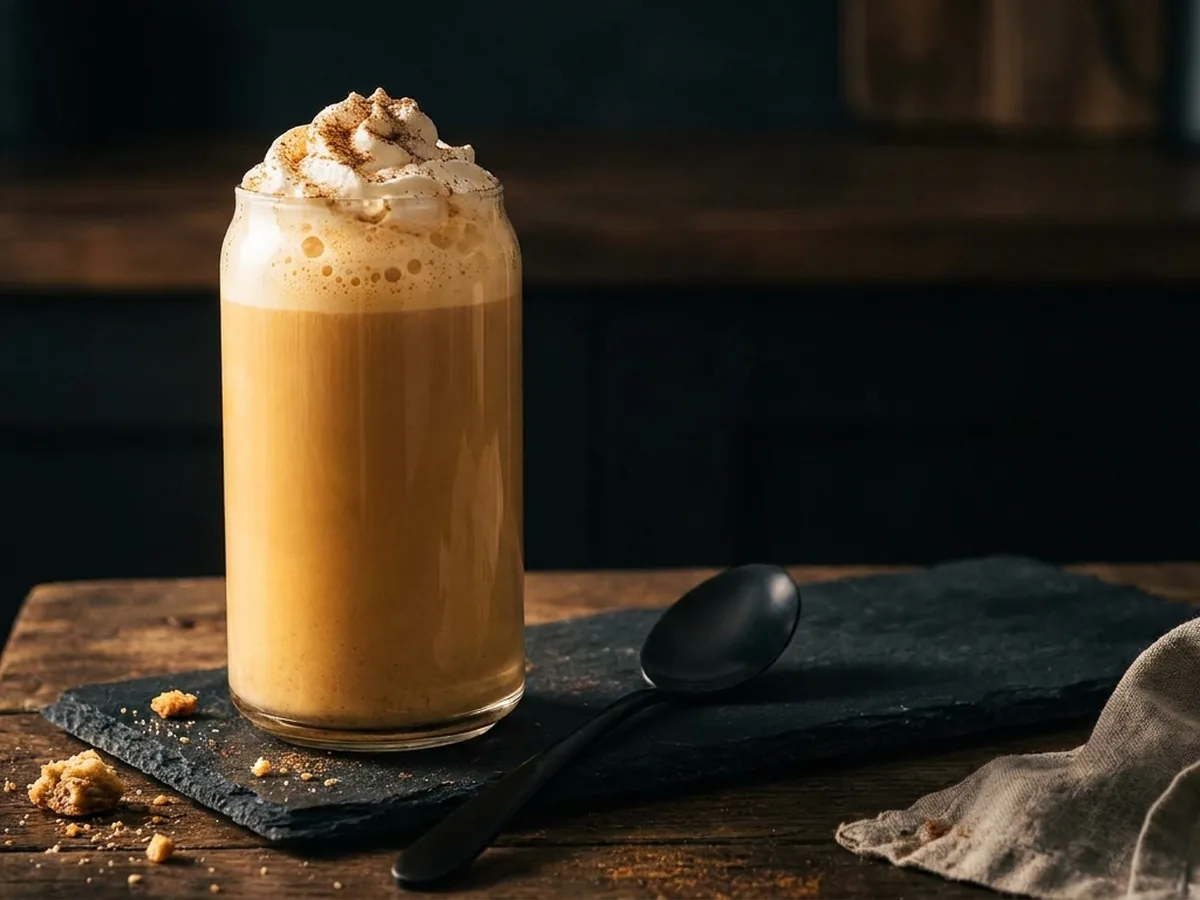
A pumpkin spice sauce made in fifteen minutes that keeps two weeks, and the drink built from it in ninety seconds.
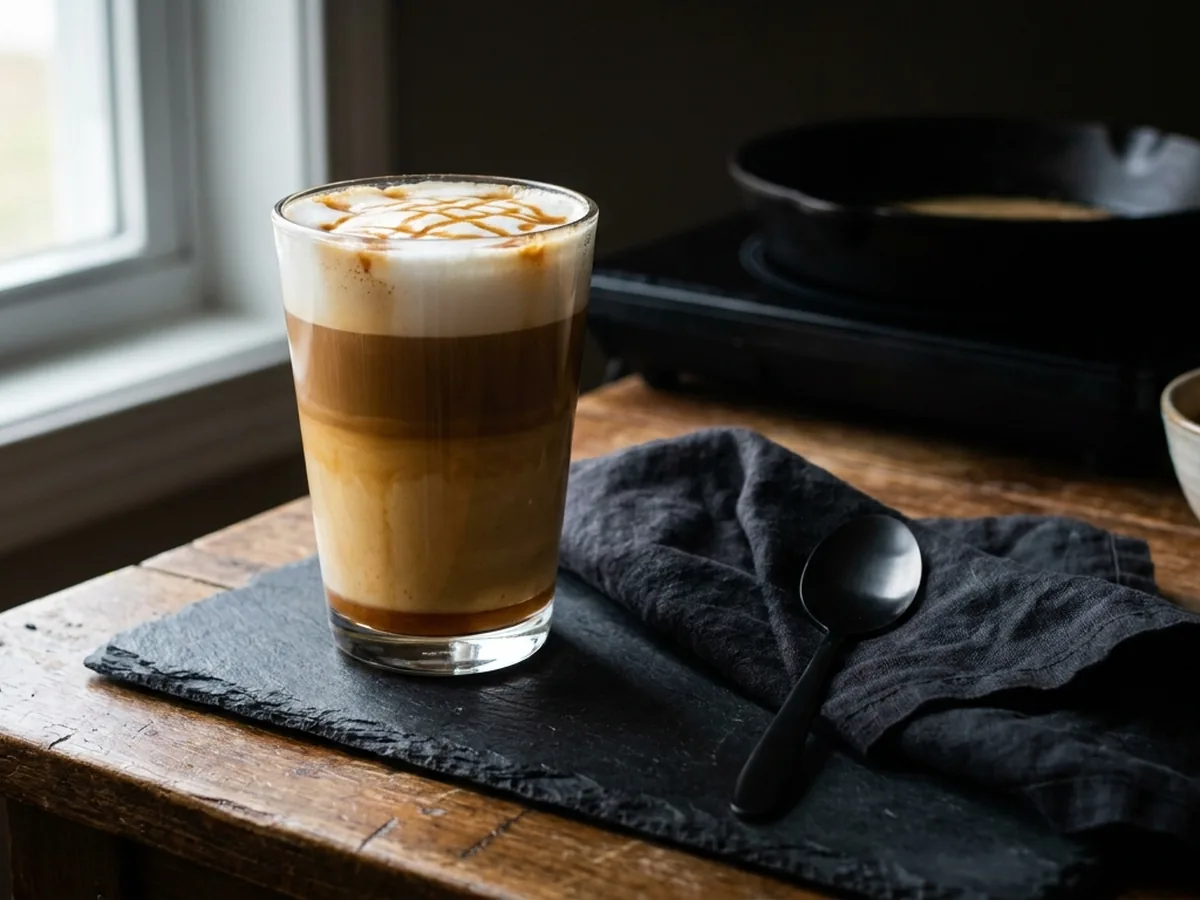
Vanilla syrup, milk, espresso poured last so it marks the foam, and a caramel drizzle. Two minutes once the syrup is made.
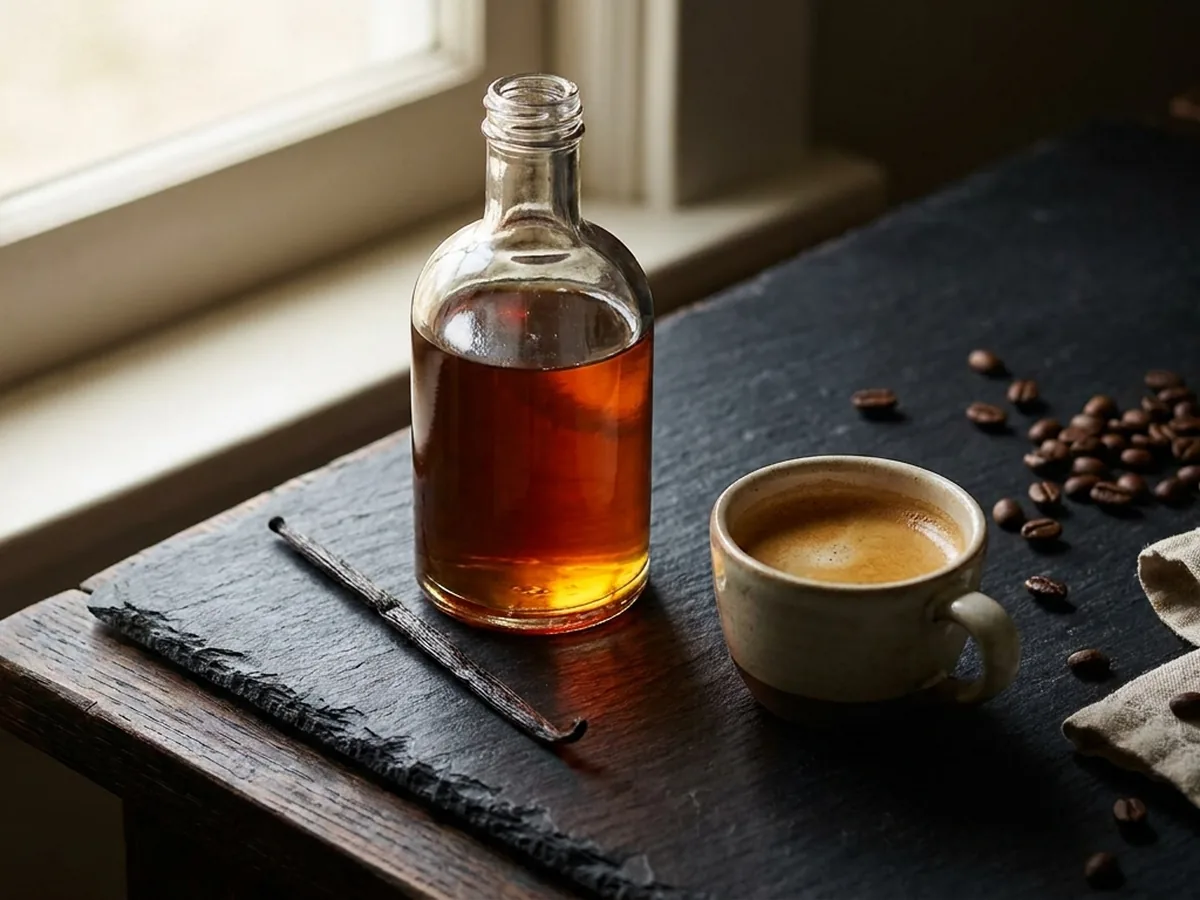
Sugar, water, vanilla. Four minutes on the hob for a bottle that costs about forty pence and replaces a shelf of them.
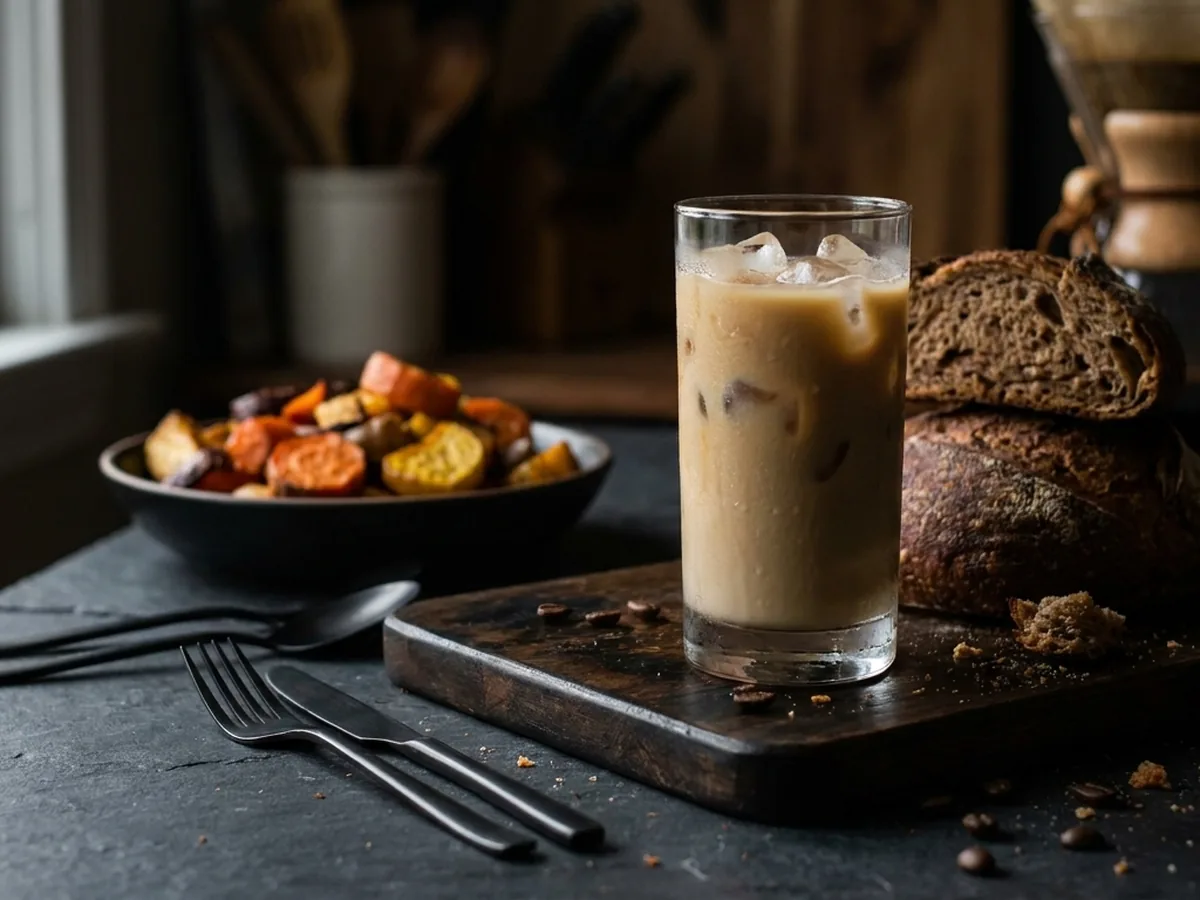
Hot-brewed at double strength, chilled fast, and sweetened with syrup rather than granules. Five minutes plus chilling.