KFC
KFC Original Recipe Fried Chicken Copycat
Buttermilk brine, a double dredge with a rest, and controlled shallow frying. Honest about the one thing a home kitch…
 food.fast
Takeaway taste, kitchen prices
The Salt Is Doing the Work, Not the Buttermilk
"The acid tenderises the meat" is the usual explanation for buttermilk brining and it is mostly wrong. Here is what actually happens, which tells you exactly how long to leave it.
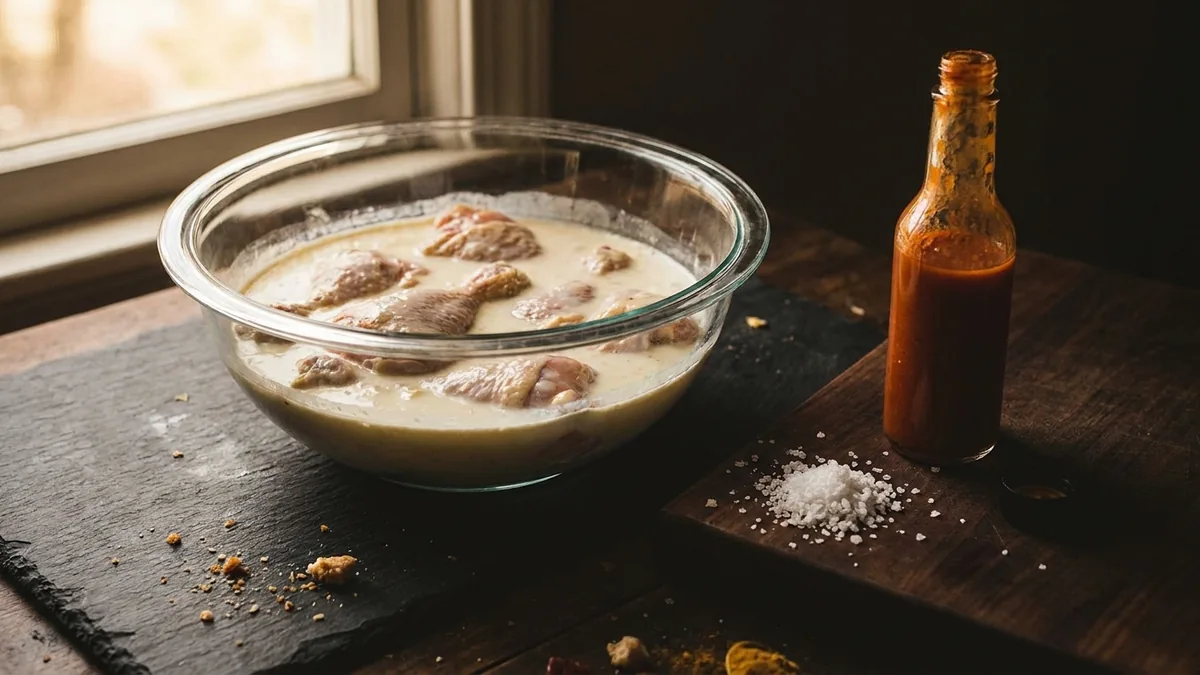
Muscle is made of protein filaments packed in bundles. When meat is heated those proteins contract and squeeze water out - which is why an overcooked chicken breast is dry.
Salt in solution changes that. At the concentrations used in a brine, salt partially denatures and dissolves some of those proteins, particularly myosin. The filament bundles swell and loosen, and the dissolved protein forms a gel that physically traps water.
Two consequences:
The meat holds more water going in, because the loosened structure absorbs some of the brine.
It loses less water coming out, because the gel holds onto it during cooking. This is the bigger effect and it is why brined chicken survives a few extra minutes in the oil that unbrined chicken would not.
The number usually quoted is around 10 per cent less moisture loss during cooking, which is the difference between juicy and merely acceptable.
None of this is acid, and none of it is tenderising in the sense of breaking down connective tissue.
Salt has to physically travel into the meat, and diffusion through muscle tissue is slow - roughly a centimetre every four hours at fridge temperature.
Which gives a straightforward table:
| Cut | Time | What it reaches |
|---|---|---|
| Boneless thigh, 2 cm | 2-4 hours | All the way through |
| Bone-in thigh or drumstick | 8-12 hours | All the way through |
| Whole chicken breast | 4-6 hours | All the way through |
| Wings | 2-4 hours | All the way through |
| 2 cm nugget pieces | 1-2 hours | All the way through |
| Whole chicken | 12-24 hours | Most of the way |
An hour salts the surface. Four hours reaches a centimetre in. Eight hours gets through a thigh.
The upper limit is real. Past about 24 hours the protein structure continues to break down past the useful point, and the texture turns soft, slightly mealy and chalky at the surface. That is a different failure from dry and no more pleasant.
The concentration matters less than the time, within reason. A 5 to 6 per cent salt solution - about 50 to 60 g of salt per litre - is the standard range, and doubling it does not halve the time.
Wet brine. Salt dissolved in water. The meat absorbs some of the brine, so it gains weight and is noticeably juicier. The trade-off is that the added water dilutes the meat's own flavour slightly, and a wet surface has to be dried before any coating goes on.
Dry brine. Salt rubbed directly onto the surface, uncovered in the fridge. The salt draws moisture out, dissolves in it, and that concentrated solution is reabsorbed. No added water, more concentrated flavour, and - crucially for fried and roast chicken - a drier surface, which browns better. This is what the overnight fridge rest in the wings recipe is doing.
Buttermilk brine. A wet brine plus three other things:
For fried chicken, buttermilk. For roast chicken and wings, dry brine.
Use a bag, not a bowl. A zip bag with the air pressed out uses about half the liquid and coats every surface. A bowl needs the meat fully submerged, which takes a lot more buttermilk.
Score thick pieces. Two deep slashes into a thigh, down to the bone, cuts the distance salt has to travel and roughly halves the effective time.
Do not rinse afterwards unless the brine was very strong. Rinsing washes off surface salt you want, and adds water you will have to dry off again. Let the excess drip and go straight into the dredge.
Do not reuse a brine. It has had raw chicken in it.
Brine cold. Always in the fridge, never at room temperature. A protein in a salt solution at 20 °C is a bacterial culture.
Adjust salt elsewhere. Brined chicken is already seasoned. Recipes on this site that brine use less salt in the dredge, and a recipe that does both at full strength will be inedible.
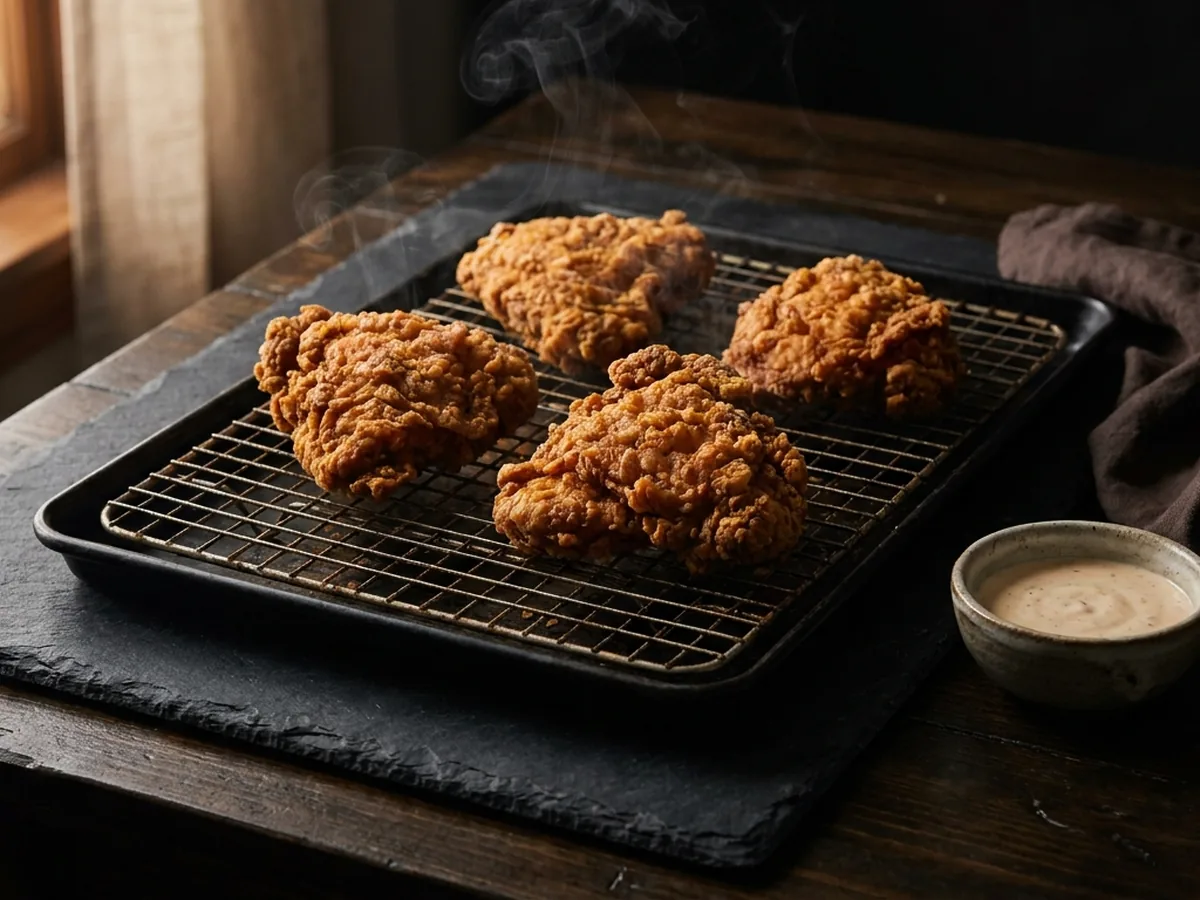
Buttermilk brine, a double dredge with a rest, and controlled shallow frying. Honest about the one thing a home kitch…
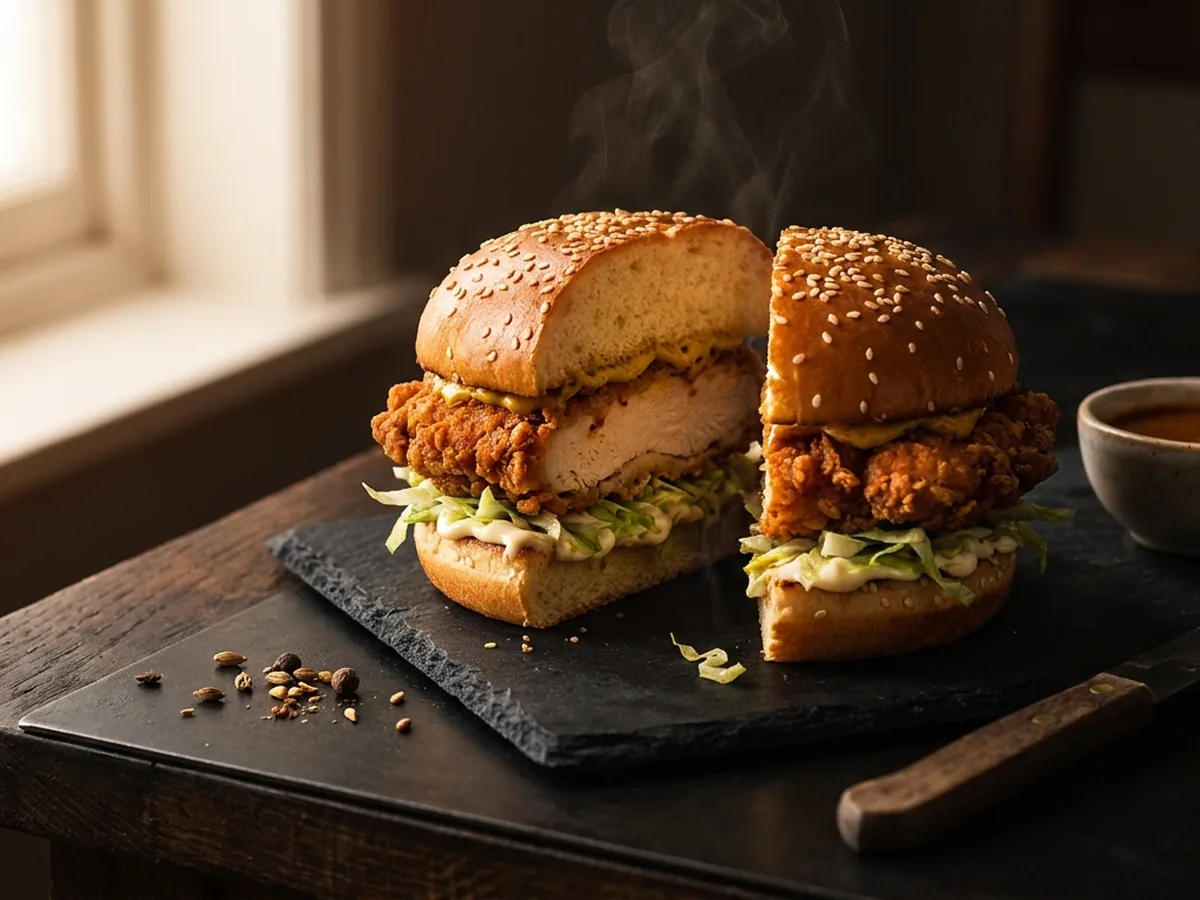
A boneless thigh, a cayenne-loaded dredge and plain mayonnaise. The heat is built into the crust, which is the whole trick.
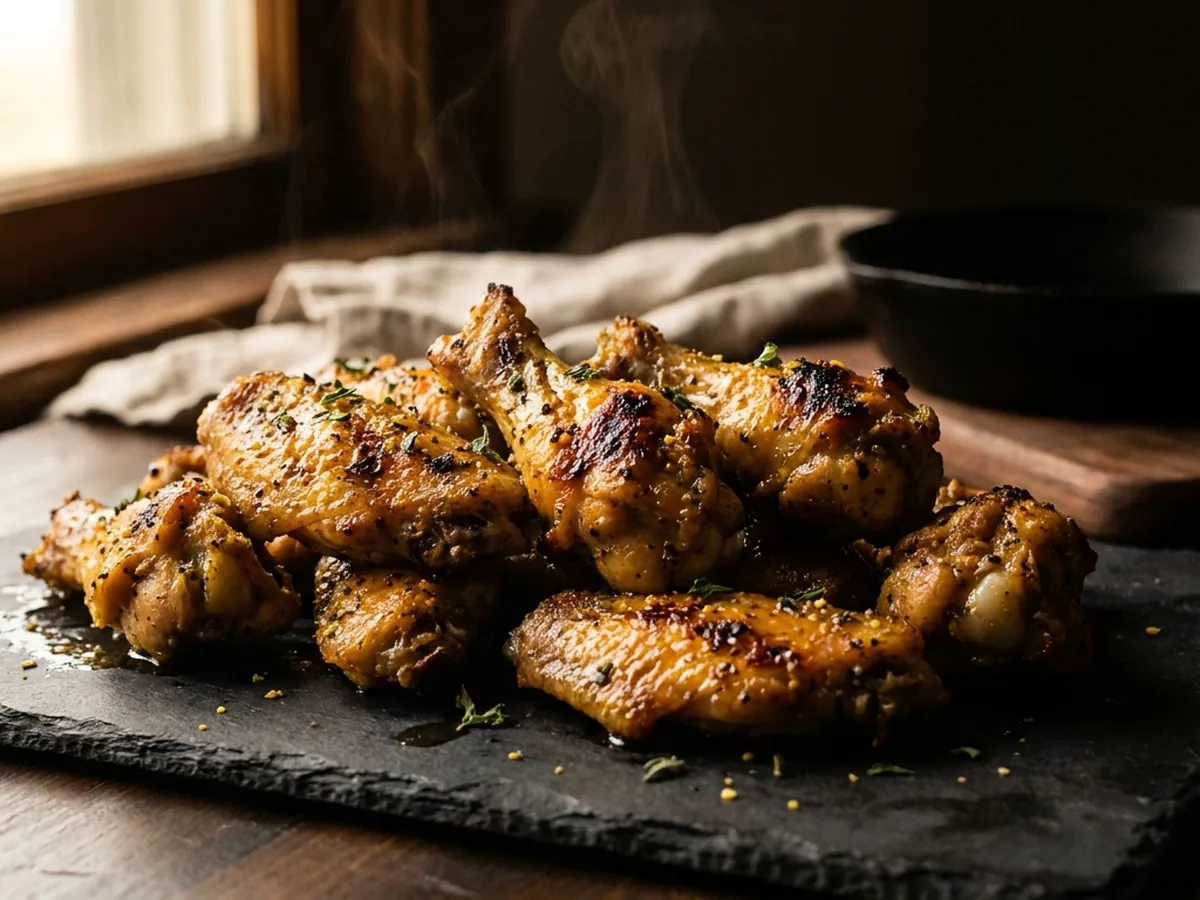
The chain's most ordered flavour, and the reason home versions taste dusty is that they skip the butter. Forty minutes.
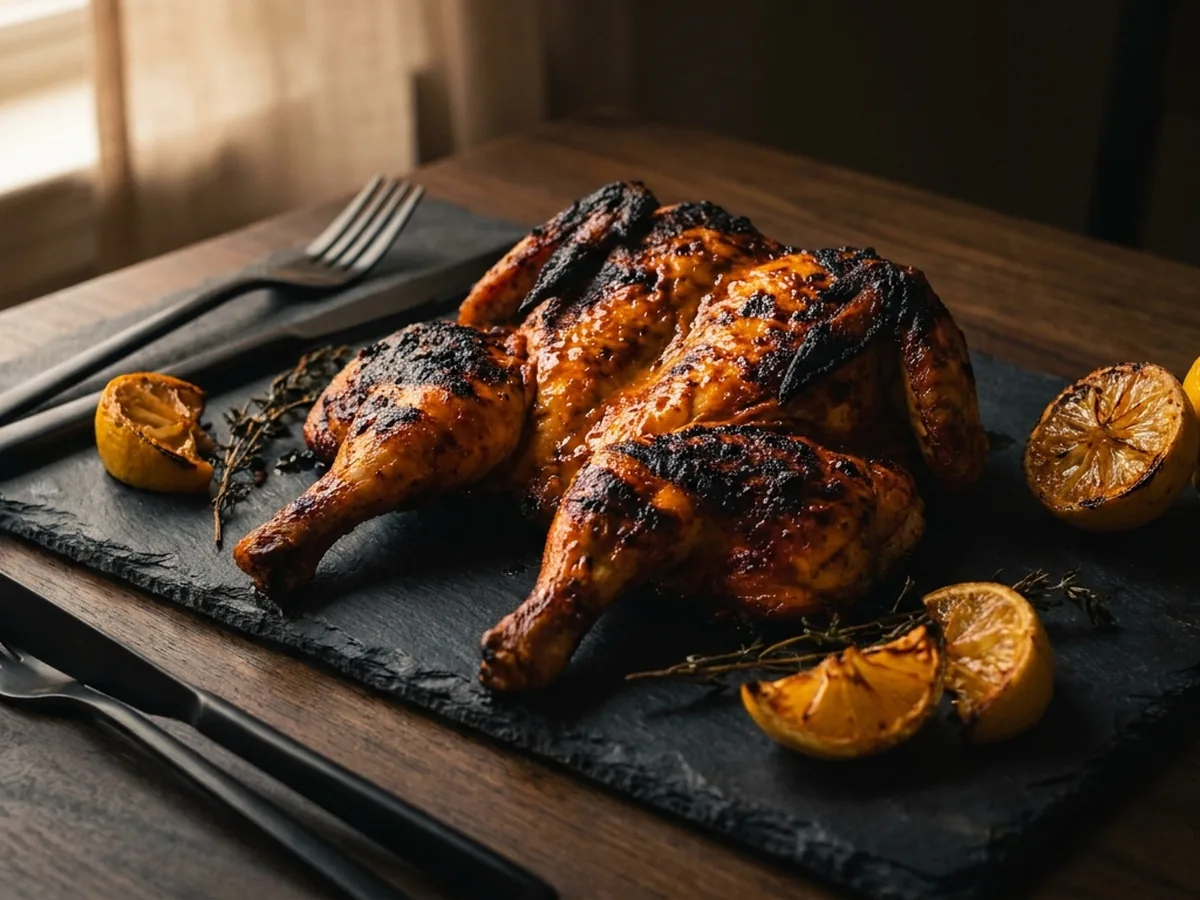
A whole chicken opened flat, a day in the marinade, and a baste that only goes on in the last five minutes because it…