KFC
KFC Original Recipe Fried Chicken Copycat
Buttermilk brine, a double dredge with a rest, and controlled shallow frying. Honest about the one thing a home kitch…
 food.fast
Takeaway taste, kitchen prices
Three Coatings, Three Textures, Three Completely Different Techniques
A dredge, a batter and a crumb are not interchangeable. Each produces a specific texture, fails in a specific way, and suits specific food.
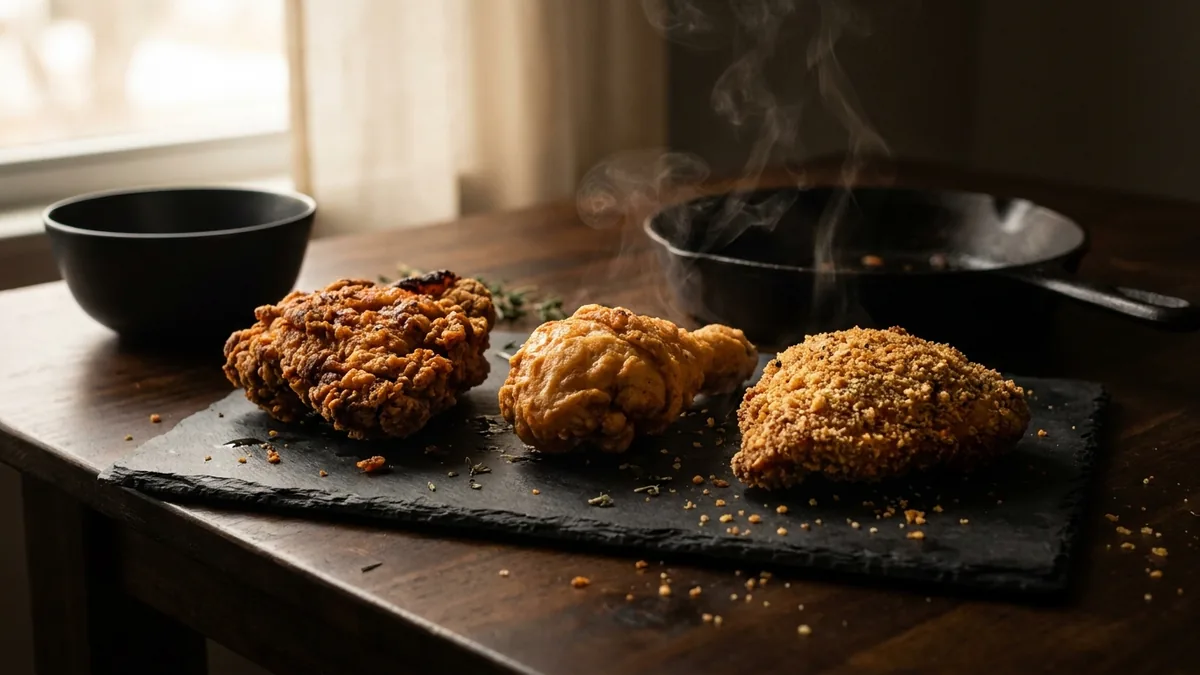
The KFC-style coating. Wet chicken into seasoned flour, pressed, sometimes back into the wet and floured again.
How it works. Flour sticks to the wet surface and absorbs some of its moisture, forming a paste at the boundary. That paste sets in the fryer into a craggy, irregular crust with peaks and hollows that catch and hold oil, giving enormous textural variety in a single bite.
What makes it craggy. Two things. A double dredge with a wet dip between builds an uneven, multi-layered surface. And rubbing a little of the brine through the dry flour creates lumps the size of couscous which become the crags.
Why baking powder belongs in it. It produces gas bubbles that open the crust, and raises the surface pH so the Maillard reaction runs faster and the coating browns more at the same temperature. A teaspoon per two cups of flour.
Why it falls off. Almost always the rest was skipped. Coated chicken needs ten minutes on a rack before frying, during which the flour hydrates from below and turns from dusty white to tacky grey. That colour change is the coating bonding. Dry flour hitting hot oil floats away.
Best for: bone-in chicken, thighs, anything where you want maximum texture.
Flour and liquid mixed to a pourable consistency, the food dipped and fried immediately. The tempura-style coating on a nugget or a fish-shop fish.
How it works. The batter's water boils off violently in the oil, leaving a dry, porous shell of set starch and protein. It is smooth rather than craggy, because the liquid finds its own level before it sets.
Three things make a good batter:
It must be used within about five minutes. A batter that has stood has lost its bubbles and developed gluten.
Why it slides off. Too thick a batter, or a wet surface underneath. A light dusting of flour or cornflour on the food before dipping gives the batter something to hold.
Best for: small pieces, fish, vegetables, anything where you want a smooth shell and a distinct separation between coating and food.
Flour, then egg, then breadcrumb. A schnitzel, a katsu, a Chicken Royale.
How it works. Flour dries the surface and gives the egg something to cling to. Egg is the glue. Breadcrumb is a dry, already-toasted particle that simply needs heat and a little fat to crisp - it is not cooking so much as toasting.
The two crumbs and why to blend them:
Season the crumb, not just the flour. An unseasoned crumb tastes like packaging.
It needs a rest too - fifteen minutes for the egg to set and glue the crumb down.
Best for: flat fillets, and anything going in an air fryer, because a crumb is already dry and crisps with heat alone where a raw flour dredge needs to cook in fat.
| Dredge | Batter | Crumb | |
|---|---|---|---|
| Texture | Craggy, irregular | Smooth shell | Shattering, even |
| Rest before frying | 10 min | None - use at once | 15 min |
| Air fryer? | Poor | No - it drips | Excellent |
| Oven? | Fair, needs oil | No | Good |
| Best with | Bone-in chicken | Small pieces, fish | Flat fillets |
| Fails by | Falling off if not rested | Sliding off, going chewy | Falling off if floured too heavily |
Whichever coating you use, the single most common failure is the same and the fix is the same: let it sit before it meets the oil.
For a dredge, ten minutes on a rack. The flour draws moisture up from the chicken and hydrates into a paste that bonds mechanically to the surface. You can watch it happen - the coating goes from powdery white to slightly grey and tacky.
For a crumb, fifteen minutes. The egg proteins begin to set and physically glue the crumb particles to the flour layer.
For a batter, the opposite - no rest at all, because the bubbles and the cold are what you are protecting.
And in all three cases, rest on a rack, spread out, not touching. Pieces piled together trap steam between them and the coating on the contact faces goes soggy before it ever reaches the pan.
Afterwards, the same rule: drain on a rack, never on kitchen paper. Paper traps steam directly under the food and softens the crust you have just spent the whole recipe building. This is the single easiest improvement most home cooks can make to fried food.
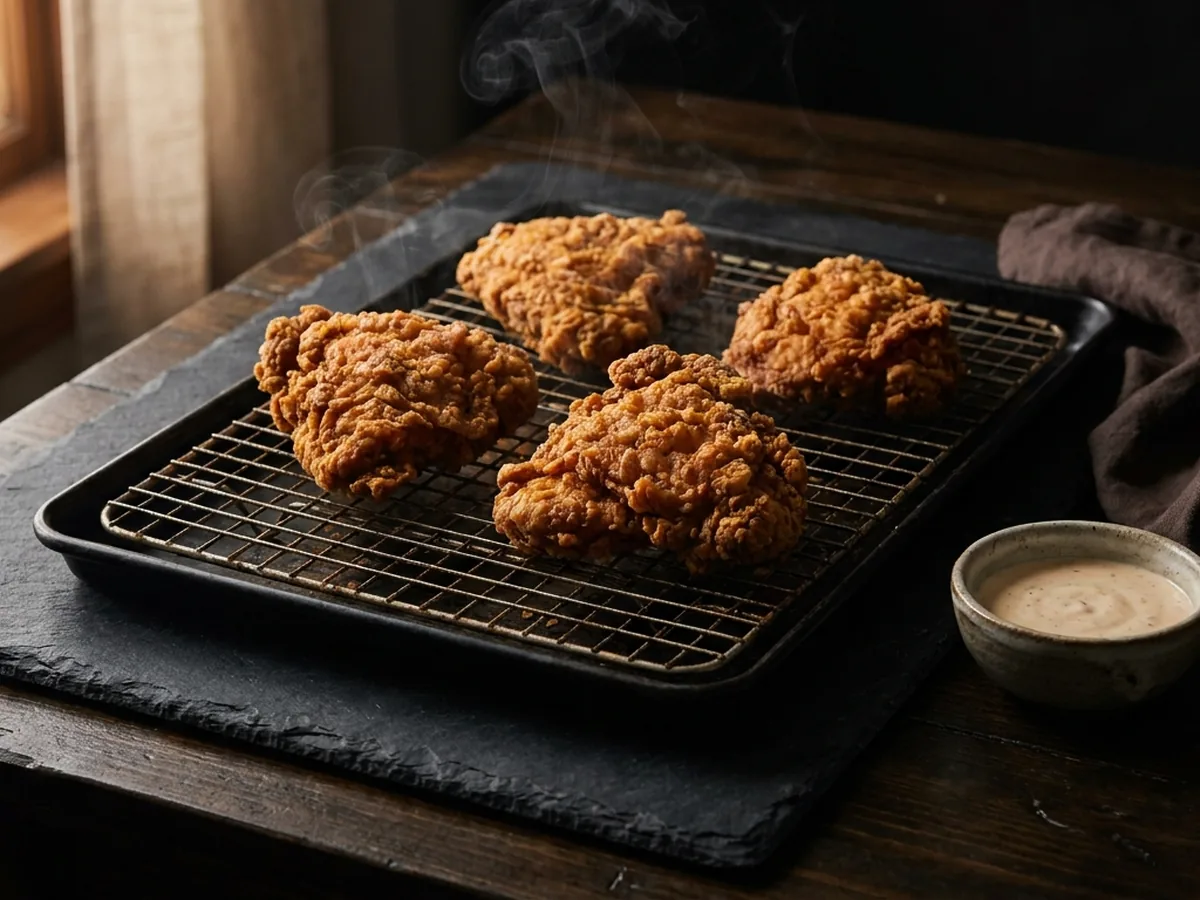
Buttermilk brine, a double dredge with a rest, and controlled shallow frying. Honest about the one thing a home kitch…
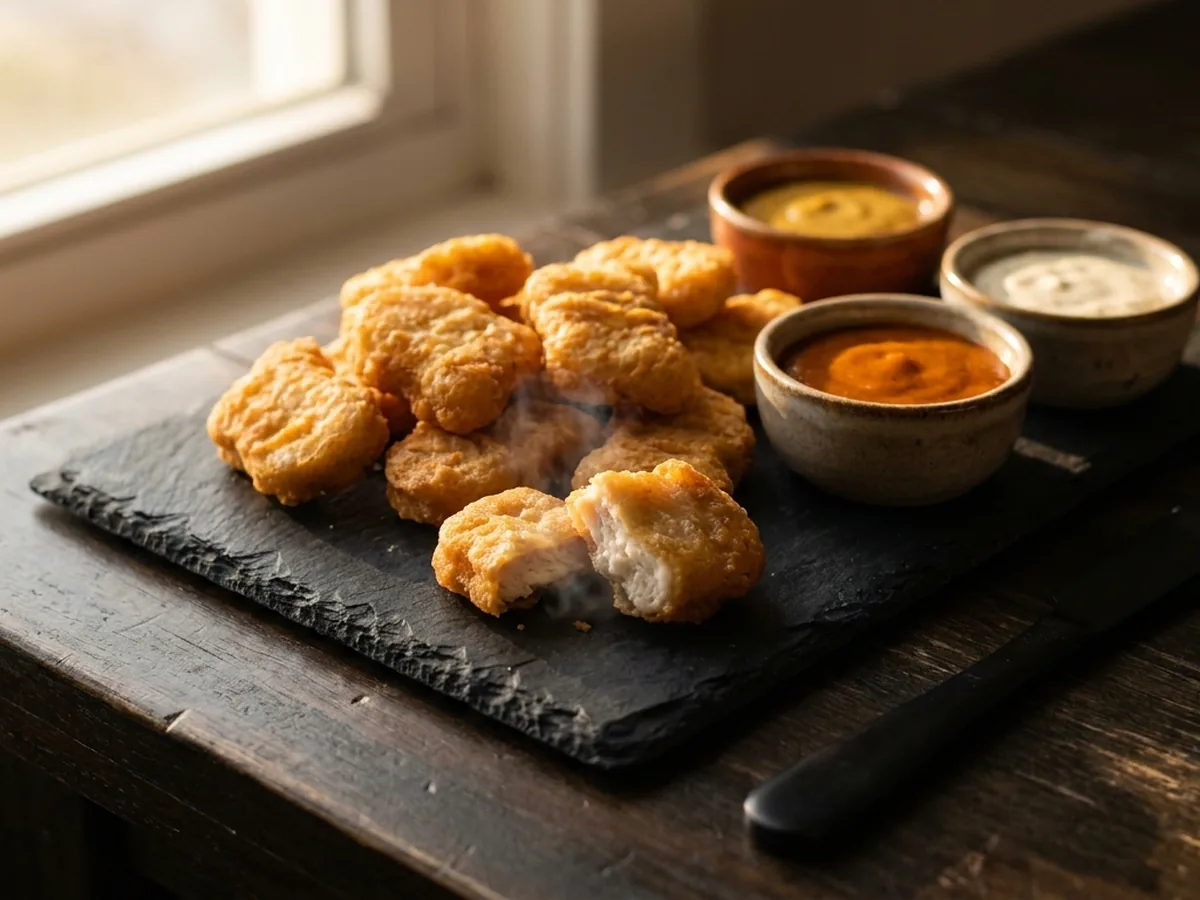
Minced and re-formed chicken in a thin tempura-style batter. The smooth interior is the whole point and it needs a fo…
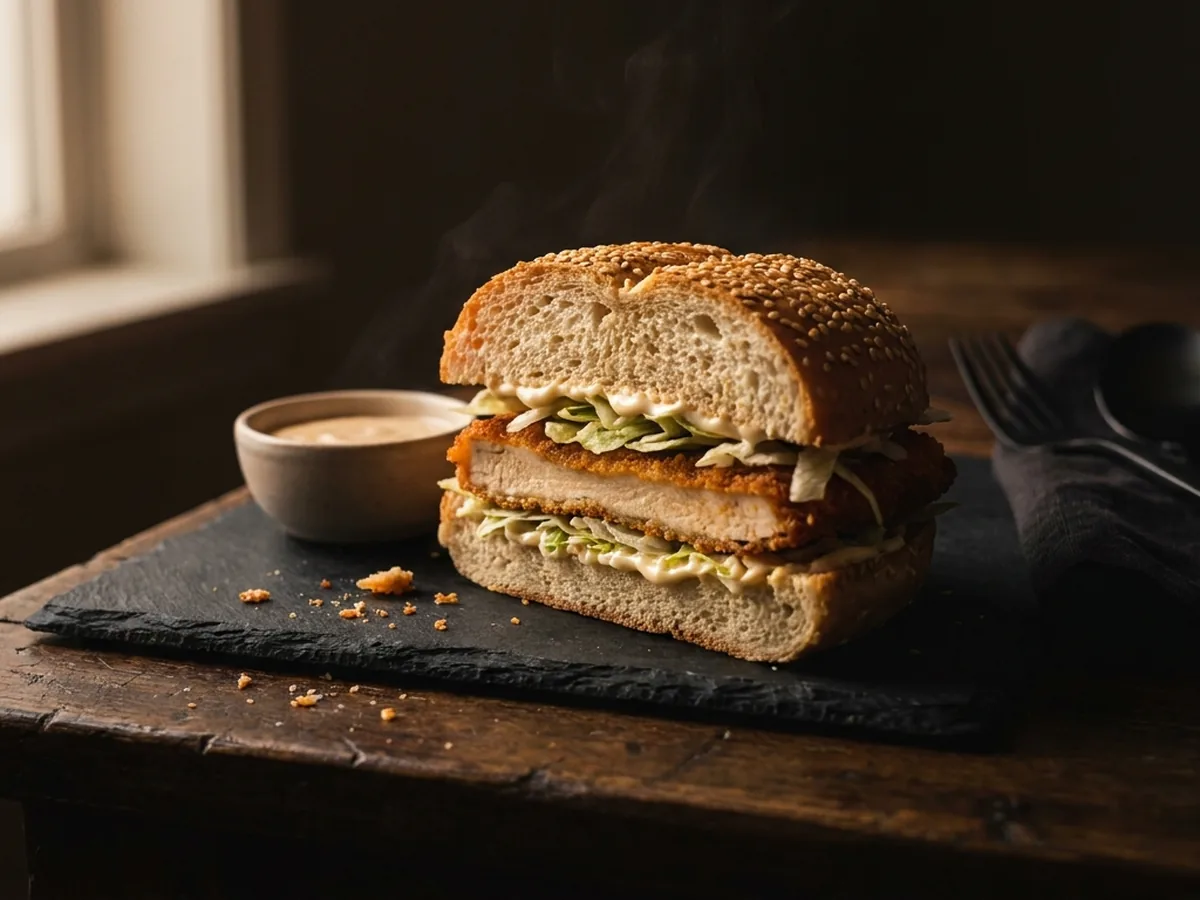
A breadcrumbed chicken fillet, shredded lettuce and mayonnaise in a long sesame bun. Deliberately plain, and the crum…
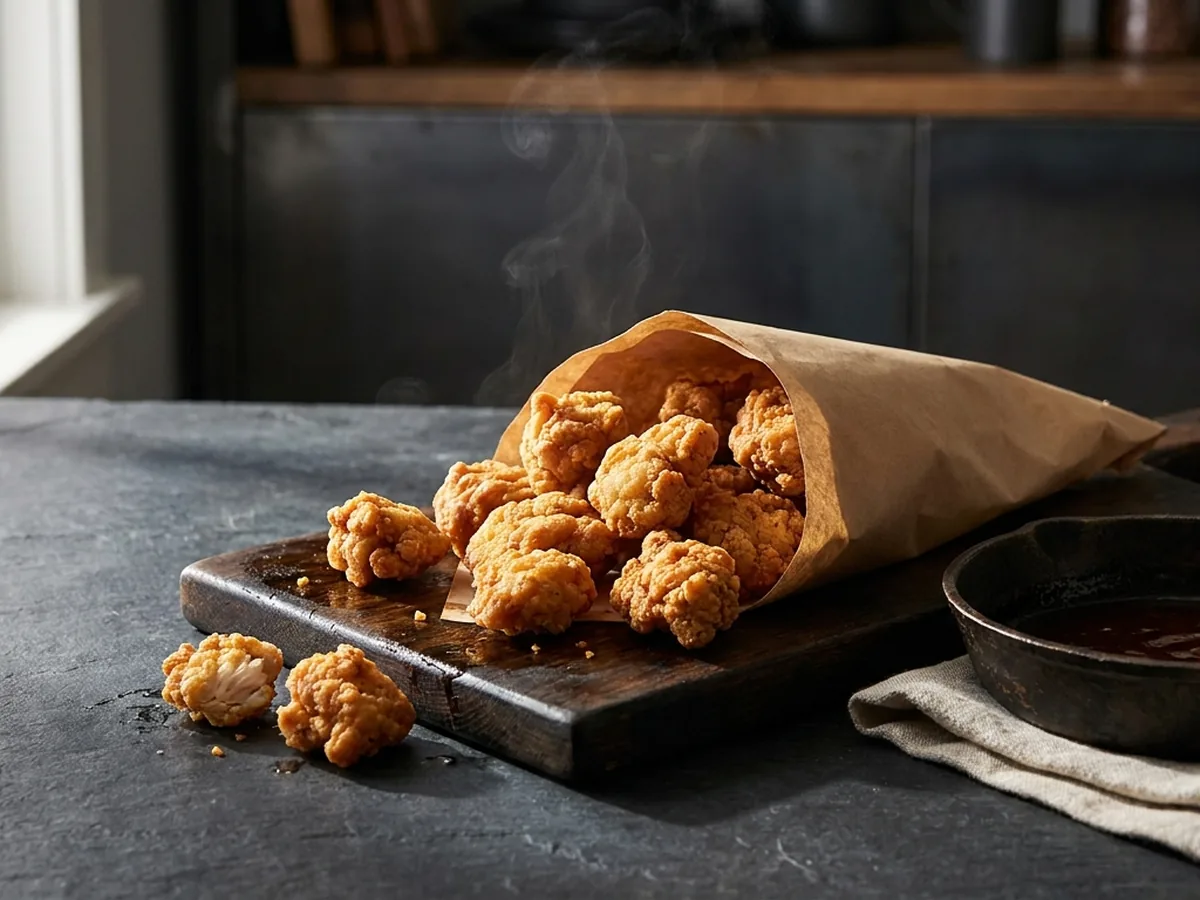
Small pieces, a heavily seasoned dredge and a very short fry. The whole recipe is about not overcooking something tha…