KFC
KFC Original Recipe Fried Chicken Copycat
Buttermilk brine, a double dredge with a rest, and controlled shallow frying. Honest about the one thing a home kitch…
 food.fast
Takeaway taste, kitchen prices
Everything That Goes Wrong With Hot Oil, and How to Prevent It
Frying at home is routine and it is the one technique on this site with a genuine injury risk attached. Ten rules, the reasoning behind each, and what to do if it goes wrong.
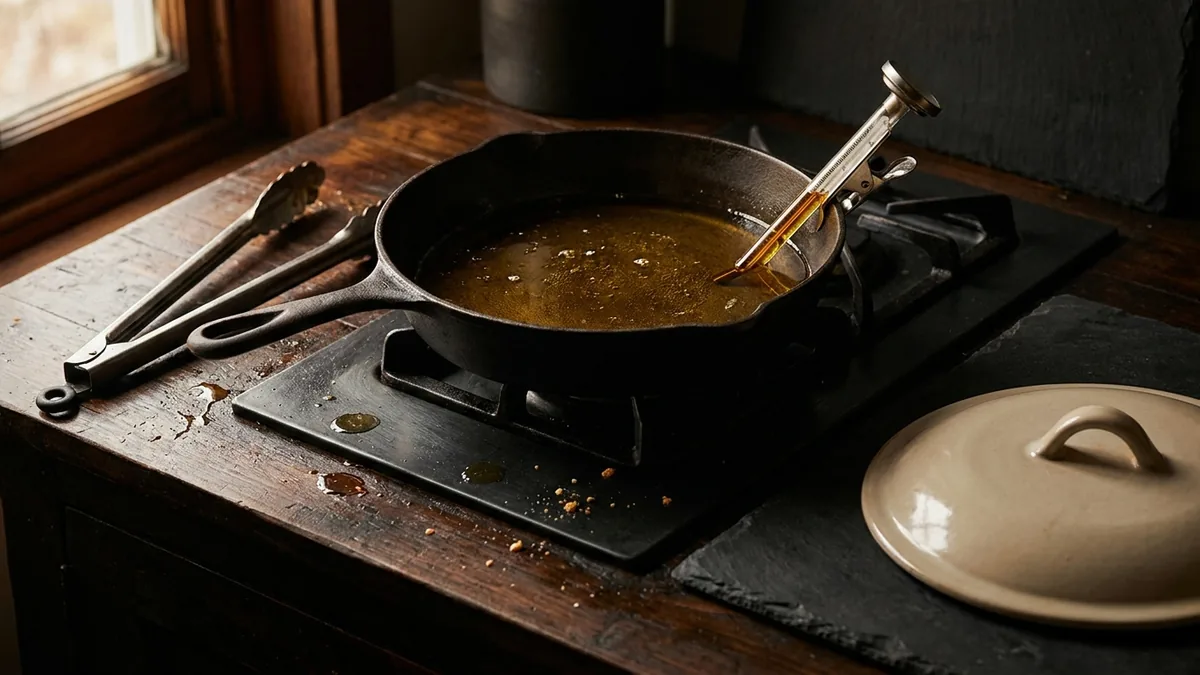
1. Never fill a pan more than one third with oil. Food displaces oil, and the water leaving the food turns to steam and foams the surface upward. A pan that looks safe empty can overflow the moment a batch of chips goes in.
2. Dry the food. Water and 180 °C oil react violently - the water flashes to steam instantly and throws oil out of the pan. This is why every dredge and batter on this site is applied to a surface that has been patted dry.
3. Never leave the pan. Not to answer the door. Oil goes from hot to smoking to its autoignition point - around 315 °C for most vegetable oils - faster than people expect, and unattended cooking is the single largest cause of domestic kitchen fires.
4. Use a thermometer. A clip-on or probe thermometer costs about twelve pounds. Without one you are guessing at both the quality and the safety of what you are doing.
5. Keep a lid or fire blanket within arm's reach before you start heating anything.
6. Lower food in away from you, with long tongs or a spider, so any splash goes away from your body. Never drop it in.
7. Small batches. Crowding drops the temperature, which makes greasy food, and displaces more oil at once.
8. A heavy, stable pan on a back burner, handle turned in. A tall pan is better than a wide one for containing splashes.
9. Let the oil cool completely in the pan before moving it. Carrying a pan of hot oil across a kitchen is how a very large proportion of serious scalds happen.
10. Never pressure fry in a domestic pressure cooker. Covered in detail on what a home kitchen cannot do, and it is the one technique this site refuses to describe.
Turn off the heat. Cover the pan with a lid, a baking tray or a fire blanket to cut off the oxygen. Leave it covered and do not move it. NEVER use water - it flashes to steam instantly and throws burning oil across the room. If it is not out in seconds, leave the room, close the door and call the fire service.
The smoke point is the temperature at which an oil starts to break down visibly. Past it, the oil develops acrid flavours and free radicals, and it is closer to its flash point than you want to be.
Frying happens at 160 to 190 °C, so you want an oil comfortably above that.
| Oil | Smoke point | Frying? |
|---|---|---|
| Refined rapeseed / canola | 230 °C | Yes - cheap and neutral |
| Groundnut / peanut | 230 °C | Yes - and it has flavour |
| Sunflower, refined | 225 °C | Yes |
| Vegetable oil blend | 220 °C | Yes |
| Beef dripping | 205 °C | Yes - superb for chips |
| Light olive oil | 200 °C | Possible, expensive |
| Butter | 150 °C | No - the milk solids burn |
| Extra virgin olive oil | 190 °C | No - and a waste |
Smoke point falls with use. Every frying session introduces food particles and water, both of which accelerate breakdown. Oil that smokes at a temperature it handled last month has degraded and should be replaced.
Two numbers matter, and most people only watch one.
The set temperature is what you preheat to. Easy to check, easy to hit.
The recovery temperature is what the oil actually sits at once food is in it, and it is what the food is really cooked at. Cold food takes an enormous amount of energy out of the oil, and how far it drops depends on the ratio of oil to food and the thermal mass of the pan.
A litre of oil in a thin pan with four chicken thighs in it can crash from 175 °C to 130 °C and stay there. At 130 °C food absorbs oil instead of sealing, and comes out pale and greasy - a quality failure that people usually blame on the recipe.
Three fixes:
A clip-on thermometer makes all of this visible and turns frying from guesswork into a controlled process.
Reusing is normal, economical and has limits.
Strain it while still warm - not hot - through a fine sieve lined with muslin or a coffee filter, into a clean sealed container, stored dark and cool.
Discard it when it darkens noticeably, smells rancid or fishy, foams across the surface rather than bubbling, smokes below its normal temperature, or has become syrupy when cold. Any one of those is enough.
Disposal. Never down a sink or a drain. Oil solidifies in pipes and is the main constituent of the fatbergs that block municipal sewers. Cool it completely, pour it into a sealed container - a milk carton or the bottle it came in - and put it in general waste. Many local authorities and supermarkets take used cooking oil for recycling, which is better again.
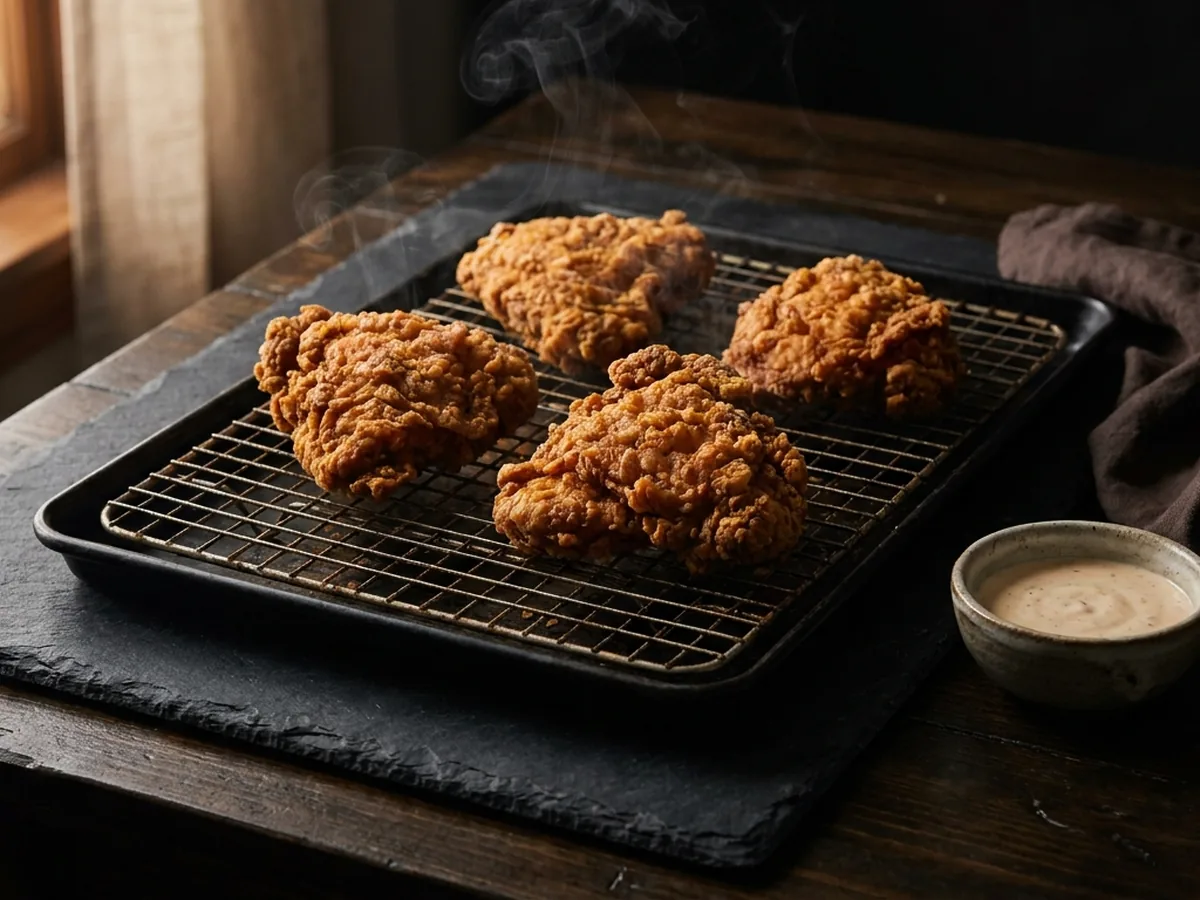
Buttermilk brine, a double dredge with a rest, and controlled shallow frying. Honest about the one thing a home kitch…
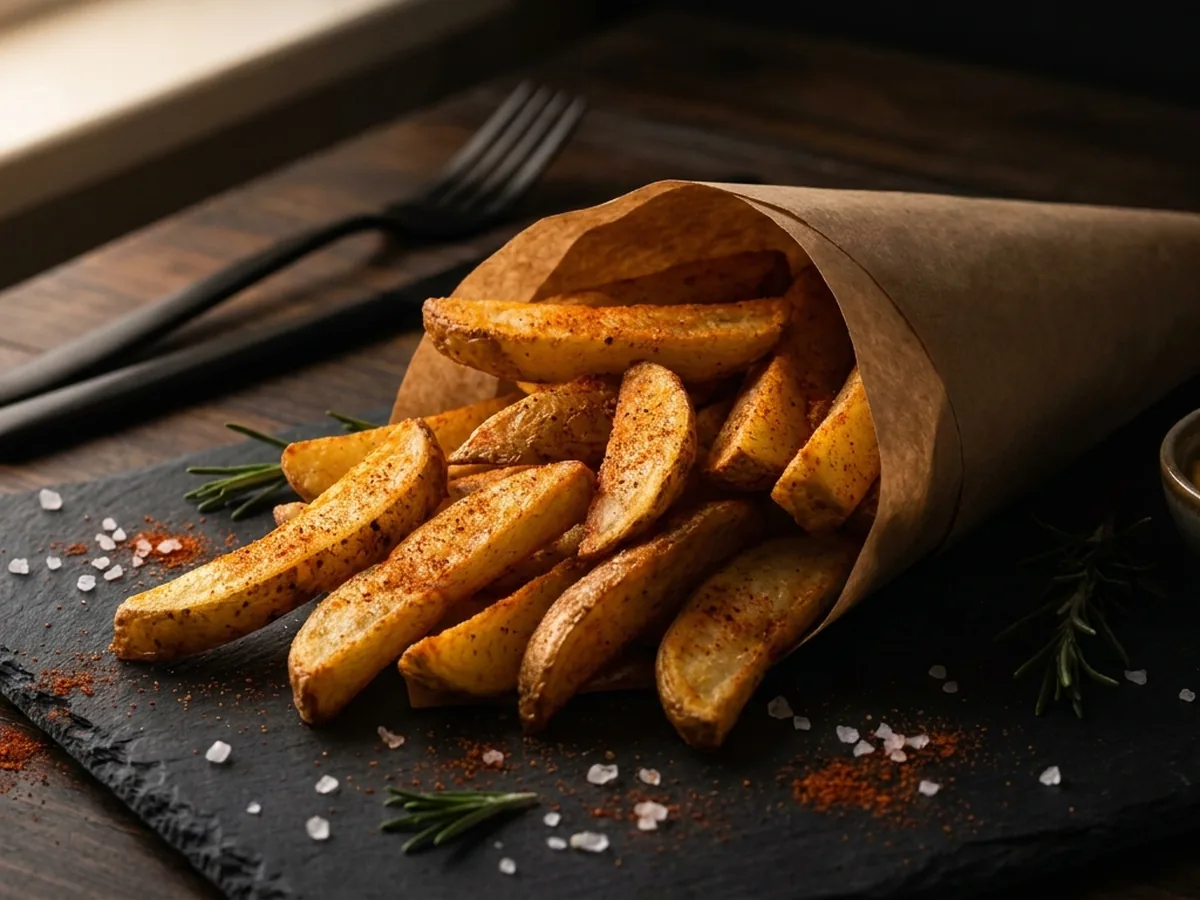
Skin-on potatoes, fried twice at two temperatures, tossed hot in Cajun seasoning. The oil is doing more of the flavou…
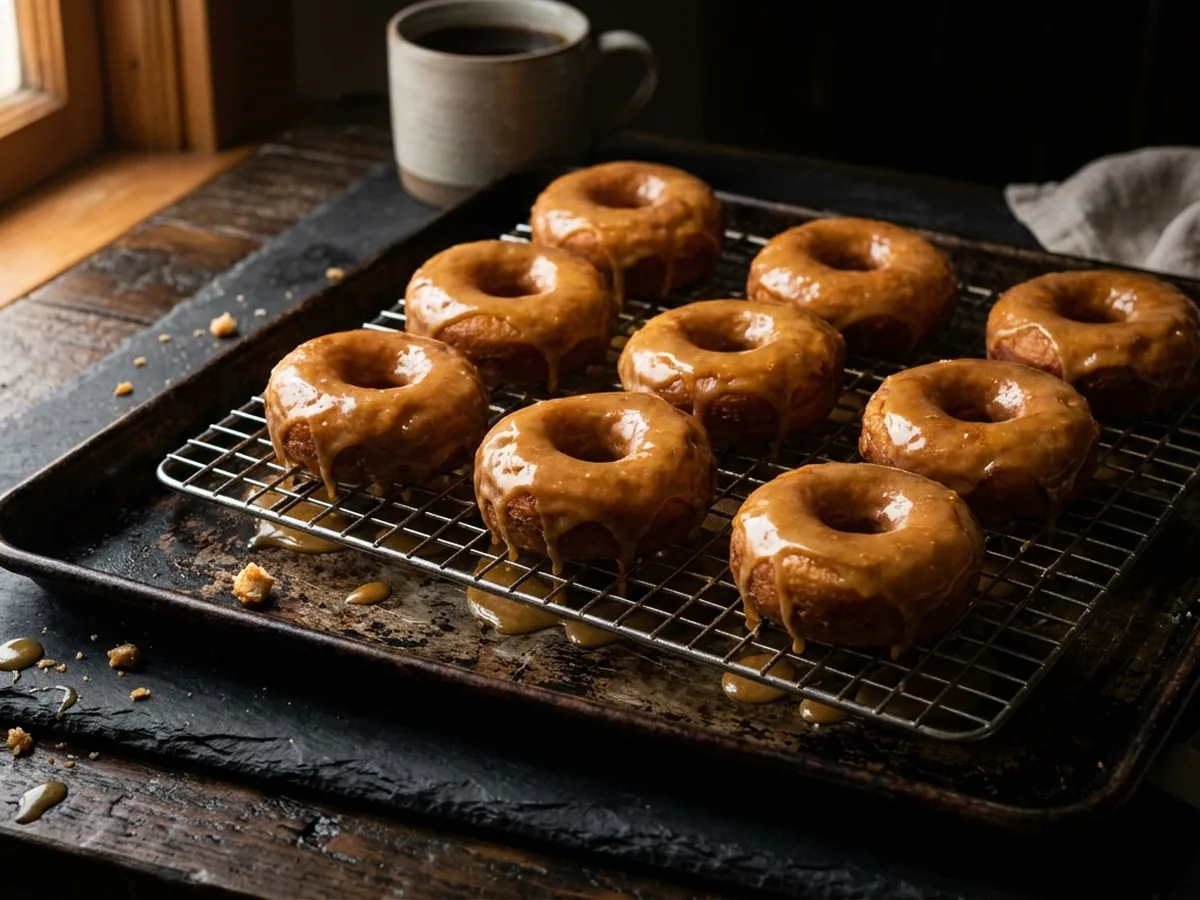
A very soft enriched dough, a short proof, forty-five seconds a side, and a thin glaze applied immediately. The heat …
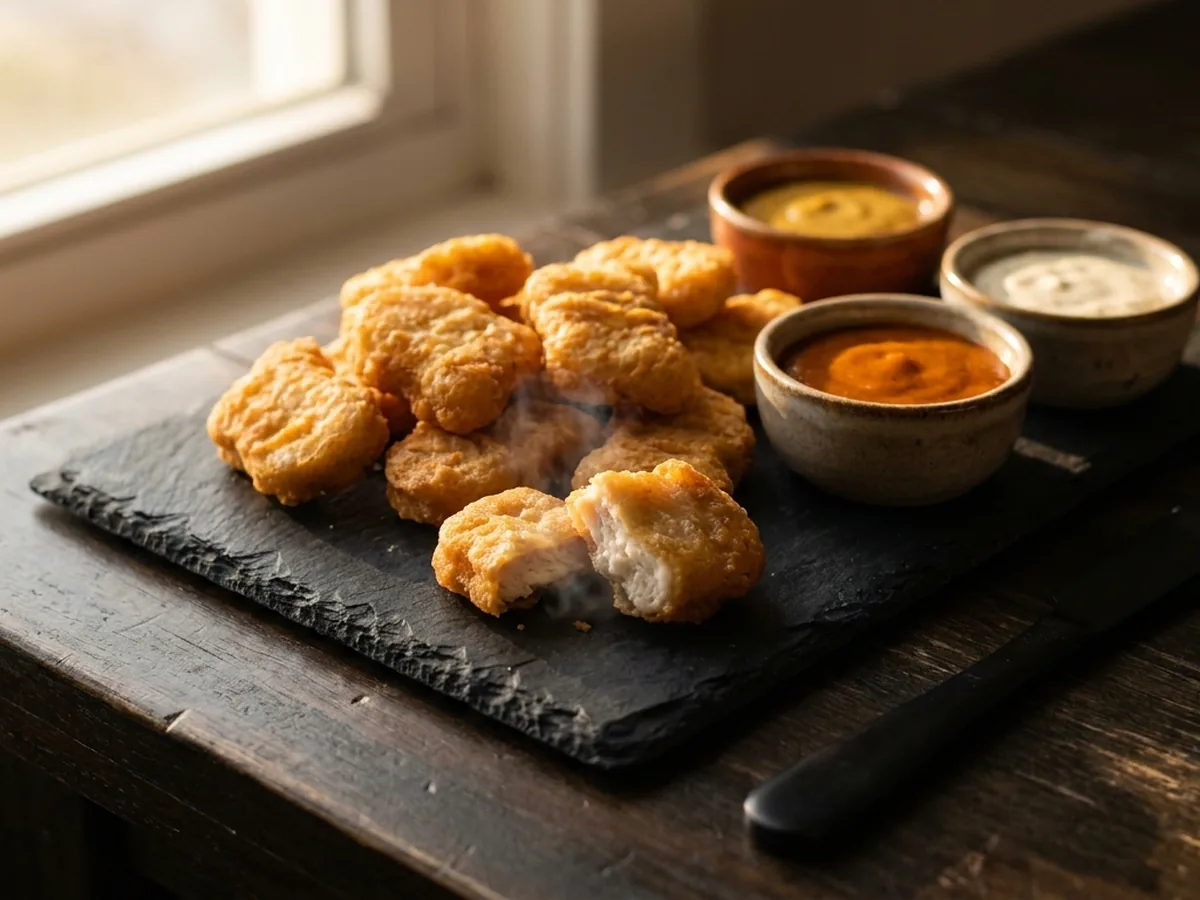
Minced and re-formed chicken in a thin tempura-style batter. The smooth interior is the whole point and it needs a fo…