McDonald's
McDonald's Big Mac Copycat Recipe
Two thin patties, a three-piece bun and the assembly order that stops the whole thing sliding apart on the second bit…
 food.fast
Takeaway taste, kitchen prices
The Big Mac Index Is a Joke That Turned Out to Be Useful
An identical product, made to the same specification, sold at wildly different prices across markets. The reasons are interesting and they are not mostly about exchange rates.
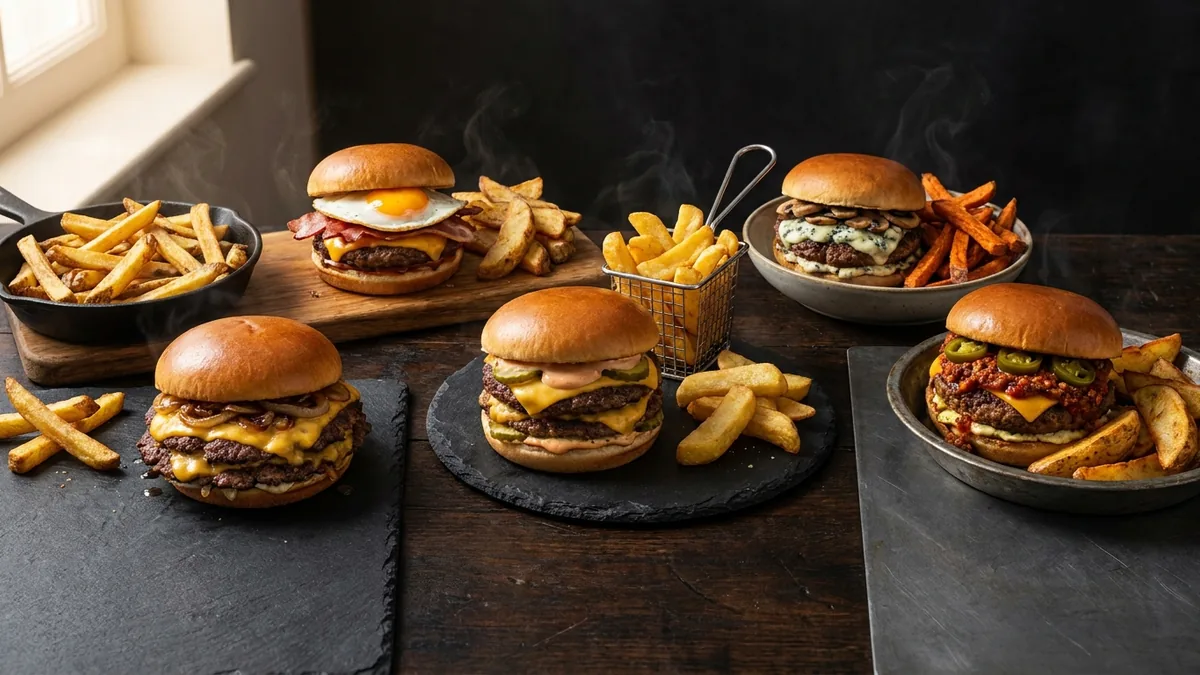
The Economist invented the Big Mac Index in 1986 as a light-hearted way to illustrate purchasing power parity - the theory that exchange rates should, over the long run, move towards a level that equalises the price of an identical basket of goods in two countries.
The Big Mac is an unusually good stand-in for that basket, because it is close to identical everywhere and because it contains, in one item, a bundle of local inputs: beef, bread, lettuce, labour, rent, energy and transport.
The arithmetic is simple. If a Big Mac costs $5.69 in the United States and £4.49 in the UK, the implied exchange rate is 4.49 / 5.69 = 0.789 pounds to the dollar. If the actual market rate is 0.73, sterling is by this measure overvalued by about 8 per cent.
It began as a joke and has been taken seriously enough to appear in economics courses, central bank commentary and academic literature. It is crude - it ignores local tax differences, local competition, and the fact that a Big Mac occupies a different market position in different countries - and it captures something real that more sophisticated measures often obscure.
The purchasing power arithmetic works the same way for any product priced in several markets, which is what a price dataset like this one makes possible.
Beef is a globally traded commodity. Flour, oil, sugar and cheese are broadly traded too. The raw ingredient cost of a Big Mac does vary between countries - tariffs, local agriculture, transport - but nothing like enough to explain price differences of two or three times.
What varies enormously is everything else:
Labour. The dominant factor. A restaurant in Switzerland pays several times what one in Malaysia pays for the same shift, and labour is 25 to 30 per cent of a quick-service restaurant's costs.
Rent. A high street site in central London against one in a Philippine provincial city. Property costs vary more than almost any other input.
Local taxes. VAT at 20 per cent in the UK, GST at 10 in Australia, sales tax varying by US state and often excluded from the advertised price entirely - which is why American menu prices look lower than they turn out to be.
Market positioning. This is the underrated one. In the US, McDonald's is inexpensive food. In parts of Asia it is a mid-market outing with air conditioning and clean lavatories, and it is priced accordingly relative to local alternatives. The same company deliberately occupies different rungs in different economies.
This site holds priced menus for thirty-five chains across eleven countries, and a few patterns are consistent.
The spread is wide. For items priced in six or more of our markets, the ratio between the most and least expensive market is commonly 2.5 to 4 times in converted US dollars.
The ordering is stable across items. The markets that are expensive for a burger are expensive for coffee and for chicken. That is the point - the price is telling you about the local economy, not about the product.
Drinks vary least. Syrup and water are cheap everywhere and the cup is the main input, so a fountain drink's price is compressed relative to food.
Local items disappear from the comparison entirely. McDonald's Thailand sells things McDonald's Ireland does not, which is why our price index only compares items sold under the same normalised name by the same brand in several markets, and why a lot of the menu data is not comparable at all.
You can see the per-market prices on any chain's menu page, which carry the date each menu was recorded - because a price without a date is a rumour.
For a traveller, a chain menu is a surprisingly good economic thermometer. Comparing the price of an identical item against what you are used to tells you more quickly than most things how expensive a place is going to feel, because it bundles labour, rent and tax into one number in a form you already understand.
For a cook, the interesting consequence is that the saving from cooking at home varies enormously by country, and in the opposite direction from what you might guess.
In a high-cost market the menu price is high because labour and rent are high. Ingredients are also somewhat more expensive, but much less so - so the gap between making and buying is widest in expensive countries.
In lower-cost markets, where labour is cheap and eating out is correspondingly cheap, the gap narrows sharply. In several of the markets in our dataset, eating a chain meal costs little more than the ingredients would - which is a completely reasonable reason to eat out and one that does not apply in London, New York or Sydney.
Our cost figures are UK-based and stated as such on how we cost recipes. The ratios hold better than the absolute numbers, and they hold least well in the cheapest markets.
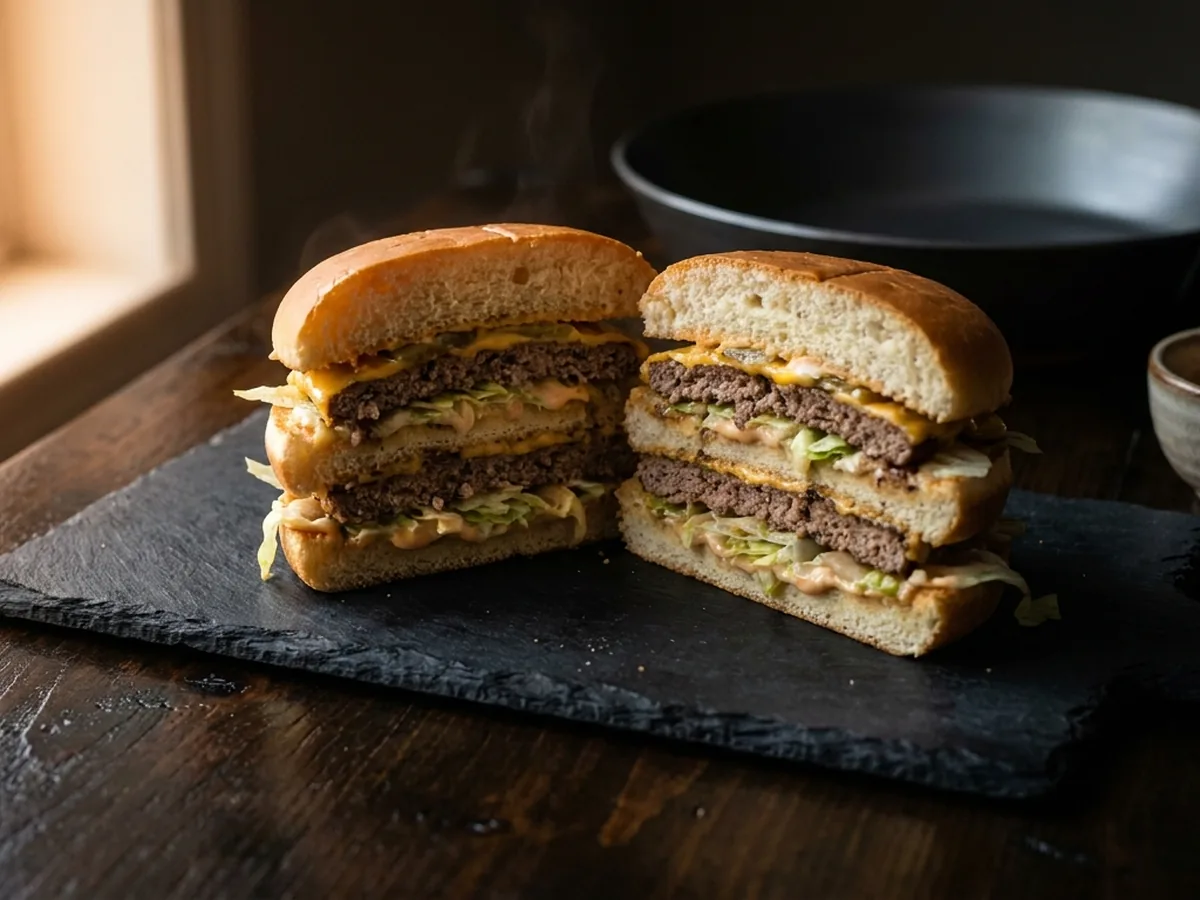
Two thin patties, a three-piece bun and the assembly order that stops the whole thing sliding apart on the second bit…
A flame-grilled quarter-pound patty, a serious quantity of mayonnaise, and more raw vegetable than any other chain bu…
Buttermilk brine, a double dredge with a rest, and controlled shallow frying. Honest about the one thing a home kitch…