Auntie Anne's
Auntie Anne's Soft Pretzel Copycat Recipe
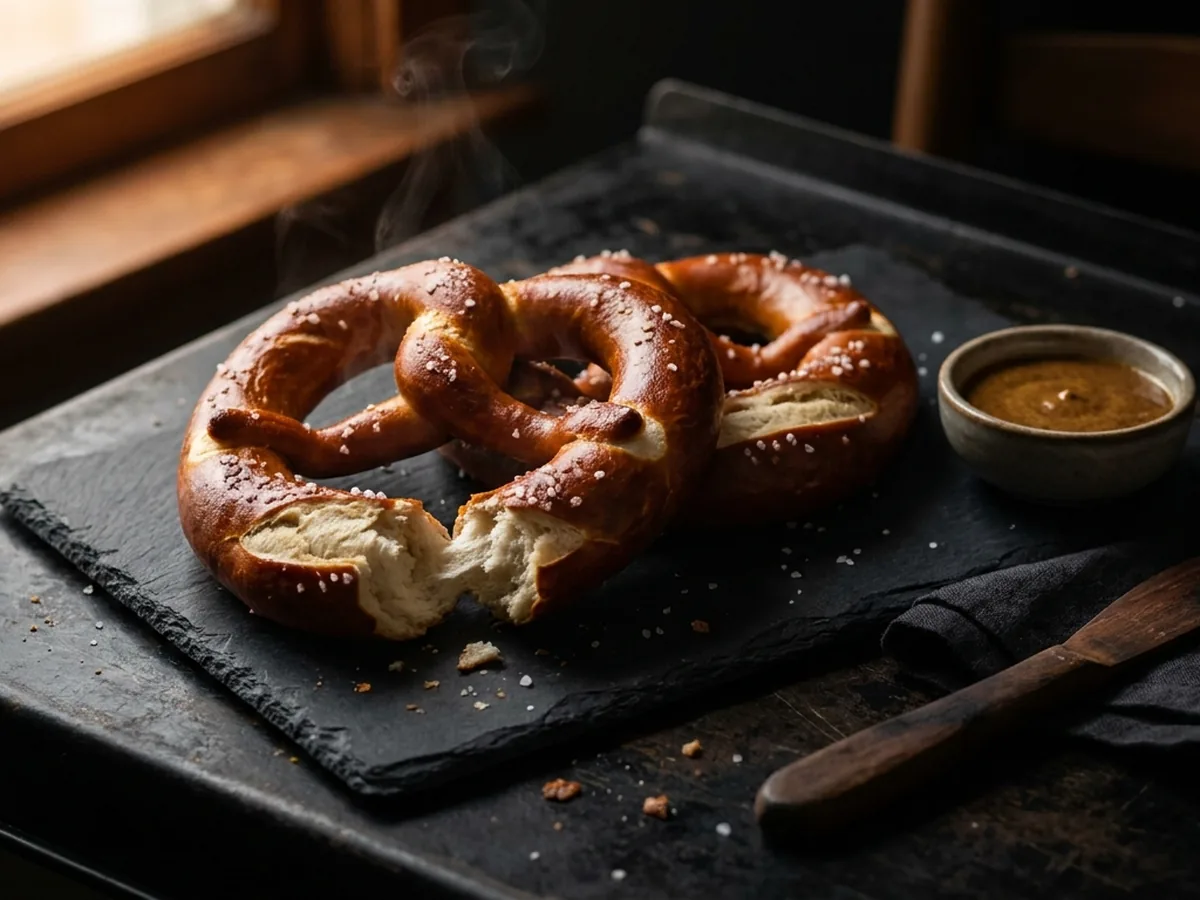
An ordinary bread dough put through an alkaline bath, buttered twice, and salted with coarse crystals. Thirty minutes…
 food.fast
Takeaway taste, kitchen prices
Thirty Minutes of Baked Bicarbonate Changes Everything
The mahogany colour, the chewy skin and the distinctive tang all come from one brief dip before baking. Here is the chemistry, the safe home version, and what else the technique is good for.
The Maillard reaction - amino acids and reducing sugars combining under heat into hundreds of brown, savoury compounds - is strongly pH-dependent. It runs slowly in acidic conditions and much faster in alkaline ones.
The first step of the reaction requires an amino group that is not protonated. In acidic conditions most amino groups have picked up a proton and are unavailable; raise the pH and they are freed up, and the reaction accelerates sharply.
In practice, a dough surface dipped in an alkaline solution browns several times faster than an untreated one. A pretzel goes deep mahogany in fourteen minutes where the same dough baked plain would be pale gold.
There is a second effect. Alkali partially breaks down surface proteins and starches, producing a smooth, slightly glassy skin and the distinctive slightly mineral tang that is unmistakably pretzel. That flavour is not salt and it is not yeast - it is a genuinely different taste that only alkaline treatment produces.
| Solution | pH | Result | Safe at home? |
|---|---|---|---|
| Plain water | 7 | Pale, ordinary bread | Yes |
| Bicarbonate of soda | 8.3 | Slightly darker | Yes |
| Baked bicarbonate (sodium carbonate) | 11.5 | Close to the real thing | Yes, with care |
| Food-grade lye (sodium hydroxide) | 13-14 | The commercial result | Not recommended |
Lye is what commercial bakeries use and it is genuinely caustic - it causes chemical burns on skin contact and requires gloves and eye protection. This site does not recommend it for a domestic kitchen.
Baked bicarbonate is the home answer and it is much better than plain bicarbonate. Spread bicarbonate of soda on a foil-lined tray and bake at 150 °C for thirty minutes. Heat drives off carbon dioxide and water, converting sodium bicarbonate into sodium carbonate:
2 NaHCO₃ → Na₂CO₃ + H₂O + CO₂
It loses about a third of its weight and looks identical. The pH goes from 8.3 to around 11.5, which is roughly a thousand times more alkaline.
Handle it with reasonable care. It is not caustic like lye, but it is noticeably alkaline - avoid your eyes, rinse your hands afterwards, and use a stainless steel or ceramic pan rather than aluminium, which reacts with alkali.
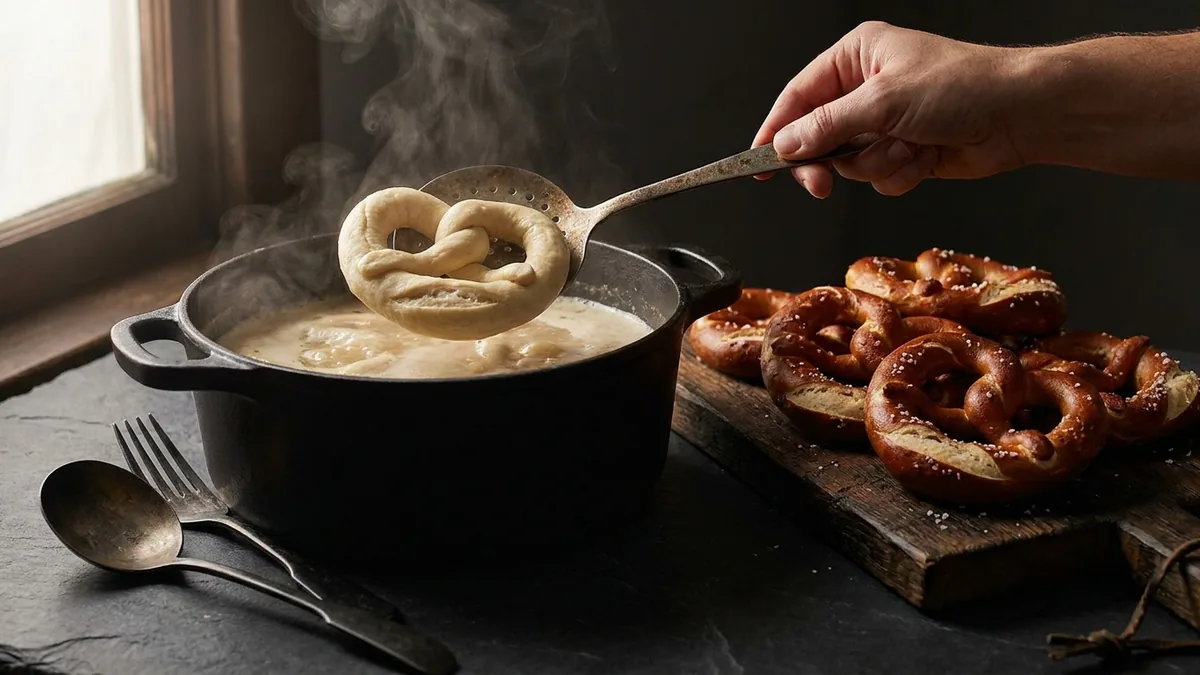
60 g of baked bicarbonate to 2 litres of water, brought to a bare simmer. Two pretzels at a time, thirty seconds a side, lifted out with a slotted spoon and drained well.
The dough will go slightly slimy and turn a faint yellow in the bath. Both are correct.
The two failures:
Too long in the bath. Past about a minute a side, enough alkali penetrates that the finished pretzel tastes soapy and slightly metallic. Thirty seconds a side. It is a surface treatment, not a cooking step.
Not drained. Alkaline solution pooling under the pretzel on the tray gives dark, bitter, over-treated patches. Lift, let it drip for a few seconds, then place.
Two supporting details: rest the shaped pretzels for fifteen minutes before the bath, so a slight skin forms and they hold their shape. And bake immediately after the bath - a treated dough sitting around continues to be affected by the alkali still on it.
Once you have a jar of baked bicarbonate, it has other uses.
Ramen noodles. Alkaline noodles - the springy, yellow, slightly slippery kind - are made with kansui, an alkaline solution. Adding 1 per cent baked bicarbonate by flour weight to a noodle dough produces a recognisably ramen-like noodle from ordinary flour. This is the best-known application outside pretzels.
Roast potatoes. A teaspoon of bicarbonate in the parboiling water raises the pH, breaks down the potato surface into a starchy slurry, and gives a dramatically rougher exterior that crisps far more. Ordinary bicarbonate is enough here - baked is overkill.
Caramelising onions faster. A pinch raises the pH and accelerates browning, turning a forty-minute job into about fifteen. The texture goes softer and more jammy, which is sometimes what you want and sometimes not.
Darker, faster browning on almost anything baked. A very light dusting of baked bicarbonate on a bread surface before baking gives a noticeably deeper crust. Used sparingly - it is easy to reach soapy.
The pretzel recipe has the full method, and a batch of baked bicarbonate keeps indefinitely in a sealed jar.
An ordinary bread dough put through an alkaline bath, buttered twice, and salted with coarse crystals. Thirty minutes…
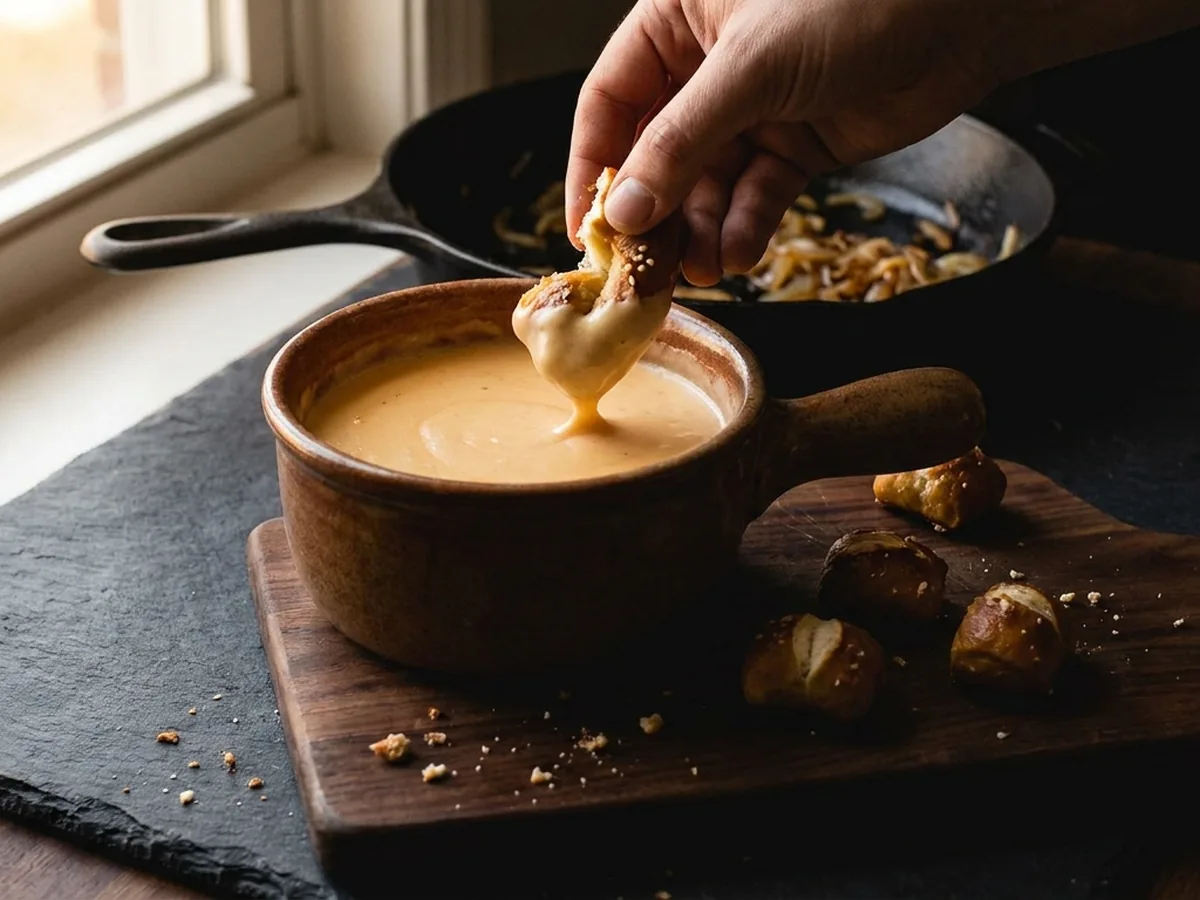
The pretzel dip - milder and thinner than a queso, built to stay liquid in a paper pot. Eight minutes.
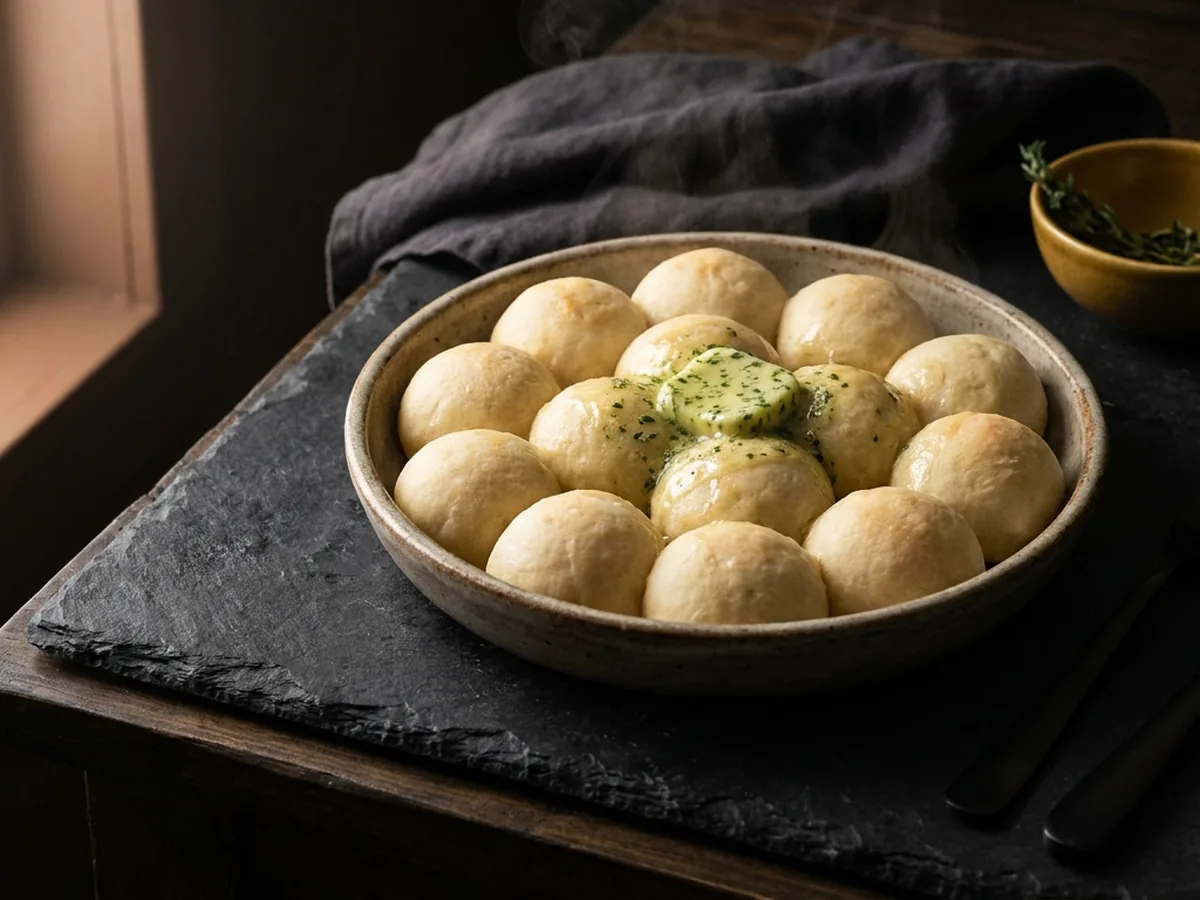
Walnut-sized, baked hot and fast so they stay pale and pillowy, with a soft garlic butter that melts into them. About…