Domino's Pizza
Domino's Pizza Dough Copycat Recipe
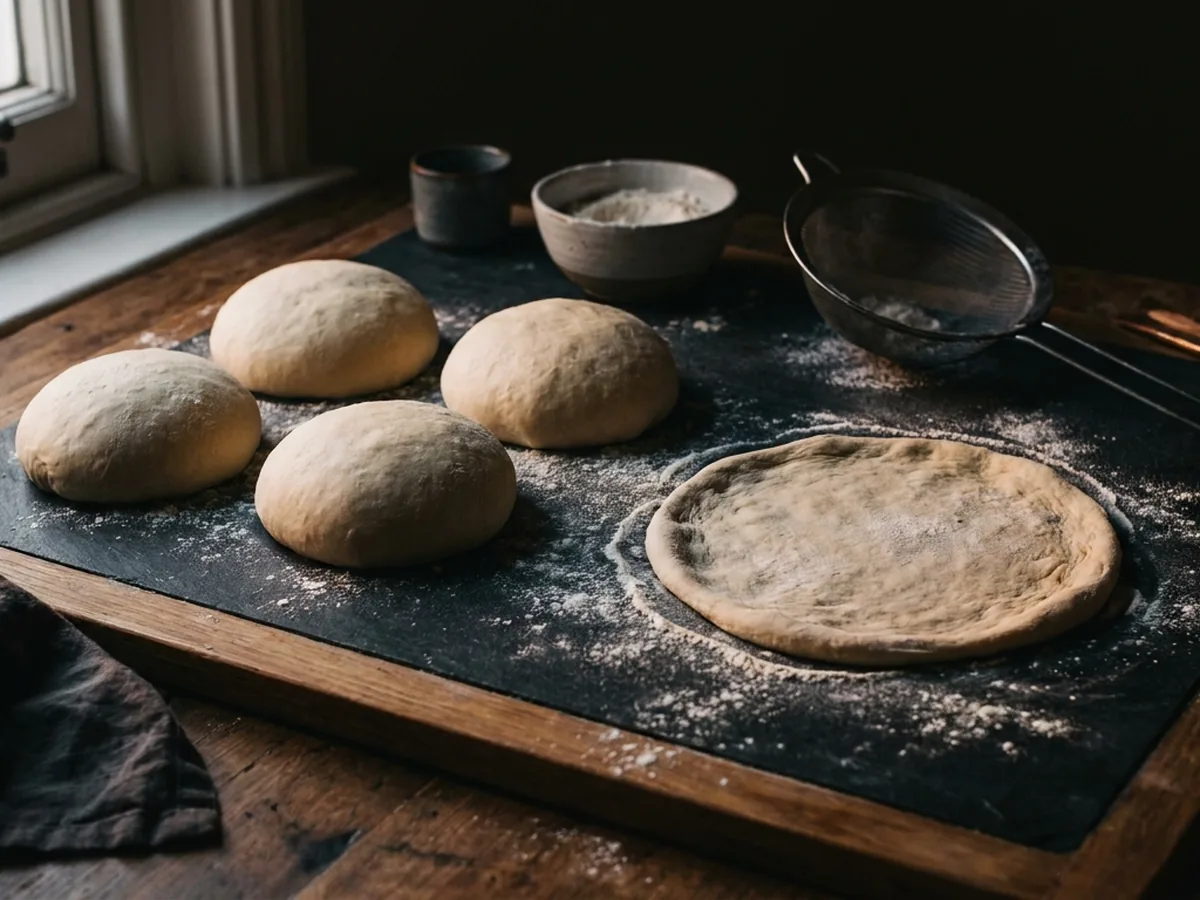
A pressed rather than tossed dough, cold-fermented for two days. Fifteen minutes of work, and the fridge does the rest.
 food.fast
Takeaway taste, kitchen prices
The Difference Between Dough That Tastes of Flour and Dough That Tastes of Bread
Same ingredients, same weights, forty-eight hours apart. The flavour difference is large and the reasons are specific - three slow processes that a two-hour rise never gets to.
At room temperature, yeast races through available sugars, producing carbon dioxide and alcohol. The dough doubles in ninety minutes and very little else has time to happen.
At 4 °C, yeast activity drops to roughly a twentieth of that rate. Three slower processes then have time to catch up.
Amylase enzymes break starch into sugars. Flour contains amylase, which converts long starch chains into maltose and glucose. Those sugars feed the yeast and - more importantly for the finished bread - caramelise in the oven. A cold-fermented dough browns noticeably better at the same temperature, because there is more sugar at the surface.
Protease enzymes break some gluten proteins into amino acids and peptides. Amino acids contribute savoury depth, and the partial breakdown makes the dough more extensible - it stretches rather than springing back. Anybody who has handled a two-day dough notices this immediately.
Lactic and acetic acid bacteria, naturally present in any flour, produce small quantities of organic acids. At 48 hours this is a faint complexity; at 72 it is a discernible tang.
None of the three can be accelerated. They are the reason a long ferment tastes different, and the reason no shortcut exists.
From tasting the same dough at each stage, side by side.
| Time | Flavour | Handling | Browning |
|---|---|---|---|
| 2 hr, room temperature | Flour and yeast | Springy, fights back | Pale |
| 12 hr, cold | Slightly rounder | A little easier | Slightly better |
| 24 hr | Faintly bready | Noticeably easier | Better |
| 48 hr | Bready, slightly sweet | Stretches willingly | Good |
| 72 hr | Bready with a tang | Very extensible, near the limit | Very good |
| 96 hr | Sour, beery | Slack, tears | Good, but the dough has gone |
48 hours is the sweet spot for pizza dough and for most lean doughs. The flavour gain from 24 to 48 is large; from 48 to 72 it is smaller and the handling starts getting fragile.
Past 72 hours protease activity has broken down more gluten than the dough can spare. It goes slack, tears when stretched, and smells of beer. There is no recovering it.
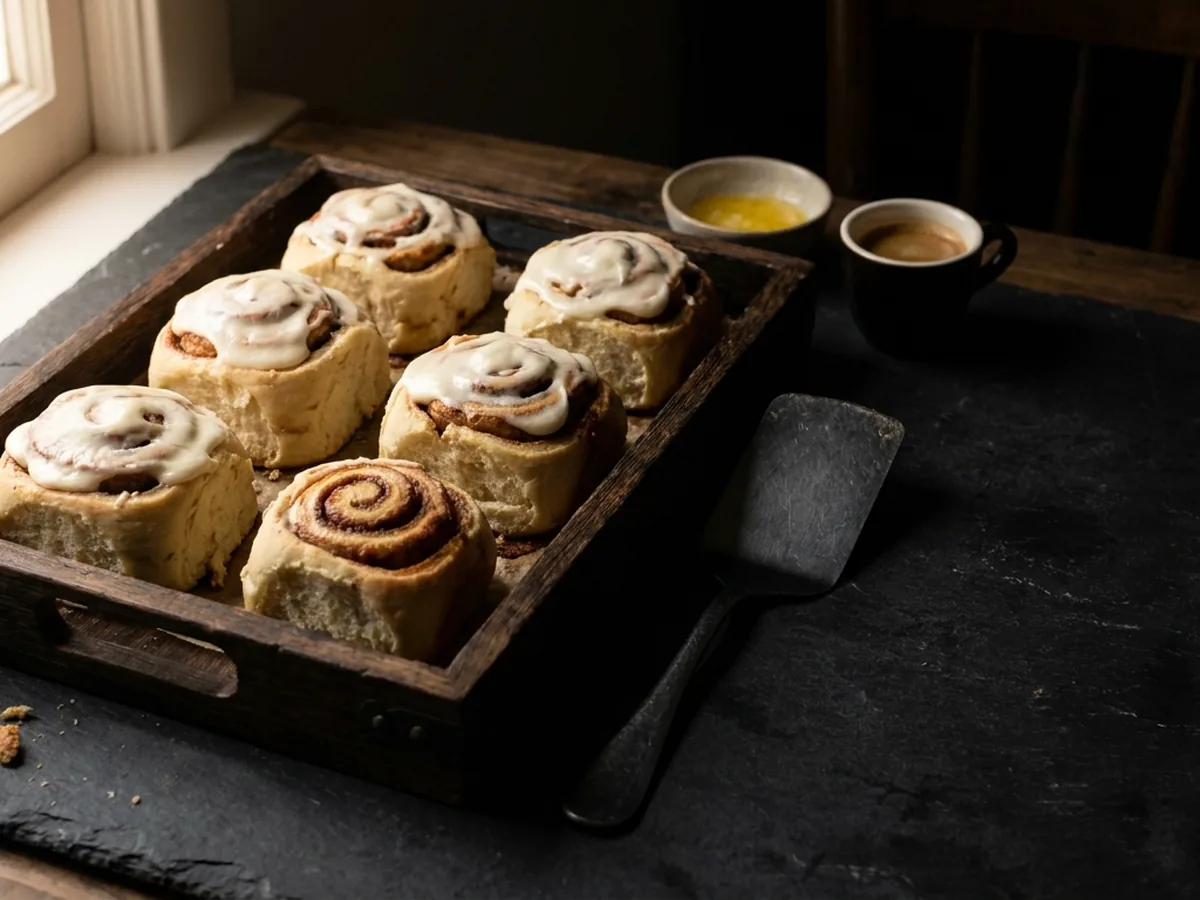
Enriched doughs - cinnamon rolls, doughnuts, brioche - can be cold-fermented too and generally want 12 to 24 hours rather than 48, because the fat and sugar already slow things down.
This is the mistake that ruins first attempts.
A same-day pizza dough uses 1.5 to 2 per cent instant yeast and rises in two hours. Use that much for a 48-hour cold ferment and the yeast exhausts the available sugars long before you bake. The dough over-ferments: it rises, collapses, goes slack, smells strongly of alcohol, and produces flat, grey bread.
For a long cold ferment, 0.3 to 0.6 per cent. The Domino's dough uses 0.5 per cent - 3 g for 600 g of flour - which looks absurdly little and is correct.
Two supporting details:
Use cool water, around 20 °C, not warm. You want the dough to go into the fridge close to fridge temperature, not to get a two-hour head start on the worktop first.
Give it 30 to 60 minutes at room temperature before refrigerating, so the yeast wakes up and starts, then chill it. Straight into the fridge from mixing and very little happens for the first several hours.
It has risen and then visibly collapsed. It smells strongly of beer or alcohol. It is slack and sticky in a way that does not improve with handling. It tears rather than stretching. None of these are recoverable - reduce the yeast next time.
Cold fermentation sounds like extra work and is usually less, because it decouples the effort from the meal.
The routine for pizza:
Total hands-on time is under half an hour, split across two days, neither of which has to be the day you decided to make pizza.
Freezing extends it further. Cold-ferment for 24 hours, then freeze the balls. Three months. The overnight fridge thaw counts as further cold fermentation, so a ball thawed overnight has effectively had its full 48 hours.
Frozen dough balls in a drawer turn pizza from a two-day project into a twenty-minute one, permanently, and are the single most useful thing in this kitchen's freezer.
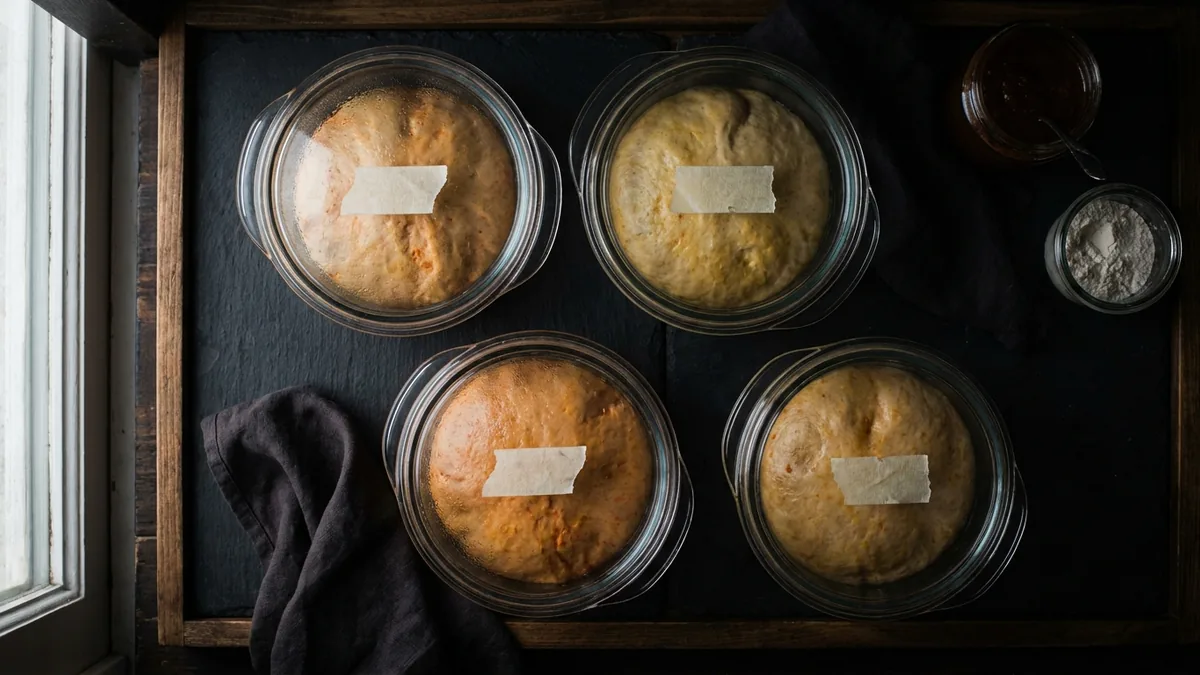
Individual containers, not one big box. Balls in a shared container merge into a single mass and have to be divided again, which degasses them.
A pressed rather than tossed dough, cold-fermented for two days. Fifteen minutes of work, and the fridge does the rest.
Three tablespoons of oil in the tin, a dough that proves where it bakes, and a base that fries from underneath. The o…
An enriched dough, a filling that is a third cinnamon by volume, and a cream cheese frosting with a much higher chees…